



Bauhaus posters: geometry, function and lasting design
Bauhaus posters are more than decorative wall art. They reflect an influential design philosophy that reshaped architecture, graphic design, furniture and visual communication during the twentieth century. Instead of relying on ornament, Bauhaus artists focused on simple forms, balanced composition and practical purpose. The result is artwork that still feels relevant in modern homes, offices and creative spaces.
Today, these designs appeal to people who appreciate clean lines, thoughtful colour combinations and art that works comfortably with different interior styles. Their visual clarity makes them easy to enjoy without dominating a room.
The origins of the Bauhaus movement
The Bauhaus movement began in Germany in 1919, when architect Walter Gropius founded the Bauhaus school. His vision was to unite art, craftsmanship and industry into a single approach to design. Students explored painting, typography, architecture, furniture, textiles and product design while following the same guiding principle: every object should be both useful and visually balanced.
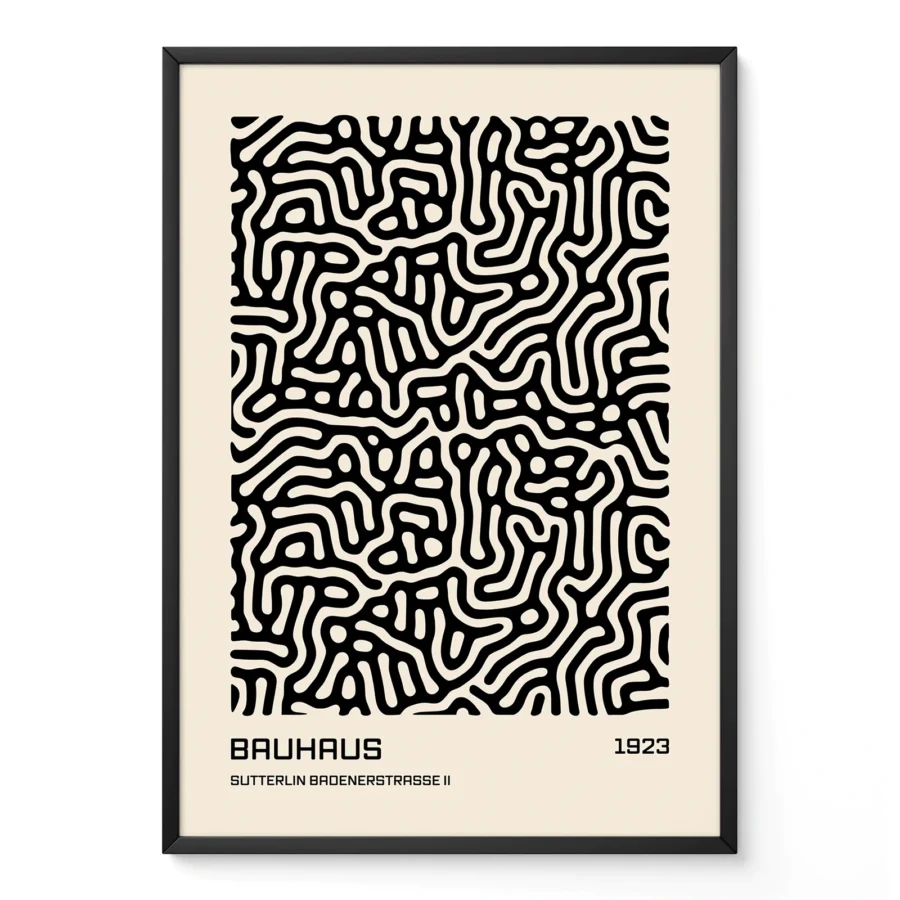
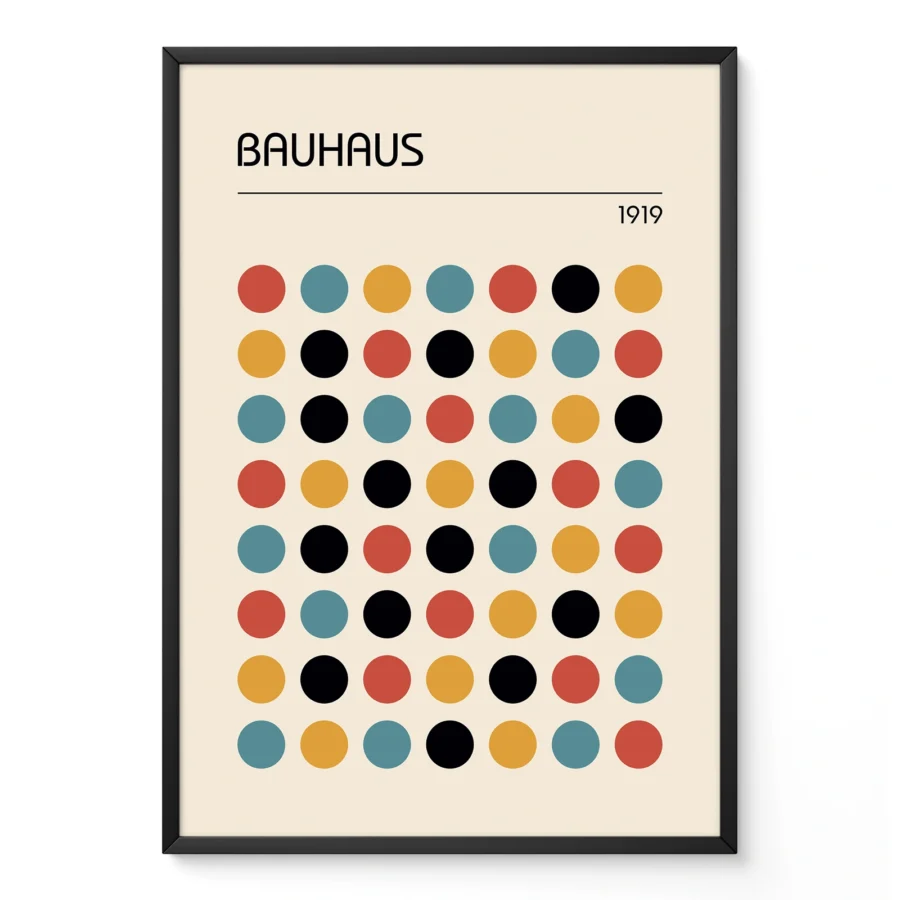
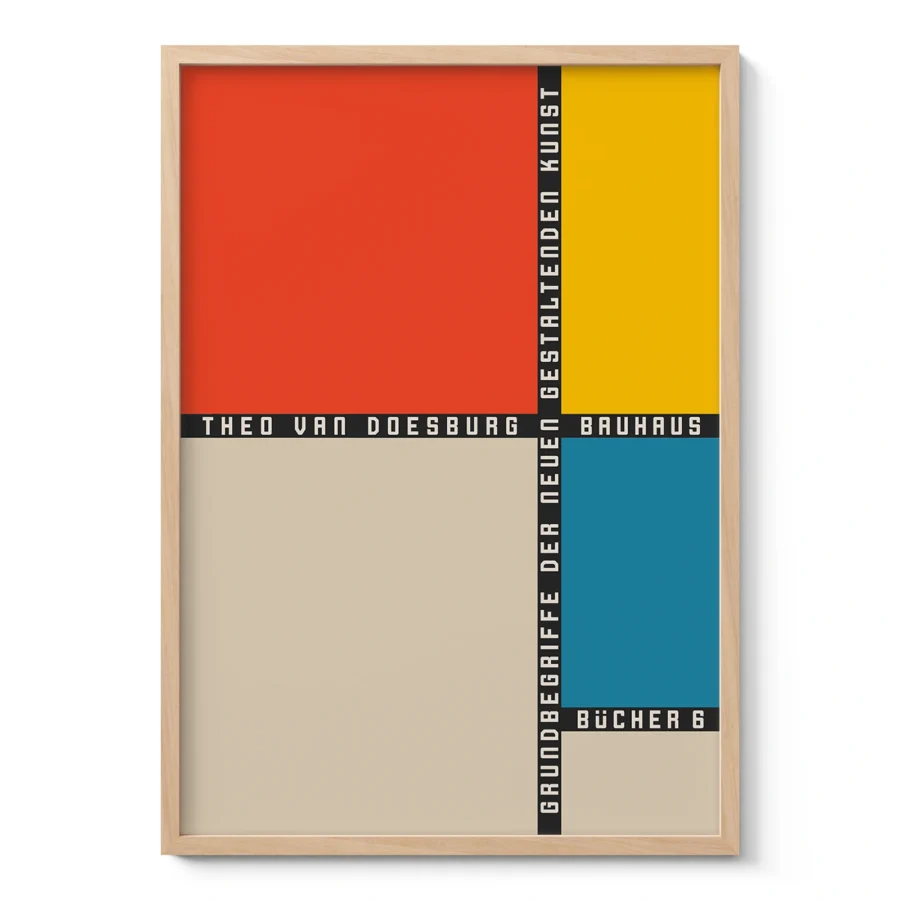
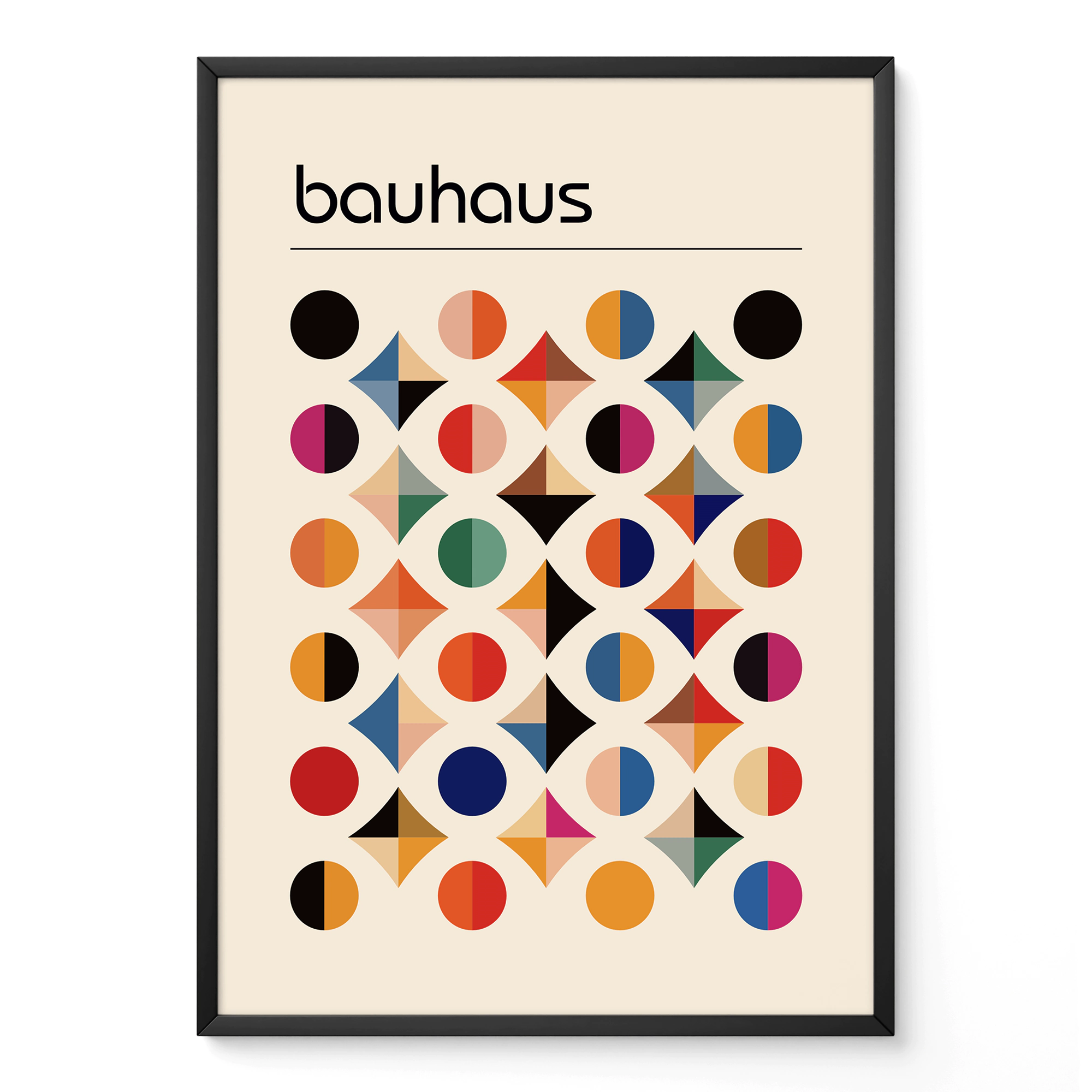
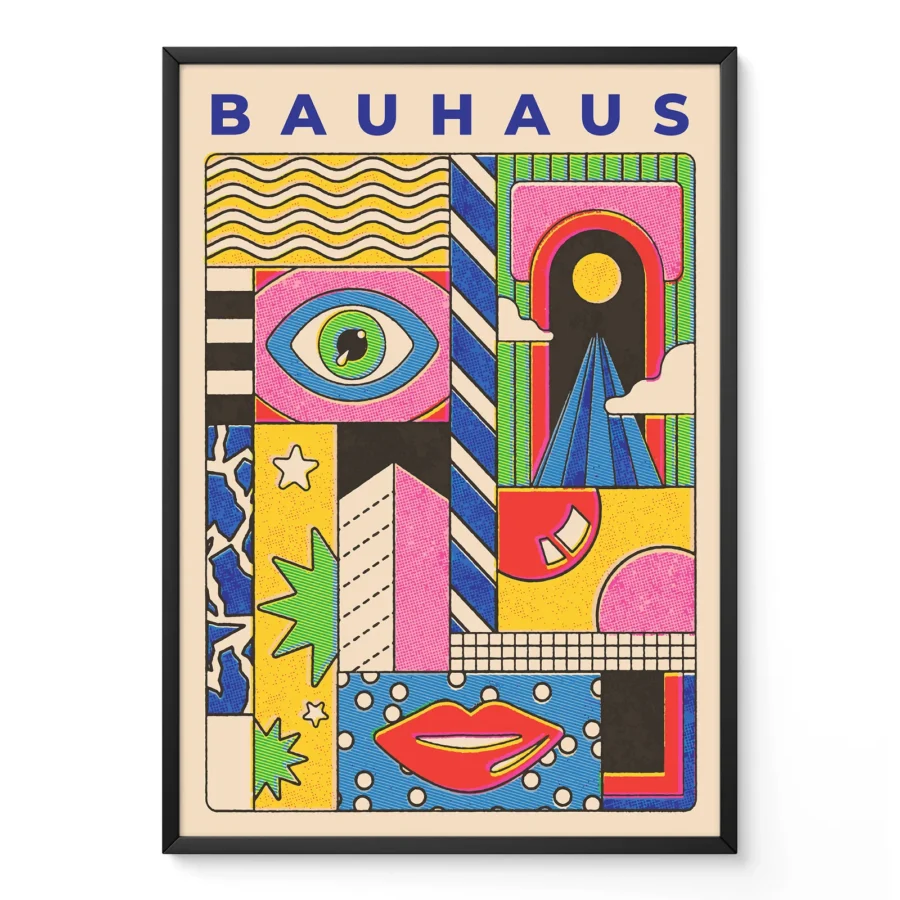
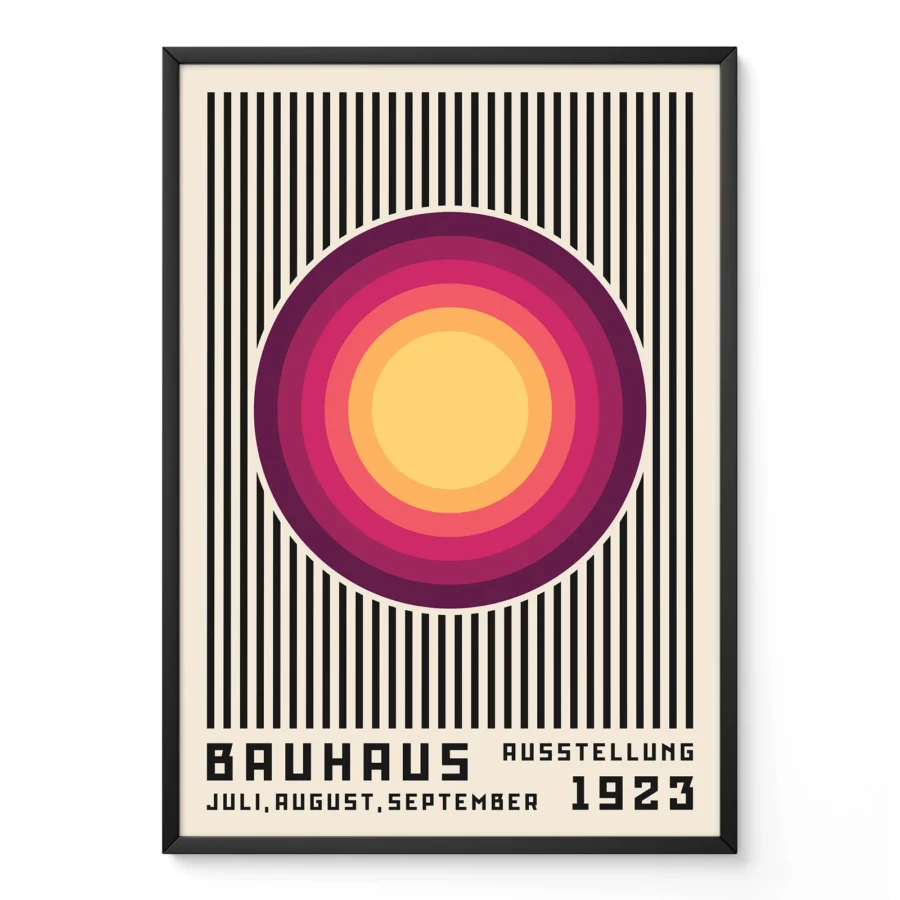
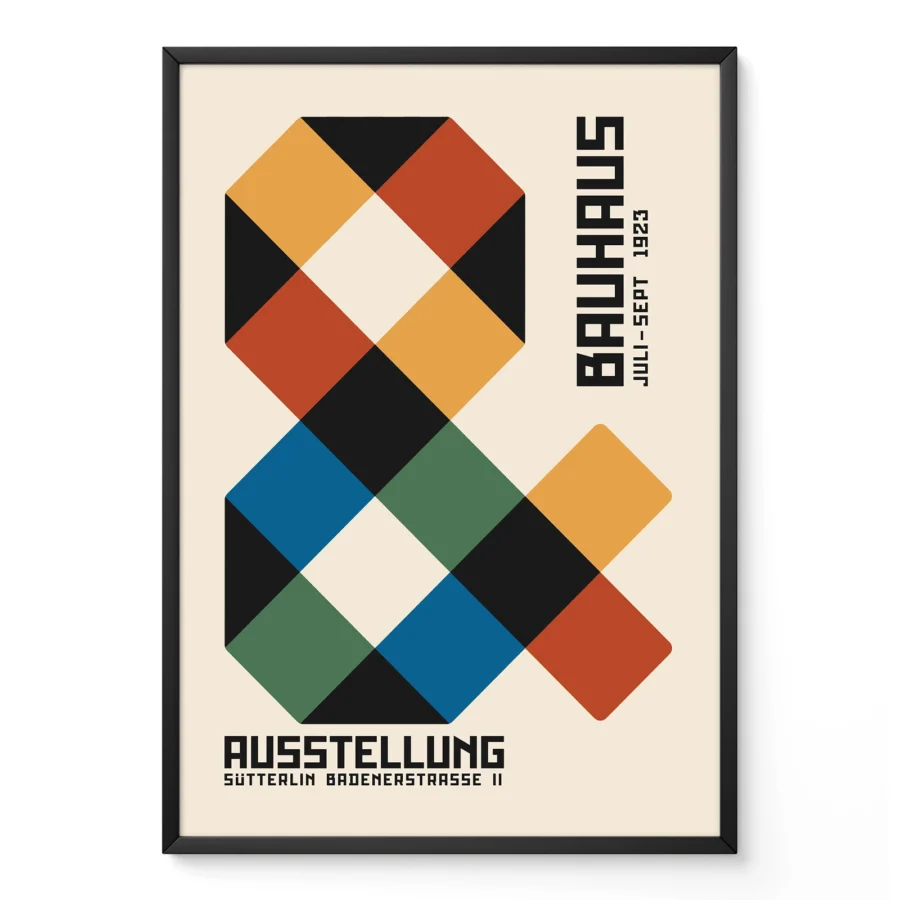
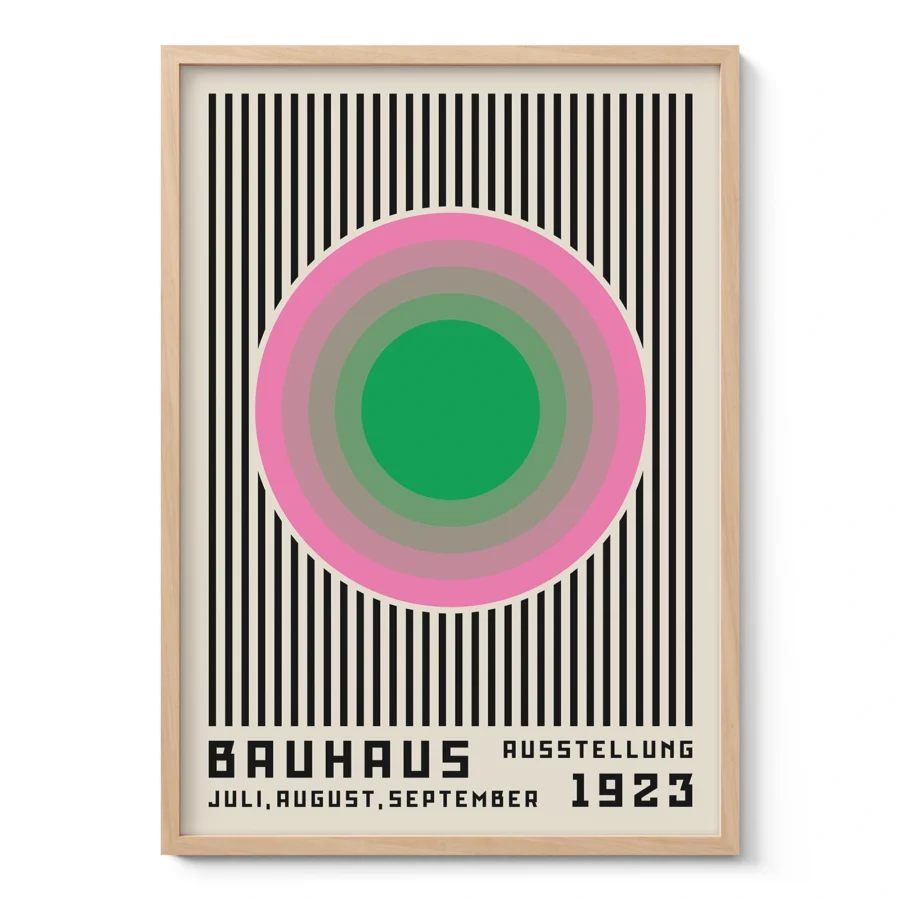
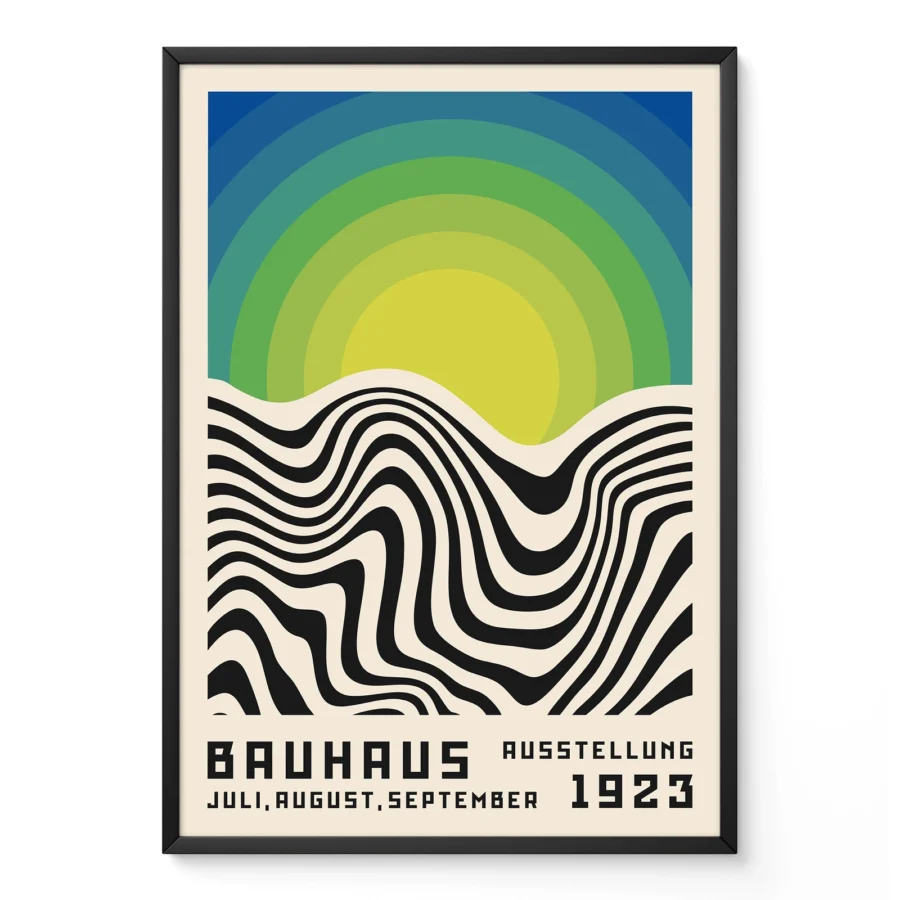
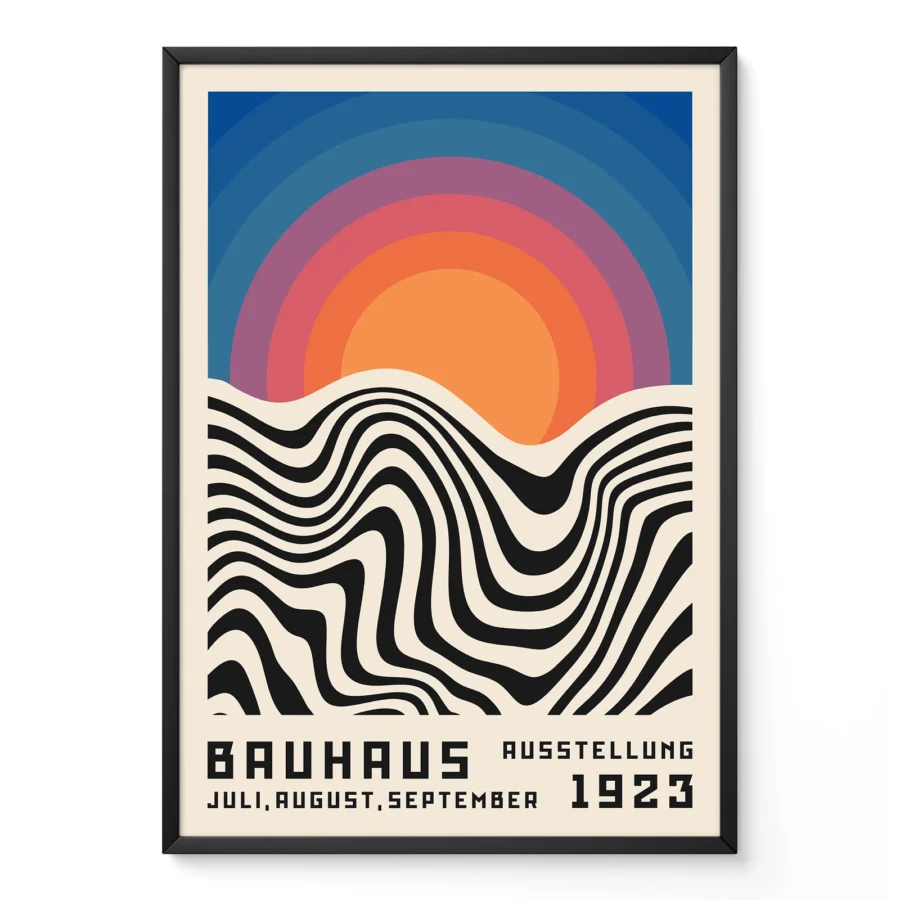
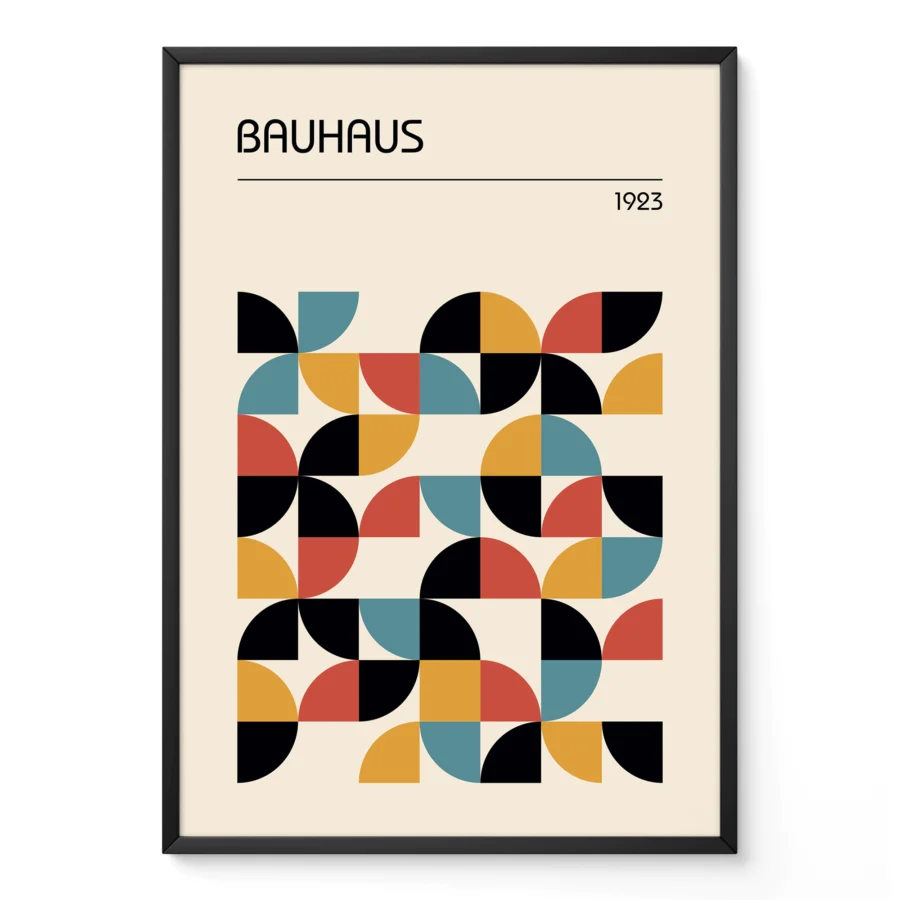
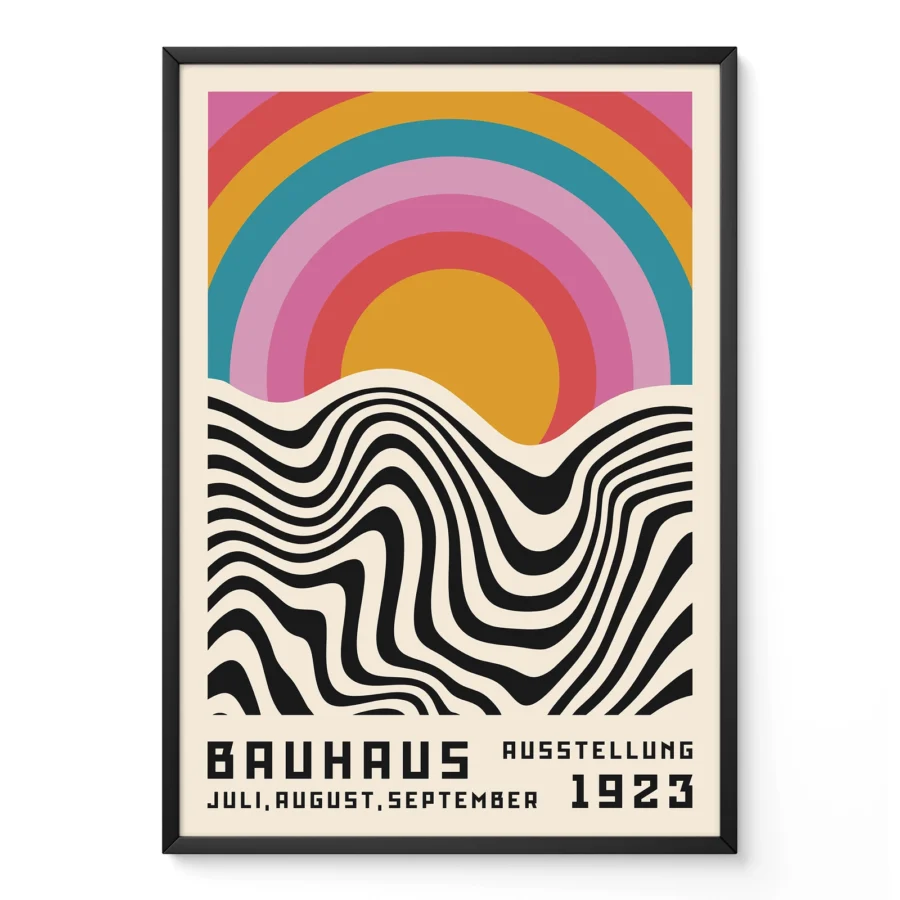
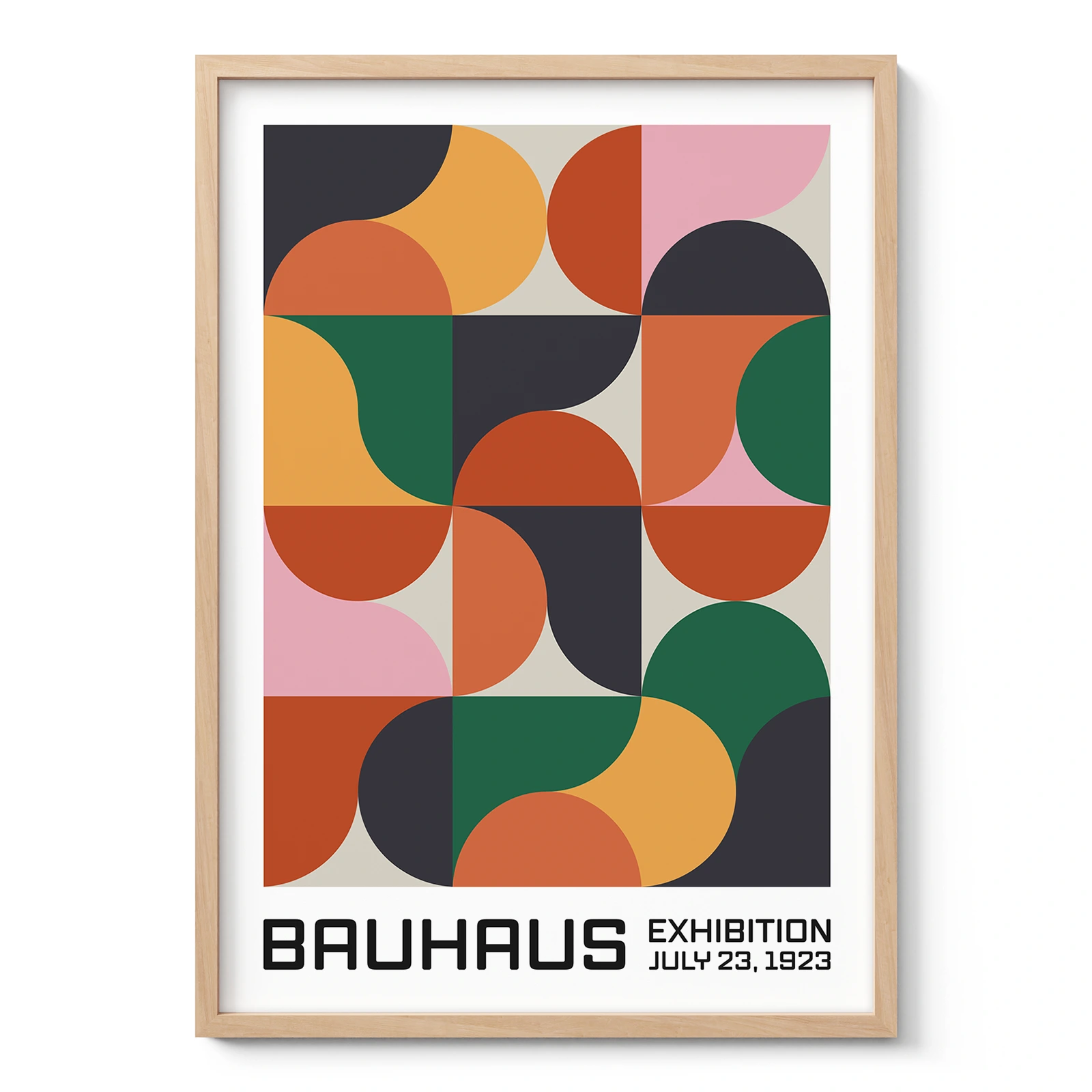
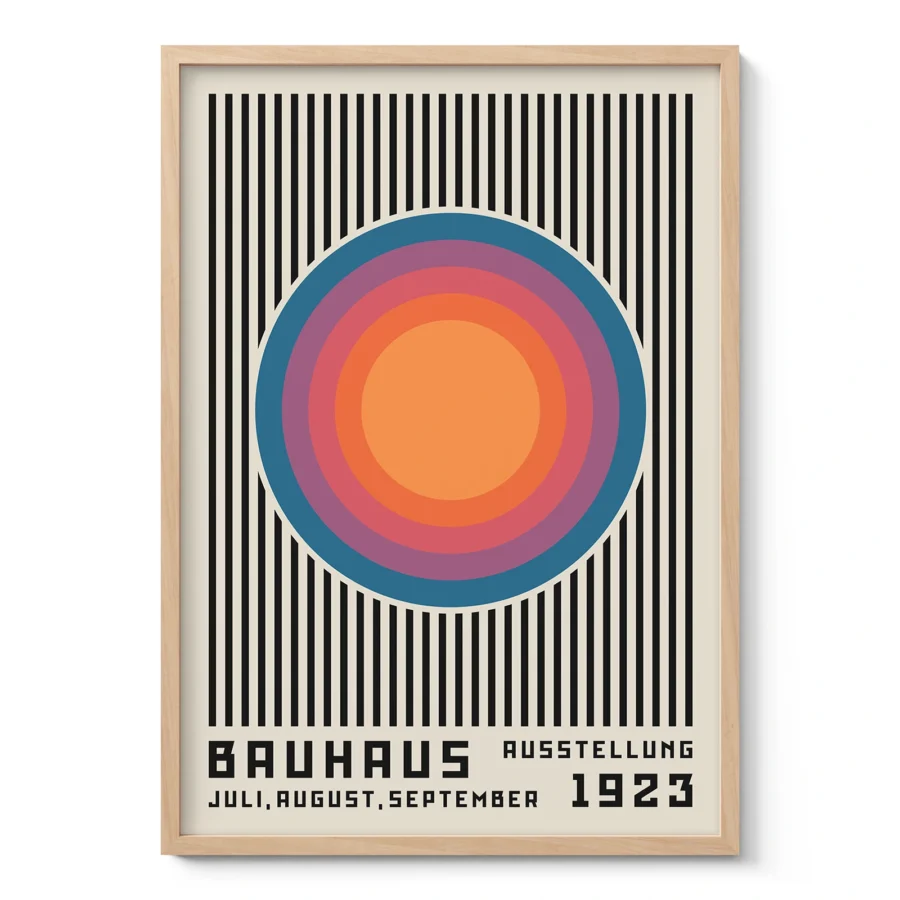
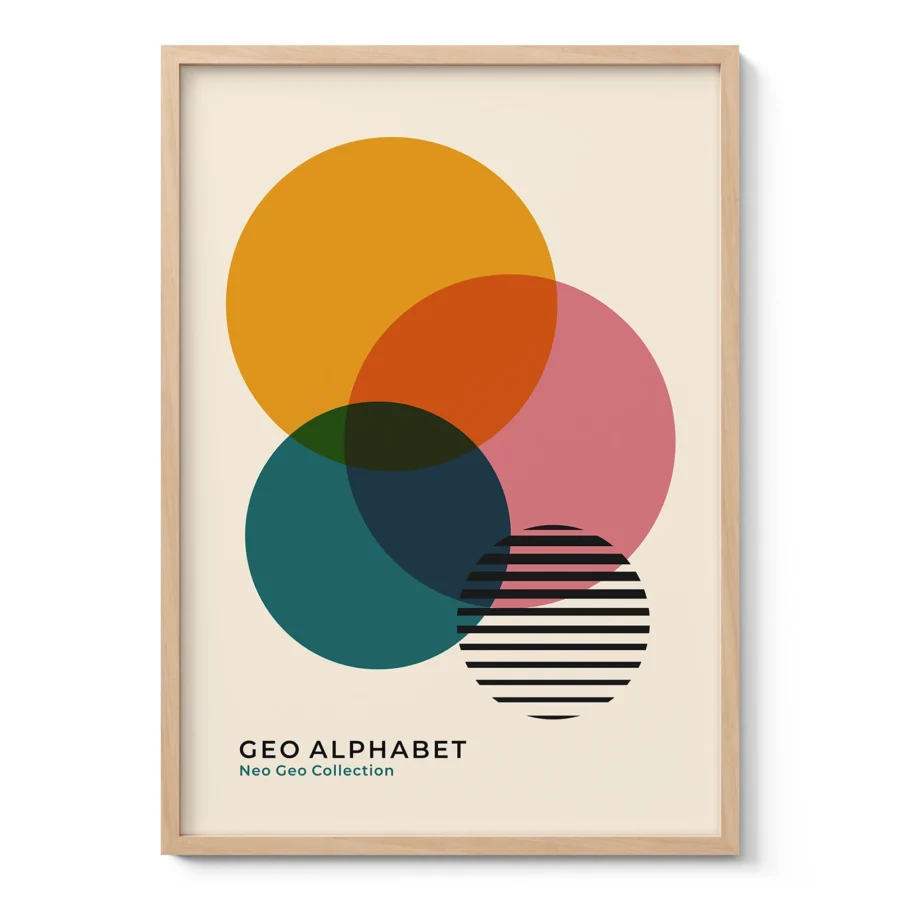
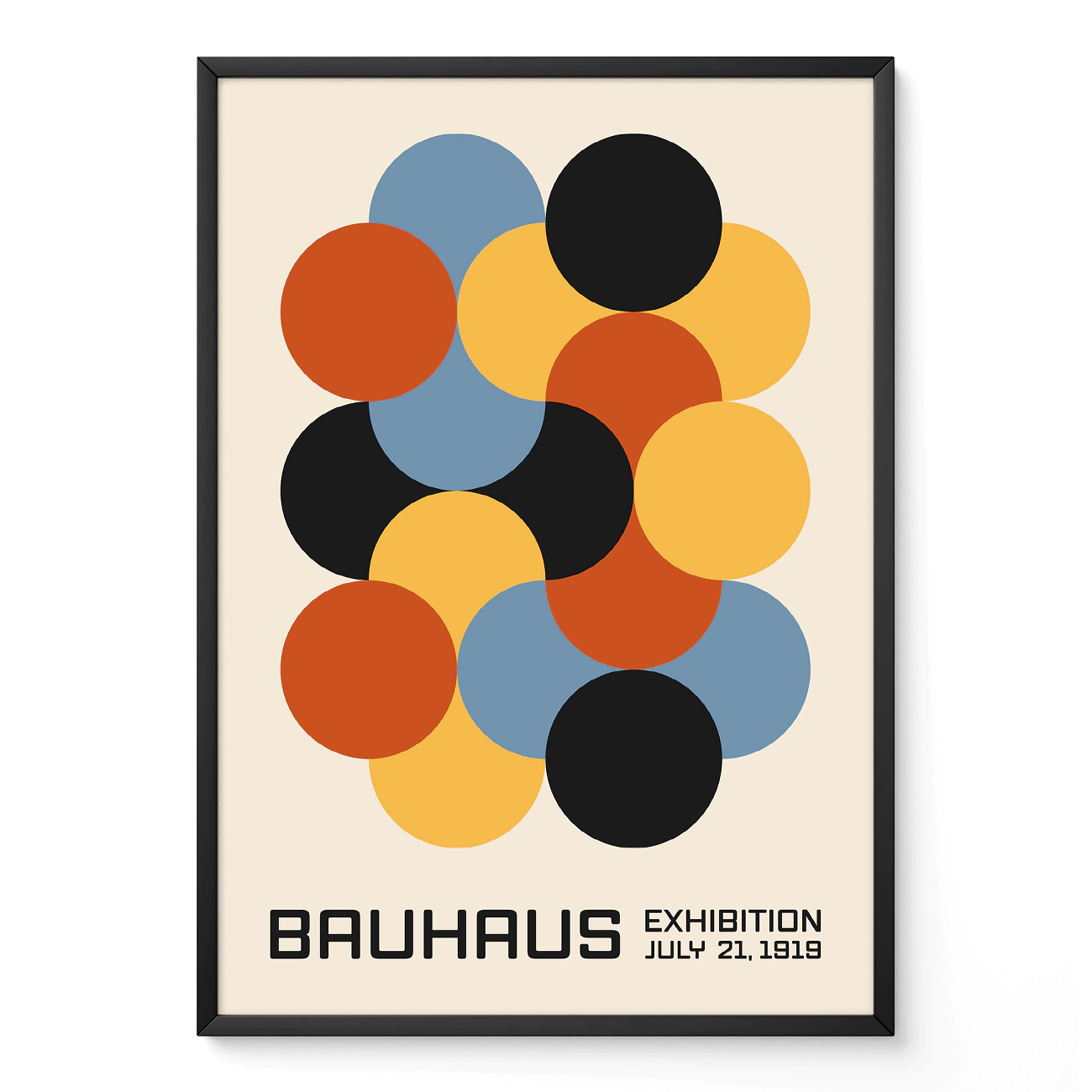
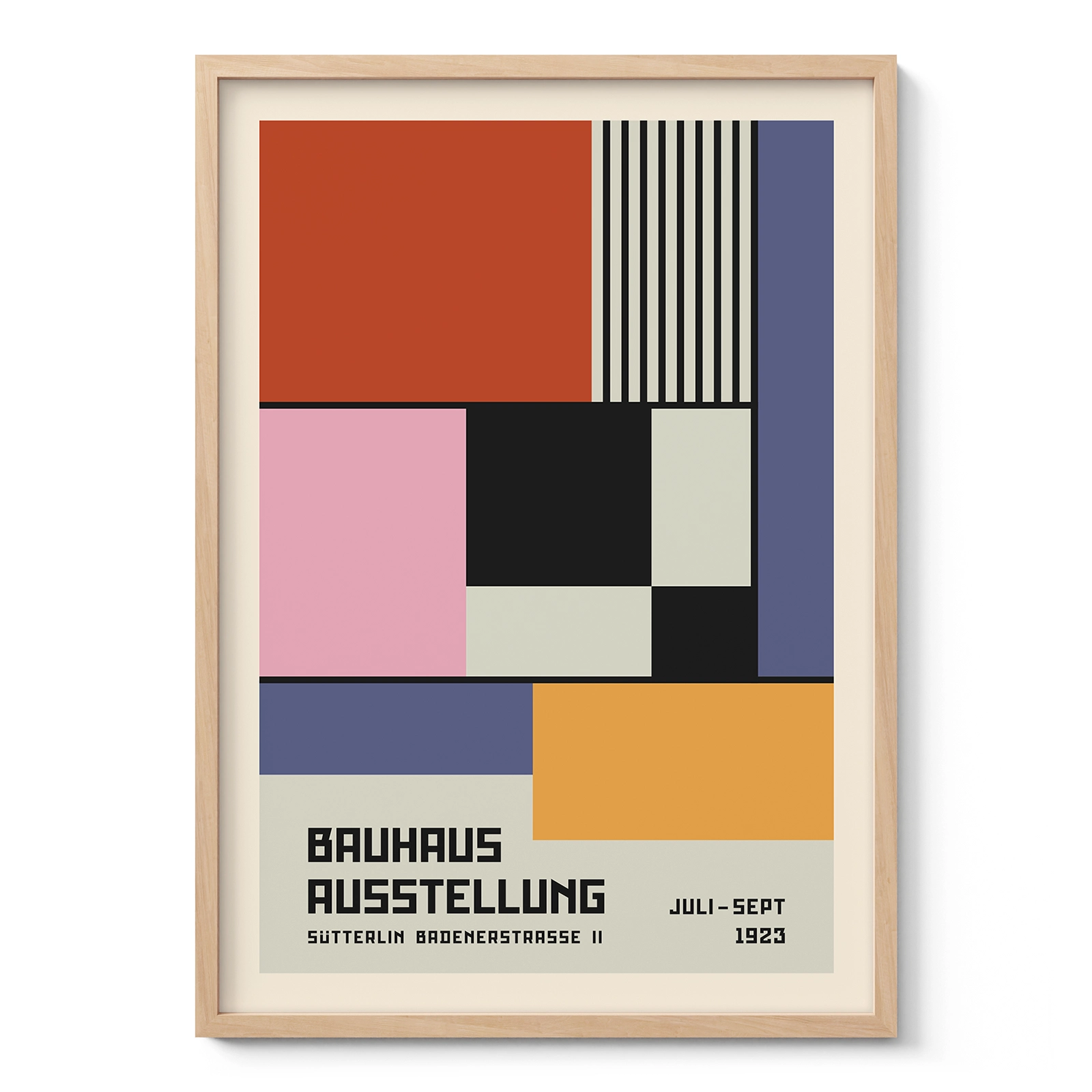
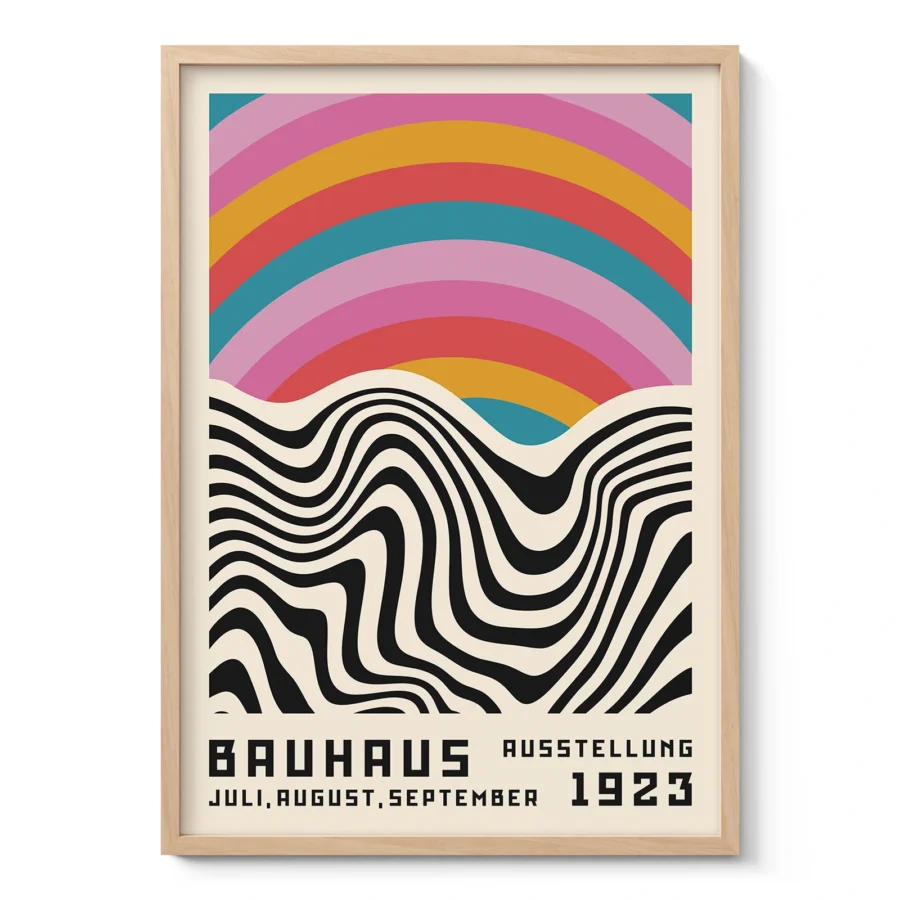
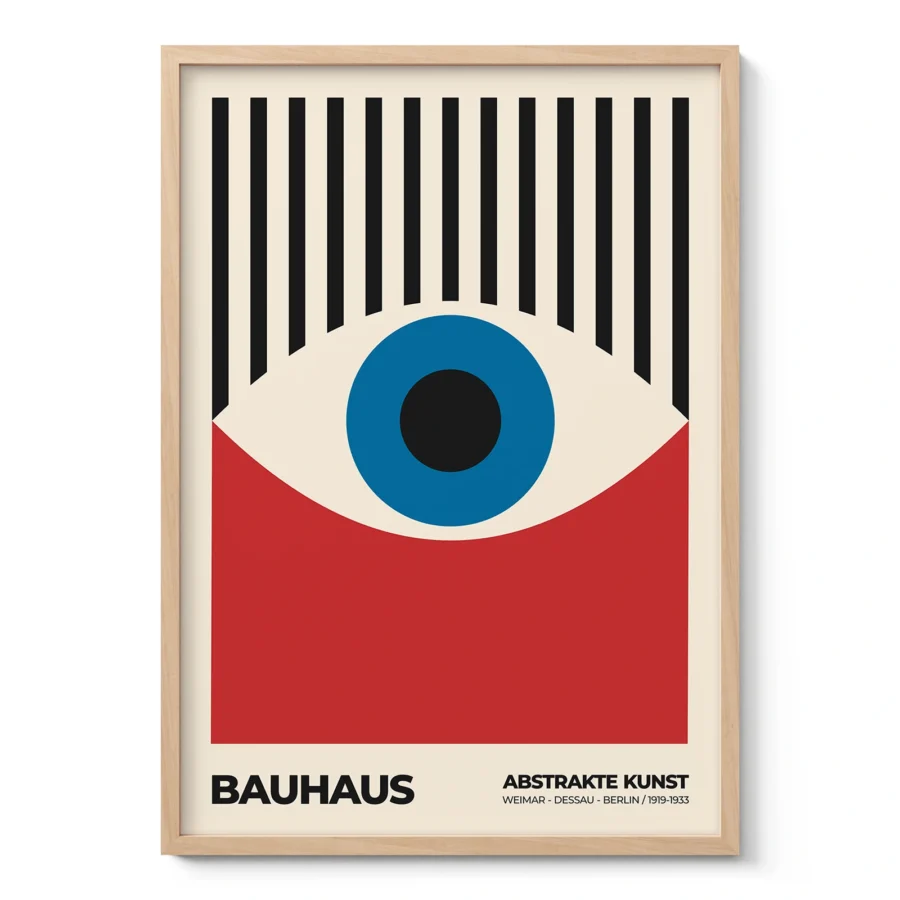
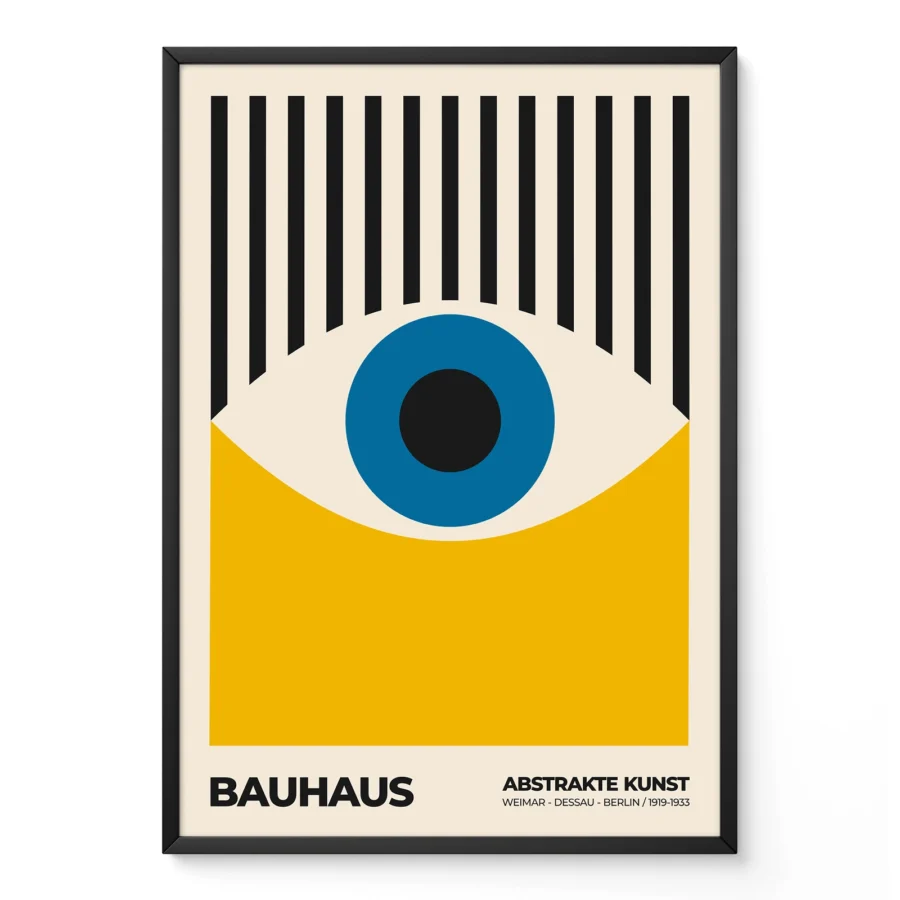
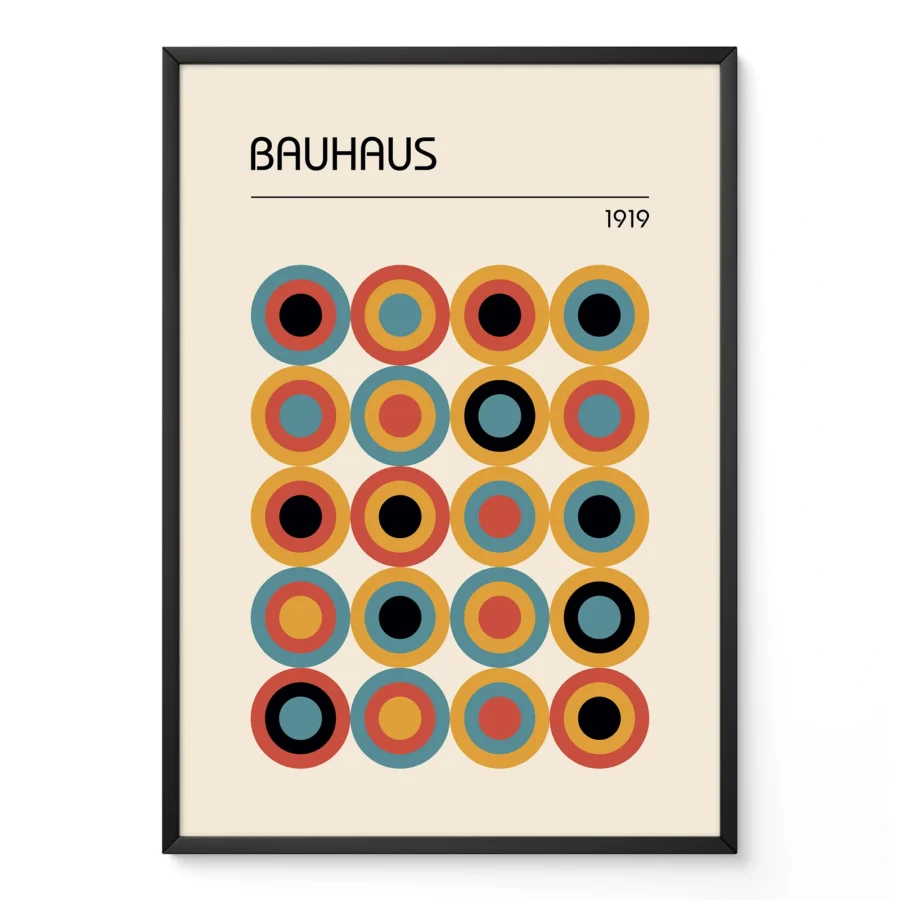
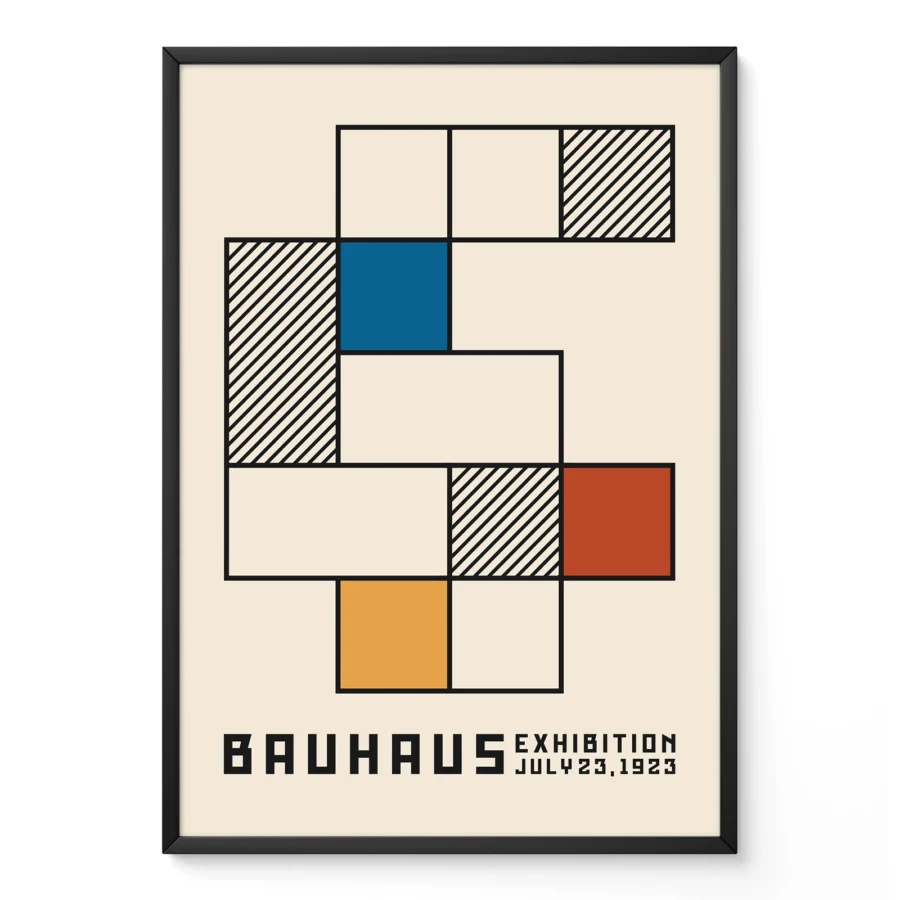
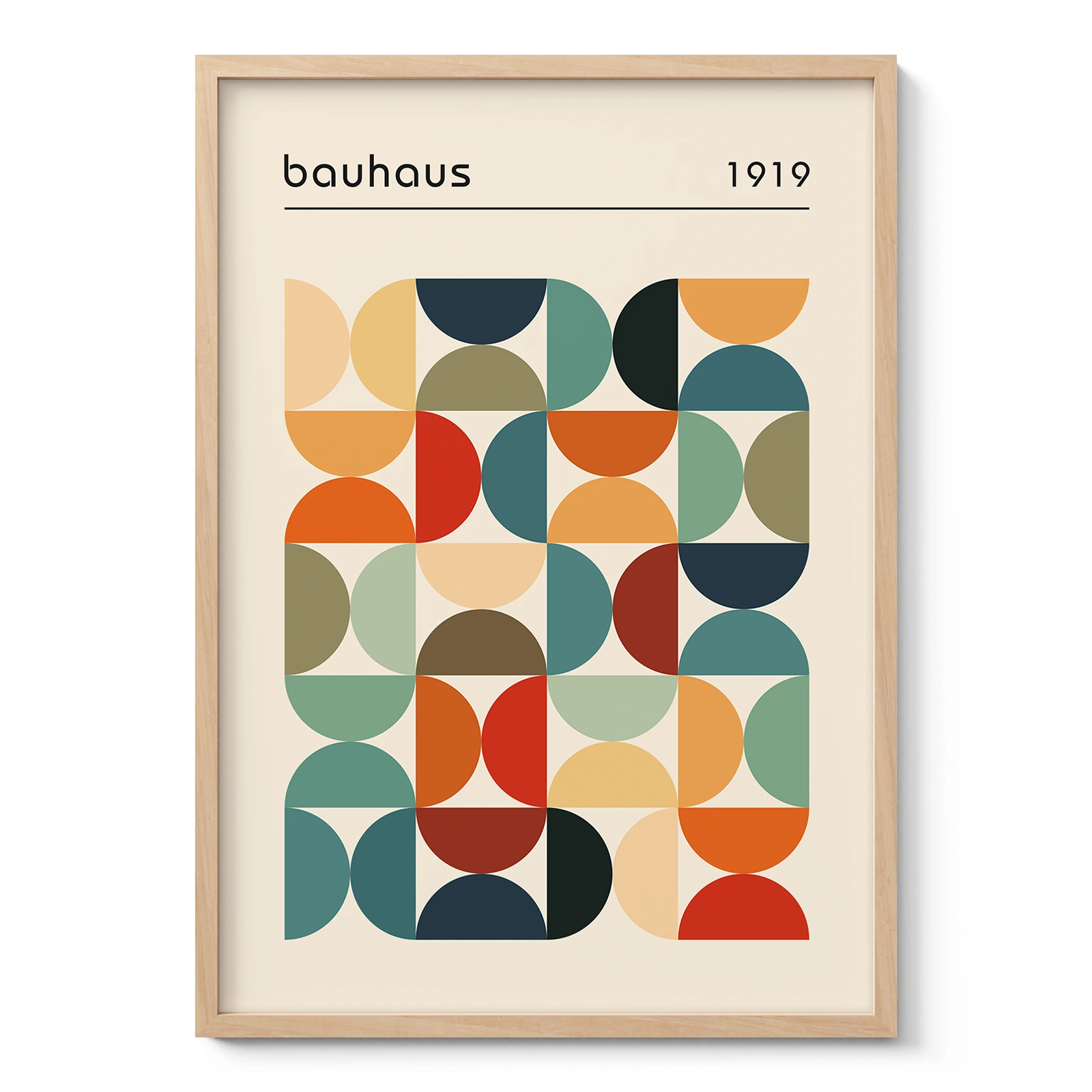
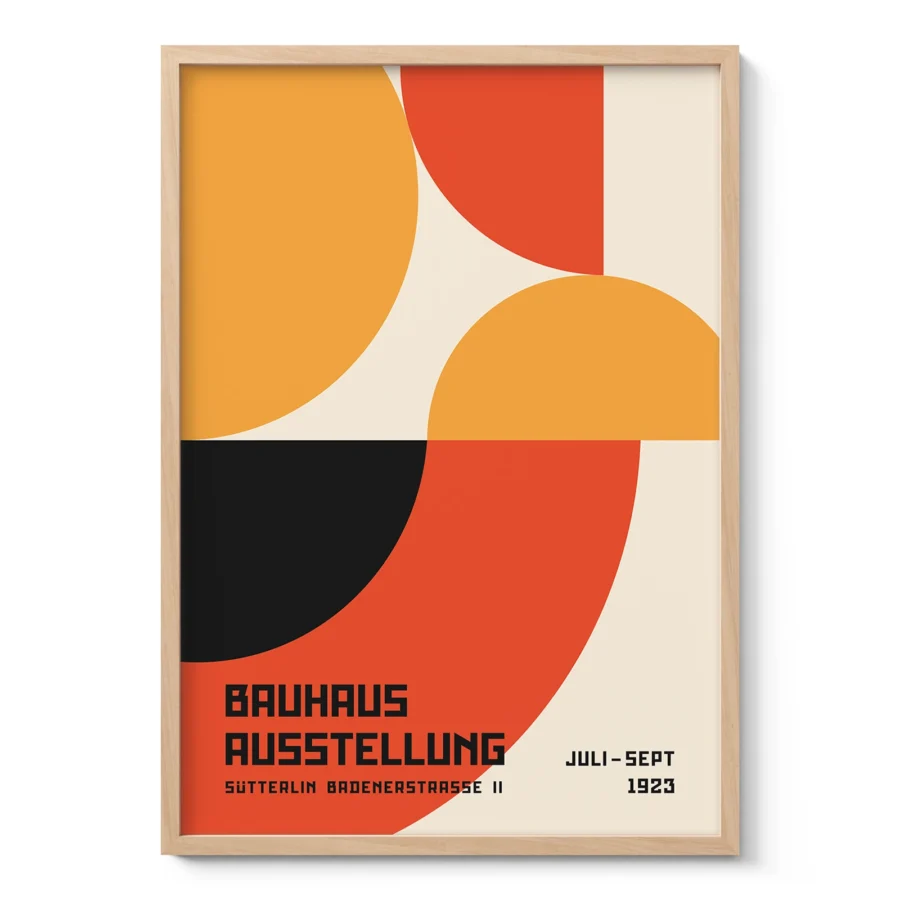
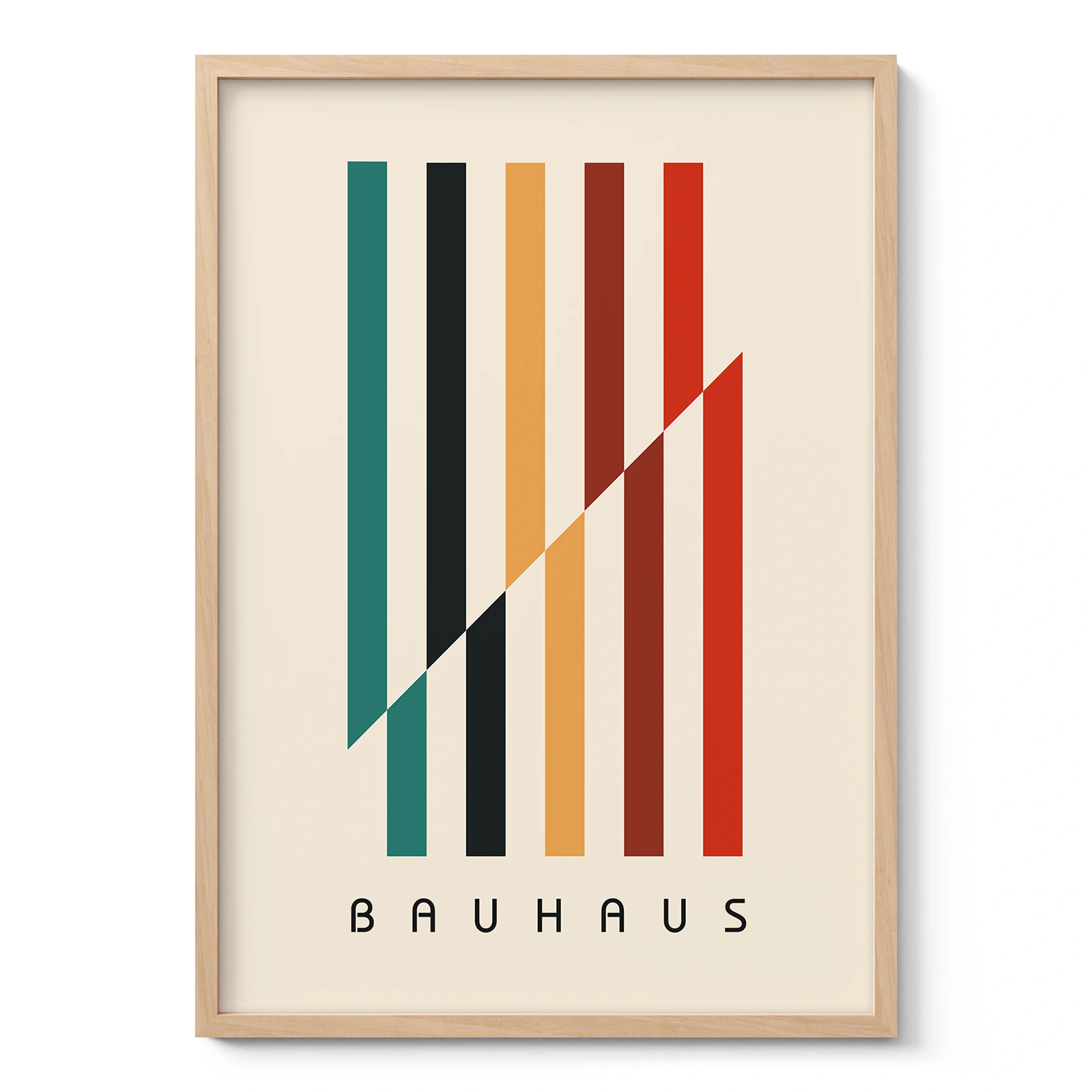
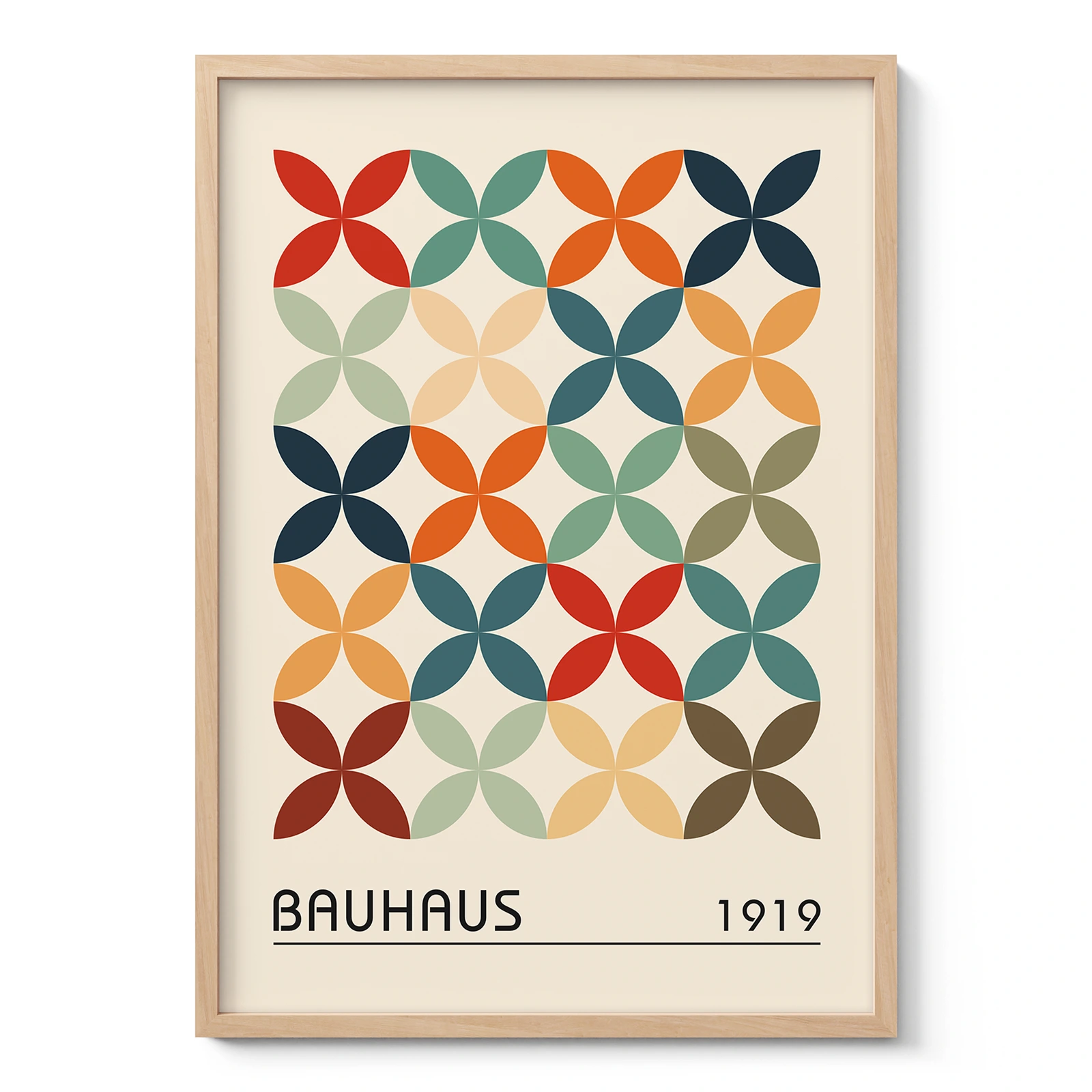
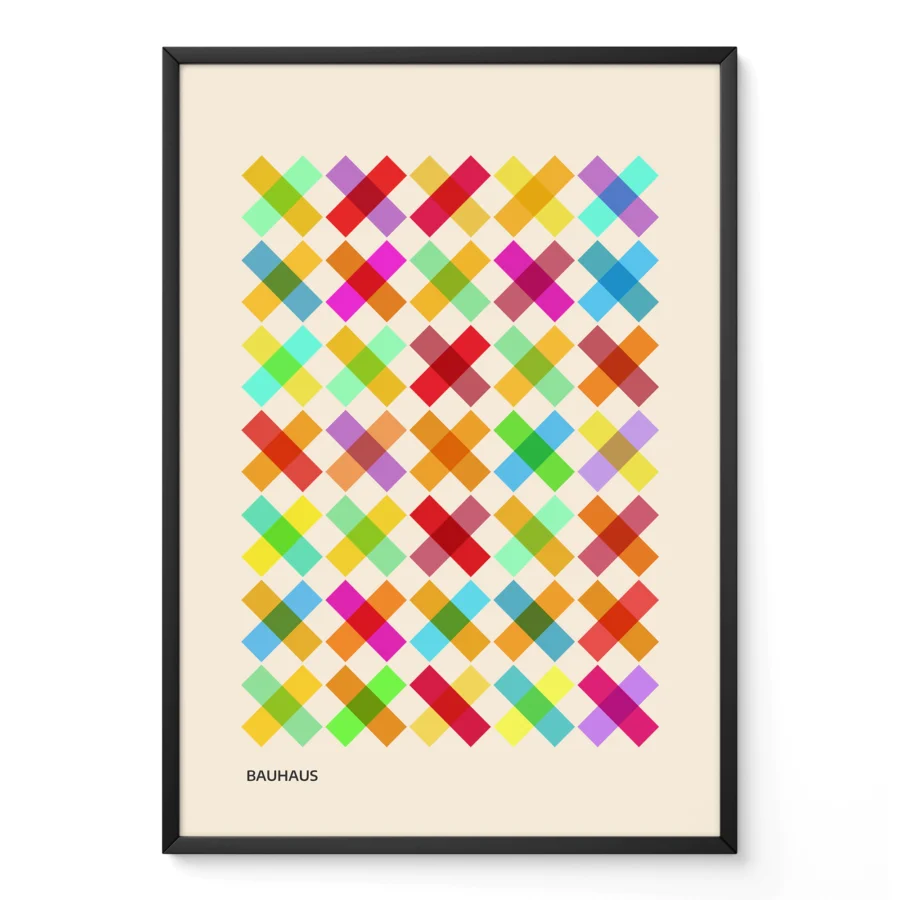
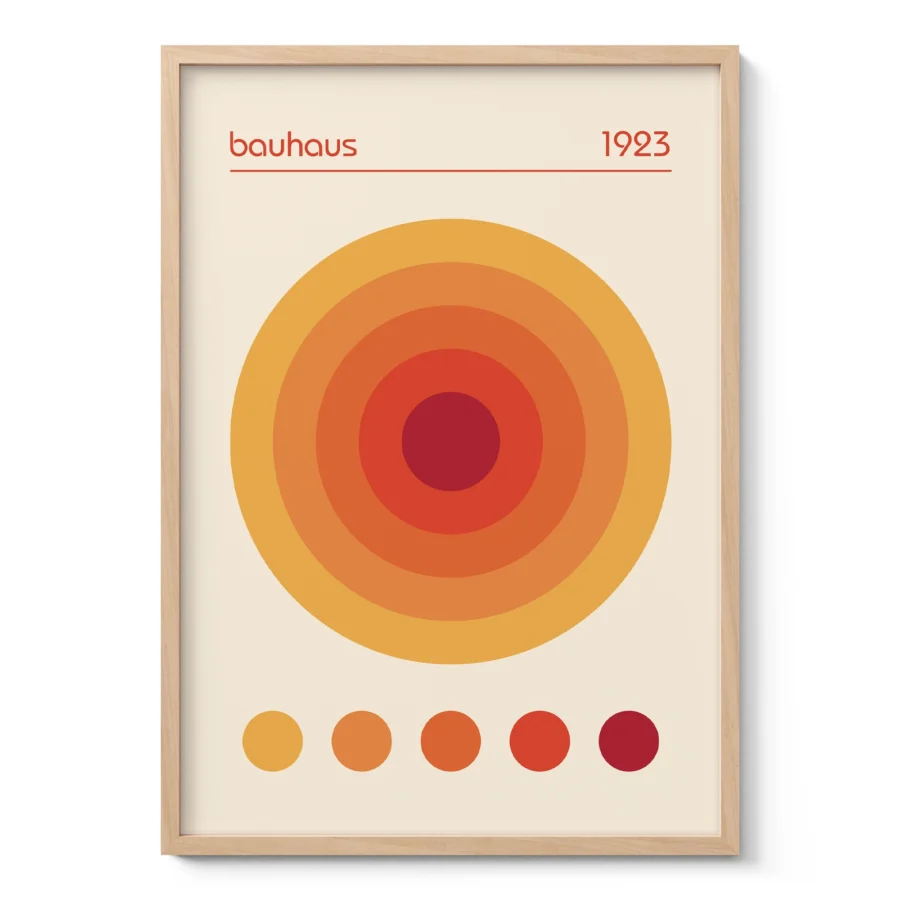
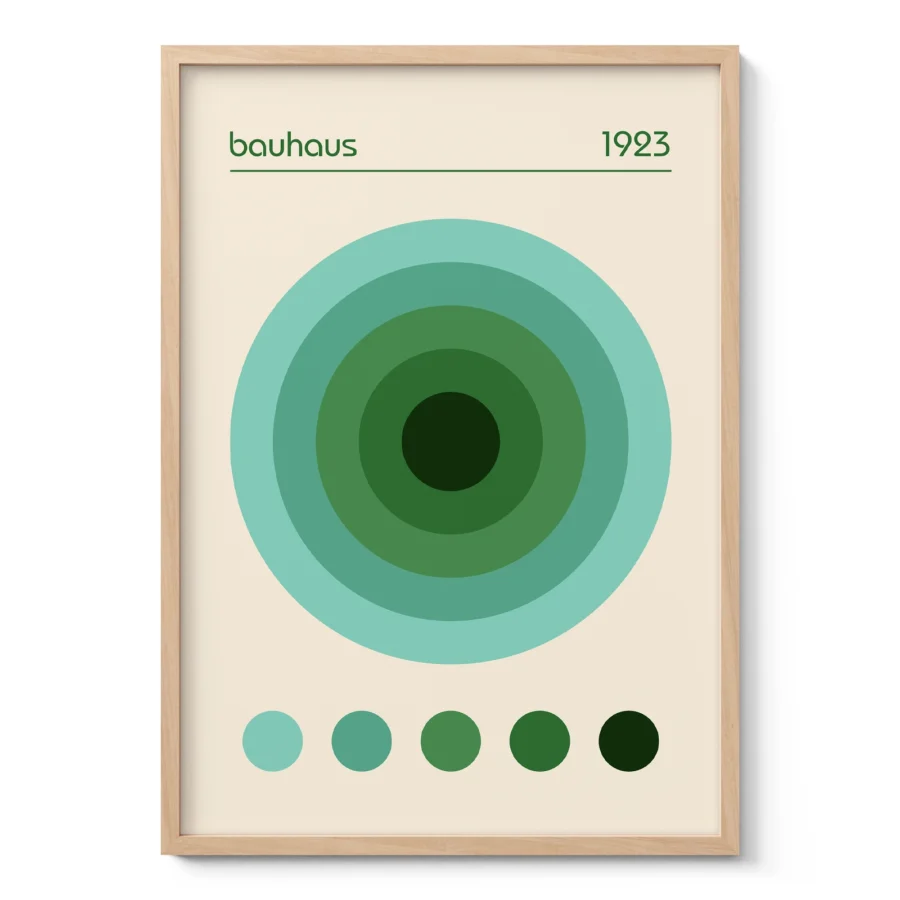
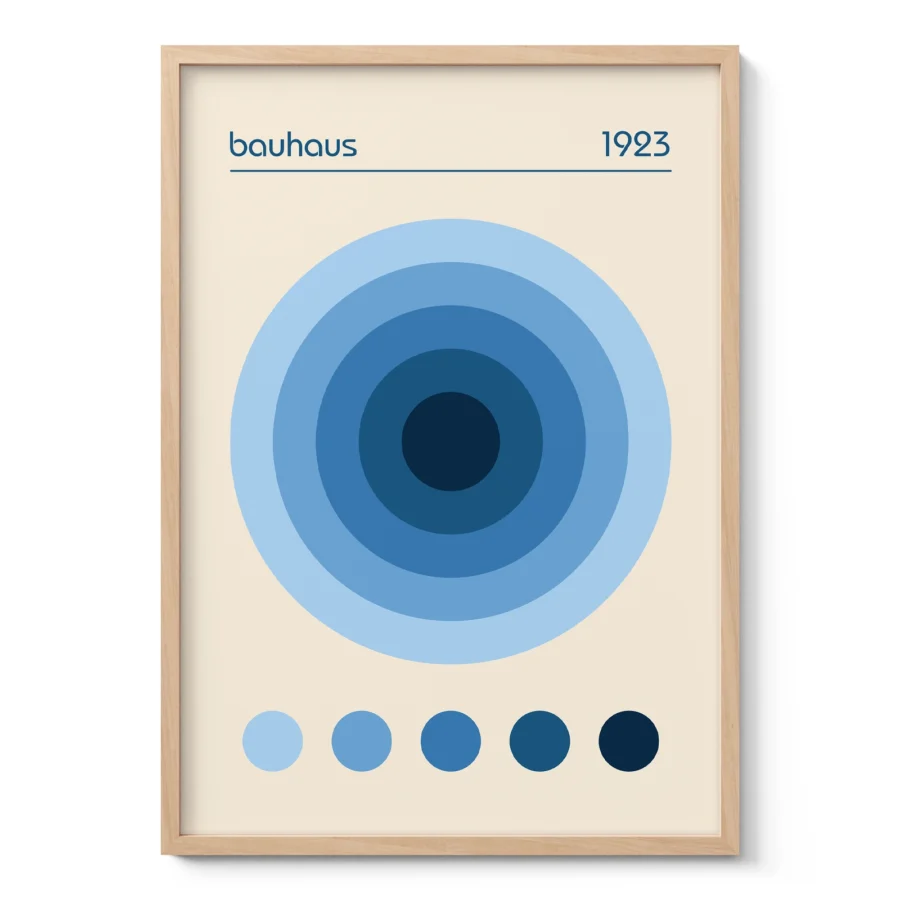
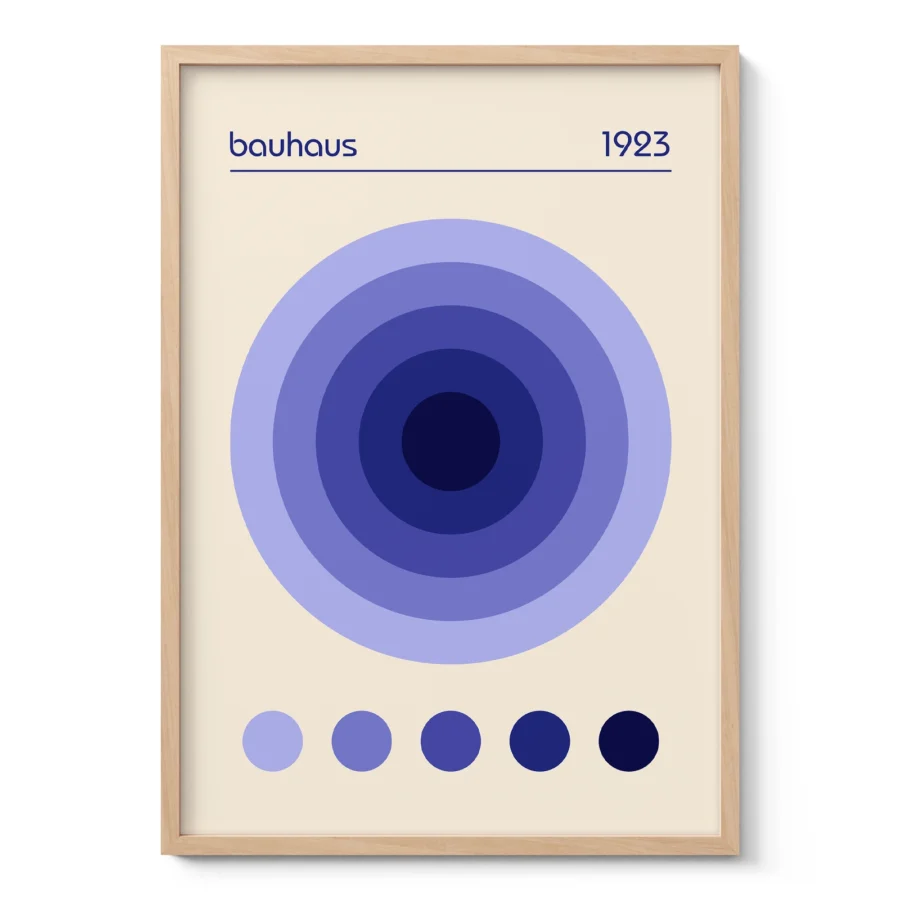
Bauhaus posters reflect these ideas through geometric shapes, carefully arranged proportions and limited colour palettes. Circles, triangles, rectangles and straight lines became essential visual elements. Primary colours such as red, blue and yellow frequently appear alongside black, white and neutral tones, creating compositions that remain instantly recognisable more than a century later.
Unlike many decorative art styles, Bauhaus design was never created simply for ornament. Every line, shape and colour had a purpose.
Why Bauhaus design still feels contemporary
Many historic art movements are closely linked to a particular era, yet Bauhaus continues to fit naturally into today's interiors. Its emphasis on functional design mirrors the preferences of modern homeowners who value simplicity over excess.
Bauhaus posters work especially well because they leave visual space within a room. Instead of competing with furniture or architectural details, they complement them through balance and proportion. This quality makes Bauhaus art suitable for Scandinavian interiors, Mid-Century Modern homes, minimalist spaces and contemporary apartments alike.
Their restrained use of colour also allows them to adapt easily as interior trends evolve. A room can change completely while the artwork continues to feel appropriate years later.
Choosing Bauhaus wall art for different rooms
The versatility of Bauhaus artwork is one reason it remains popular among collectors and interior designers. Different compositions can influence the atmosphere of a room without overwhelming it.
In living rooms, larger abstract compositions often become a quiet focal point above a sofa or sideboard. Bedrooms usually benefit from softer geometric arrangements with a balanced colour palette that encourages a calm environment. Hallways can display smaller works that create rhythm as visitors move through the home.
Bauhaus posters are equally suitable for home offices and professional workplaces. Their structured compositions and strong graphic design often reinforce an organised atmosphere while adding visual interest without unnecessary distraction.
Many buyers also combine museum-quality posters with canvas prints. Matching several works within the same colour family creates continuity while allowing each design to retain its own character.
Details that make Bauhaus art worth appreciating
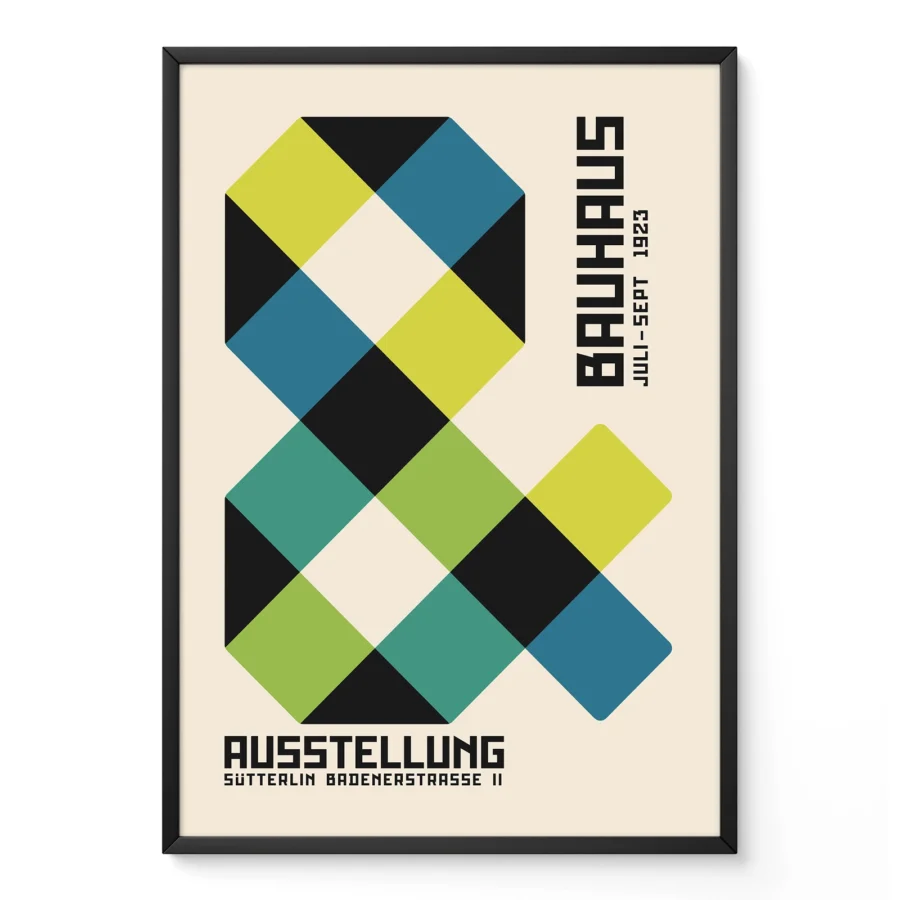
One aspect that is often overlooked is the relationship between typography and geometry. Bauhaus designers treated letters as visual forms rather than decorative elements, allowing text and shapes to work together as a unified composition. This approach influenced modern branding, editorial design and advertising long after the original school closed.
When choosing among Bauhaus posters, it is worth paying attention to spacing, proportion and colour balance rather than focusing only on individual shapes. Small differences in composition can completely change how a piece feels within an interior.
Bauhaus remains influential because its design principles are based on clarity rather than fashion. That combination of function, thoughtful composition and artistic restraint explains why these works continue to find a place in homes, creative studios and workspaces across generations. Whether printed as museum-quality posters or canvas prints, Bauhaus art offers lasting visual interest grounded in one of the most important design movements of the modern era.