



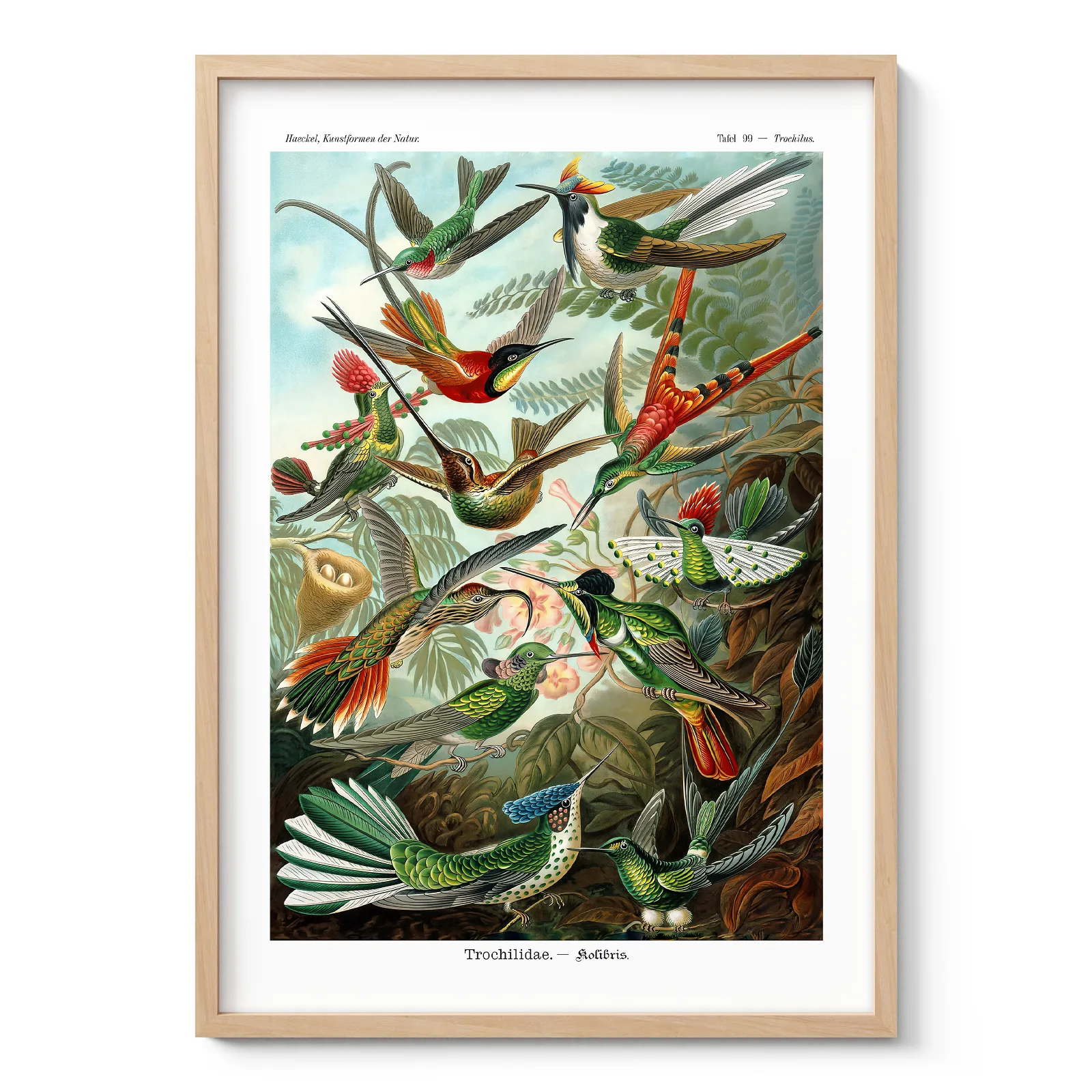
Ernst Haeckel prints: science, nature and decorative detail
Ernst Haeckel prints belong to the rare place where science and art meet naturally. Ernst Haeckel was a German biologist, zoologist, physician and artist who lived from 1834 to 1919. He studied living forms with scientific attention, then presented them with a strong sense of rhythm, symmetry and composition.
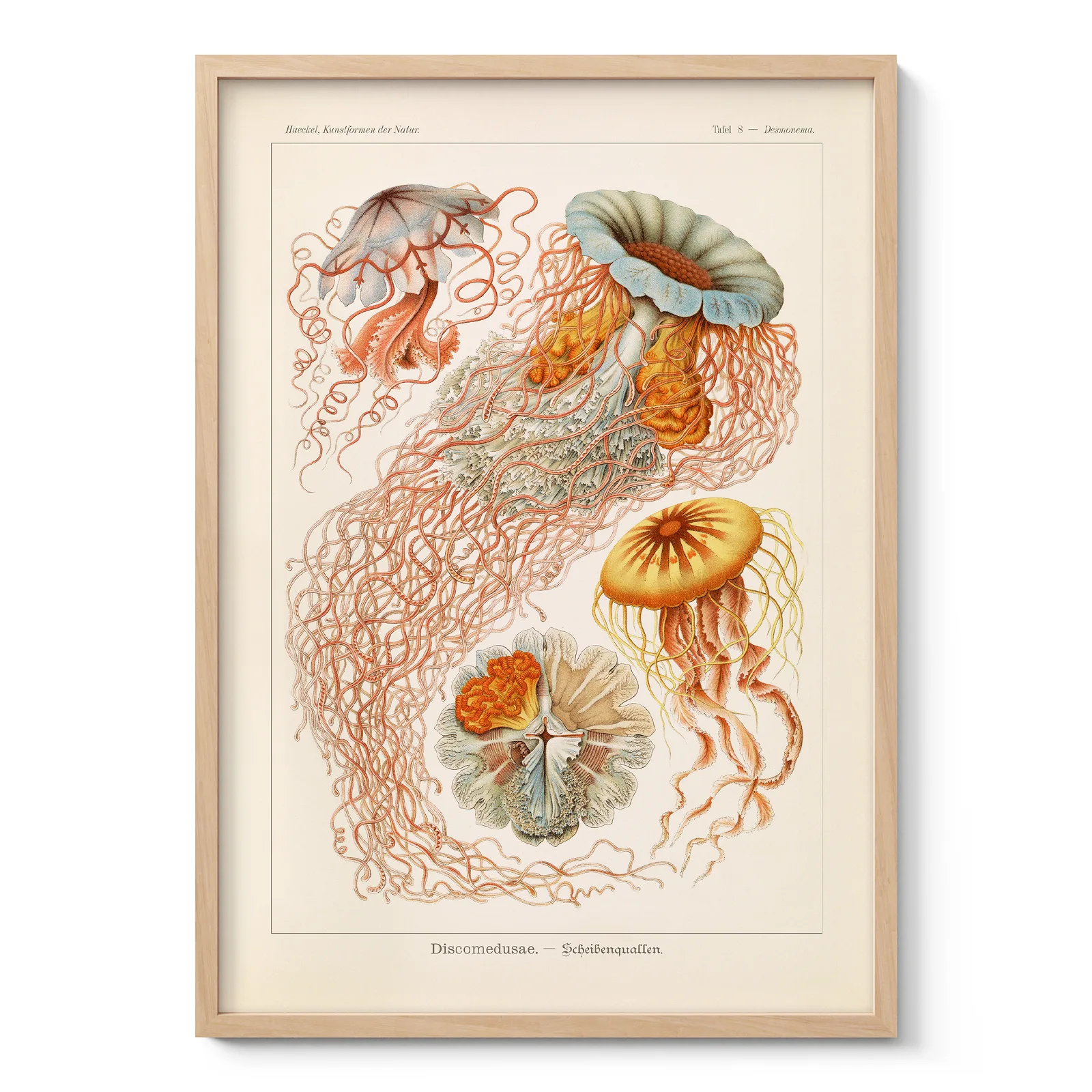
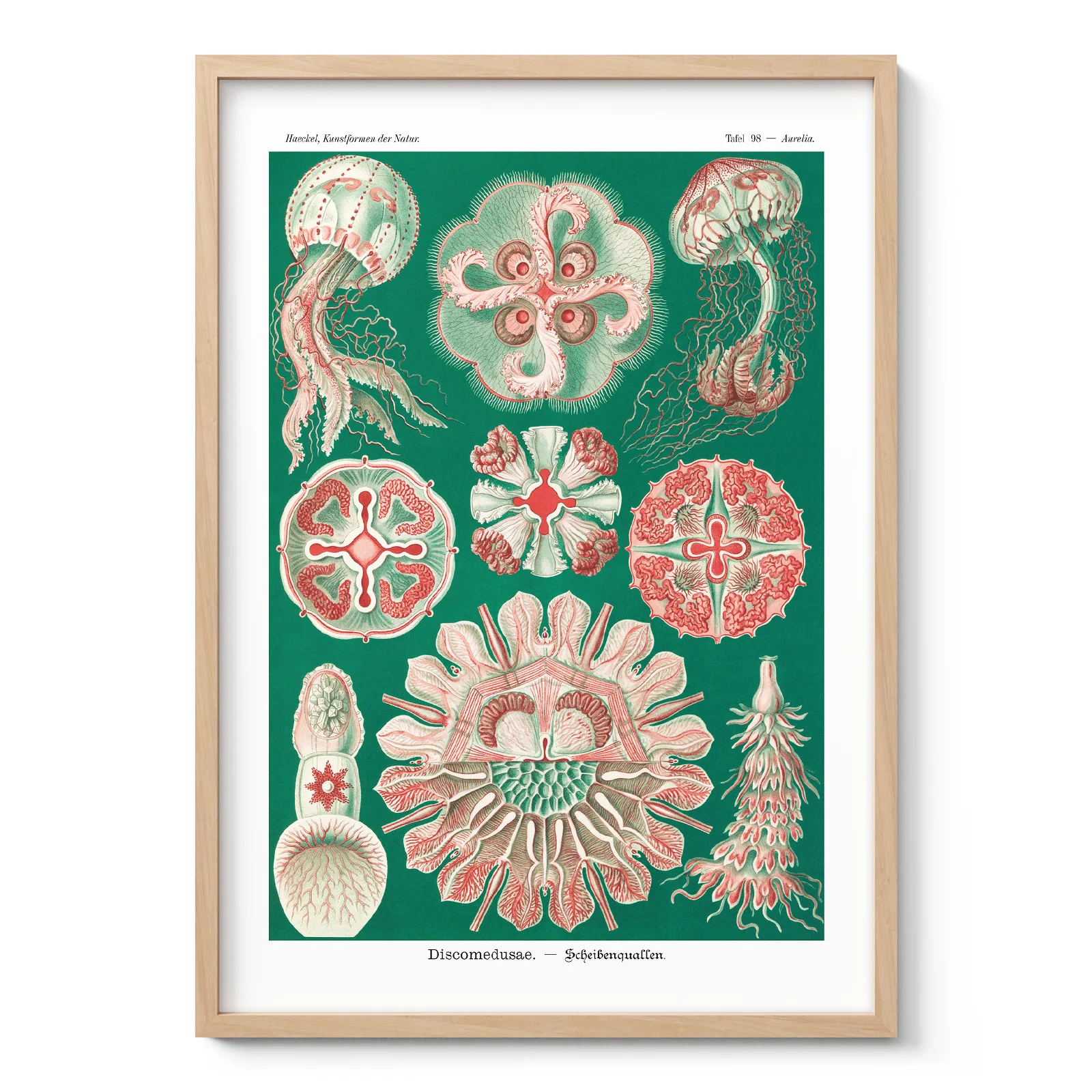
His illustrations are still loved because they do more than record nature. They reveal structure. Jellyfish, corals, radiolarians, sea creatures, plants and microscopic organisms become clear, balanced and visually rich. For many homes, this makes his work feel both intelligent and decorative.
Who was Ernst Haeckel?
Haeckel was an important figure in nineteenth-century natural science. He studied marine life, described many organisms and helped popularise evolutionary ideas in the German-speaking world. His scientific views were sometimes debated, but his visual work remains highly influential.
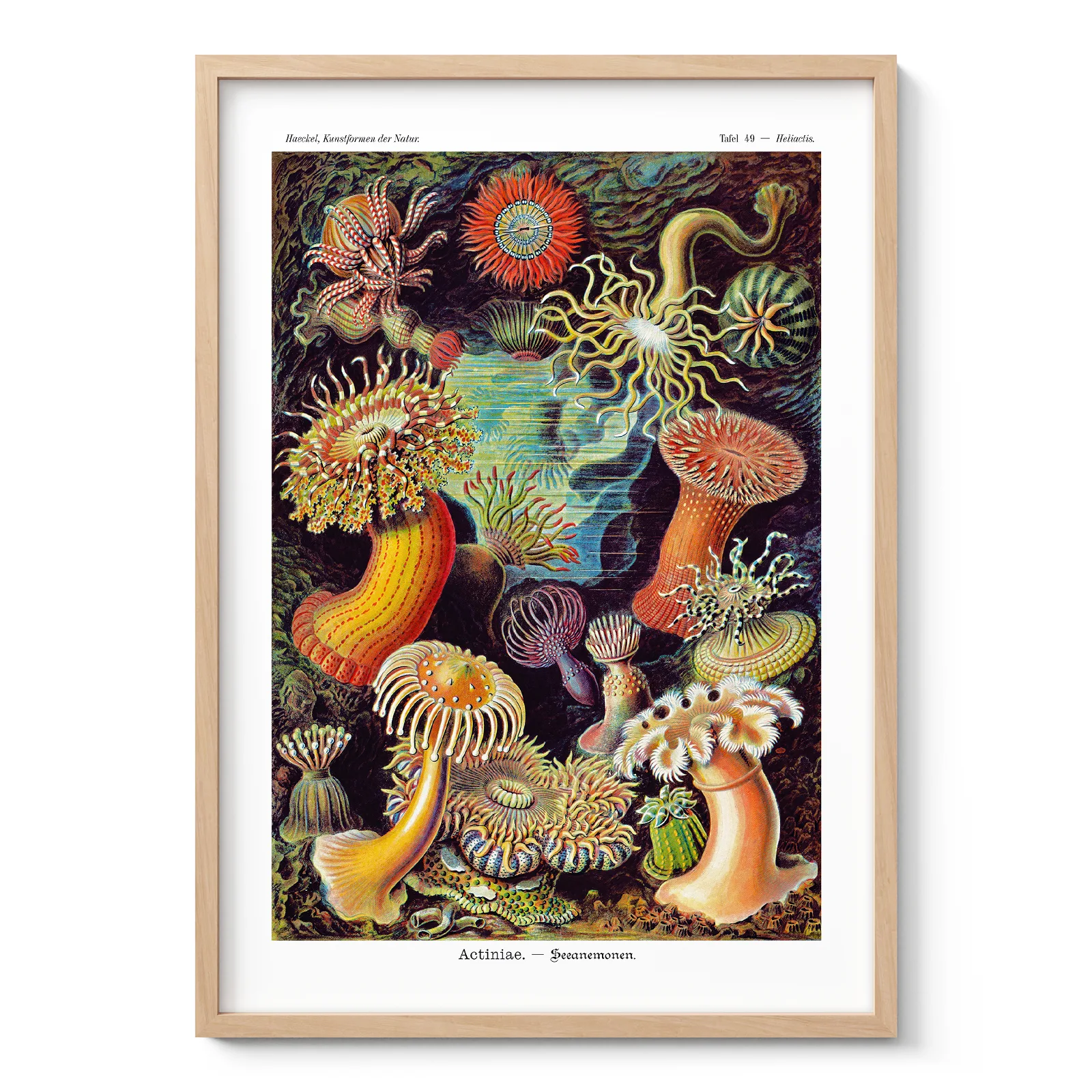
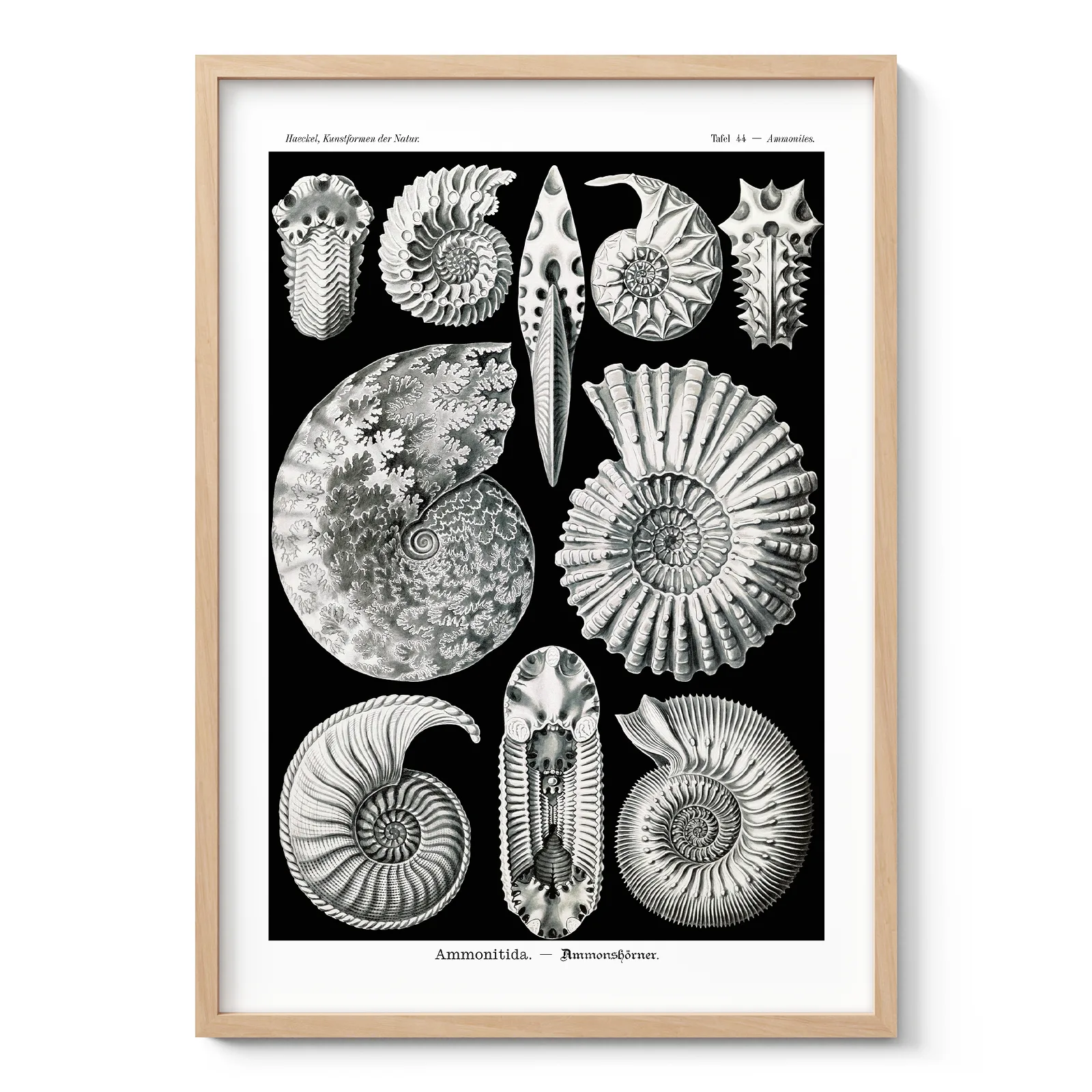
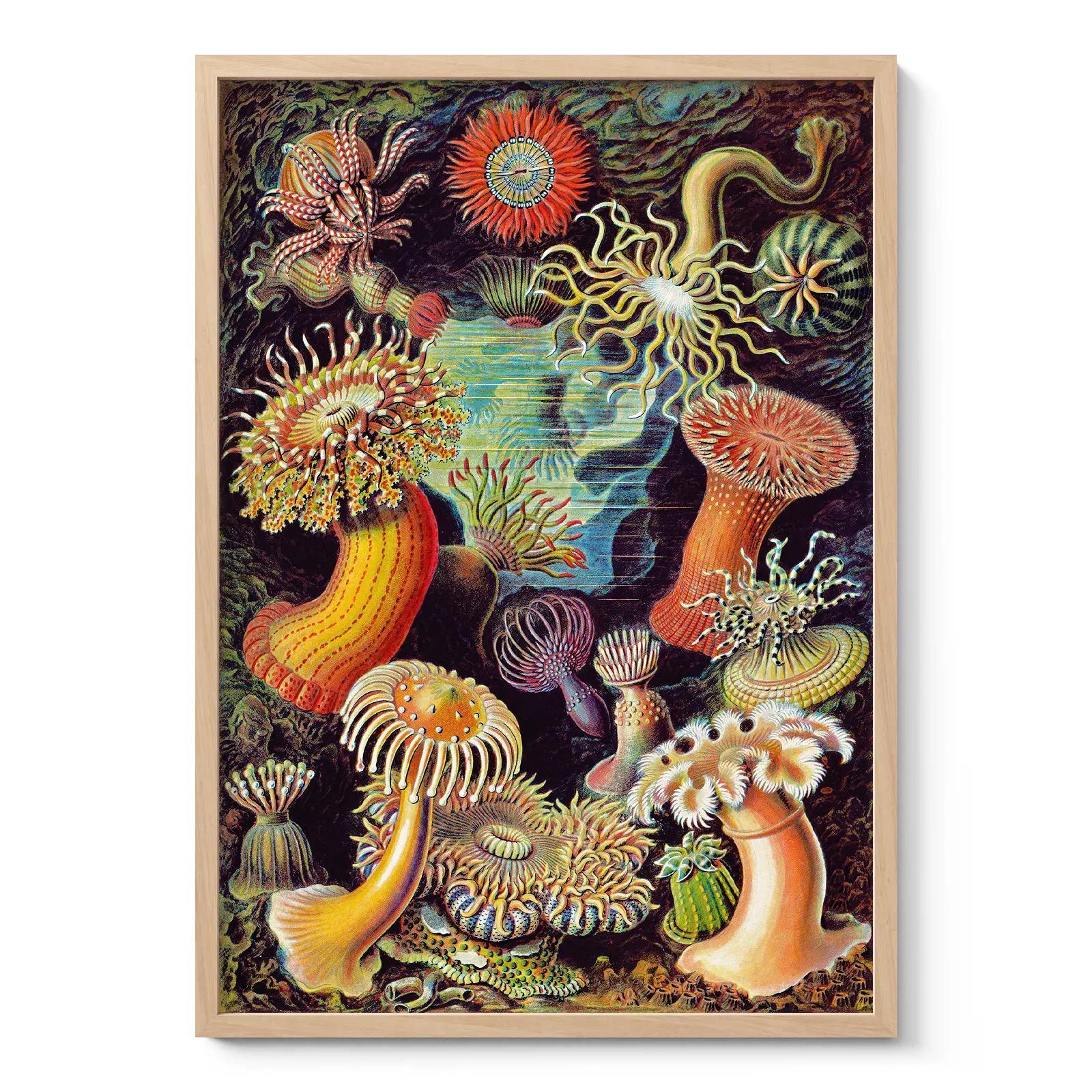
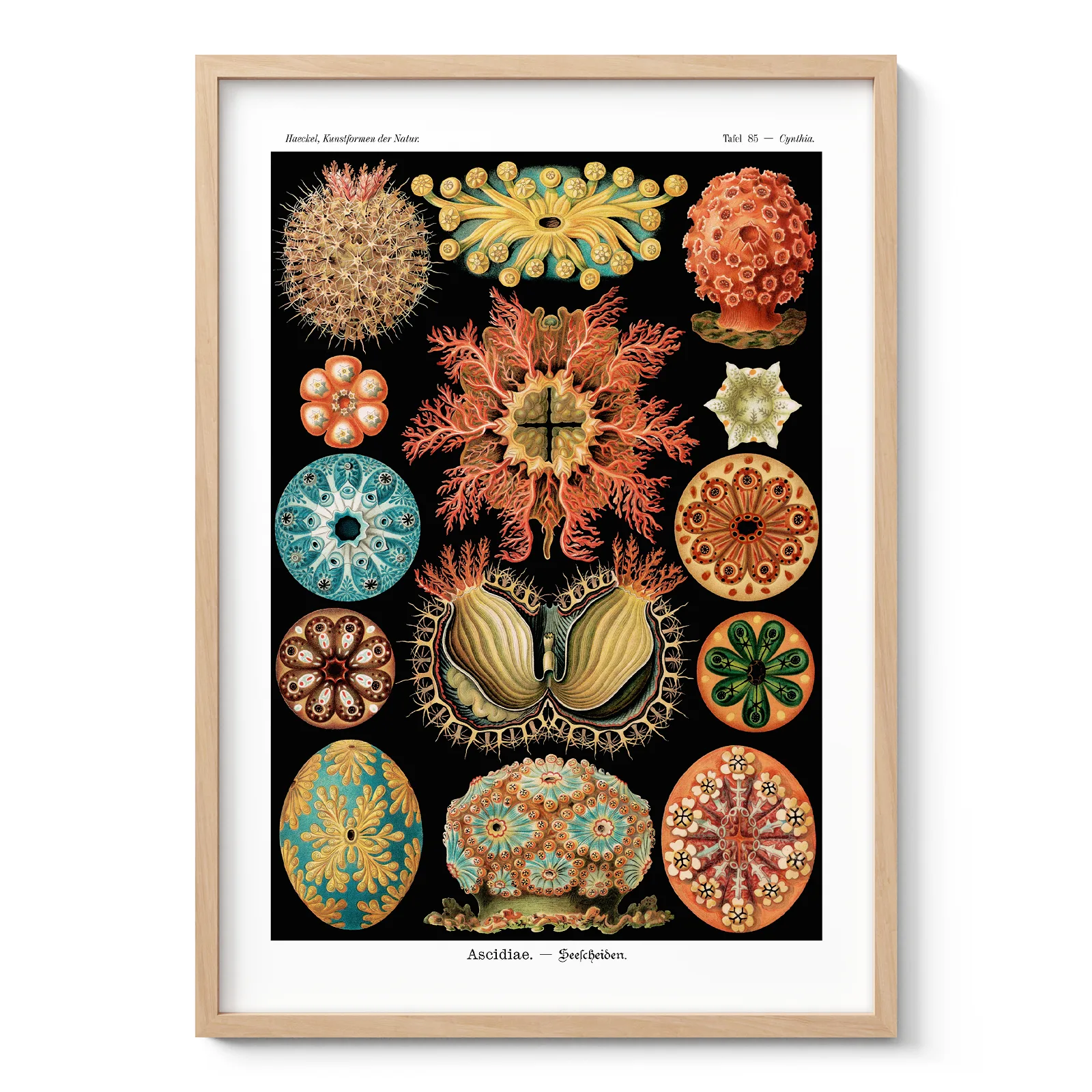
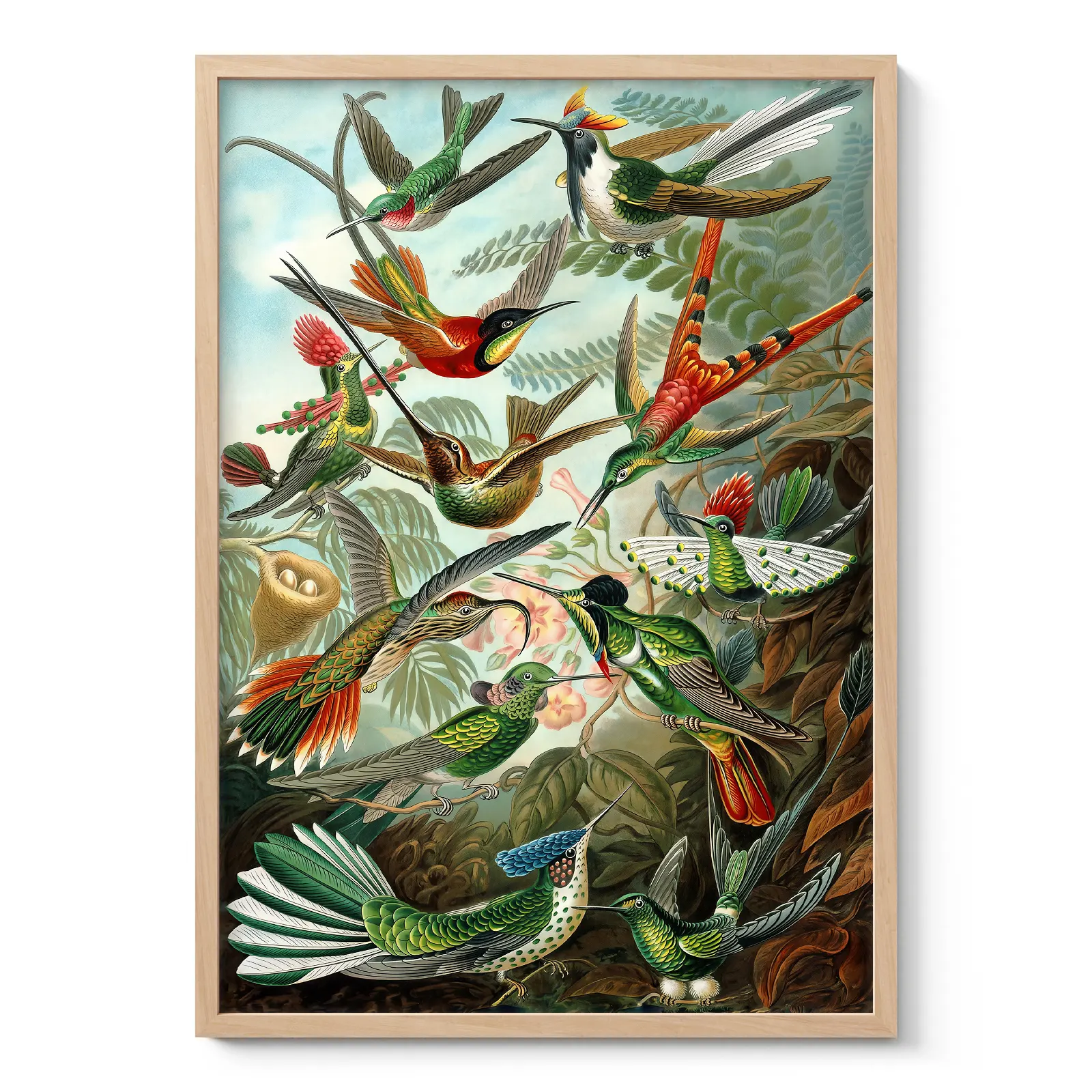
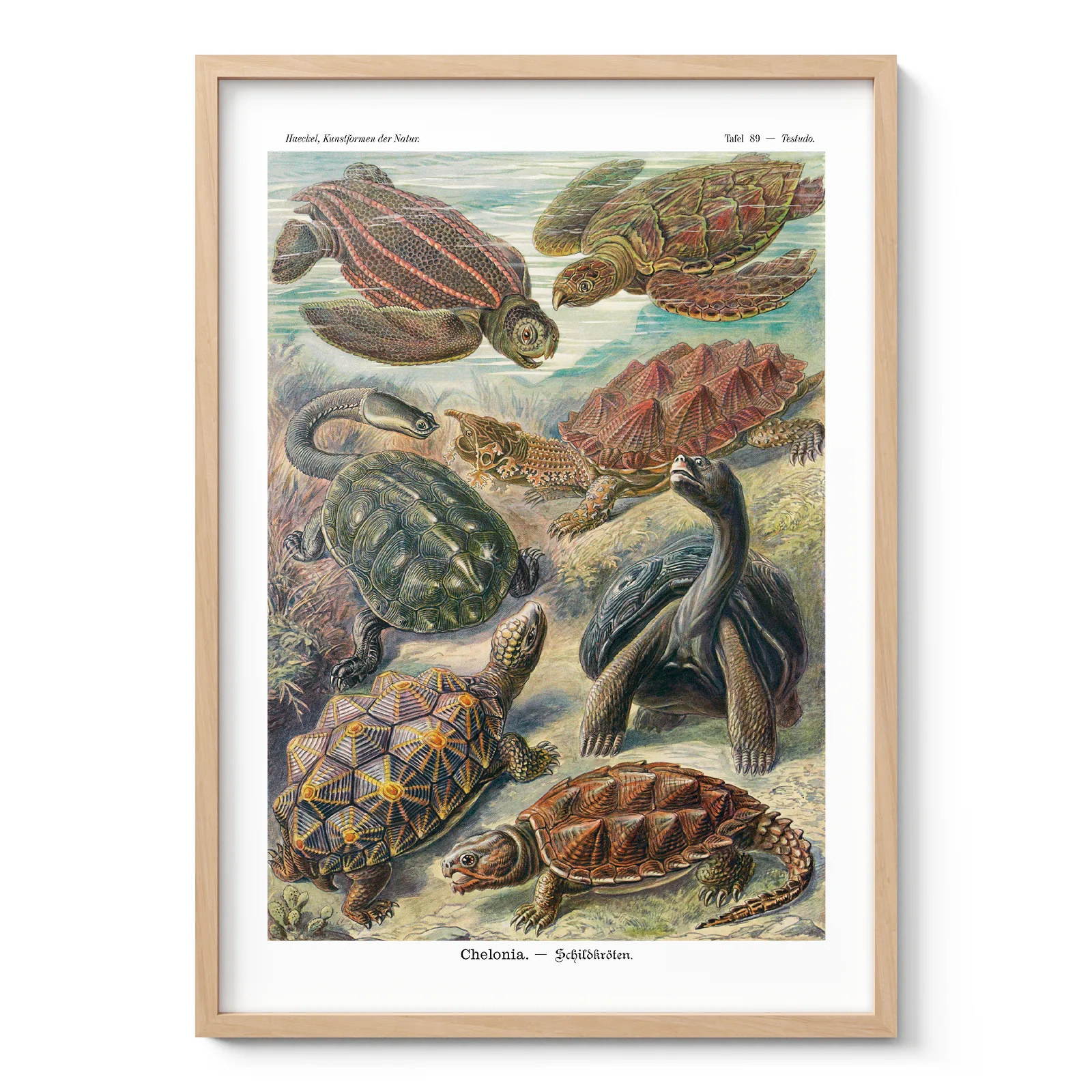
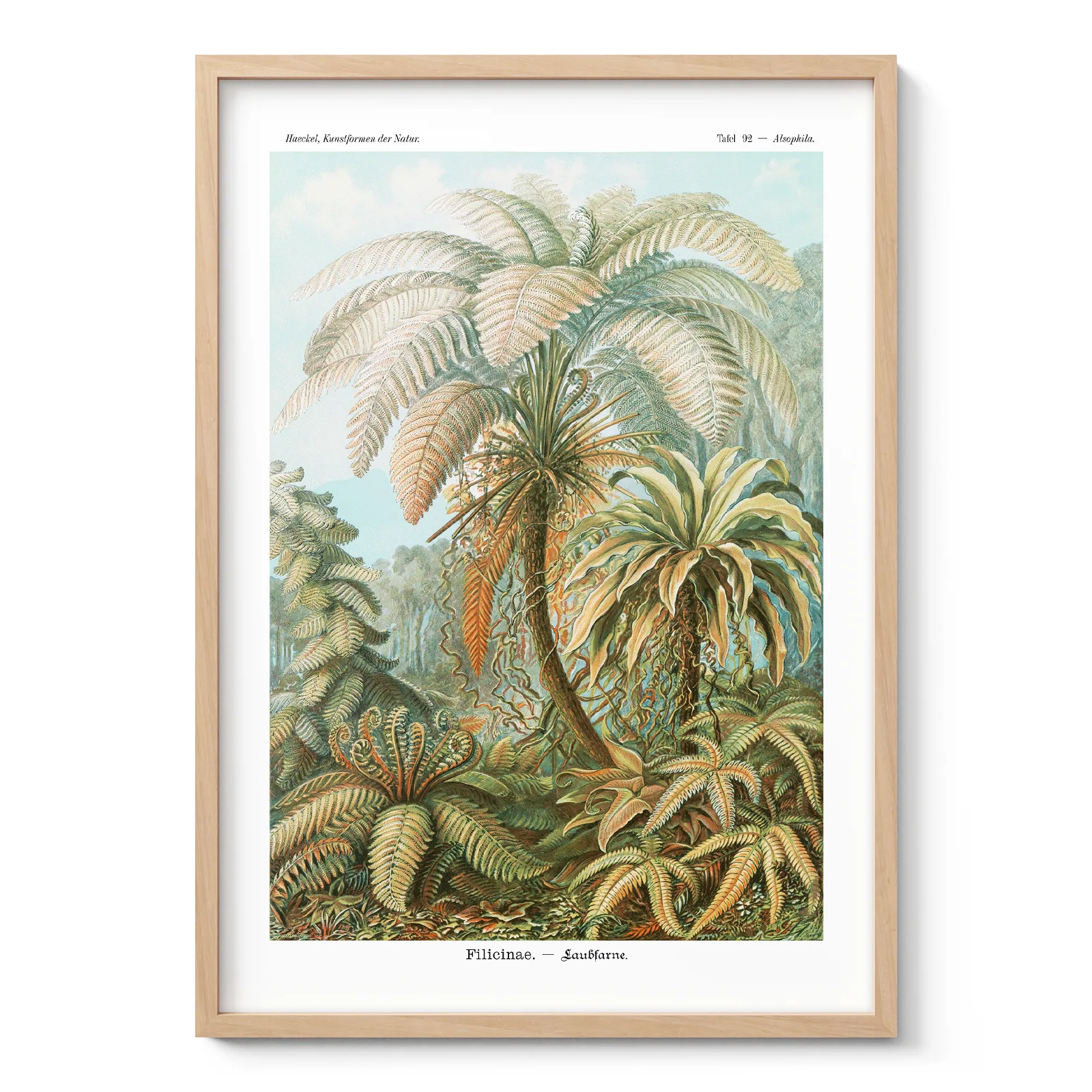
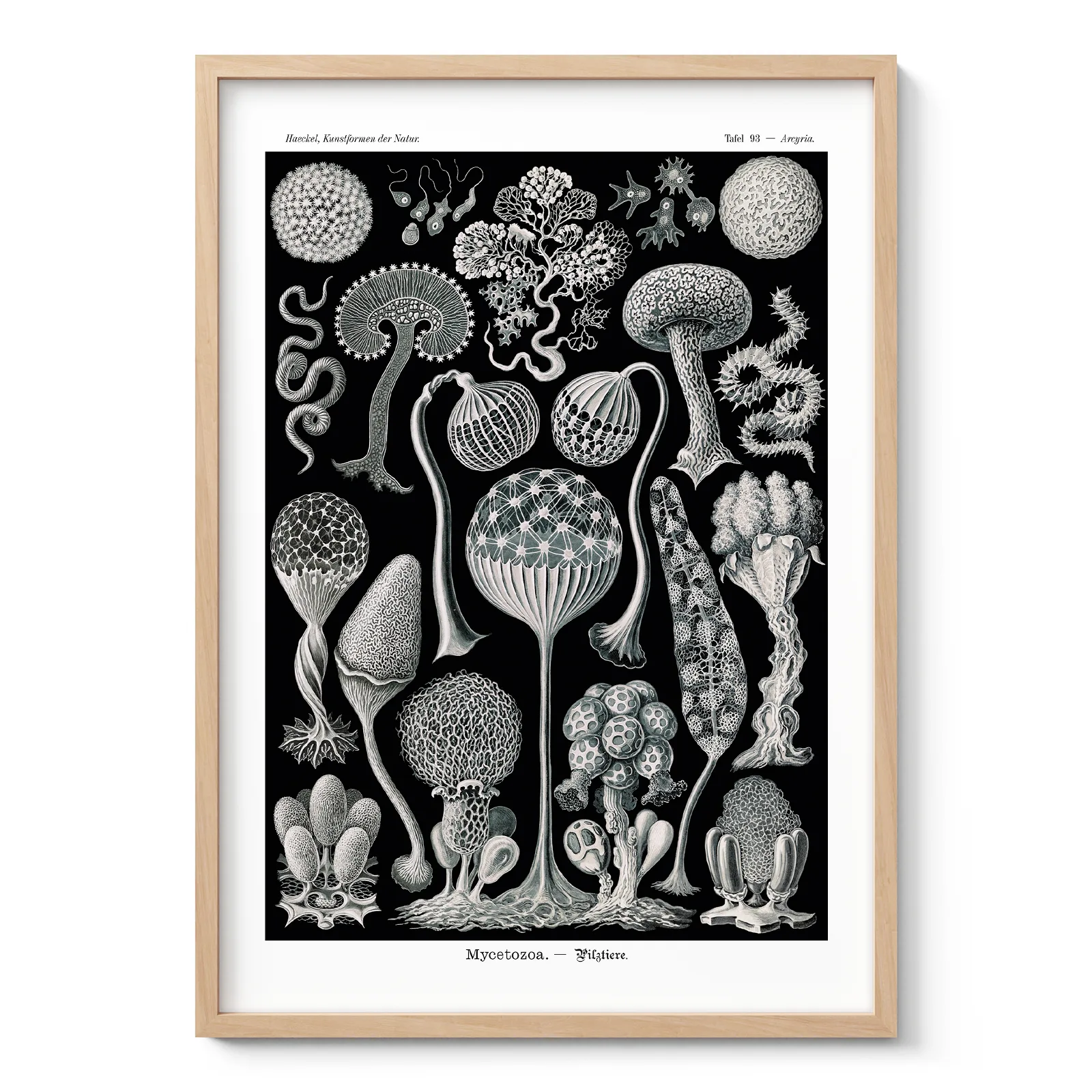
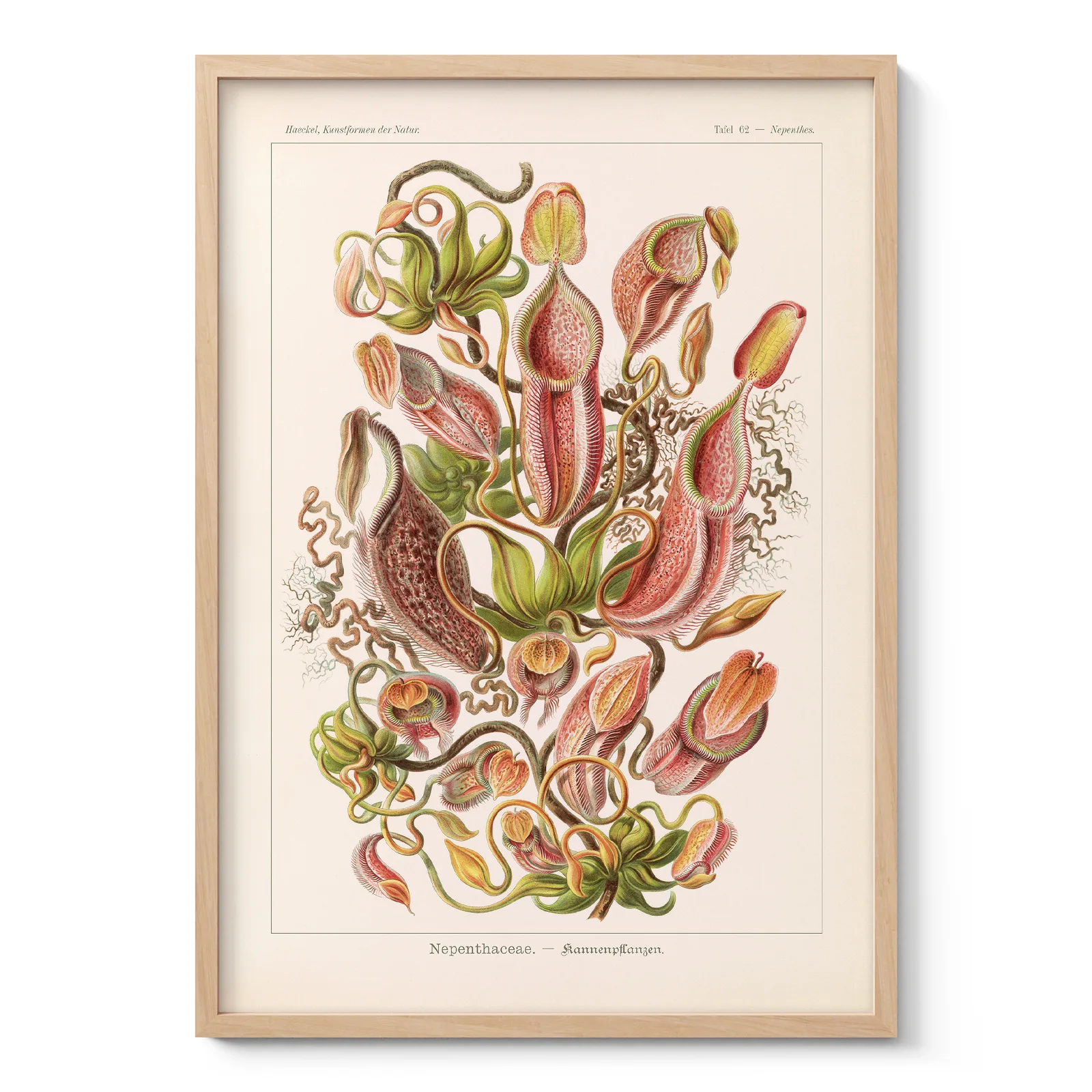
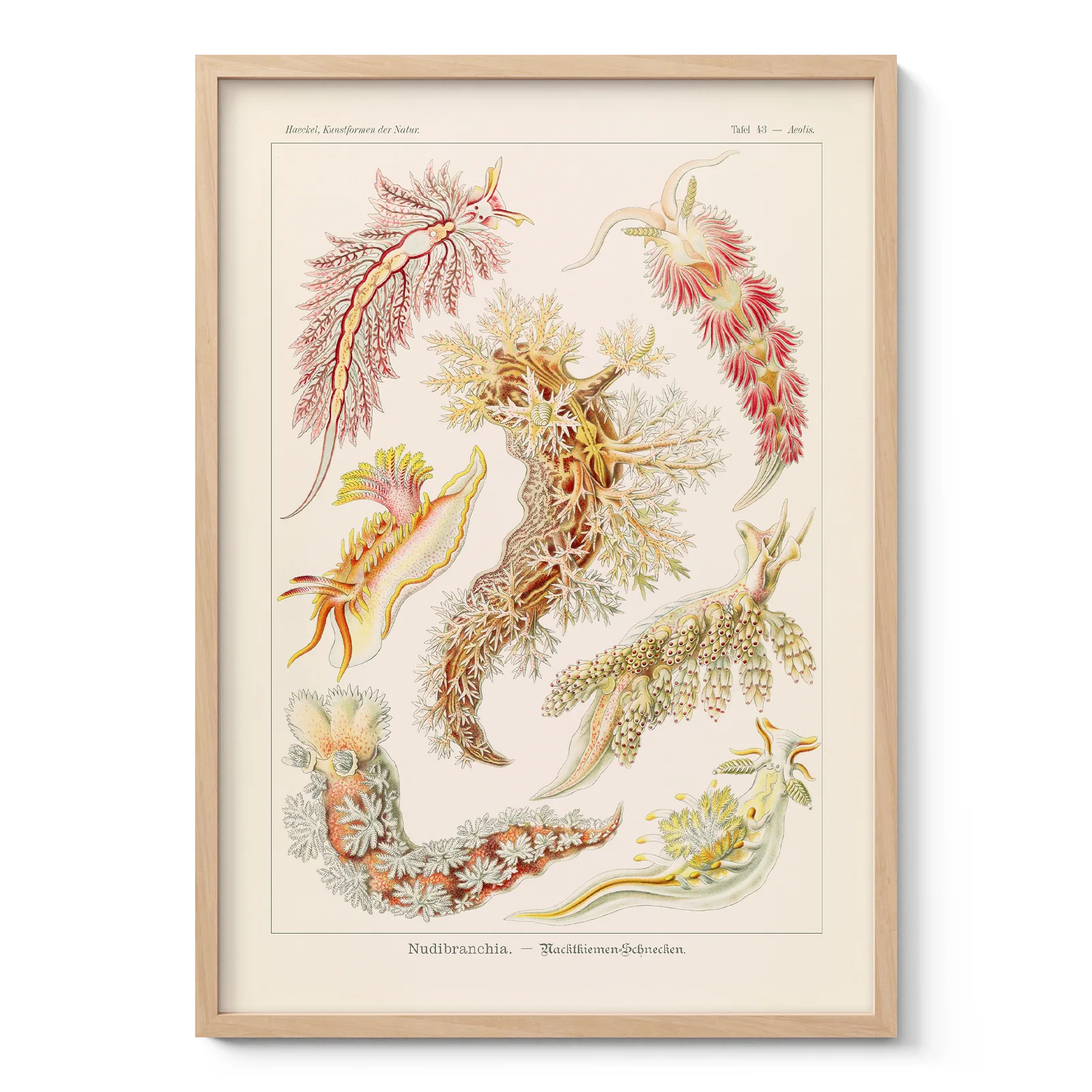
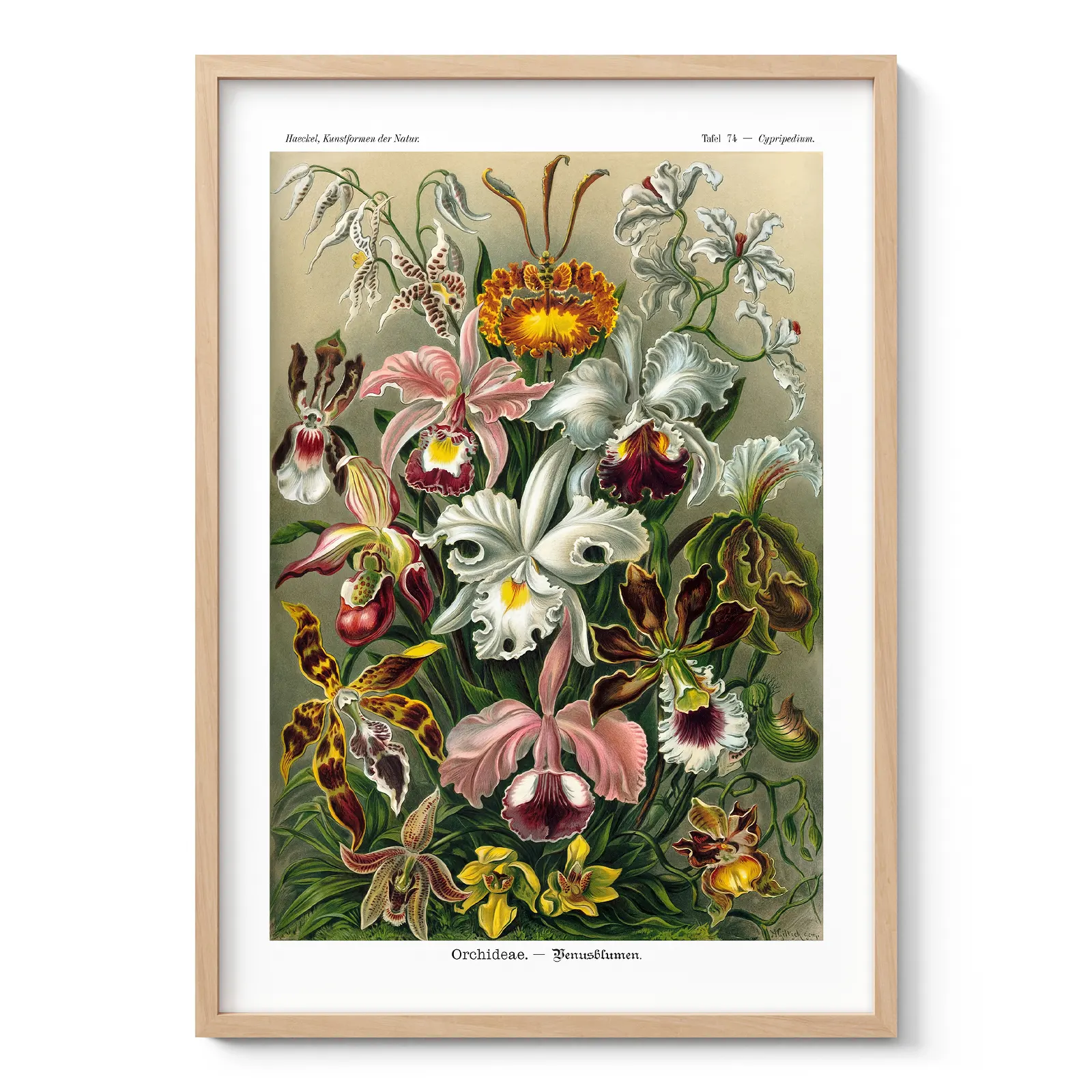
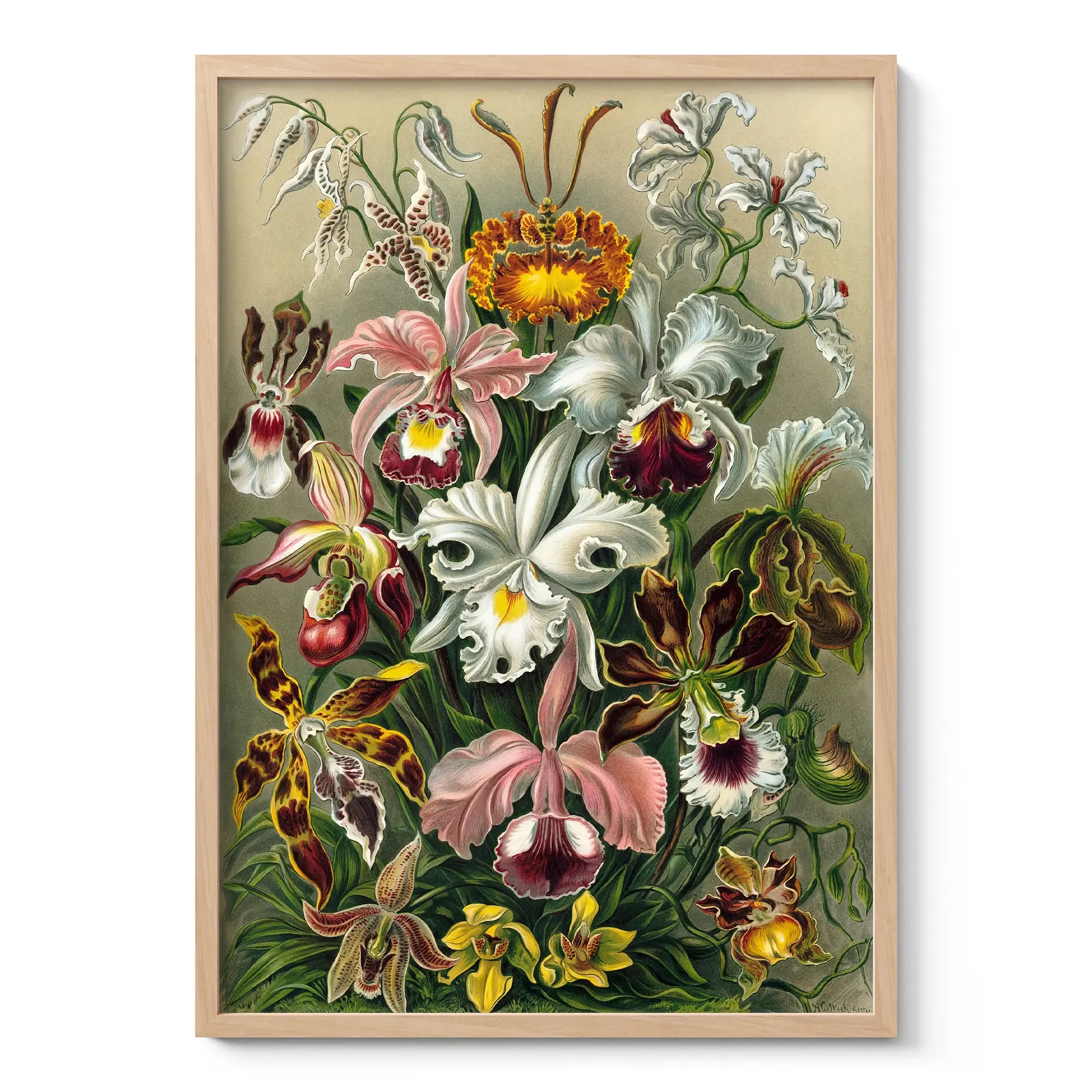
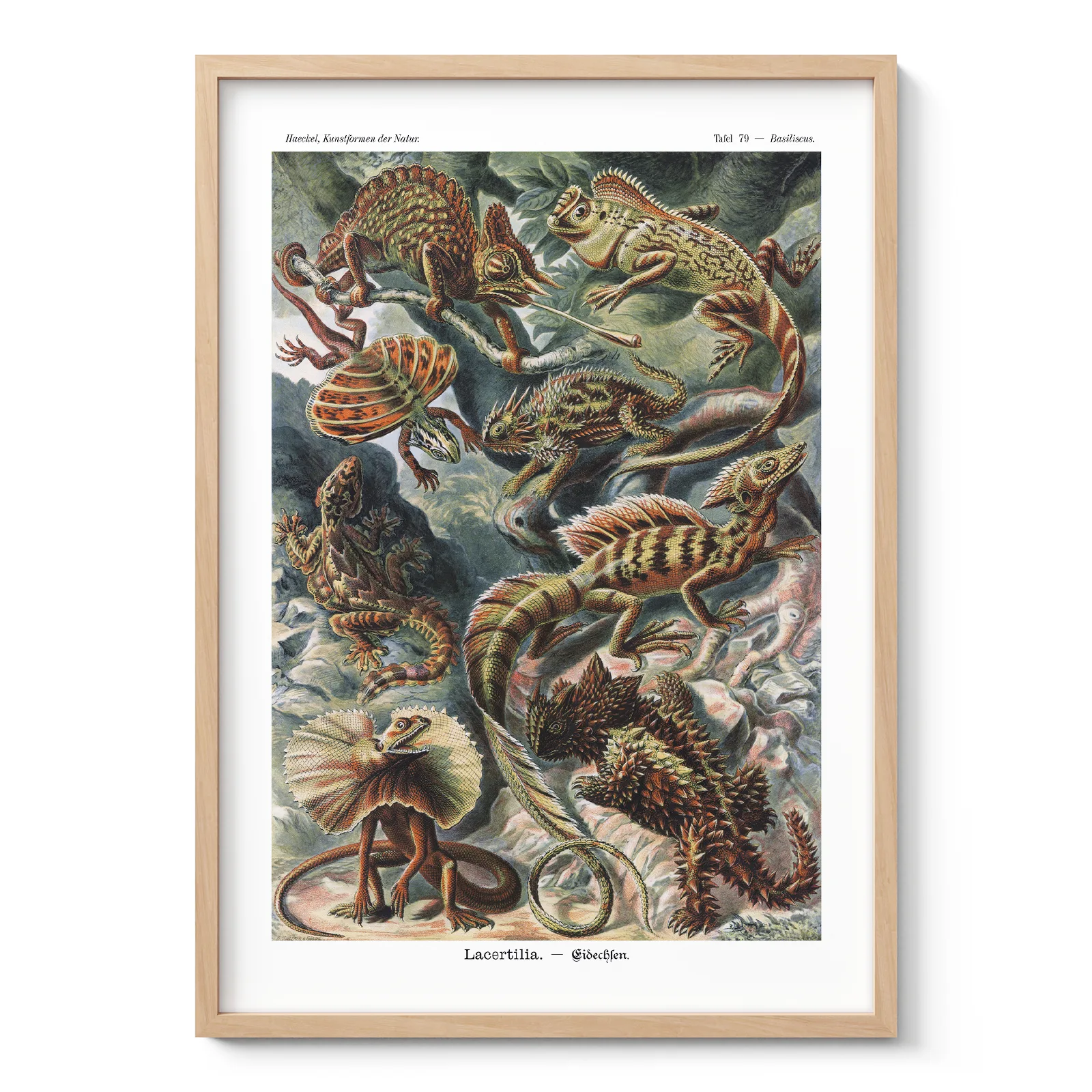
Ernst Haeckel prints are mostly associated with Kunstformen der Natur, known in English as Art Forms in Nature. Published between 1899 and 1904, this series presented natural forms in carefully arranged plates. The images showed how shells, jellyfish, algae, corals and microscopic life could appear almost architectural.
This is why his work still attracts biologists, designers, artists and collectors. It shows that nature can be complex without looking chaotic.
Why his scientific art still feels modern
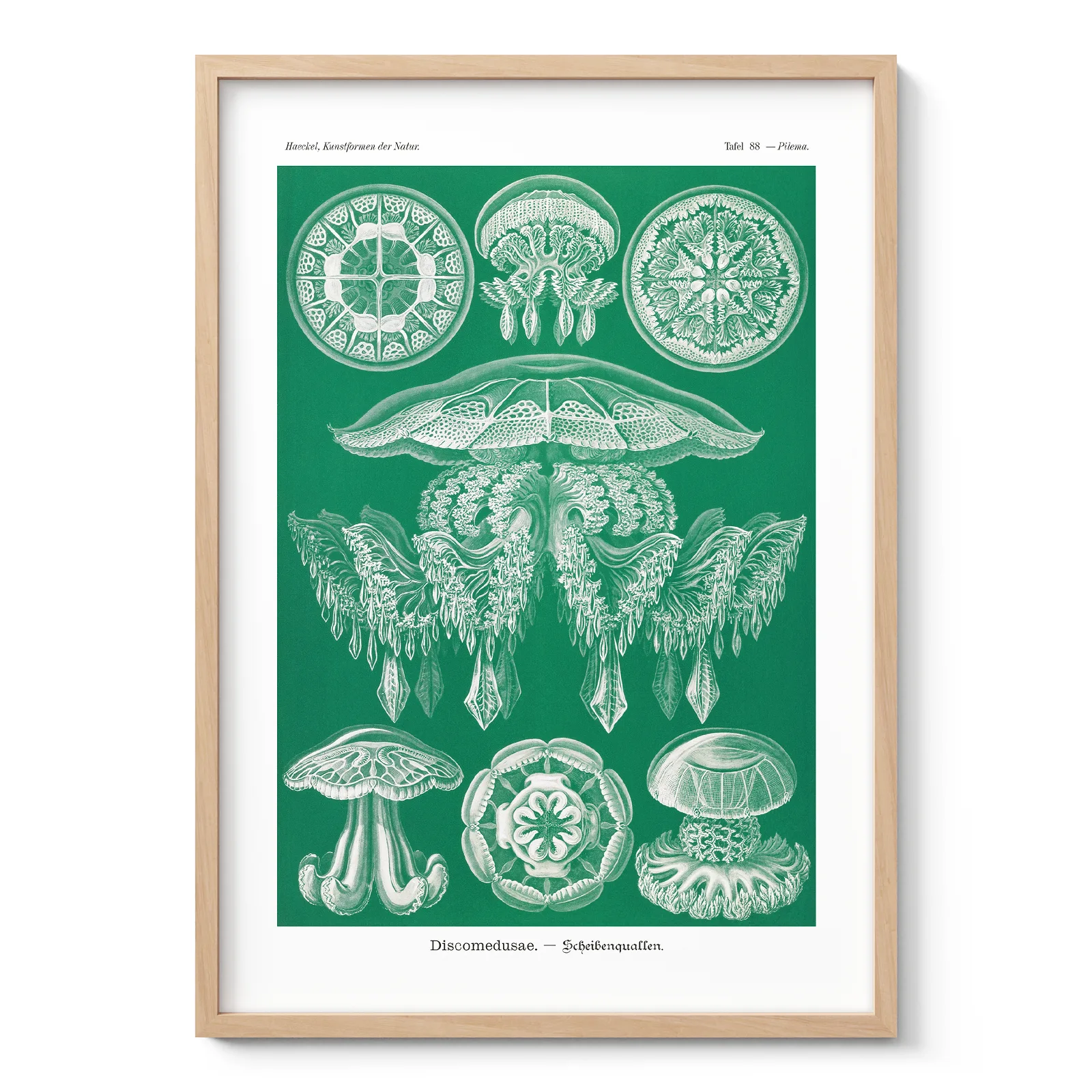
Haeckel’s illustrations are often compared with botanical prints and vintage scientific illustrations, but they have a different character. Traditional botanical art usually focuses on plants, flowers and accurate species details. Haeckel often focused on hidden structures: radial symmetry, repeating forms, branching systems and organic geometry.
Ernst Haeckel prints also influenced Art Nouveau, a movement known for flowing lines, plant forms and nature-inspired design. His plates gave artists and architects a visual library of natural patterns. Many forms look decorative at first glance, yet they come from real biological observation.
This balance is the main reason his work has lasted. It is scientific enough to feel credible and artistic enough to work as wall art.
Subjects to choose for different interiors
Jellyfish prints often suit calm rooms because their shapes feel light, floating and almost transparent. They work well in bedrooms, bathrooms, home offices and quiet reading corners. Corals and sea creatures usually bring more texture, making them useful for living rooms or eclectic interiors.
Radiolarians and microscopic organisms are especially good for minimalist or contemporary spaces. Their circular forms and fine details can look almost like abstract art, but they still carry a connection to natural science. Plant and botanical-inspired plates feel warmer and may suit home libraries, hallways or interiors with wood furniture.
Ernst Haeckel prints can also work well in natural history interiors, where books, specimens, maps and vintage scientific art already create a thoughtful atmosphere.
How they fit modern homes and workspaces
In Scandinavian interiors, Haeckel’s lighter plates pair well with pale walls, simple frames and natural materials. Minimalist rooms benefit from the precision of his line work, especially when the colour palette stays soft. Contemporary interiors can use larger canvas prints to add detail without relying on loud colour.
Eclectic rooms allow more freedom. A coral print can sit near botanical artwork, vintage maps or antique illustrations if the tones are connected. Modern offices and home workspaces often suit Haeckel’s work because it feels focused, intellectual and visually ordered.
Posters are useful when small details and fine lines matter. A museum-quality print can keep the scientific clarity of the original illustration. Canvas prints add more presence and can suit larger walls, especially in living rooms or offices.
A lasting link between biology and design
Ernst Haeckel prints remain popular more than a century later because they invite slow looking. You notice the subject first, then the pattern, then the structure behind it. That layered experience is difficult to find in ordinary decorative art.
For buyers choosing between natural history prints, botanical artwork or vintage scientific art, Haeckel’s work offers something distinct: the quiet drama of real organisms arranged with artistic discipline. It brings science into the home without feeling clinical, and beauty without losing its connection to nature.