



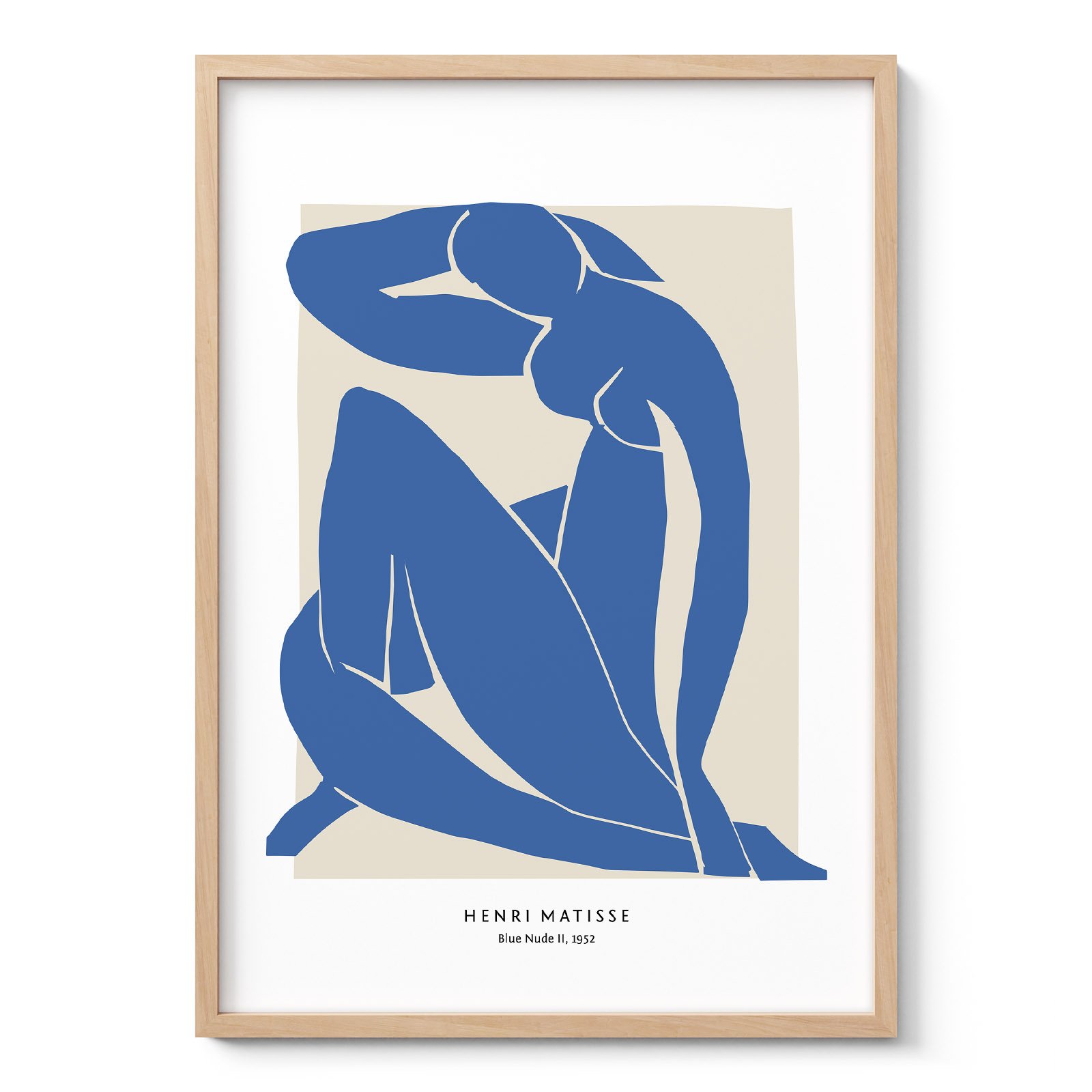
Henri Matisse prints: colour, shape and the joy of modern art
Henri Matisse was a French artist whose work changed how people understood colour, line and form. His paintings, drawings and paper cut-outs helped shape modern art in the twentieth century. Today, Henri Matisse prints are chosen by homeowners, collectors and interior designers because they feel both artistic and easy to live with.
Who was Henri Matisse?
Matisse began his career with painting, studying traditional techniques before moving toward a freer visual language. He became closely associated with Fauvism, a short but important movement known for bold colours, visible brushwork and emotional expression. While Picasso often explored structure and fractured form, Matisse focused on harmony, rhythm and the power of simplified shapes.
His art developed over many decades. Early works used strong colour and expressive paint. Later interiors, still lifes and female figures became calmer, more balanced and more decorative. Near the end of his life, his famous paper cut-outs, known as gouaches découpées, turned colour and shape into a new kind of visual music.
Why Matisse’s style still feels modern
Matisse simplified objects without making them feel empty. A leaf, flower, body or window could be reduced to a few flowing lines, yet still carry warmth and movement. This is one reason Henri Matisse prints work so well in modern interiors. They offer clarity without coldness.
His use of negative space is especially important. In many works, empty areas are as active as coloured forms. A white background can make blue leaves feel lighter. A flat red surface can make a figure feel calm and grounded. His compositions often look simple at first, then reveal careful balance.
The paper cut-outs became one of the defining moments of modern art because they removed the boundary between drawing, painting and collage. Matisse called this process “drawing with scissors.” These works influenced later abstract art, graphic design and contemporary wall art.
Subjects, colours and interior mood
Matisse prints often include botanical forms, flowers, leaves, dancers, female figures, interiors, still lifes and abstract compositions. Each subject creates a different atmosphere. Botanical art feels fresh and organic, especially in bedrooms, dining rooms and quiet reading corners. Figure studies and line art can feel intimate, making them suitable for bedrooms, hallways or small gallery walls.
Abstract cut-outs are stronger visually. They suit living rooms, home offices and spaces where colour is welcome. A blue and white composition can feel crisp in Scandinavian or Japandi interiors. Warm reds, yellows and pinks can add energy to Mid-Century Modern or Eclectic rooms. Minimalist interiors often work best with one clear Matisse poster rather than many competing pieces.
Canvas prints can give larger artworks more presence, while posters are flexible for gallery walls, narrow hallways and rented homes. A museum-quality print keeps the colour relationships clear, which matters with Matisse because small changes in tone can affect the whole composition.
Choosing Matisse wall art for your home
When choosing Henri Matisse prints, think first about the room’s purpose. A dining room can handle richer colour and lively shapes. A bedroom usually benefits from softer line art, calm interiors or botanical forms. A home office may suit a graphic cut-out that adds focus without visual clutter.
Many buyers start with famous cut-outs, but lesser-known Matisse works are also worth considering. His interiors, still lifes and seated figures show how carefully he arranged colour, pattern and space. These pieces can feel quieter than the iconic cut-outs while still carrying his unmistakable style.
Henri Matisse prints remain popular because they connect art history with real home décor needs. They are intelligent without feeling distant, colourful without being chaotic, and modern without depending on trends. For anyone drawn to expressive colour, organic shapes and balanced composition, Henri Matisse prints offer a thoughtful way to bring one of modern art’s most important voices into everyday spaces.