



Vintage Japanese Poster Design – Timeless Decor Impact

Searching for characterful artwork that speaks to your love of culture and design can feel like a treasure hunt. Many assume vintage Japanese posters are simply old advertisements, yet these pieces are vibrant expressions of identity, art, and social history. Collectors value their fusion of tradition and pop culture as each poster tells a layered visual story that enhances interiors with meaning and style.
Table of Contents
- Defining Vintage Japanese Posters And Misconceptions
- Key Artistic Styles And Their Origins
- Cultural Themes And Iconography Explained
- Spotting Authenticity And Common Reproductions
- Selecting, Buying And Displaying Vintage Posters
Key Takeaways
| Point | Details |
|---|---|
| Cultural Significance | Vintage Japanese posters are complex artworks that blend traditional aesthetics with modern influences, serving as cultural narratives rather than mere advertisements. |
| Artistic Styles | Key styles such as Constructivist Modernism and Pop Culture Fusion illustrate a unique synthesis of Western techniques and Japanese artistic traditions. |
| Authenticity Indicators | Key features to identify original vintage posters include paper texture, printing techniques, and natural ageing signs that differentiate them from modern reproductions. |
| Collecting Considerations | Successful collecting involves verifying provenance, assessing condition, and utilising proper display techniques to preserve poster integrity. |
Defining Vintage Japanese Posters and Misconceptions
Vintage Japanese posters represent a complex visual language that extends far beyond simple commercial imagery. Post-World War II graphic design evolution reveals these artworks as sophisticated cultural documents that blend traditional aesthetics with contemporary influences.
Contrary to popular belief, these posters are not merely advertising tools but intricate visual narratives. Key characteristics that define vintage Japanese posters include:
- Vibrant colour palettes reflecting both traditional and modern sensibilities
- Symbolic imagery drawing from Japanese cultural heritage
- Fusion of Western graphic design techniques with indigenous artistic traditions
- Multilayered visual communication beyond straightforward commercial messaging
The historical progression of these posters demonstrates a remarkable transformation. Japanese poster documentation reveals their evolution from propaganda instruments to nuanced artistic expressions, challenging misconceptions about their artistic and cultural significance.
Pro Tip: When collecting vintage Japanese posters, look beyond surface aesthetics and appreciate the rich cultural narrative embedded in each design.
Key Artistic Styles and Their Origins
Postwar Japanese graphic design emerged as a revolutionary fusion of Western modernist techniques and traditional Japanese artistic principles. This unique visual language transformed poster design through a complex synthesis of global and indigenous creative approaches.
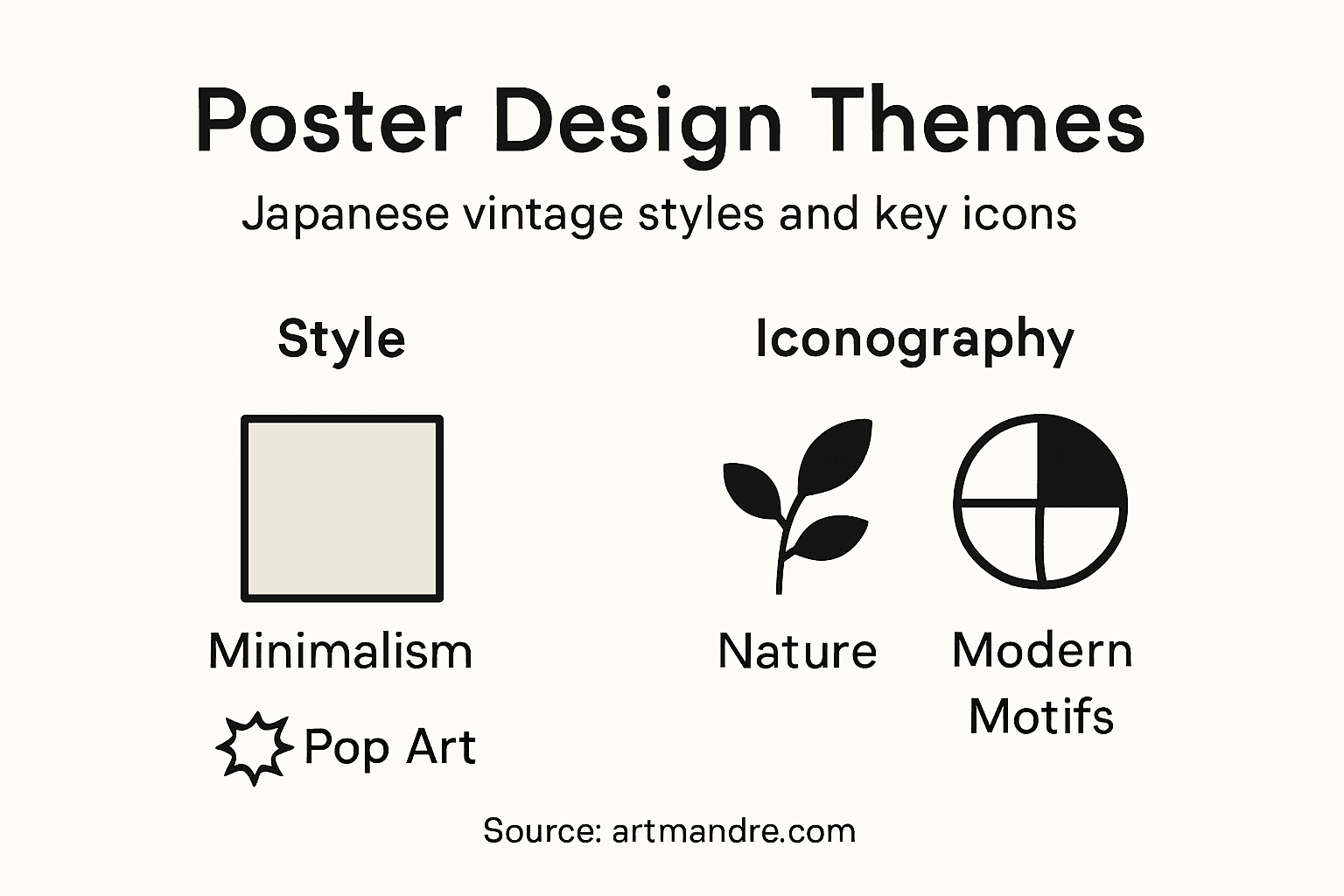
The key artistic styles of vintage Japanese posters can be categorised into several distinctive movements:
- Constructivist Modernism integrating geometric precision with Japanese aesthetic sensibilities
- Pop Culture Fusion incorporating manga, science fiction, and contemporary graphic elements
- Symbolic Minimalism utilising traditional Japanese imagery with contemporary design techniques
- Colour-Driven Narrative emphasising vibrant palettes that communicate cultural stories
Influential designers like Yusaku Kamekura and Tadanori Yokoo played pivotal roles in developing these styles. Their work demonstrated how post-World War II design evolution could simultaneously honour cultural heritage and embrace international design innovations.

Here is a quick reference guide to notable artistic styles and their historical influences within vintage Japanese poster design:
| Artistic Style | Influential Period | Notable Designers |
|---|---|---|
| Constructivist Modernism | 1950s–1960s | Yusaku Kamekura |
| Pop Culture Fusion | 1970s–1980s | Tadanori Yokoo |
| Symbolic Minimalism | Postwar Era onwards | Shigeo Fukuda |
| Colour-Driven Narrative | 1960s–1970s | Kazumasa Nagai |
Pro Tip: When studying vintage Japanese poster styles, examine the subtle interplay between traditional symbolism and modern graphic techniques to truly appreciate their artistic complexity.
Cultural Themes and Iconography Explained
Japanese manner posters reveal a profound visual language that transcends mere graphic representation, embodying deep cultural narratives and social communication strategies.
The iconographic elements in vintage Japanese posters can be categorised into several significant thematic groups:
- Social Harmony symbols representing collective responsibility
- Traditional Motif integration of family crests and historical imagery
- Pop Culture References incorporating manga and contemporary graphic elements
- Nature and Spiritual symbolism reflecting Shinto and Buddhist philosophical principles
These visual narratives were not simply decorative but functioned as complex communicative vehicles. Post-WWII graphic design demonstrated how iconography could encode national identity, social values, and cultural continuity within seemingly simple visual compositions.
Pro Tip: When analysing vintage Japanese posters, look beyond aesthetic elements and investigate the nuanced cultural messages embedded within their symbolic language.
Spotting Authenticity and Common Reproductions
Vintage poster authentication requires careful examination of subtle yet critical details that distinguish original artworks from modern reproductions. The process involves a comprehensive assessment of physical characteristics that reveal the poster’s true origins.
Key indicators of authenticity include:
- Paper Quality: Original posters feature thin lithographic paper with unique textural imperfections
- Printing Techniques: Genuine works display layered ink with visible analog printing marks
- Aging Characteristics: Natural discoloration, fold lines, and subtle paper degradation
- Colour Saturation: Muted, slightly faded tones versus overly bright digital reproductions
Collectors should pay special attention to Japanese poster verification methods, which involve examining specific markers like Eirin markings and understanding traditional Japanese paper stocks. These nuanced details provide crucial insights into the poster’s historical authenticity.
The table below summarises key differences between original vintage Japanese posters and common reproductions for collectors:
| Aspect | Original Vintage Poster | Modern Reproduction |
|---|---|---|
| Paper Texture | Thin, tactile, imperfect surface | Smooth, uniform modern paper |
| Printing Process | Layered ink, analogue marks | Digital printing, flat finish |
| Ageing Signs | Natural discolouration, gentle wear | Pristine appearance, no ageing |
| Colour Tone | Muted, subtly faded | Overly vivid, unnatural hues |
Pro Tip: Always examine potential vintage Japanese posters under natural light and use a magnifying glass to detect subtle printing techniques and paper characteristics.
Selecting, Buying and Displaying Vintage Posters
Vintage Japanese poster collecting requires a strategic approach that balances aesthetic appreciation with careful preservation. Understanding the nuanced world of poster acquisition involves more than simply purchasing an attractive image.
Key considerations for collectors include:
- Provenance Verification: Researching the poster’s historical background and original printing
- Condition Assessment: Examining physical integrity, colour preservation, and potential restoration
- Authentication Techniques: Identifying genuine printing methods and original production markers
- Display Environment: Understanding preservation requirements for long-term conservation
Successful collectors develop a comprehensive strategy that encompasses both purchasing and preservation. Specialist dealer interactions can provide invaluable insights into identifying high-quality vintage pieces with significant cultural and artistic value.
Pro Tip: Invest in archival-quality framing with UV-protective glass to maintain your vintage poster’s condition and prevent deterioration over time.
Elevate Your Space with Timeless Vintage Japanese Poster Designs
Discover the power of authentic vintage Japanese posters to transform your living space into a vibrant storytelling canvas rich with cultural depth. This article highlights key challenges such as identifying genuine artwork and appreciating the complex blend of traditional symbolism and modern graphic techniques. If you desire wall art that goes beyond decoration to convey heritage and artistic mastery, then finding the right pieces is essential.

Bring home compelling visual narratives with our curated selection at ArtMandre.com. Whether you seek to add sophisticated colour-driven narratives or subtle symbolic minimalism, our range of prints offers authentic style balanced with the convenience of secure online shopping. Explore new arrivals and take advantage of limited-time offers to build a collection that honours vintage Japanese poster design’s unique cultural language. Start your journey now and create a striking interior that truly speaks to you.
Frequently Asked Questions
What are vintage Japanese posters and why are they significant?
Vintage Japanese posters are intricate artworks that blend traditional Japanese aesthetics with modern influences. They serve as cultural documents, reflecting both societal values and artistic evolution, surpassing their common perception as mere advertising tools.
How can I identify key artistic styles in vintage Japanese posters?
Key artistic styles include Constructivist Modernism, Pop Culture Fusion, Symbolic Minimalism, and Colour-Driven Narrative. Each style expresses a unique synthesis of Western graphic design techniques and traditional Japanese artistic principles, which can be identified through specific visual elements and themes.
What common themes and symbols are found in vintage Japanese poster design?
Common themes include social harmony, traditional motifs, pop culture references, and nature/spiritual symbolism. These elements embody deeper cultural narratives that communicate societal values and continuity, making them significant beyond their decorative appeal.
How can I ensure the authenticity of a vintage Japanese poster?
To ensure authenticity, examine the paper quality, printing techniques, ageing characteristics, and colour saturation. Original posters typically feature unique textural imperfections, layered ink displays, natural signs of ageing, and muted colour tones, distinguishing them from modern reproductions.