



Blog
Hasui Print Art: Elevating Vintage-Inspired Décor
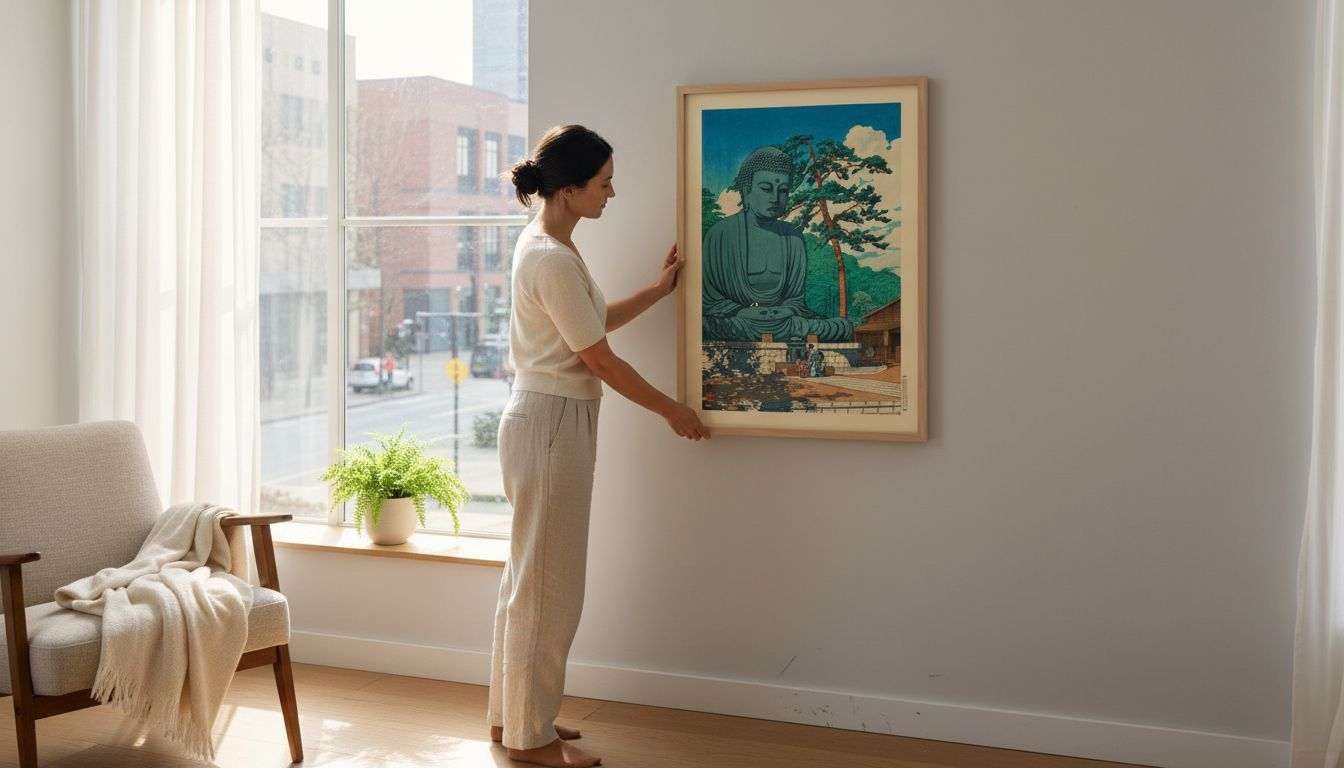
Searching for art that blends nostalgia and sophistication can feel daunting when decorating vintage-inspired homes. The work of Hasui Kawase, a renowned Japanese artist and Living National Treasure, offers a distinct solution with atmospheric woodblock prints that transport viewers to tranquil rural and urban scenes. Whether you hope to find affordable Hasui prints or want ideas for thoughtful display, discovering his unique blend of traditional and Western influences opens new possibilities for timeless decor and personal expression.
Table of Contents
- Hasui Print Art—Origins and Definition
- Styles and Themes in Hasui Prints
- Identifying Authentic Hasui Woodblocks
- Integrating Hasui Prints Into Home Décor
- Risks and Smart Practices for Buyers
Key Takeaways
| Point | Details |
|---|---|
| Importance of Authenticity | Ensure the authenticity of Hasui woodblock prints through careful verification, focusing on publisher seals and paper quality. |
| Significance of Emotional Resonance | Hasui prints are not just visually stunning; they evoke deep emotional responses through their representation of landscapes and cultural nostalgia. |
| Integration into Home Décor | Consider the prints’ color palettes and thematic resonance when incorporating them into interior design, fostering a harmonious atmosphere. |
| Risks in Collecting | Be aware of the high risk of counterfeits in the market, and always consult trusted dealers for authentic acquisitions. |
Hasui Print Art—Origins and Definition
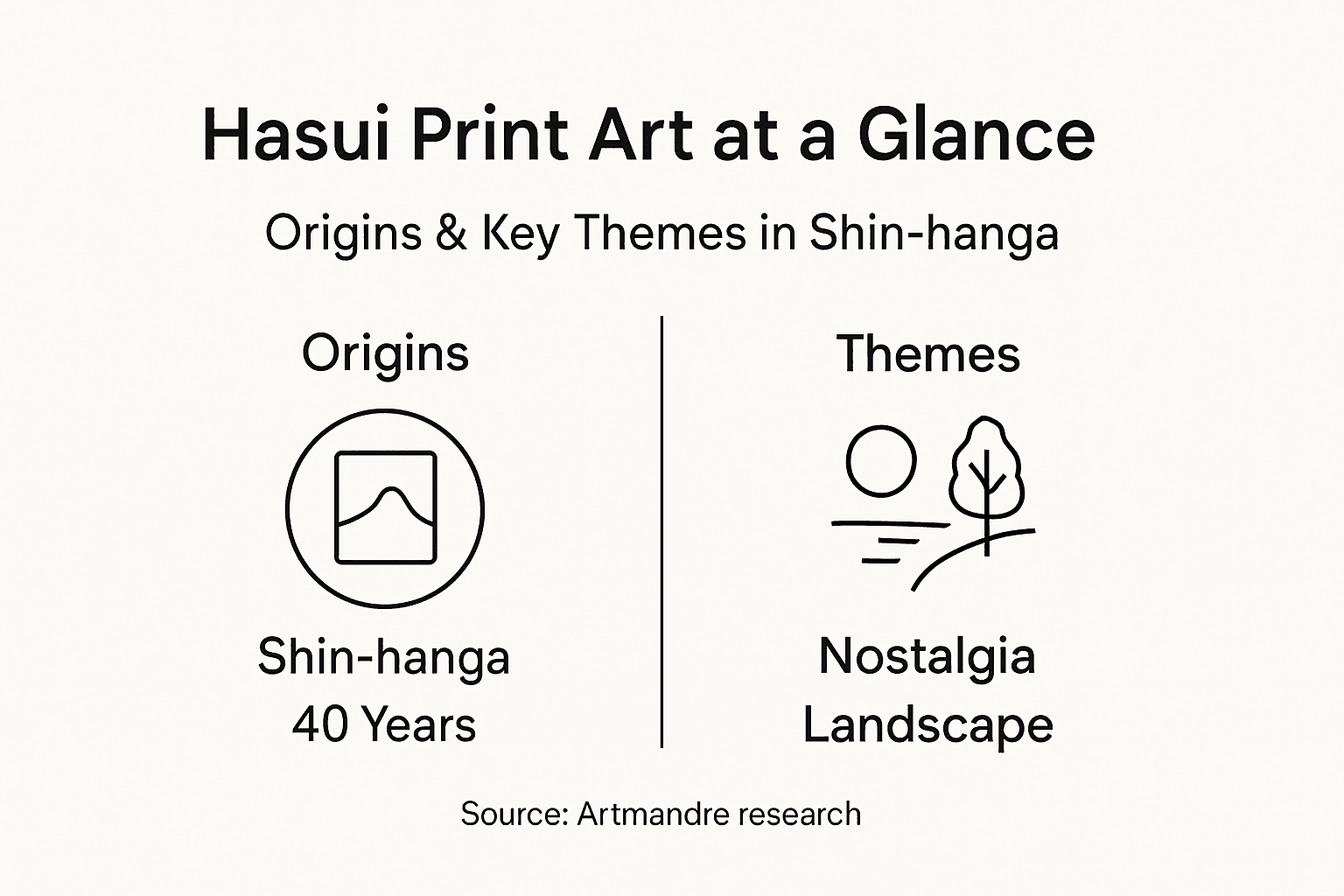
Japanese art has a remarkable history of visual storytelling, and Hasui Kawase represents a pinnacle of this tradition. A prominent figure in the shin-hanga movement, Hasui transformed landscape printmaking in the early 20th century through his unique artistic vision.
Hasui’s work emerged during a transformative period in Japanese art, characterized by innovative reinterpretations of traditional techniques. His prints stand out for several distinctive characteristics:
- Atmospheric landscapes capturing subtle natural lighting
- Blending traditional Japanese subjects with Western artistic influences
- Detailed representation of urban and rural environments
- Emphasis on emotional resonance through scenic compositions
Shin-hanga, or “new prints,” represented a significant artistic movement that Hasui helped pioneer. This artistic approach reimagined traditional ukiyo-e woodblock printing techniques with modern sensibilities, creating a bridge between historical art forms and contemporary aesthetic sensibilities.
Kawase Hasui’s artistic journey spanned approximately 40 years, during which he produced nearly 1,000 woodblock prints that captured Japan’s diverse landscapes. His remarkable talent was ultimately recognized when he was designated a Living National Treasure, solidifying his status as a pivotal figure in modern Japanese art.
Pro tip: When collecting vintage Japanese prints, focus on original prints with clear provenance and excellent preservation to ensure both artistic and investment value.
Styles and Themes in Hasui Prints
Hasui Kawase’s artistic repertoire represents a profound exploration of Japanese landscapes, capturing atmospheric transformations with remarkable sensitivity. His prints masterfully illustrate the nuanced beauty of Japan’s natural environments, transcending mere visual representation to evoke deep emotional resonance.
The distinctive characteristics of Hasui’s prints include several key stylistic elements:
- Ethereal depictions of seasonal transitions
- Subtle atmospheric lighting effects
- Minimalist representation of human presence
- Emphasis on landscape’s emotional and spiritual dimensions
- Intricate details highlighting natural textures
Hasui’s themes often reflected a profound sense of nostalgia, particularly embodying the cultural longing for traditional Japanese identity. His woodblock prints captured scenes that represented a disappearing agrarian landscape, creating a visual narrative of cultural transformation during Japan’s rapid modernization.
Through dream-like compositions and carefully selected subjects, Hasui created visual poems that transcended simple landscape documentation. His prints often featured serene rural settings, urban scenes during rain or snow, and nighttime landscapes that captured the ephemeral beauty of moments suspended between tradition and modernity.
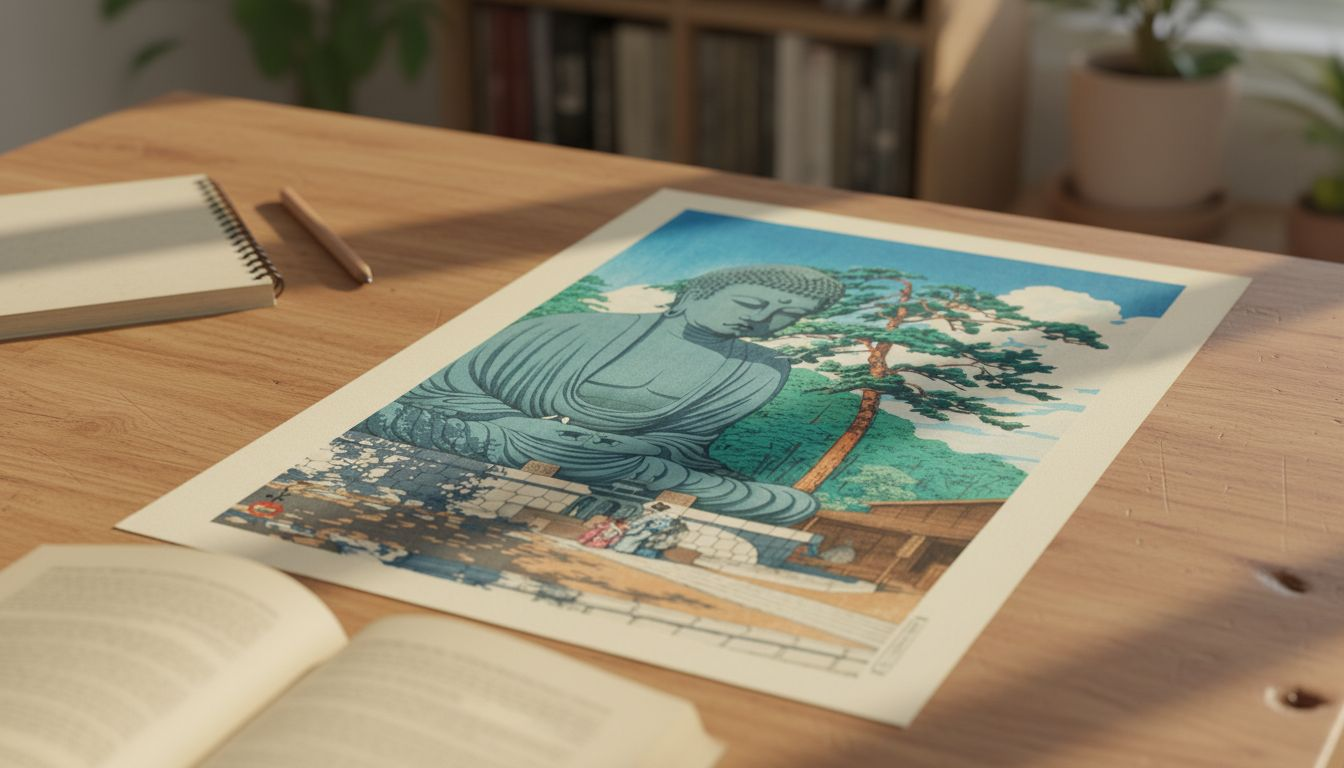
Pro tip: When selecting Hasui-inspired prints for home decor, consider the emotional resonance of the scene and how its color palette and mood complement your existing interior design.
Identifying Authentic Hasui Woodblocks
Hasui woodblocks represent significant artistic investments that demand careful authentication. Collectors must navigate complex verification processes to distinguish genuine prints from sophisticated reproductions.
Authentic Hasui woodblocks possess several critical identifying characteristics:
- Original publisher seals from Watanabe Studio
- Specific edition markings in Japanese characters
- Handmade paper with subtle texture variations
- Consistent woodgrain impressions
- Precise color registration typical of traditional techniques
- Numbered series information
The verification process involves multiple layers of expert examination. Genuine prints typically feature intricate details that modern mechanical reproductions cannot replicate, including subtle variations in ink application, paper texture, and woodblock carving techniques. Experienced collectors look beyond visual similarities to assess minute technical aspects that reveal a print’s true origin.
Collectors should pay particular attention to provenance documentation, printing techniques, and historical context. Original Hasui prints from the early 20th century demonstrate remarkable craftsmanship, with each woodblock revealing subtle variations that machine reproductions cannot easily mimic. Consulting expert appraisers and maintaining thorough research can help protect against potential fraudulent acquisitions.
Pro tip: Always request detailed authentication certificates and professional assessments before purchasing high-value Hasui woodblock prints to ensure your investment’s legitimacy.
Integrating Hasui Prints Into Home Décor
Transforming living spaces with Hasui prints requires thoughtful placement and understanding of their unique aesthetic qualities. Selecting the right art prints involves considering color palettes, room lighting, and existing decor elements that complement these historical Japanese artworks.
Successful integration of Hasui prints into home decor involves several strategic approaches:
- Match print color tones with room’s existing color scheme
- Consider frame styles that enhance the print’s vintage aesthetic
- Select appropriate wall spaces with consistent lighting
- Balance print size with wall dimensions
- Create visual narrative through strategic grouping
- Use prints as focal points in minimalist or neutral rooms
Hasui’s landscape prints work particularly well in spaces that appreciate subtlety and historical depth. Their muted color palettes and atmospheric qualities make them versatile for various interior design styles, from modern minimalist to traditional Japanese-inspired environments. The prints’ ability to evoke emotional landscapes transforms ordinary rooms into contemplative spaces that tell visual stories.
When positioning Hasui prints, consider creating visual dialogues between artwork and surrounding elements. Neutral walls in soft grays, whites, or earth tones provide ideal backdrops that allow the intricate details and nuanced color gradations of these prints to shine. Thoughtful placement can turn these historical artworks into powerful design statements that reflect both aesthetic sophistication and cultural appreciation.
Pro tip: Use museum-quality archival framing to preserve your Hasui prints and protect them from environmental degradation while enhancing their visual presentation.
Here’s a helpful summary contrasting original Hasui woodblock prints with modern reproductions:
| Aspect | Original Hasui Prints | Modern Reproductions |
|---|---|---|
| Paper Texture | Handmade, subtle variations | Machine-made, uniform surface |
| Publisher Seal | Watanabe Studio, era-specific | Often missing or inconsistent |
| Ink Application | Variable, nuanced color blending | Flat, mechanical coloring |
| Collector Value | High artistic and investment worth | Low, mainly decorative purpose |
This table offers practical guidance for collectors. Now, here’s a quick reference for interior designers integrating Hasui prints:
| Design Factor | Best Practice with Hasui Prints | Resulting Effect |
|---|---|---|
| Room Color Scheme | Match muted tones to print palette | Harmonious, calming atmosphere |
| Frame Selection | Use vintage or archival-quality frames | Enhanced artwork preservation |
| Lighting Conditions | Display in softly lit, indirect light areas | Highlights subtle print details |
| Placement Strategy | Group prints to create a visual story | Sophisticated, unified decor |
Risks and Smart Practices for Buyers
Hasui print collecting requires careful navigation of complex market dynamics. Authenticating vintage Japanese woodblock prints involves understanding intricate details that distinguish genuine works from sophisticated counterfeits.
Key risks for potential buyers include:
- Widespread market proliferation of unauthorized reproductions
- High financial stakes attracting sophisticated forgers
- Subtle technical differences between original and fake prints
- Potential misrepresentation of print editions
- Complex historical verification processes
- Variable pricing across different market channels
Smart buyers develop comprehensive strategies for mitigating purchasing risks. Trusted dealers and expert consultation remain critical in verifying print authenticity. Collectors should request detailed provenance documentation, examine publisher seals, and understand the nuanced differences between lifetime and posthumous print editions.
Successful Hasui print acquisition demands rigorous research and expert-level scrutiny. Potential buyers must evaluate multiple factors including print condition, color vibrancy, margin integrity, and historical context. Professional authentication services can provide critical insights, helping collectors distinguish between genuine historical artifacts and modern reproductions.
Pro tip: Always request a comprehensive condition report and certificate of authenticity from reputable dealers before finalizing any significant Hasui print purchase.
Elevate Your Space with Timeless Hasui-Inspired Art Prints
Discover how the subtle beauty and emotional depth of Hasui Kawase’s vintage landscapes can transform your home into a serene retreat. If you struggle to find authentic vintage-inspired prints that blend tradition with modern décor, our curated collection at ArtMandre offers the perfect solution. Our carefully selected artwork captures the atmospheric lighting and nostalgic charm Hasui is known for while complementing diverse interior styles.

Explore exclusive deals on vintage-style prints that speak to your soul and enhance your living space. Visit Artmandre now to browse our unique selections and take advantage of promotional offers like buy 2 get 1 free. Start crafting a visual story that honors Hasui’s artistic legacy while adding a sophisticated flair to your home décor.
Frequently Asked Questions
What are the defining characteristics of Hasui prints?
Hasui prints are known for their atmospheric landscapes that capture subtle natural lighting, blending traditional Japanese subjects with Western artistic influences, and an emphasis on emotional resonance through scenic compositions.
How can I identify an authentic Hasui woodblock print?
Authentic Hasui woodblocks can be identified by original publisher seals from Watanabe Studio, specific edition markings in Japanese characters, handmade paper with subtle texture variations, and consistent woodgrain impressions, among other factors.
What themes are commonly found in Hasui’s artwork?
Hasui’s artwork often reflects themes of nostalgia, capturing Japan’s diverse landscapes and incorporating scenes that emphasize seasonal transitions, urban and rural environments, and an emotional or spiritual connection to the landscape.
How can I effectively integrate Hasui prints into my home decor?
To effectively integrate Hasui prints into your home decor, consider matching the print’s color tones with the room’s existing color scheme, selecting vintage-style frames, placing the prints in well-lit areas, and strategically grouping them to create a visual narrative.