

Blog
Japanese Vintage Poster Art: Elevating Modern Interiors

Bold patterns and cultural symbolism meet refined minimalism in Japanese vintage poster art, making every print a striking conversation piece for contemporary interiors. For collectors and decorators, these posters offer more than decoration—they reflect Japan’s rapid post-war transformation and enduring artistic innovation. Explore how the fusion of traditional aesthetics with modern design principles can bring timeless sophistication and vibrant history into any modern living space.
Table of Contents
- Japanese Vintage Poster Art Explained
- Distinct Types And Styles Of Japanese Posters
- Key Design Features And Thematic Elements
- Collecting Vintage Posters Safely And Legally
- Styling Japanese Posters For Contemporary Decor
Key Takeaways
| Point | Details |
|---|---|
| Cultural Fusion | Japanese vintage poster art blends traditional aesthetics with modernist design, reflecting the country’s cultural evolution. |
| Artistic Significance | Posters by artists like Yusaku Kamekura transcended advertising to become autonomous art forms. |
| Diverse Styles | The collection includes various types, such as Ukiyo-e inspired, travel, and psychedelic posters, each telling its unique story. |
| Collecting Essentials | Ensure authenticity, originality, and compliance with legal frameworks when collecting vintage posters for both personal enjoyment and cultural preservation. |
Japanese vintage poster art explained
Japanese vintage poster art represents a profound visual narrative that emerged from the dynamic cultural transformations of post-war Japan. Post-war graphic design evolution reveals a compelling story of artistic innovation, blending traditional Japanese aesthetics with emerging global influences.
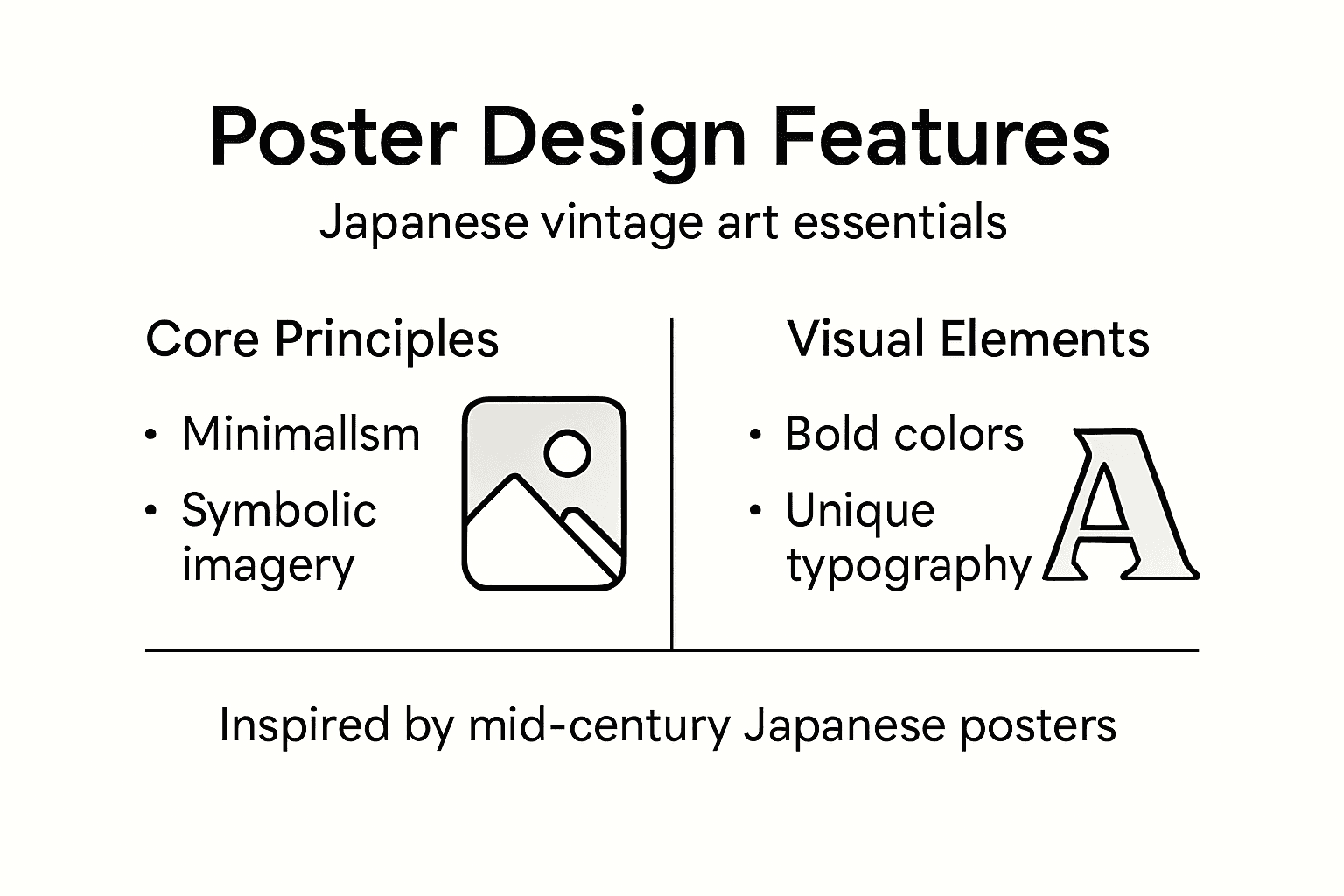
The development of Japanese poster design during the mid-20th century was characterised by several distinctive features:
- Vibrant and expressive colour palettes
- Symbolic and metaphorical imagery
- Integration of Western modernist design principles
- Representation of cultural identity and social change
Artists like Yusaku Kamekura played a pivotal role in transforming poster art from mere advertising into an autonomous art form. Japanese graphic design’s international rise demonstrated how traditional craftsmanship could intersect with contemporary visual communication.
The aesthetic principles of Japanese vintage posters often drew from ukiyo-e woodblock prints, minimalist design, and zen philosophy, creating visually striking compositions that communicated complex narratives through elegant simplicity. These posters weren’t just promotional materials; they were cultural artefacts capturing Japan’s rapid modernisation.
Pro tip: When collecting vintage Japanese posters, focus on original prints from the 1950s and 1960s that showcase the unique blend of traditional Japanese aesthetics and modernist design principles.
Distinct types and styles of Japanese posters
Japanese poster art encompasses a rich tapestry of visual styles that reflect the nation’s complex cultural evolution. Poster design categories reveal remarkable diversity, ranging from traditional artistic expressions to experimental graphic narratives that capture societal transformations.
The primary categories of Japanese posters include:
- Ukiyo-e inspired posters: Featuring traditional woodblock print aesthetics
- Travel and tourism posters: Highlighting scenic landscapes and cultural destinations
- Propaganda and social messaging posters: Communicating governmental and cultural narratives
- Commercial advertising posters: Representing brand and consumer culture
- Psychedelic design posters: Experimental visual styles from the 1960s avant-garde movement
Post-war graphic design movements dramatically transformed Japanese poster art, integrating Western modernist principles with intrinsic Japanese visual sensibilities. Designers like Yusaku Kamekura and Tadanori Yokoo pioneered innovative approaches that transcended traditional advertising, elevating poster design to an autonomous art form.
Here is a summary of prominent Japanese poster artists and their unique contributions:
| Artist | Signature Approach | International Impact |
|---|---|---|
| Yusaku Kamekura | Used bold modernist elements | Raised global awareness of Japanese design |
| Tadanori Yokoo | Blended psychedelia with symbolism | Influenced Western graphic art trends |
| Shigeo Fukuda | Employed visual illusions and wit | Recognised in global art exhibitions |
| Kazumasa Nagai | Fused abstract forms with nature motifs | Inspired poster designers worldwide |
These posters were not merely visual communications but sophisticated cultural artefacts that captured Japan’s rapid modernisation, blending minimalist aesthetics, symbolic imagery, and profound cultural narratives. The graphic design reflected a complex dialogue between tradition and contemporary global influences, making each poster a nuanced representation of social change.
Pro tip: When collecting vintage Japanese posters, prioritise original prints that demonstrate unique design philosophies and represent specific historical periods.
Key design features and thematic elements
Japanese poster art’s distinctive aesthetic emerges from a complex interplay of cultural and visual elements that transcend mere graphic communication. These posters represent a sophisticated visual language that encapsulates Japan’s social, cultural, and artistic transformations.
The key design features of Japanese poster art include:
- Chromatic vibrancy: Bold and expressive colour palettes
- Symbolic imagery: Multilayered visual metaphors
- Typographic innovation: Experimental and dynamic text treatments
- Minimalist composition: Elegant spatial arrangements
- Cultural narrative: Embedded societal and historical references
Graphic communication strategies demonstrated remarkable depth through strategic visual elements. Designers employed pictographic language, abstract representations, and cultural iconography to communicate complex messages beyond traditional advertising paradigms.

These visual approaches reflected a nuanced dialogue between tradition and modernity, where each poster became a microcosm of Japan’s cultural evolution. The design elements frequently incorporated traditional aesthetic principles like ma (negative space), wabi-sabi (imperfection), and asymmetrical balance, transforming commercial communication into profound artistic expressions.
Pro tip: When analysing vintage Japanese posters, pay close attention to the subtle visual metaphors and cultural symbols embedded within the design.
Collecting vintage posters safely and legally
Japanese poster preservation practices require meticulous attention to authenticity, legal ownership, and cultural heritage. Collectors must navigate a complex landscape of ethical acquisition and responsible collecting to ensure the integrity of these remarkable artistic artifacts.
Key considerations for safe and legal poster collection include:
- Provenance verification: Obtaining comprehensive documentation of origin
- Authentication processes: Consulting expert appraisers and specialists
- Copyright compliance: Understanding international intellectual property regulations
- Original vs reproduction: Distinguishing between genuine vintage prints and modern reproductions
- Cultural heritage regulations: Respecting international art export restrictions
The process of acquiring vintage Japanese posters demands rigorous research and professional guidance. Legitimate collectors must develop comprehensive strategies that encompass historical understanding, legal frameworks, and respectful engagement with cultural artefacts.
Navigating the collector’s landscape requires developing relationships with reputable dealers, museums, and cultural institutions specialising in Japanese graphic arts. Understanding the nuanced legal landscape, cultural significance, and preservation requirements transforms collecting from a mere transaction into a meaningful cultural exchange.
To clarify collecting practices, here’s a reference on poster authenticity and legal guidelines:
| Aspect | Why It Matters | Recommended Action |
|---|---|---|
| Provenance | Ensures historical legitimacy | Request full documentation |
| Copyright | Avoids legal disputes | Confirm artist rights status |
| Originality | Adds collection value | Seek expert appraisal |
| Heritage Laws | Protects cultural assets | Check export restrictions |
Pro tip: Always request and retain comprehensive documentation, including certificates of authenticity and detailed provenance records, when purchasing vintage Japanese posters.
Styling Japanese posters for contemporary decor
Japanese vintage poster integration transforms modern interior spaces by bridging cultural aesthetics with contemporary design principles. These artistic treasures offer more than decorative appeal; they represent sophisticated visual narratives that elevate living environments.
Strategic styling approaches for Japanese posters include:
- Minimalist framing: Using clean, understated frames that complement poster aesthetics
- Colour coordination: Matching poster hues with existing room palettes
- Contextual placement: Creating focal points in living spaces
- Thematic grouping: Curating posters with complementary design languages
- Spatial balance: Considering negative space and visual harmony
Contemporary interiors benefit from the nuanced visual language of Japanese posters, which blend traditional symbolism with modern graphic sensibilities. These artworks transcend mere wall decorations, functioning as cultural conversation pieces that reflect sophisticated design understanding.
Successful integration requires thoughtful consideration of architectural context, room geometry, and existing design elements. Collectors and interior designers can transform spaces by treating vintage Japanese posters as dynamic, living artworks that dialogue with their surrounding environments.
Pro tip: Select vintage Japanese posters that resonate with your room’s existing colour scheme and architectural character to create seamless visual narratives.
Elevate Your Space with Authentic Vintage Poster Art
Discover how the unique blend of traditional Japanese aesthetics and mid-century modernist design can transform your interior into a captivating cultural experience. The article highlights challenges like capturing cultural narratives through minimalist compositions and symbolic imagery while maintaining a timeless style. At ArtMandre.com, we understand these goals and offer a carefully curated collection of vintage-inspired posters that deliver vibrant colour palettes, refined symbolism, and elegant spatial balance to your living spaces.

Bring the sophisticated charm of Japanese vintage poster art into your home today by browsing our exclusive selection at ArtMandre.com. Take advantage of our promotional offers like buy 2 get 1 free to build a visually stunning gallery wall that resonates with your personal style. Don’t wait to create a meaningful interior that celebrates both tradition and modernity—explore our collection now and start styling with art that speaks volumes.
Frequently Asked Questions
What are the key design features of Japanese vintage posters?
Japanese vintage posters are characterised by chromatic vibrancy, symbolic imagery, innovative typography, minimalist composition, and embedded cultural narratives that reflect social and historical contexts.
How can I style Japanese vintage posters in my home?
To style Japanese vintage posters effectively, use minimalist framing, coordinate colours with your room’s palette, create thematic groupings, and consider spatial balance to enhance visual harmony in your space.
What types of Japanese posters are available for collectors?
Collectors can find various types of Japanese posters, including ukiyo-e inspired designs, travel and tourism posters, propaganda and social messaging posters, commercial advertising, and psychedelic design posters from the avant-garde movement.
Why is provenance important when collecting vintage Japanese posters?
Provenance is crucial as it ensures the historical legitimacy of the artwork. Collectors should obtain comprehensive documentation to verify origin and authenticity, which significantly impacts the poster’s value and cultural significance.