
Blog
Vintage Parrot Prints 2026: 40% Are Fakes – Buy Smart
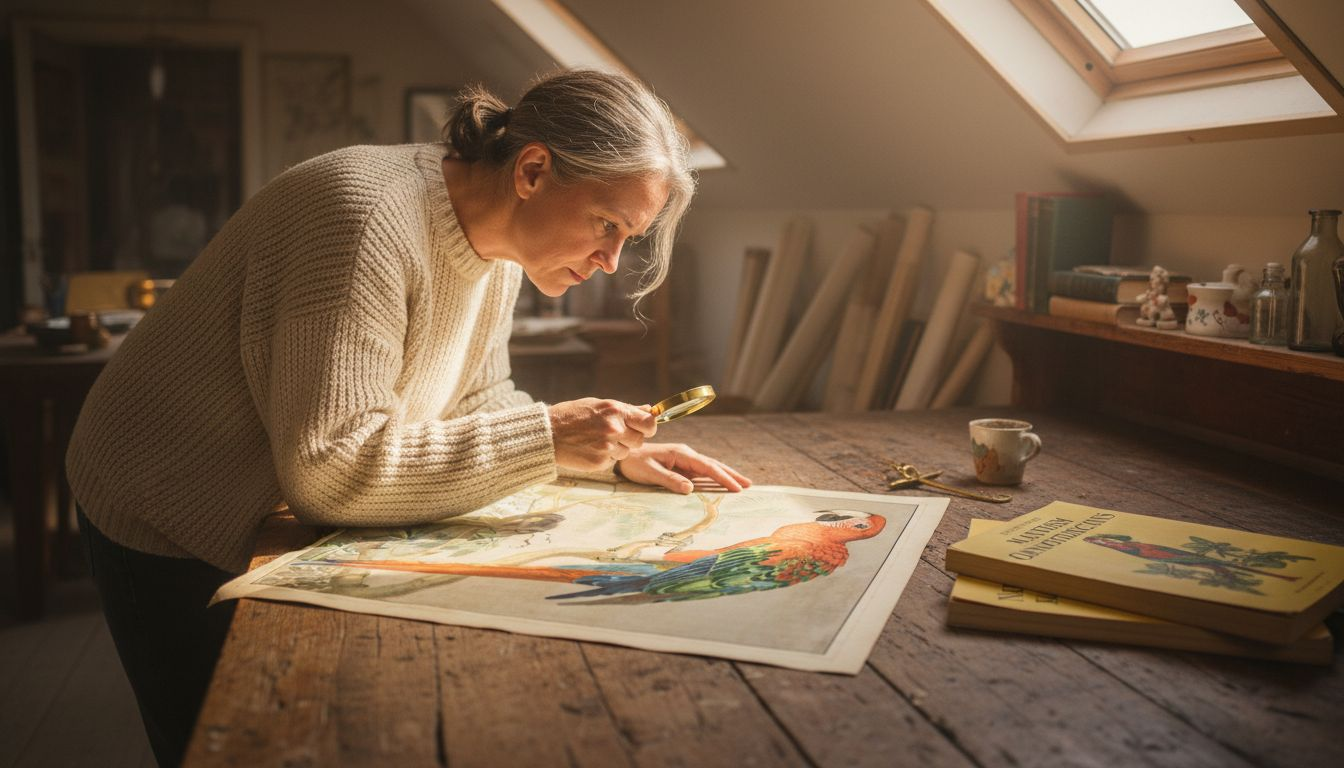
Vintage parrot prints have surged in popularity for retro interiors, but up to 40% of prints sold online are misrepresented reproductions. This guide cuts through the confusion by teaching you how to identify authentic prints, style them confidently in your living space, and preserve their vibrant appeal. Whether you’re building a gallery wall or searching for a statement piece, you’ll gain the skills to navigate the vintage market and transform your home with meaningful art.
Table of Contents
- Understanding Vintage Parrot Prints: History and Cultural Context
- Authenticating Vintage Parrot Prints: Key Indicators and Common Pitfalls
- Styling Vintage Parrot Prints in Retro-Themed Living Spaces
- Where and How to Buy Vintage Parrot Prints: Sourcing and Pricing Strategies
- Preserving Vintage Parrot Prints: Care and Display Recommendations
- Common Misconceptions About Vintage Parrot Prints
- Discover Authentic Vintage and Retro Posters at ArtMandre
Key Takeaways
| Point | Details |
|---|---|
| Historical Context | Vintage parrot prints span the late 19th to mid-20th century, reflecting exoticism and naturalist art movements. |
| Authentication Matters | Look for period printing techniques like lithography and verify provenance to avoid digital reproductions. |
| Styling Impact | Use prints as focal points with 30%-50% color contrast against mid-century modern palettes. |
| Smart Sourcing | Niche retro art retailers offer 20-30% higher authenticity guarantees than generic marketplaces. |
| Preservation Essentials | UV-protective glass and acid-free mats maintain color vibrancy and prevent deterioration. |
Understanding Vintage Parrot Prints: History and Cultural Context
Vintage parrot prints hold a unique place in decorative art history. These prints originate from the late 19th to mid-20th century, reflecting cultural fascinations with exoticism and tropical landscapes. During the Victorian era through Art Deco, parrots symbolized freedom, adventure, and the allure of distant lands.
These prints emerged from several artistic movements. Naturalist illustrators documented exotic species with scientific precision. Decorative artists incorporated tropical motifs into home décor, capitalizing on public enthusiasm for exploration and colonialism.
The printing techniques define their character:
- Lithography created rich colors and fine details through stone-based printing processes.
- Traditional etching produced delicate line work with distinctive plate marks.
- Chromolithography layered multiple colors for vibrant, complex compositions.
- Hand-coloring added unique variations to black and white prints.
Artistic styles ranged from highly detailed naturalist renderings to stylized decorative designs. Some prints mirrored scientific illustration with anatomical accuracy. Others embraced Art Nouveau curves or Art Deco geometry, blending tropical subjects with period aesthetics.
Understanding this historical context helps you appreciate why authentic vintage parrot prints carry value beyond decoration. They represent specific artistic periods, printing innovations, and cultural moments. This knowledge becomes your foundation for distinguishing real vintage pieces from modern imitations when you begin shopping.
Authenticating Vintage Parrot Prints: Key Indicators and Common Pitfalls
Authentication separates genuine vintage treasures from worthless reproductions. Up to 40% of online vintage parrot prints lack proper authenticity indicators and are digitally created. Learning to spot the difference protects your investment and ensures you bring home real vintage character.
Start with the printing method. Authentic vintage prints show period-appropriate techniques:
- Tactile texture from lithographic stones or etching plates.
- Slight registration misalignments in multi-color prints.
- Plate marks or edge impressions from printing processes.
- Paper aging with natural yellowing, foxing spots, or edge wear.
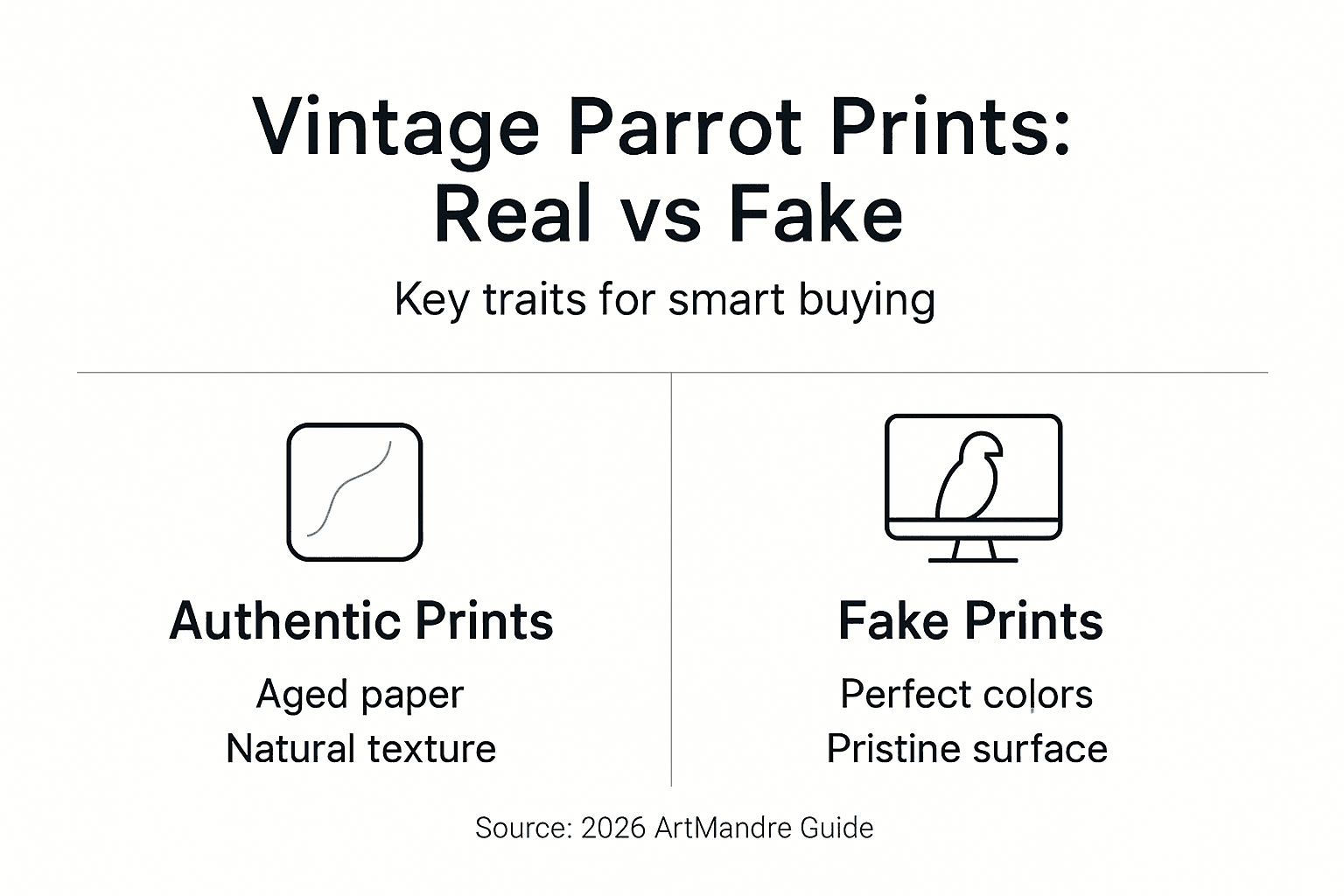
Digital reproductions lack these qualities. They appear too perfect, with flawless color registration and pristine paper. Modern inkjet prints show dot patterns under magnification, while vintage lithographs display smooth color gradations.
Pro Tip: Examine prints under natural light and use a magnifying glass to check texture and printing patterns. Authentic vintage prints reveal subtle imperfections that digital reproductions cannot replicate.
Provenance matters significantly. Credible sellers provide documentation about print origins, previous ownership, and publication details. Ask for catalog numbers, publisher information, or exhibition history. Generic marketplace listings often lack these details entirely.
Authenticity guarantee rates improve by 20-30% when purchasing from niche retro art retailers compared to generic platforms. Specialized sellers understand period printing techniques and curate inventory carefully.
| Authentication Factor | Authentic Vintage | Digital Reproduction |
|---|---|---|
| Printing Texture | Tactile, uneven surface | Perfectly smooth |
| Color Registration | Slight misalignments | Flawless alignment |
| Paper Condition | Natural aging signs | Artificially distressed or pristine |
| Provenance | Documented history | Vague or absent |
| Price Range | Varies by rarity | Often suspiciously low |
Common pitfalls include mistaking marketing terms for authenticity. Terms like “vintage style” or “retro inspired” describe modern prints designed to look old. True vintage prints date from the actual historical period. Beware of sellers who avoid questions about printing dates or techniques.
Styling Vintage Parrot Prints in Retro-Themed Living Spaces
Authentic vintage parrot prints transform retro interiors into vibrant, personality-rich spaces. These prints provide 30%-50% color contrast, serving as powerful focal points against mid-century modern neutrals.
Start by selecting your display approach:
- Single statement piece above a sofa or credenza draws immediate attention.
- Grid arrangement of matching-sized prints creates structured visual rhythm.
- Salon wall mixing parrot prints with complementary vintage art builds eclectic charm.
- Symmetrical pairs flanking doorways or windows establish balanced composition.
Color coordination matters for cohesive design. Vintage parrot prints typically feature bold greens, blues, yellows, and reds. Pull accent colors from the prints into throw pillows, ceramics, or textiles. This repetition ties the room together without overwhelming the space.
Pro Tip: Place parrot prints where natural light enhances their colors without causing direct sun damage. East or north-facing walls work well, offering brightness without harsh afternoon rays.
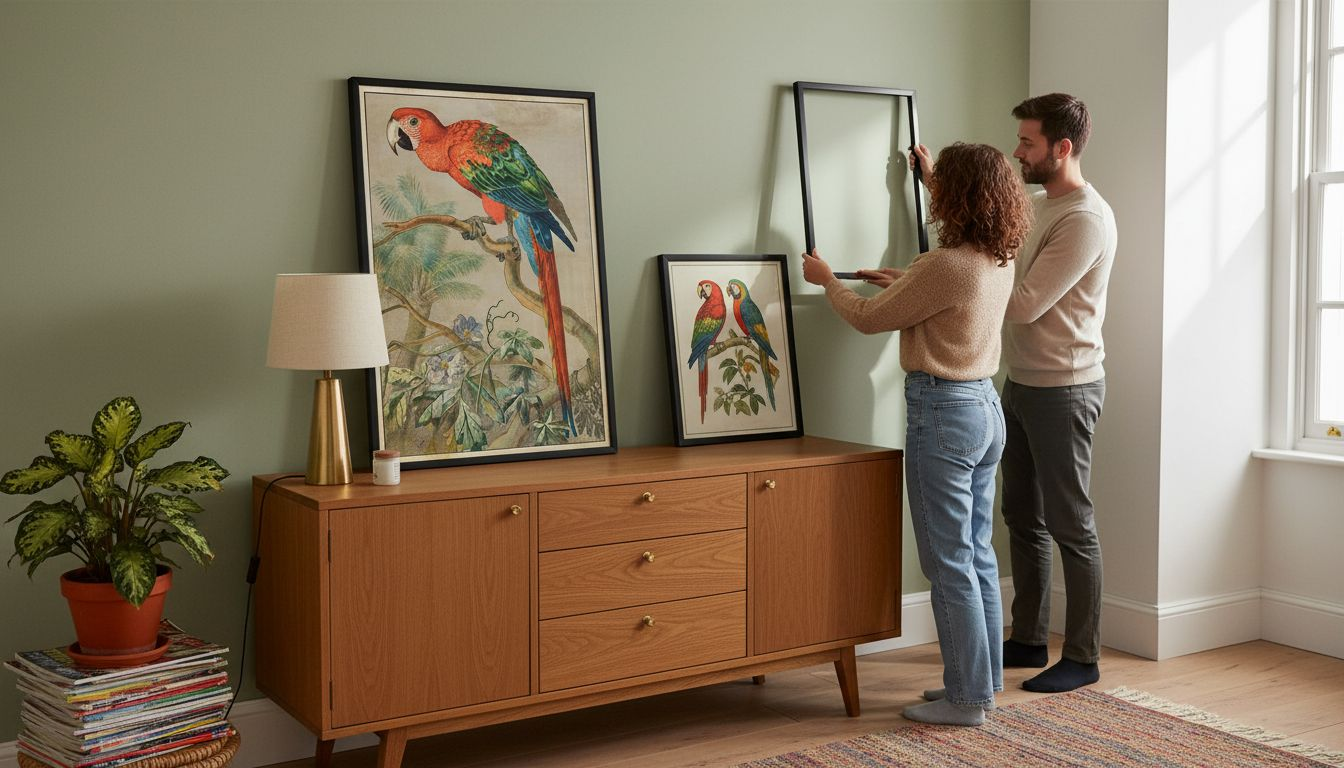
Combine parrot prints with other vintage art for thematic depth. Styling vintage art prints alongside botanical illustrations, vintage maps, or retro travel posters creates narrative interest. The tropical parrot theme pairs beautifully with palm leaf prints or nautical charts.
Balance exotic tropical subjects with clean-lined furniture:
- Mid-century modern sofas in neutral tones let colorful prints dominate.
- Teak or walnut credenzas provide warm wood contrast.
- Simple geometric rugs ground the space without competing visually.
- Minimalist lighting keeps focus on wall art.
When choosing vintage prints for living rooms, consider scale and proportion. Large prints anchor spacious walls, while smaller prints suit intimate nooks. Group arrangements work best with odd numbers for visual balance.
For gallery wall ideas with vintage prints, start by laying out your arrangement on the floor. Maintain 2-3 inches between frames for breathing room. Mix frame styles or keep them uniform, depending on whether you want eclectic or streamlined aesthetics.
Where and How to Buy Vintage Parrot Prints: Sourcing and Pricing Strategies
Sourcing authentic vintage parrot prints requires strategic shopping and informed decision making. Niche retro art retailers offer 20-30% higher authenticity guarantees than generic online marketplaces, making them safer choices for serious collectors.
Specialized retailers curate inventory carefully. They verify printing techniques, document provenance, and often provide authenticity certificates. These sellers understand period styles and can answer detailed questions about print origins and condition.
Generic marketplaces carry significant risks:
- Mislabeling of modern reproductions as vintage originals.
- Limited provenance documentation or seller expertise.
- Inconsistent quality control across listings.
- Difficulty verifying seller credibility and return policies.
| Source Type | Authenticity Rate | Price Range | Provenance Documentation | Return Policy |
|---|---|---|---|---|
| Specialized Retro Retailers | 85-95% | Moderate to high | Detailed and verified | Clear and protective |
| Generic Marketplaces | 55-70% | Low to moderate | Often minimal | Varies widely |
| Auction Houses | 90-98% | High | Extensive | Limited |
| Estate Sales | 70-80% | Variable | Sometimes available | Typically final sale |
Pricing depends on multiple factors beyond age. Print size, condition, rarity, artist recognition, and subject appeal all influence value. A small, common parrot print in fair condition costs less than a large, rare specimen in excellent condition.
Watch for multi-buy opportunities. Many retailers offer bundle discounts that reduce per-print costs significantly. Purchasing multiple prints for a gallery wall becomes more affordable this way.
Before buying, verify these details:
- Seller reviews and reputation scores.
- Return policies allowing inspection and authentication.
- Detailed condition reports with close-up photographs.
- Provenance documentation or publishing information.
- Shipping protections ensuring safe delivery.
Don’t assume high prices guarantee authenticity. Some sellers inflate prices on reproductions hoping buyers equate cost with quality. Compare similar prints across multiple sources to understand fair market value.
Preserving Vintage Parrot Prints: Care and Display Recommendations
Proper preservation maintains your vintage parrot prints’ beauty for decades. Paper-based art faces threats from light, humidity, pollutants, and improper handling. Strategic care prevents fading, discoloration, and structural damage.
Framing provides essential protection. Understanding the importance of framing art prints helps you make preservation-focused choices:
- UV-protective glass or acrylic blocks 97-99% of harmful ultraviolet rays.
- Acid-free mats prevent chemical reactions that yellow paper over time.
- Backing boards support prints and prevent warping or creasing.
- Sealed frames reduce exposure to airborne pollutants and moisture.
Environmental control matters significantly. Keep prints away from direct sunlight, even with UV glass. Indirect natural light or LED lighting preserves colors without heat damage. Avoid fluorescent bulbs that emit UV rays.
Pro Tip: Rotate displayed prints seasonally if you have a collection. This practice distributes light exposure evenly and keeps your interior feeling fresh while protecting individual pieces.
Maintain stable temperature and humidity. Ideal conditions range from 65-70°F with 40-50% relative humidity. Extreme fluctuations cause paper expansion and contraction, leading to warping or brittleness. Avoid hanging prints near heating vents, air conditioners, or exterior walls.
Cleaning requires gentle care:
- Dust frames regularly with soft, dry cloths.
- Never clean print surfaces directly; leave this to professional conservators.
- Check for pest damage periodically, especially in older frames.
- Inspect mounting to ensure prints remain secure without tension.
For DIY framing tips, choose archival materials exclusively. Standard matboard and backing contain acids that damage prints over time. Invest in conservation-grade supplies for long-term preservation.
Consider professional conservation for valuable or fragile prints. Conservators can stabilize damaged paper, remove old acidic materials, and provide museum-quality mounting. This investment protects significant pieces and maintains their collectible value.
Common Misconceptions About Vintage Parrot Prints
Several myths cloud understanding of vintage parrot prints, leading to poor purchasing decisions and missed styling opportunities. Clarifying these misconceptions sharpens your collector’s eye and expands creative possibilities.
Myth: All prints labeled vintage are authentic originals. Reality shows that marketing terms often mislead. “Vintage style” describes modern prints designed to look old, not actual historical pieces. True vintage prints date from the period they represent, with period-appropriate printing methods.
Myth: Digital reproductions hold the same value as originals. Reproductions lack the historical significance, craftsmanship, and collectible appeal of authentic vintage prints. Original lithographs or etchings represent specific artistic moments and printing technologies. Digital copies, regardless of quality, remain modern decorative items without comparable cultural or monetary value.
Myth: Vintage parrot prints only suit Victorian or traditional interiors. These prints adapt beautifully to multiple design styles:
- Mid-century modern spaces benefit from tropical color pops against clean lines.
- Eclectic interiors gain personality from mixing vintage subjects with contemporary pieces.
- Bohemian designs embrace the exotic, free-spirited symbolism parrots represent.
- Coastal themes pair naturally with tropical bird imagery and oceanic palettes.
Myth: Higher prices always indicate authenticity. Price reflects many factors including condition, rarity, seller overhead, and market positioning. Some dealers price reproductions high, counting on buyer assumptions. Others offer authentic prints affordably due to overstock or sourcing advantages. Always verify authenticity through printing technique examination rather than price alone.
Myth: Vintage prints require minimal care once framed. Even well-framed prints need environmental monitoring, periodic inspection, and appropriate display locations. Light damage accumulates gradually, and humidity fluctuations affect paper over years. Active preservation ensures prints maintain their appeal long-term.
Understanding these realities helps you navigate the vintage market confidently. You’ll make informed purchases, style prints creatively across design contexts, and care for them appropriately. This knowledge transforms you from casual buyer to educated collector.
Discover Authentic Vintage and Retro Posters at ArtMandre
Now that you understand how to identify, style, and preserve vintage parrot prints, finding trusted sources becomes your next step. ArtMandre.com specializes in curated retro and vintage-inspired posters designed for modern living spaces.

Our collection includes carefully selected prints featuring tropical birds, botanical illustrations, and classic travel designs. Each piece reflects authentic vintage aesthetics while meeting contemporary quality standards. Detailed product descriptions help you understand printing methods, sizing options, and styling possibilities before purchase.
Explore iconic retro poster styles to discover how different artistic movements influence home décor choices. Our editorial content provides practical guidance for creating cohesive gallery walls with retro vintage prints that transform ordinary rooms into distinctive spaces.
Multi-buy discounts make building complete gallery walls affordable. Purchase two posters and receive 5% off, three for 10% off, or four or more for 15% off. This transparent pricing supports your creative vision while delivering measurable value.
Visit ArtMandre today to browse our complete collection. Whether you’re searching for a single statement piece or curating an entire wall composition, you’ll find designs that balance vintage character with modern simplicity.
Frequently Asked Questions
How can I tell if a vintage parrot print is authentic?
Examine the printing technique for tactile texture, slight color misalignments, and natural paper aging like foxing or yellowing. Authentic prints show period-appropriate methods such as lithography with physical depth, while reproductions appear perfectly smooth with digital dot patterns. Always request provenance documentation from sellers.
What are the best ways to display vintage parrot prints in modern homes?
Use parrot prints as focal points providing 30%-50% color contrast against neutral mid-century modern palettes. Create grid arrangements for structured appeal, salon walls for eclectic charm, or single statement pieces above key furniture. Balance tropical subjects with clean-lined furnishings and pull accent colors into textiles for cohesion.
Are digital reproductions worth buying?
Digital reproductions offer affordable decorative options but lack the historical significance, craftsmanship, and collectible value of authentic vintage prints. They suit temporary styling or budget-conscious projects. For meaningful investment in art with cultural relevance and potential appreciation, prioritize original vintage pieces.
Where is the safest place to purchase authentic vintage parrot prints?
Niche retro art retailers provide 20-30% higher authenticity guarantees than generic marketplaces through expert curation and provenance verification. Auction houses offer extensive documentation but higher prices. Always verify seller reviews, return policies, and detailed condition reports regardless of source.
How do I care for and preserve my vintage parrot prints?
Frame prints with UV-protective glass and acid-free mats to prevent fading and chemical damage. Display away from direct sunlight, maintaining stable 65-70°F temperature and 40-50% humidity. Regularly inspect for pest damage or mounting issues, and rotate displayed pieces seasonally to distribute light exposure evenly across your collection.