
Blog
Why Frame Art Prints: Enhance Style and Longevity

Choosing the right frame for your art print feels more complex than ever with modern styles, tight budgets, and the need for lasting protection all competing for attention. Framing does so much more than simply dress up a piece—it creates a protective boundary that shields prints from dust, moisture, and fading. Learning about archival-grade materials and reliable framing methods empowers you to confidently showcase retro and modern artwork while keeping every print vibrant and secure.
Table of Contents
- What Framing Art Prints Means
- Types of Frames and Display Options
- How Framing Protects and Preserves Prints
- Impact on Room Décor and Presentation
- Framing Costs, Value, and Common Mistakes
Key Takeaways
| Point | Details |
|---|---|
| Importance of Framing | Framing art prints ensures preservation, enhances presentation, and protects artwork from damage, transforming them into sophisticated visual statements. |
| Choosing the Right Frame | The choice of frame material and style plays a crucial role in both the artwork’s aesthetic appeal and its long-term preservation, with wood, metal, and plastic offering different benefits. |
| Financial Considerations | Investing in high-quality archival framing can prevent future restoration costs, highlighting the importance of prioritizing preservation techniques over budget-friendly options. |
| Impact on Décor | Properly framed art can dramatically alter a room’s visual dynamics and emotional atmosphere, making it essential to consider placement and coordination with other decor elements. |
What Framing Art Prints Means
Framing art prints goes far beyond simply hanging artwork on a wall. It represents a deliberate method of preservation, presentation, and protection that transforms an ordinary print into a sophisticated visual statement. Conservation framing techniques involve carefully selecting materials and methods to safeguard the artwork’s integrity while enhancing its aesthetic appeal.
At its core, framing is about creating a protective boundary that shields delicate art prints from environmental damage. High-quality frames prevent dust, moisture, and ultraviolet light from degrading the artwork. By selecting archival-grade materials like acid-free mats, UV-protective glass, and sturdy wooden or metal frames, collectors can significantly extend the lifespan of their cherished prints. Visual arts framing) also serves a compositional purpose, guiding viewers’ attention and complementing the artwork’s inherent design.
The framing process involves several critical considerations. Art print enthusiasts must evaluate frame material, mat color, glass type, and mounting technique. Wooden frames offer classic warmth, while metal frames provide a sleek modern aesthetic. Professional conservators recommend choosing neutral mat colors that enhance the print’s visual characteristics without overwhelming its original artistic intent. Specialized museum-grade glass can block up to 99% of harmful UV rays, ensuring your investment remains vibrant and undamaged for decades.
Pro tip: When selecting a frame, always bring a sample of your art print to compare frame colors and styles in person to ensure the perfect visual harmony.
Types of Frames and Display Options
Selecting the right frame is an art form that dramatically transforms the visual impact and preservation of art prints. Picture frame materials range from traditional wooden frames to contemporary metal and plastic options, each offering unique aesthetic and protective qualities. Wood remains a classic choice, providing warmth and versatility with numerous profile styles that can complement virtually any art print’s character.
Metal frames represent a modern alternative, delivering sleek lines and durability perfect for contemporary and minimalist spaces. Aluminum and steel frames offer lightweight protection with a sophisticated edge, ideal for urban home decor. Plastic frames provide an affordable and lightweight solution, though they may lack the longevity of more premium materials. The frame’s width, color, and finish significantly influence how viewers perceive the artwork, making selection a nuanced design decision.
Here’s a comparison of common frame materials for art prints:
| Frame Material | Appearance | Durability | Typical Cost |
|---|---|---|---|
| Wood | Warm, classic look | Moderate to high | Medium to high |
| Metal | Sleek, modern style | High, resists warping | Medium to high |
| Plastic | Lightweight, varied colors | Low to moderate | Low |
Beyond material, display options have expanded dramatically for art print enthusiasts. Custom framing solutions now include museum-quality glazing that protects artwork from ultraviolet damage while maintaining visual clarity. Collectors can choose between standard hanging, floating frame designs that create depth, or gallery-style arrangements that transform entire wall spaces. Considerations like room lighting, wall color, and surrounding decor play crucial roles in determining the most effective display strategy for each unique art print.
Pro tip: Always measure your wall space and create paper templates of potential frame sizes before purchasing to visualize the final display arrangement.
How Framing Protects and Preserves Prints
Archival framing techniques represent the gold standard for protecting delicate art prints from environmental degradation. The primary goal of professional framing is creating a protective microenvironment that shields artwork from potential damage caused by humidity, temperature fluctuations, light exposure, and airborne contaminants. By using specialized materials and precise mounting techniques, collectors can significantly extend the lifespan of their cherished prints.
The protective components of a high-quality frame work in concert to prevent deterioration. Acid-free mat boards create a crucial buffer zone between the artwork and glass, preventing direct contact that could cause moisture condensation or chemical transfer. UV-protective glazing blocks harmful radiation that can fade and degrade print colors, while archival backing boards provide structural support and prevent warping. Carefully selected mounting techniques ensure the print remains stable and undamaged, allowing art enthusiasts to display their pieces without risking long-term preservation.
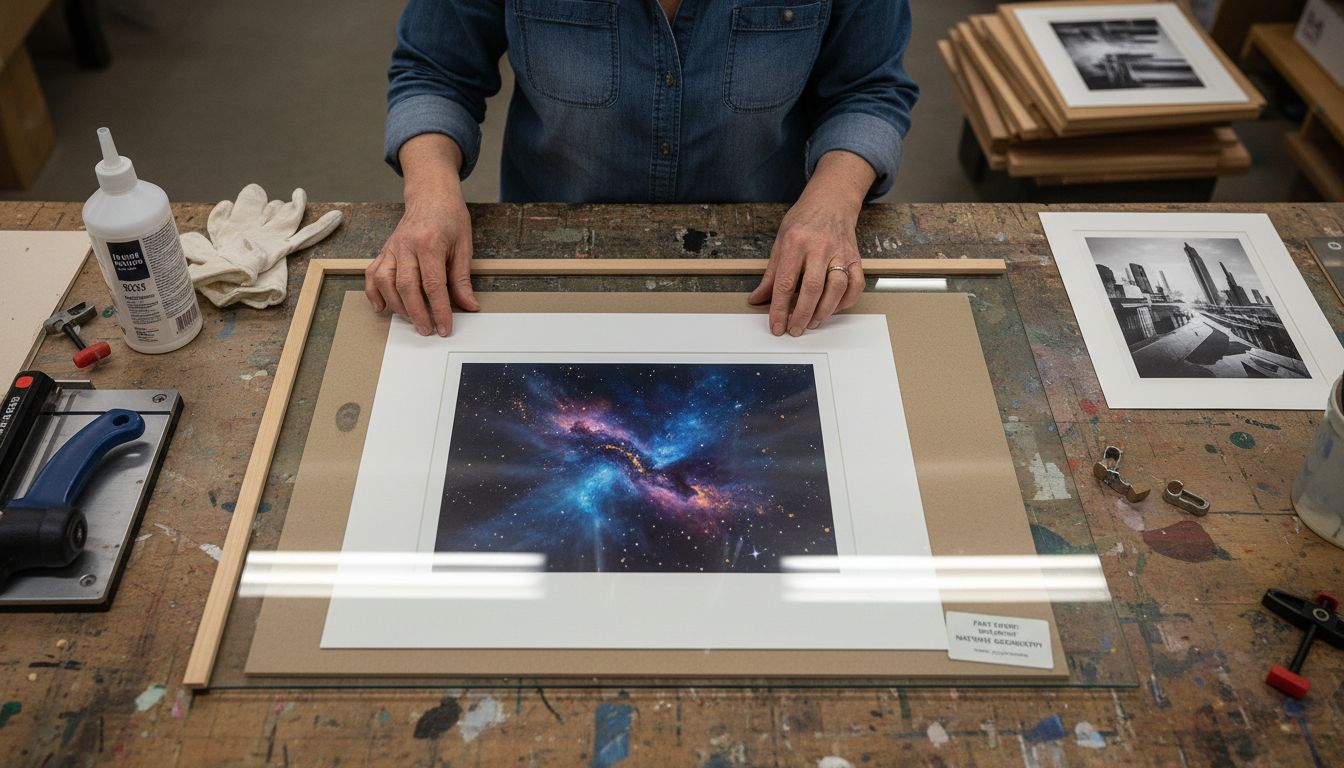
Picture frame protective mechanisms go beyond simple aesthetic considerations, functioning as a comprehensive preservation system. Professional framers understand that each material choice impacts the artwork’s longevity. Cotton rag mat boards, museum-grade glass, and precision-engineered mounting techniques all contribute to creating an environment that protects prints from oxidation, acid migration, and mechanical stress. The investment in high-quality framing transforms a simple print into a protected, museum-worthy piece that can be enjoyed for generations.
Refer to this summary of key framing components and their roles:
| Component | Primary Role | Long-Term Benefit |
|---|---|---|
| UV-protective glass | Blocks damaging light | Prevents fading and discoloration |
| Acid-free mat | Separates print/glass | Avoids chemical damage |
| Archival backing | Provides support | Prevents warping and deterioration |
Pro tip: Rotate artwork periodically and avoid hanging prints in direct sunlight to minimize potential environmental damage.
Impact on Room Décor and Presentation
Framing visual arts) transforms art prints from simple decorative elements into powerful design statements that dramatically reshape interior spaces. The right frame can elevate a print from a mere wall hanging to a focal point that anchors an entire room’s aesthetic, creating visual harmony and drawing the viewer’s eye exactly where you want it. Different frame styles communicate distinct design languages: sleek metallic frames suggest modern minimalism, ornate wooden frames evoke classic elegance, and rustic frames introduce a sense of warmth and authenticity.
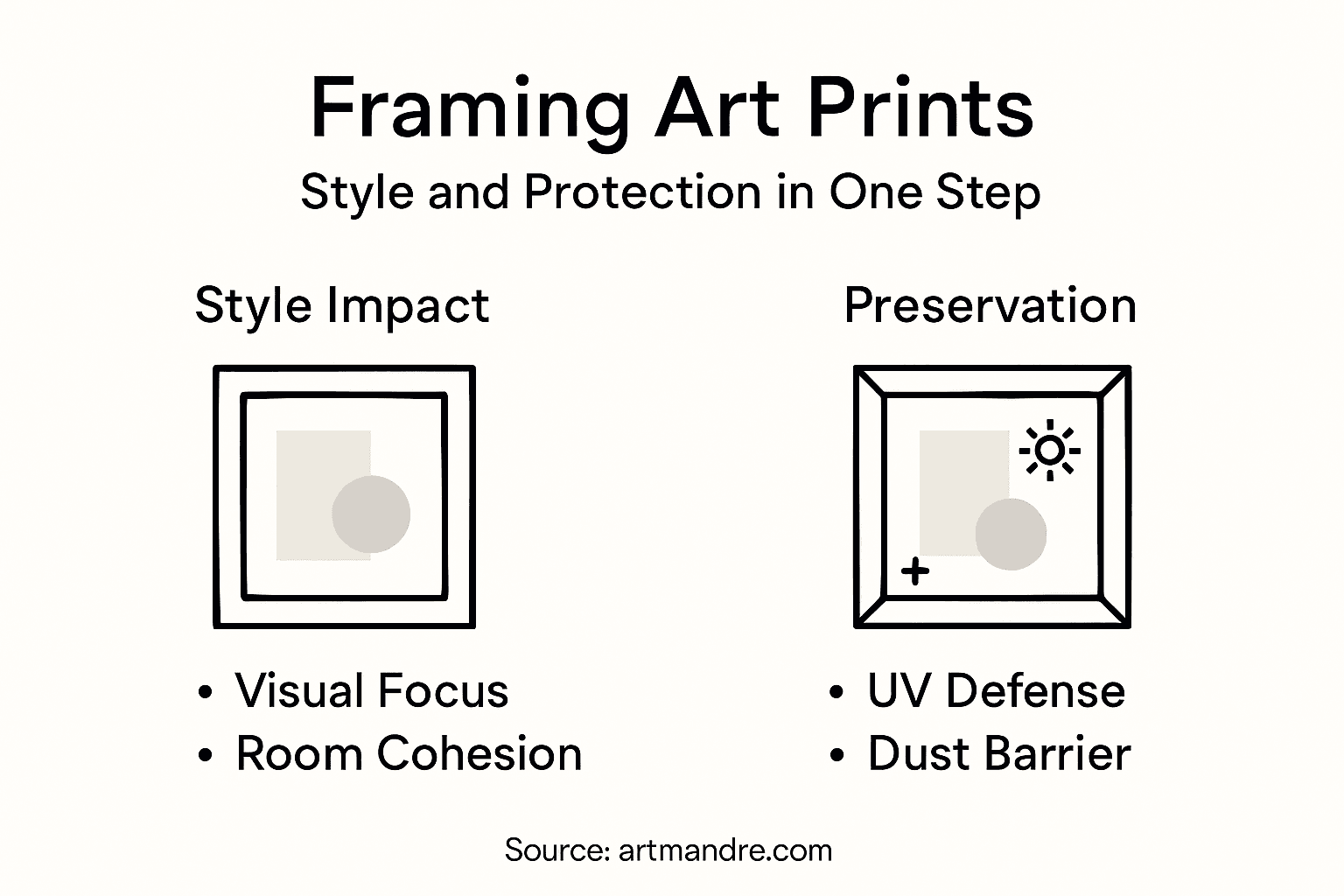
The strategic placement and framing of art prints can fundamentally alter a room’s perceived dimensions and emotional atmosphere. Lighter frames can make small spaces feel more expansive, while darker, more substantial frames create visual weight and intimacy. Color coordination becomes crucial – frames that complement or intentionally contrast with wall colors can create depth, highlight architectural features, or soften harsh room geometries. Professional designers understand that framing is not just about protecting artwork, but about crafting a narrative within the living space.
Interior presentation techniques go beyond individual pieces to consider how art prints interact and communicate with each other. Gallery walls, where multiple framed prints are arranged in carefully curated configurations, can transform an ordinary wall into a dynamic visual conversation. The spacing, alignment, and relationship between frames become as important as the artwork itself, allowing homeowners to express personal style and create immersive visual experiences that reflect their unique aesthetic sensibilities.
Pro tip: Create visual balance by mixing frame sizes and styles, ensuring no single piece overwhelms the entire composition.
Framing Costs, Value, and Common Mistakes
Framing preservation strategies require careful financial planning and understanding of long-term value. Art print framing costs can range from $50 to $500, depending on print size, frame complexity, and preservation techniques. Budget-conscious collectors should prioritize archival quality over pure cost savings, recognizing that investing in proper framing protects artwork’s intrinsic and monetary value. Cheaper framing options might save money initially but can potentially damage prints, leading to much higher restoration or replacement expenses.
The most common framing mistakes often stem from uninformed material choices. Non-archival mats, acidic backing boards, and inappropriate adhesives can cause irreversible damage to art prints. Professional framers recommend using 100% cotton rag mat boards, acid-free backing, and museum-grade glass to prevent deterioration. Custom framing services offer tailored solutions that balance aesthetic preferences with conservation requirements, helping collectors make informed decisions about protecting their artwork investments.
Pricing for art print framing varies widely based on several critical factors. Standard frames might cost $50-$100, while conservation-grade framing can exceed $300. Key price determinants include frame material (wood being typically less expensive than metal), glass type (standard glass is cheaper than UV-protective museum glass), mat quality, and overall craftsmanship. Collectors should view framing as a protective investment rather than a pure aesthetic expense, understanding that proper framing can dramatically extend an art print’s longevity and maintained value.
Pro tip: Request material samples and frame corners before committing to a full framing project to ensure color, texture, and style match your vision.
Protect and Style Your Art Prints with Confidence
Framing art prints is essential for preserving their beauty and enhancing your room’s style. The article highlights key challenges like protecting your artwork from fading, moisture, and environmental damage while selecting the perfect frame material and color to complement your space. At artmandre.com, we understand how important it is to combine longevity with visual impact when showcasing your favorite retro, vintage, or modern prints.
Whether you are drawn to nostalgic cocktail posters, vintage maps, or Bauhaus-inspired art, our curated selection offers stylish wall decor designed to fit diverse aesthetics. Enjoy attractive deals like our buy 2 get 1 free offer so you can frame and display your artwork with confidence. Don’t let your prints lose their charm due to poor framing choices. Explore framing-friendly art prints and start enhancing your home today.

Discover how easy it is to bring preservation and style together with our unique collections at artmandre.com. Visit our new arrivals for fresh, trendy prints or explore our hot sellers designed to inspire your next framing project. Act now to secure high-quality art prints that both protect your investment and transform your living space.
Frequently Asked Questions
What is the purpose of framing art prints?
Framing art prints serves to preserve, protect, and enhance the visual appeal of the artwork. It creates a protective boundary that shields prints from environmental damage while also guiding viewers’ attention to the art.
How does framing protect art prints from damage?
Framing art prints protects them by using high-quality materials that block dust, moisture, and UV light. Techniques like using acid-free mats and UV-protective glass help prevent fading and chemical damage, significantly extending the lifespan of the prints.
What materials should I use for framing art prints?
For optimal preservation, use archival-grade materials such as acid-free mats, museum-quality glass, and sturdy backing boards. These components create aSafe microenvironment that protects the artwork from degradation over time.
How can the right frame impact room decor?
The right frame can elevate art prints from mere decorations to focal points in a room, influencing the overall aesthetic. Different frame styles and colors can create harmony, highlight features, or enhance the emotional atmosphere of the space.