
Blog
Hasui Kawase Print: Timeless Elegance in Vintage Decor
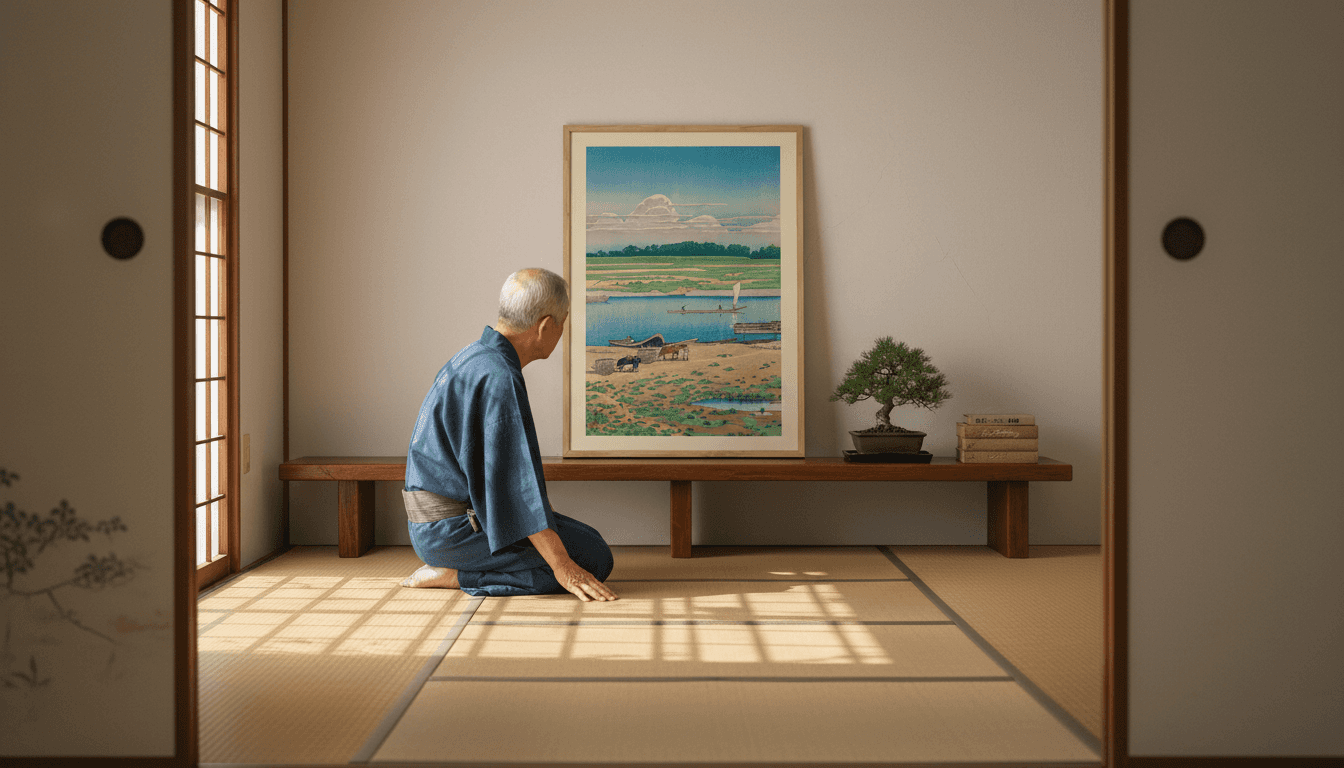
Choosing artwork for your retro-themed home can feel like a balancing act between finding something unique and staying true to vintage aesthetics. Hasui Kawase prints offer that rare combination, blending traditional Japanese craftsmanship with Western artistic innovation and attracting collectors from across Europe and North America. If you want pieces that bring both historical depth and quiet sophistication to your interiors, the shin-hanga movement’s blend of old and new delivers timeless beauty certain to enhance your living space.
Table of Contents
- Hasui Kawase Prints And Their Origins
- Landscape Styles And Subject Variations
- Defining Features And Artistic Techniques
- Authenticity, Value And Reproduction Concerns
- Decorating Benefits For Vintage-Themed Interiors
Key Takeaways
| Point | Details |
|---|---|
| Significance of Hasui’s Art | Kawase Hasui’s prints uniquely blend traditional Japanese aesthetics with modern techniques, making them enduringly popular among collectors. |
| Variety of Subjects | His works capture both tranquil natural landscapes and dynamic urban settings, reflecting Japan’s transformation in the early 20th century. |
| Characteristics of Prints | Hasui’s prints are known for their atmospheric effects, meticulous craftsmanship, and emotional resonance, achieved through careful use of light and colour. |
| Collecting and Authenticity | When collecting Hasui prints, understanding categories and authenticity markers is crucial to ensure value and genuine craftsmanship in artwork. |
Hasui Kawase prints and their origins
Kawase Hasui stands as one of Japan’s most celebrated landscape artists, creating nearly 1,000 prints that bridged traditional Japanese art with modern sensibilities. Born in 1883, he emerged during a transformative period when Japan was rapidly modernising whilst maintaining its cultural identity.
Hashui became the leading figure of the shin-hanga movement, meaning “new prints.” This artistic movement represented a conscious departure from the classical ukiyo-e tradition that had dominated Japanese printmaking for centuries. Rather than abandoning the past, shin-hanga artists like Hasui evolved the medium for contemporary audiences.
His partnership with publisher Watanabe Shozaburo proved instrumental to his success. Watanabe recognised the international appeal of Hasui’s work and actively promoted shin-hanga prints across Western markets, helping establish the movement as a legitimate continuation of Japanese landscape art into the 20th century.
The Bridge Between Tradition and Modernity
Hasui’s shin-hanga landscape prints reflect Japan’s transformation during the Taisho and early Showa periods. His scenes capture urban landscapes, seasonal changes, and architectural subjects infused with Western compositional techniques.
What made Hasui’s work distinctive:
- Western perspective and shading techniques applied to Japanese subjects
- Incorporation of modern infrastructure like railways, bridges, and streetlights
- Preservation of traditional Japanese aesthetics and colour palettes
- Attention to atmospheric effects and mood through light
- Deep respect for seasonal imagery rooted in classical Japanese art
Hasui gained immediate popularity internationally, helping elevate shin-hanga from a niche movement to a globally recognised art form. His prints resonated with Western collectors who appreciated the blend of familiar artistic techniques with exotic Japanese imagery.
Hasui’s ability to modernise traditional landscape art whilst preserving Japanese cultural identity defines his enduring appeal in contemporary vintage decor.
Understanding Hasui’s origins helps explain why his prints remain so desirable today. They represent a pivotal moment in Japanese art history when tradition met progress, and that tension creates visual and emotional depth that transcends time.
Pro tip: When selecting Hasui prints for your home, look for works depicting scenes with strong seasonal markers or architectural elements—these capture the essence of his modernist approach whilst maintaining traditional beauty.
Landscape styles and subject variations
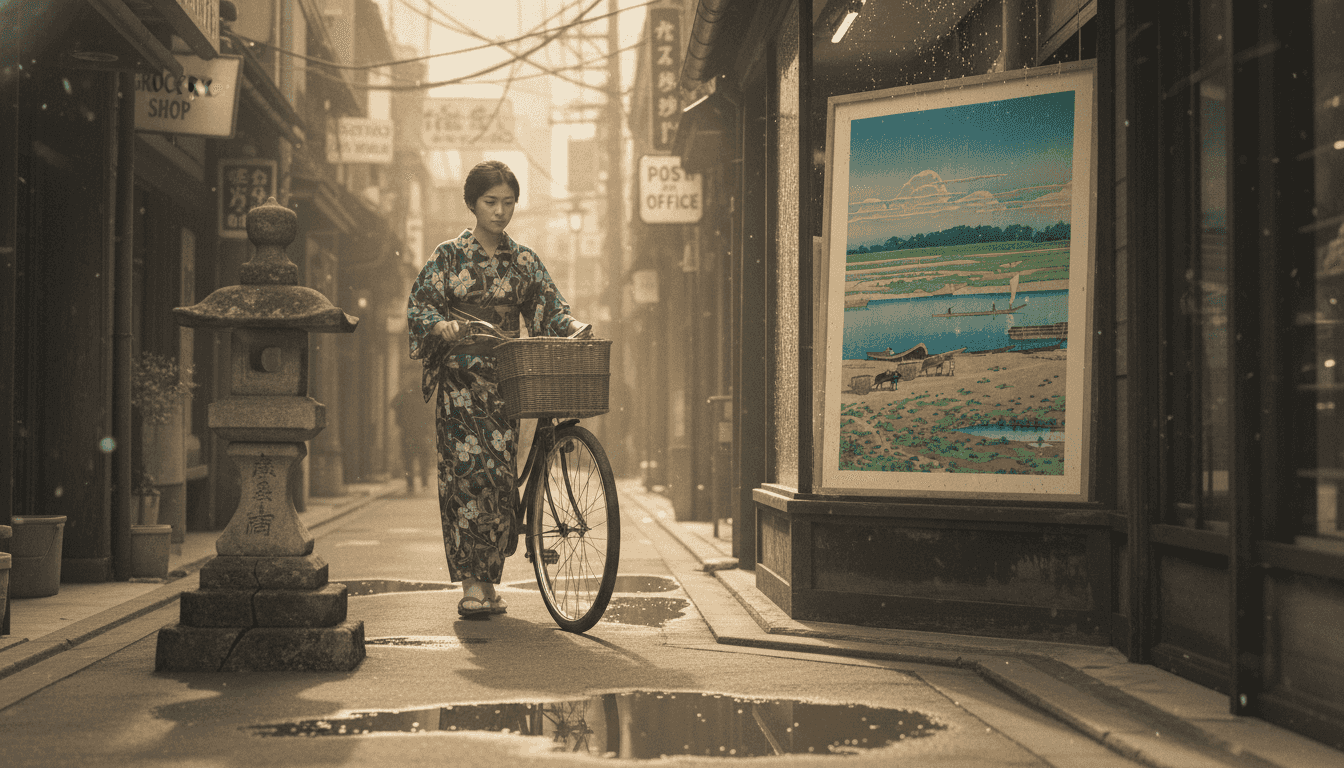
Hashui’s prints span an impressive range of subjects, yet they all share a poetic sensibility that elevates everyday scenes into moments of contemplation. Rather than focusing on famous landmarks that tourists flock to, he sought out peaceful and lesser-known locales across Japan that possessed genuine character and atmosphere.
His subject matter encompasses both natural and urban environments, often capturing the tension between them. Mountains, lakes, and rural fields sit alongside bustling city streets, railways, and modern architecture. This duality reflects Japan’s rapid transformation during the early 20th century.
Atmospheric Effects and Seasonal Moods
Hasui’s atmospheric effects like moonlight, rain, and snow became signature elements of his work. These weren’t merely decorative—they created emotional depth and invited viewers into intimate moments of reflection.
The moods Hasui captured include:
- Snow-covered temples and quiet rural pathways
- Moonlit scenes that enhance melancholy and introspection
- Rain-soaked urban streets with glistening surfaces
- Summer landscapes with vibrant seasonal colours
- Autumn scenes featuring muted blues and grays
- Winter nights with crystalline atmospheric clarity
Colour became a tool for emotion. Hasui’s palette shifted deliberately—from subdued, cool tones in winter pieces to warmer, more saturated hues in seasonal celebrations. A single print’s colour choices conveyed mood as powerfully as its composition.
The Role of Human Figures
Interestingly, people rarely dominate Hasui’s compositions. When figures appear, they’re typically solitary and peripheral, often walking away from the viewer or absorbed in their own journeys. This compositional choice intensifies feelings of loneliness and introspection rather than narrative drama.
A lone figure crossing a bridge at dusk. A solitary traveller on a mountain path. These moments capture the human experience of moving through landscape rather than conquering it.
Hasui’s restraint with human subjects paradoxically makes his prints feel deeply personal, inviting each viewer to imagine themselves within the scene.
Bridges, temples, and traditional architecture feature prominently throughout his body of work. These structures anchor his scenes in Japanese cultural identity whilst the atmospheric conditions and compositional choices modernise them.
Pro tip: Choose Hasui prints based on the mood you want to create in a room—select moody rain or snow scenes for bedrooms and introspective spaces, and brighter seasonal pieces for living areas requiring warmth and energy.
Defining features and artistic techniques
Hashui’s prints stand apart because he merged traditional Japanese woodblock craftsmanship with Western artistic innovation. This fusion created something entirely new—neither purely classical nor entirely modern, but a sophisticated blend of both traditions.
He drew inspiration from Impressionism and Art Nouveau, adopting their emphasis on natural light, atmospheric effects, and emotional resonance. Yet he never abandoned the meticulous technical foundations of Japanese printmaking. This balance distinguishes his work from both his predecessors and contemporaries.
Light, Colour, and Atmospheric Mastery
Hasui’s use of light and weather became his most recognisable signature. He designed over 600 woodblock prints that prioritised the capture of specific atmospheric moments—rain falling on wet streets, snow accumulating on temple roofs, moonlight filtering through winter branches.
His technical innovations include:
- Delicate colour layering creating depth without overstatement
- Nuanced shading that renders three-dimensional space
- Subtle tonal variations that evoke mood and place
- Refined use of shadow and light to suggest time of day
- Atmospheric effects that feel poetic rather than documentary
Unlike Edo-period prints with their flat, graphic quality, Hasui’s compositions possessed genuine spatial depth. He achieved this through careful perspective, overlapping forms, and the strategic use of atmospheric perspective—distant elements become hazier and cooler in tone.
The Technical Mastery Behind Each Print
Producing a Hasui print required extraordinary collaboration. His partnerships with publishers ensured meticulous craftsmanship and production quality. Each print involved multiple woodblocks—one for each colour—requiring precise registration to align perfectly.
The process demanded:
- Skilled carvers translating his designs into separate blocks
- Printers mixing traditional pigments to exact specifications
- Multiple passes through the printing press with absolute precision
- Quality control ensuring consistency across editions
This labour-intensive approach meant every authentic ArtMandre Hasui print represents genuine craftsmanship, not mechanical reproduction.
Hasui’s mastery lies not in technical complexity for its own sake, but in creating deceptively simple scenes that evoke profound emotional responses.
His training in both Western and traditional Japanese painting gave him unique flexibility. He could compose with Western perspective whilst maintaining Japanese aesthetic sensibilities about negative space, seasonal awareness, and poetic restraint.
Pro tip: When examining Hasui prints, look closely at how light interacts with architectural surfaces and water—this interplay between material and illumination reveals the sophistication underlying his apparently serene compositions.
Authenticity, value and reproduction concerns
Collecting Hasui prints requires understanding a complex marketplace. Not all prints bearing his name hold equal value or authenticity, and the differences matter considerably if you’re investing in genuine artwork for your home.
Hashui produced over 600 woodblock prints during his career, primarily for publisher Watanabe Shozaburo. Demand for his work remains extraordinarily high, which unfortunately creates opportunities for less scrupulous sellers.
Understanding Print Categories
Distinguishing between early editions and reproductions requires knowledge of key indicators. The market contains several distinct categories, each with vastly different values and authenticity levels.
The main print types include:
- Lifetime prints created during Hasui’s lifetime (1883-1957)
- Early editions from the Taisho and early Showa periods commanding premium prices
- Posthumous printings made after his death using original blocks
- Recuts where blocks were re-carved for additional printings
- Photo-mechanical reproductions with minimal collectible value
- High-quality handmade reproductions from newly carved blocks
Authentic early editions feature sharp colours, clear lines, and exceptional printing quality. These command substantial prices at auctions worldwide. One print, “Snow at Zojo-ji Temple,” holds the status of an Intangible Cultural Asset in Japan.
To clarify the distinctions when collecting Hasui prints, the following table summarises major print categories and their typical value considerations:
| Print Category | Edition Period | Value for Collectors | Key Authenticity Factors |
|---|---|---|---|
| Lifetime Prints | 1883–1957 | Highest; museum quality | Publisher seal, vibrant colours |
| Early Editions | Taisho/Showa periods | Excellent; premium prices | Clear lines, provenance, sharp impression |
| Posthumous Printings | After 1957 | Moderate; collectable | Original blocks, paper condition |
| Photo-mechanical Reproductions | Variable | Minimal; decorative only | Lacks texture, dull colours |
| Handmade Reproductions | Recent decades | Honest; affordable vintage | New blocks, quality documentation |
Key Authentication Markers
Verifying authenticity hinges on multiple factors working together. No single indicator tells the complete story, so examine prints holistically.
Authentication depends on:
- Publisher seals indicating Watanabe Shozaburo’s involvement
- Print quality and colour saturation consistency
- Paper condition and aging characteristics
- Carving precision visible in fine details
- Registration accuracy between colour layers
- Documentation and provenance history
Reputable sources like ArtMandre provide detailed information about print origins, ensuring you understand exactly what you’re acquiring.
Early Hasui editions remain highly sought after because their combination of artistic merit, technical excellence, and historical significance creates genuine value that endures across generations.
Photo-mechanical copies produced through photographic processes carry virtually no collector value. Conversely, high-quality handmade prints from newly carved blocks represent legitimate contemporary reproductions with honest pricing reflecting their true production method.
Condition matters significantly. Fading, foxing, or staining reduces value substantially. Genuine collectors understand that original prints from the 1920s-1930s naturally show age, yet should maintain vibrant colours and clear impressions.
Pro tip: Before purchasing, request detailed information about the print’s edition, publisher seal presence, and provenance—legitimate sellers provide this documentation transparently, giving you confidence in your investment.
Decorating benefits for vintage-themed interiors
Hashui prints transform vintage interiors by bringing authentic cultural depth and atmospheric sophistication to your walls. These aren’t merely decorative objects—they’re portals to a specific historical moment when Japan balanced tradition with modernity.
Vintage-themed spaces thrive on authenticity and emotional resonance. Hasui’s work delivers both, creating rooms that feel curated rather than assembled from a catalogue.
Creating Peaceful Sophistication
Kawase Hasui prints evoke tranquil moods through muted colour palettes and poetic representation of landscapes. This aesthetic alignment makes them exceptionally suited to vintage interiors seeking quiet elegance rather than visual drama.
The benefits for your space include:
- Atmospheric depth that invites contemplation and rest
- Muted, sophisticated colour schemes harmonising with period furnishings
- Cultural authenticity adding genuine heritage rather than superficial nostalgia
- Seasonal imagery that shifts emotional tone throughout the year
- Timeless subjects transcending specific decades or trends
- Small-scale intimate scenes encouraging close viewing and discovery
Unlike bold contemporary art that demands attention, Hasui prints reward slow looking. They work alongside vintage furniture, antique textiles, and period architectural details rather than competing with them.
To help with selecting Hasui prints for vintage interiors, the following table compares typical display locations and the moods achieved:
| Room Setting | Ideal Print Type | Mood Created | Complementary Colour Palette |
|---|---|---|---|
| Bedroom | Rain or snow scenes | Calm, introspective | Cool blues, greys, soft whites |
| Living Area | Summer or spring views | Warm, energetic | Bright greens, ochres, soft yellows |
| Study/Meditation | Moonlit landscapes | Contemplative, tranquil | Muted navy, silvers, gentle tone |
| Formal Zone | Temples/architecture | Refined, heritage-rich | Rich browns, deep greens, gold |
Seasonal and Thematic Flexibility
Hashui’s seasonal scenes—snowy temples, rain-drenched streets, twilight harbours—provide thematic richness that evolves with your home’s needs. A snow-covered landscape feels perfect during winter months, then transitions naturally as seasons change.
You might display:
- Winter prints in darker rooms during cold months
- Spring and summer scenes in brighter spaces
- Rain and evening scenes in meditation areas
- Temple and architectural prints in formal living zones
This flexibility means ArtMandre Hasui prints grow with your decorating vision rather than locking you into static arrangements.
Hasui prints create spaces that feel inhabited by history and human experience, transforming rooms from merely decorated into genuinely lived-in environments.
The muted colour ranges in authentic Hasui prints complement vintage colour schemes naturally. Blues, grays, soft greens, and warm ochres align perfectly with period palettes from the 1920s through 1950s.
Vintage interiors often struggle with contemporary art that feels jarring or dated. Hasui’s work solves this problem by being genuinely vintage whilst remaining timelessly beautiful.
Pro tip: Group three Hasui prints of varying sizes on a single wall using period-appropriate frames—this creates a curated, collected-over-time appearance that anchors an entire vintage aesthetic.
Elevate Your Vintage Interiors with Hasui Kawase Prints
Finding authentic art that balances deep cultural heritage with timeless sophistication can be challenging. This article highlights Hasui Kawase’s masterful shin-hanga landscape prints that perfectly blend traditional Japanese aesthetics with subtle modernity to create atmospheric moods and poetic scenes. If you seek artwork that adds emotional depth, preserves a vintage charm, and complements your interior’s tranquil elegance these prints offer an exceptional solution.
Discover a carefully curated selection of vintage and retro-inspired prints at ArtMandre, where quality craftsmanship meets accessible pricing. Explore our new arrivals to find reproductions and original-style artwork that echo Hasui’s seasonal themes and restrained colour palettes.

Transform your living spaces with authentic wall art that invites reflection and serenity. Shop now at https://artmandre.com to take advantage of exclusive offers like buy 2 get 1 free while stocks last. Embrace the timeless elegance of Hasui Kawase prints and bring a piece of Japan’s rich artistic legacy into your home today.
Frequently Asked Questions
What defines a Hasui Kawase print?
Hasui Kawase prints are known for their blend of traditional Japanese woodblock craftsmanship and modern artistic techniques. They feature atmospheric effects, seasonal imagery, and a unique incorporation of Western perspective in landscape representation.
How can I create a specific mood in my home using Hasui prints?
You can achieve different moods by selecting Hasui prints that align with your desired atmosphere. For calming spaces like bedrooms, choose winter scenes or rain-drenched prints. Bright, vibrant summer landscapes work well in lively areas like living rooms.
What are the main categories of Hasui prints and their significance?
The main categories include lifetime prints, early editions, posthumous printings, recuts, and photo-mechanical reproductions. Each category varies in value and authenticity, with lifetime prints typically holding the highest importance and value due to their historical significance.
How should I authenticate a Hasui print before purchasing?
To authenticate a Hasui print, check for publisher seals, print quality, paper condition, and registration accuracy of colour layers. These indicators, combined with provenance history, help verify the print’s authenticity.