

Blog
Hasui Kawase Prints: Elevating Vintage Décor
Finding the perfect piece to enrich your vintage-inspired decor can often feel like searching for a hidden gem. The timeless allure of Hasui Kawase’s prints lies in their ability to evoke a deeply peaceful and nostalgic Japanese environment, expertly blending traditional mastery with a modern sensibility. For collectors and home decor lovers, discovering affordable Shin-Hanga masterpieces opens a world of refined artistry where light, season, and atmosphere transform any space into a uniquely tranquil retreat.
Table of Contents
- Hasui Kawase And Shin-hanga Movement
- Signature Themes In Kawase Hasui Prints
- Woodblock Techniques And Landscape Artistry
- Identifying Authentic And Reproduction Prints
- Ethical Sourcing And Display Considerations
Key Takeaways
| Point | Details |
|---|---|
| Significance of Hasui Kawase | Kawase is a central figure in the Shin-hanga movement, blending traditional Japanese woodblock techniques with Western influences to create compelling modern art. |
| Features of His Prints | Kawase’s works are characterized by serene landscapes, nuanced colour palettes, and a focus on atmospheric qualities, evoking profound emotional responses. |
| Woodblock Printing Process | The creation of Kawase’s prints involves a collaborative process among artists, carvers, and printers, ensuring intricate detailing and technical mastery. |
| Collecting Authentic Prints | Serious collectors must be aware of distinctive authentication markers, including publisher seals and paper quality, to distinguish between original and reproduction prints. |
Hasui Kawase and Shin-hanga movement
Hasui Kawase emerged as a pivotal figure in the Shin-hanga movement, a remarkable artistic renaissance that reimagined traditional Japanese woodblock printing through a modern lens. Traditional Japanese print techniques transformed during this period, blending Western artistic influences with deeply rooted Japanese aesthetic principles.
Born in 1883, Kawase dedicated his artistic career to capturing Japan’s landscapes with extraordinary nuance and emotional depth. His works predominantly featured tranquil scenes that showcased:- Meticulously detailed architectural elements- Atmospheric light and seasonal variations- Serene rural and urban Japanese landscapes- Subtle colour palettes reflecting natural environmentsKawase worked intimately with publisher Watanabe Shozaburo, who played a crucial role in marketing these prints internationally. Shin-hanga landscape prints documented Japan’s transformation during a period of rapid modernisation, preserving traditional cultural essence while embracing contemporary artistic techniques.
The artist’s profound contribution to Japanese printmaking was eventually recognised when he was named a Living National Treasure, a testament to his significant artistic legacy. Throughout his lifetime, Kawase created over 600 prints that continue to captivate art enthusiasts worldwide, bridging traditional Japanese artistic expression with modern sensibilities.
Pro tip: When collecting vintage Japanese prints, focus on the subtle narrative and emotional landscape rather than just aesthetic qualities.
Signature themes in Kawase Hasui prints
Hasui Kawase’s artistic repertoire was distinguished by extraordinary thematic depth, predominantly focused on capturing the essence of Japanese landscapes through subtle atmospheric representations. His prints transcended mere visual documentation, transforming into profound emotional narratives that celebrated Japan’s natural and architectural beauty.
Kawase’s signature themes encompassed a rich exploration of seasonal and environmental variations, often featuring:
- Tranquil winter snowscapes
- Moonlit urban and rural settings
- Serene temple and shrine landscapes
- Atmospheric autumn foliage scenes
- Reflective water surfaces capturing subtle light nuances
His artistic approach was characterised by an intentional minimalism, where human figures were strategically limited to emphasise mood and environmental context. Kawase’s prints eloquently documented Japan’s transitional period, capturing traditional landscapes undergoing gradual modernisation while maintaining a profound sense of poetic stillness and contemplative beauty.
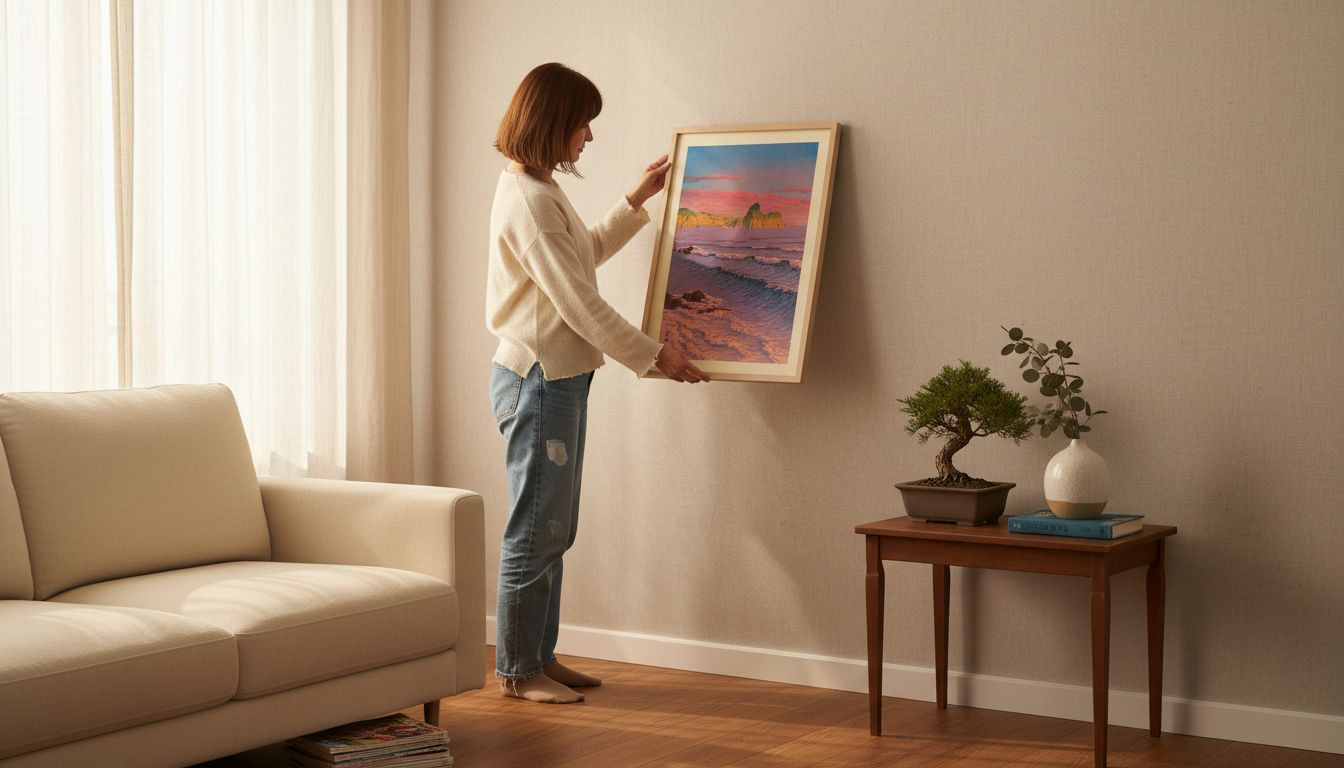
These meticulously crafted prints not only showcased technical mastery but also served as visual poetry, communicating the delicate emotional landscapes of early 20th-century Japan through masterful light, colour, and compositional techniques.
Pro tip: When appreciating vintage Japanese prints, observe the subtle interplay of light, shadow, and seasonal atmosphere rather than focusing solely on representational details.
Woodblock techniques and landscape artistry
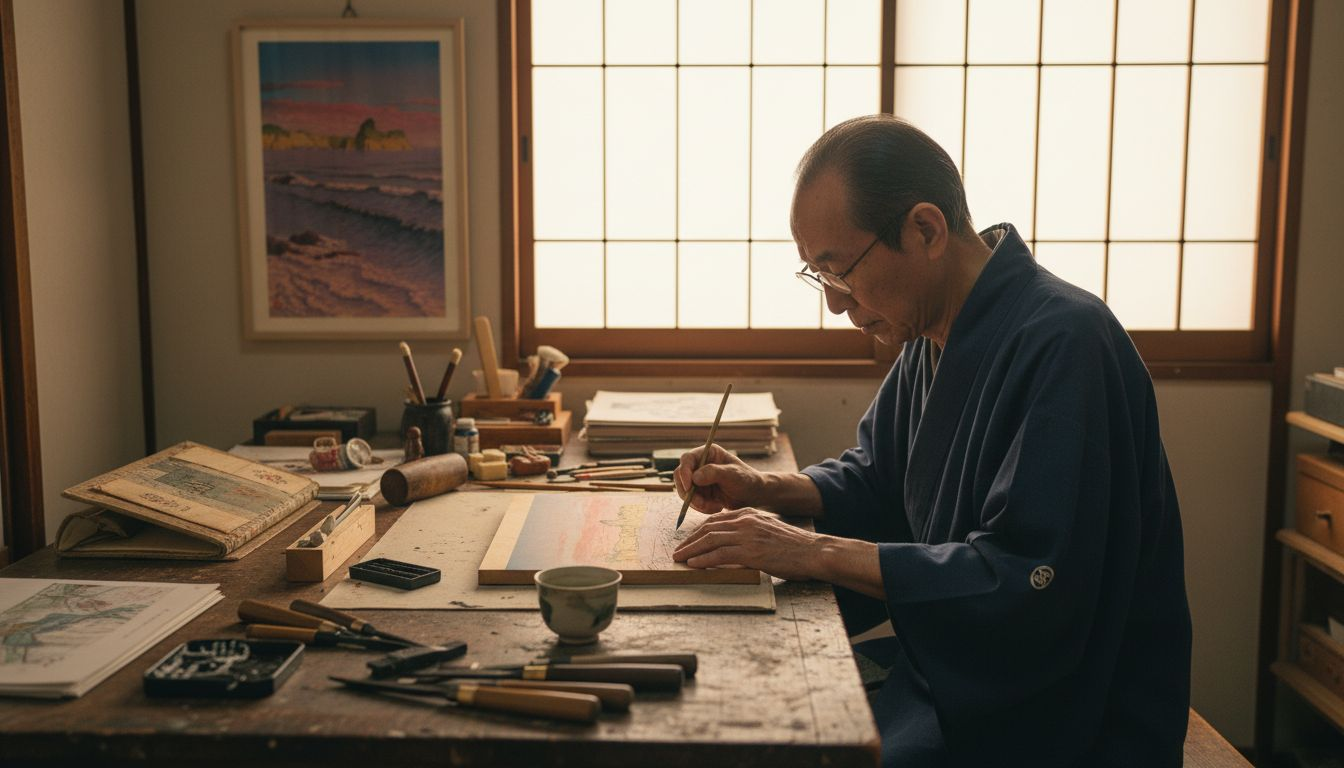
Woodblock printing represented a complex artistic collaboration that transformed Hasui Kawase’s creative vision into exquisite visual narratives. Traditional Japanese printmaking techniques involved intricate partnerships between artists, skilled carvers, and masterful printers, each contributing their specialised expertise to the final artwork.
The technical process of creating Kawase’s prints involved several sophisticated stages:
- Initial on-site landscape sketching
- Detailed pencil drawing transferred to woodblocks
- Precise carving of intricate design elements
- Layered printing using multiple colour plates
- Delicate application of nuanced colour gradations
- Careful manipulation of texture and light effects
Kawase’s artistic approach distinguished itself through remarkable atmospheric realism, blending traditional Japanese ukiyo-e line work with Western perspective techniques. His prints captured subtle environmental transitions, demonstrating extraordinary depth through meticulous colour layering and innovative texture techniques like zara-zuri, which created unique visual dimensions by scraping woodblock surfaces.
These masterful prints transcended mere visual representation, transforming landscapes into emotional experiences that communicated the profound beauty of Japan’s evolving cultural landscape.
Pro tip: When collecting vintage woodblock prints, examine the intricate details of texture and colour gradation to appreciate the true craftsmanship of the artwork.
Identifying authentic and reproduction prints
Collecting Hasui Kawase prints requires a discerning eye and deep understanding of distinctive authentication markers. Authentic prints possess unique characteristics that distinguish them from modern reproductions, making careful examination crucial for serious collectors.
Key indicators of an authentic Hasui Kawase print include:
- Precise publisher seals from Watanabe Shozaburo
- Elegant, flowing seal characters
- High-quality paper with specific historical textures
- Nuanced colour gradations reflecting original printing techniques
- Evidence of prewar or early postwar production periods
- Consistent printing quality and detailed line work
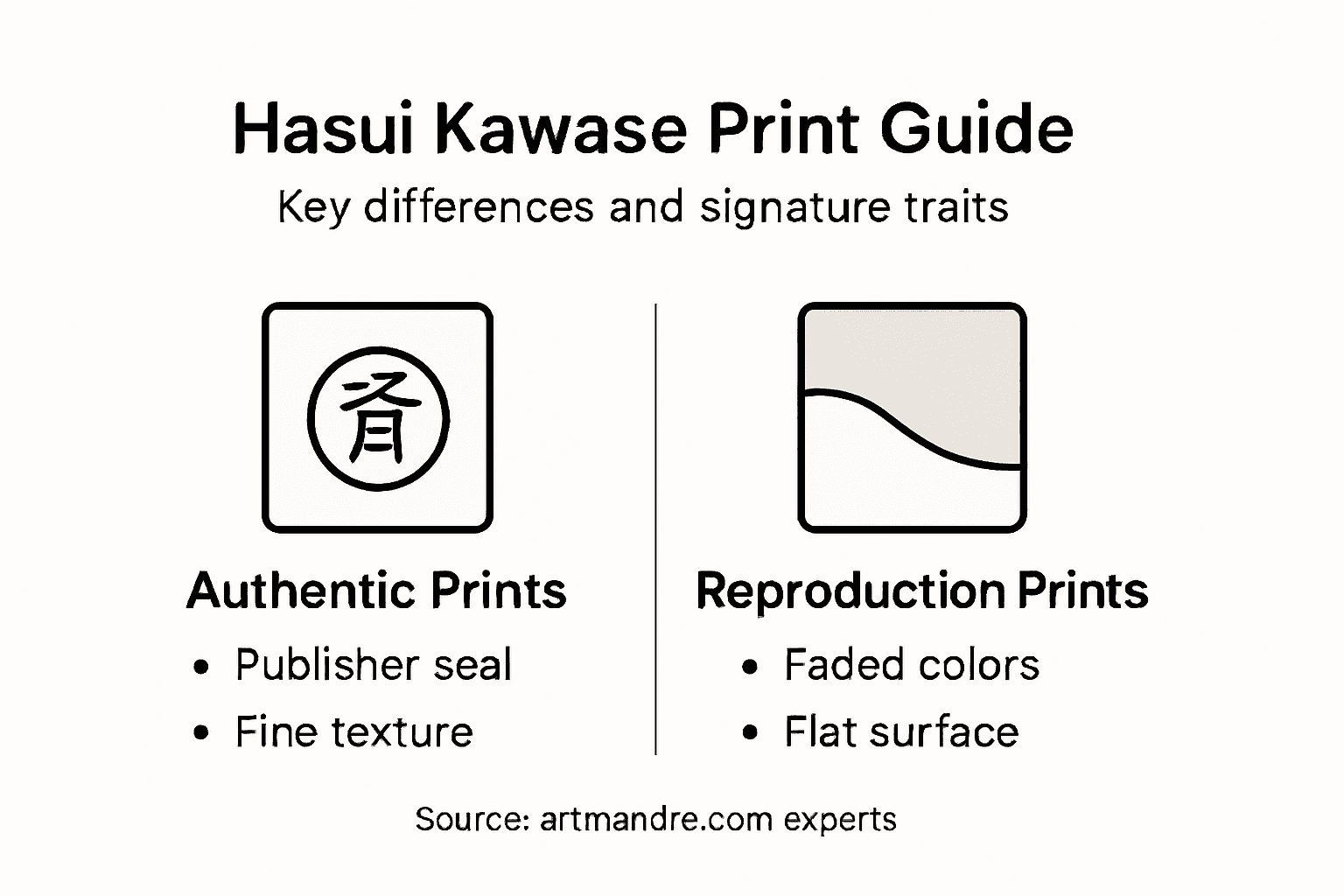
Collectors must remain vigilant about deceptive reproduction techniques, which often involve mimicking original publisher seals with less refined details. Modern reproductions typically display rigid seal characters, inferior paper quality, and less sophisticated colour layering compared to original prints.
Authentication requires a comprehensive approach, combining visual inspection, provenance research, and consultation with expert Japanese print specialists to ensure the integrity of the artwork.
The following table provides a concise comparison between authentic and reproduction Hasui Kawase prints, highlighting the most significant authentication aspects for collectors:
| Authentication Aspect | Authentic Prints | Reproduction Prints |
|---|---|---|
| Publisher Seal Quality | Finely detailed, elegant characters | Rigid, less refined, easily copied |
| Paper Texture | Historical, fibre-rich quality | Modern, smooth or inferior paper |
| Colour Gradation | Subtle, layered, nuanced colours | Flat, simplified, less nuanced colour |
| Production Era | Prewar or early postwar period | Recent decades, often post-1960s |
| Line Work | Precise, consistent, expertly carved | Often uneven, lacking sharpness |
Pro tip: Always request detailed, high-resolution images showcasing seal details and print texture before purchasing vintage Japanese woodblock prints.
Ethical sourcing and display considerations
Preserving vintage Japanese woodblock prints requires a nuanced approach that balances appreciation with responsible conservation. Delicate preservation techniques are essential to protect these fragile cultural artefacts from irreversible environmental damage.
Critical considerations for ethical display include:
- Limiting direct light exposure
- Using UV-filtered glazing
- Maintaining stable humidity levels
- Implementing periodic print rotation
- Selecting archival-quality framing materials
- Avoiding direct sunlight and bright display areas
Collectors must understand that museum-grade conservation practices involve more than aesthetic presentation. Professional preservation demands meticulous environmental control, including precise temperature regulation, minimal light exposure, and specialised storage techniques to prevent pigment degradation and paper deterioration.
Responsible collecting extends beyond display, encompassing an ethical commitment to preserving these remarkable artistic expressions for future generations to appreciate and study.
This table summarises ethical display and preservation recommendations for vintage Japanese woodblock prints:
| Conservation Practice | Purpose | Recommended Method |
|---|---|---|
| Light Management | Prevent fading and pigment loss | Use UV-filtered glazing, avoid sunlight |
| Humidity Control | Preserve paper quality | Maintain stable humidity levels |
| Framing Materials | Reduce chemical deterioration | Select archival, acid-free materials |
| Print Rotation | Minimise prolonged exposure | Rotate displayed pieces periodically |
Pro tip: Invest in professional archival-grade storage solutions and consult conservation experts before displaying vintage Japanese prints.
Elevate Your Space with Timeless Hasui Kawase Prints
Discover the captivating beauty of Hasui Kawase’s vintage Japanese woodblock prints that masterfully blend atmospheric realism with serene landscapes. The challenge many face when incorporating such delicate art into home décor lies in selecting genuine pieces that evoke the right mood and preserving their subtle colour gradations and intricate textures. Whether you are an art collector seeking authentic charm or a home décor enthusiast looking to enrich your living space with evocative narratives, the nuanced emotional landscapes Kawase created provide an unparalleled way to connect with traditional Japanese artistry.
At ArtMandre.com, we understand the desire to bring elegance and cultural depth into your environment without compromising on quality or style. Explore our curated selection of vintage-inspired prints and wall art that capture similar atmospheric moods and timeless aesthetics. Enhance your décor with standout pieces that resonate emotionally and complement your personal style — all available with attractive offers like buy 2 get 1 free to help you build a thoughtful collection. Embrace expert styling tips by visiting our blog and find inspiration on displaying artwork responsibly while protecting its beauty for years to come.

Bring the poetic stillness and refined craftsmanship of Hasui Kawase prints into your home today. Browse ArtMandre.com now to find the perfect vintage décor that tells your story and transforms your space with authentic cultural artistry.
Frequently Asked Questions
What are Hasui Kawase prints and why are they significant?
Hasui Kawase prints are a crucial part of the Shin-hanga movement, showcasing a blend of traditional Japanese woodblock printing techniques with modern artistic influences. These prints capture Japan’s landscapes with emotional depth and detail, making them highly sought after by collectors and art enthusiasts.
How can I authenticate a Hasui Kawase print?
To authenticate a Hasui Kawase print, check for distinctive indicators such as precise publisher seals from Watanabe Shozaburo, high-quality paper textures, and nuanced colour gradations. Carefully examine the print for consistent line work and evidence of its production era, as authentic pieces typically originate from prewar or early postwar periods.
What should I consider when displaying vintage Japanese woodblock prints?
When displaying vintage Japanese woodblock prints, it’s essential to limit direct light exposure, use UV-filtered glazing, and maintain stable humidity levels. Selecting archival-quality framing materials and rotating the prints periodically can also help preserve their integrity and minimise environmental damage.
What are the signature themes present in Hasui Kawase’s prints?
Hasui Kawase’s prints often feature themes like tranquil winter snowscapes, serene temple landscapes, moonlit urban settings, and atmospheric autumn foliage. His works capture Japan’s evolving cultural landscape with a focus on environmental variations, reflecting emotional narratives through masterful use of light and colour.