



Kawase Hasui Prints: Transforming Vintage Decor
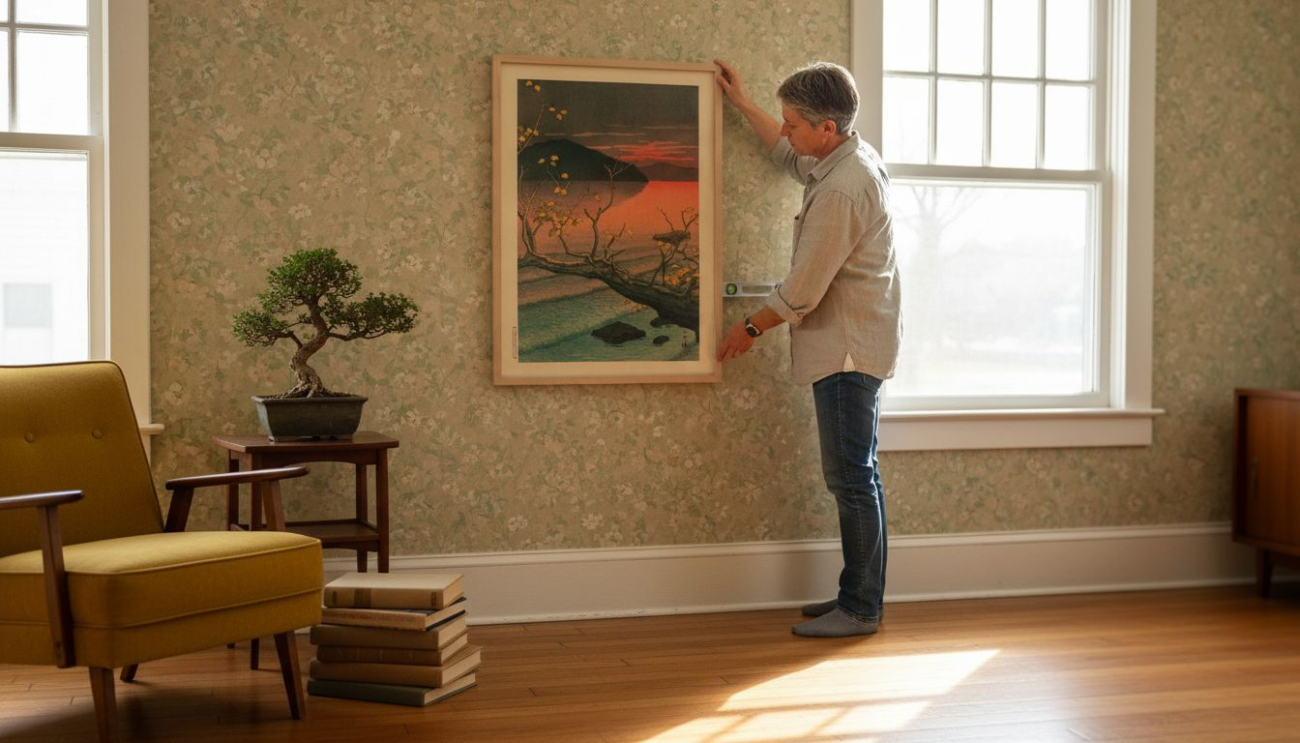
Finding authentic Kawase Hasui prints at an affordable price can feel impossible for art enthusiasts and interior decorators aiming to add vintage charm to their homes. The value of these prints lies in their blend of traditional Japanese and Western artistic techniques, which create serene scenes filled with natural light and emotional depth. This guide reveals how to identify genuine Hasui works, avoid common buying mistakes, and style them for maximum impact in vintage interiors.
Table of Contents
- Kawase Hasui And The Shin-Hanga Movement
- Distinguishing Styles Of Hasui Prints
- Key Features Of Hasui’s Landscapes
- Valuing And Authenticating Hasui Prints
- Avoiding Common Mistakes When Buying
- Styling Hasui Prints For Vintage Interiors
Key Takeaways
| Point | Details |
|---|---|
| Shin-Hanga Movement | The Shin-Hanga movement represents a blend of traditional Japanese techniques and Western influences, with artists like Kawase Hasui leading this artistic evolution. |
| Kawase Hasui’s Impact | Hasui’s prints exemplify subtlety and emotional resonance in landscape representation, characterized by meticulous attention to natural lighting and minimal human presence. |
| Authentication is Crucial | Genuine Hasui prints require thorough examination for authenticity, focusing on publisher seals, paper quality, and original printing techniques. |
| Interior Integration | When styling spaces, use simple wooden frames and soft ambient lighting to enhance the serene qualities of Hasui’s artwork, creating a harmonious vintage aesthetic. |
Kawase Hasui and the Shin-Hanga Movement
The Shin-Hanga movement emerged as a transformative artistic approach in early 20th-century Japan, representing a delicate bridge between traditional Japanese artistic techniques and Western aesthetic influences. Woodblock printing’s cultural renaissance-6-21) reflected Japan’s complex modernization period, with artists like Kawase Hasui at the forefront of this artistic revolution.
Kawase Hasui distinguished himself as a pivotal figure in this artistic transition, producing nearly 1,000 woodblock prints that captured Japan’s evolving landscape with unprecedented sensitivity. His work uniquely balanced traditional Japanese subjects with Western-style realism, creating atmospheric landscapes that transcended mere geographical representation. Key characteristics of Hasui’s artistic approach included:
- Meticulous attention to natural lighting
- Profound emotional resonance in landscape depictions
- Seamless integration of traditional and modern artistic techniques
- Capturing the subtle mood of urban and rural Japanese environments
Hasui’s collaboration with publisher Watanabe Shozaburo was instrumental in popularizing the Shin-Hanga movement internationally. Recognized as a Living National Treasure, Hasui’s artistic contributions went beyond aesthetic innovation, serving as a cultural bridge during Japan’s rapid modernization.
Pro tip: When collecting vintage Japanese prints, examine the print’s publication details and woodblock printing techniques to authenticate Shin-Hanga era artwork.
Distinguishing Styles of Hasui Prints
Kawase Hasui’s prints represent a unique artistic approach that transcends traditional Japanese landscape representation. Subtle atmospheric effects and natural lighting characterize his distinctive style, setting him apart from earlier artistic movements. His work masterfully captures the psychological essence of Japanese landscapes through nuanced visual storytelling.
The hallmark of Hasui’s artistic technique involves several defining characteristics:
- Minimal human presence in compositions
- Strategic use of muted color palettes
- Emphasis on seasonal atmospheric conditions
- Realistic perspective influenced by Western painting techniques
- Profound emotional depth through environmental representation
Hasui’s prints often feature tranquil scenes that evoke a sense of contemplative stillness. Realistic landscape depictions with nuanced colors showcase his ability to capture moments of serene beauty, whether depicting snow-covered villages, rain-drenched streets, or moonlit landscapes. His prints typically utilize a sophisticated palette of blues, grays, and seasonal hues that communicate subtle emotional states.
These artistic choices distinguish Hasui’s work within the Shin-Hanga movement, transforming traditional woodblock printing into a medium of profound artistic expression. By balancing traditional Japanese aesthetic principles with innovative techniques, he created prints that continue to captivate art enthusiasts worldwide.
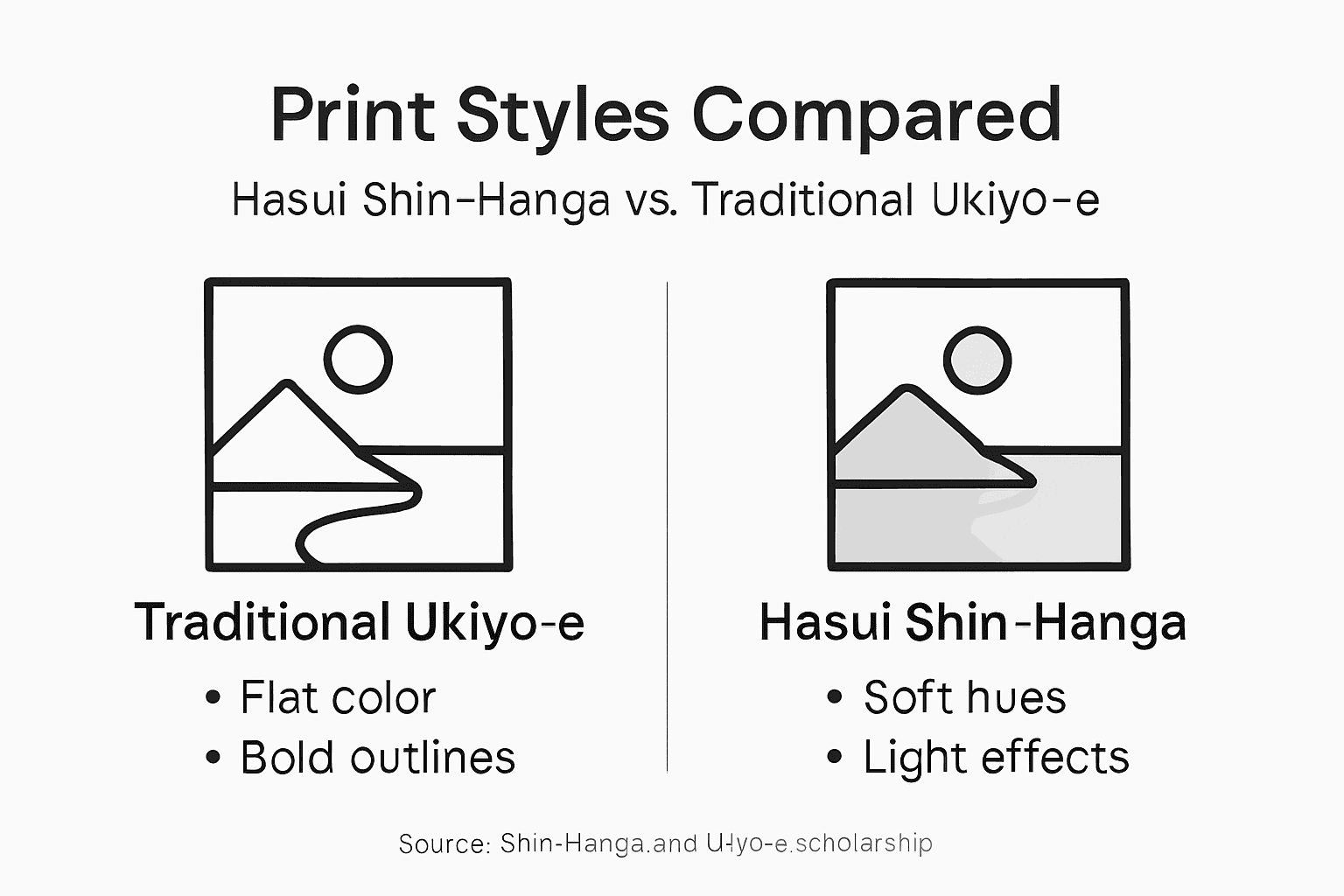
Pro tip: When analyzing Hasui prints, pay close attention to the subtle light gradations and color transitions to appreciate the intricate artistic techniques.
Here’s a comparison of traditional Ukiyo-e prints and Hasui’s Shin-Hanga prints:
| Aspect | Traditional Ukiyo-e | Hasui’s Shin-Hanga |
|---|---|---|
| Human Figures | Frequently depicted | Often minimized or absent |
| Lighting Techniques | Flat, stylized | Realistic, atmospheric |
| Use of Color | Bold, decorative | Muted, nuanced |
| Perspective | Simple, less realistic | True-to-life, Western-influenced |
| Emotional Tone | Narrative-driven | Evocative, contemplative |
Key Features of Hasui’s Landscapes
Landscape photography in woodblock printing reached new heights through Hasui’s innovative approach. Capturing serene scenes of rural and urban Japan became his most distinctive artistic signature, transforming traditional Japanese visual storytelling with remarkable sensitivity and depth.
The key characteristics that define Hasui’s landscape prints include:
- Masterful manipulation of natural lighting
- Subtle color gradations reflecting seasonal transitions
- Minimal human presence emphasizing environmental mood
- Precise perspective techniques
- Emotional resonance through atmospheric representation
Immersive landscape depictions through lighting and perspective reveal Hasui’s extraordinary ability to communicate complex emotional states. His prints frequently showcase transformative moments – moonlit temple grounds, rain-soaked city streets, and snow-covered landscapes that invite viewers into a contemplative visual experience.
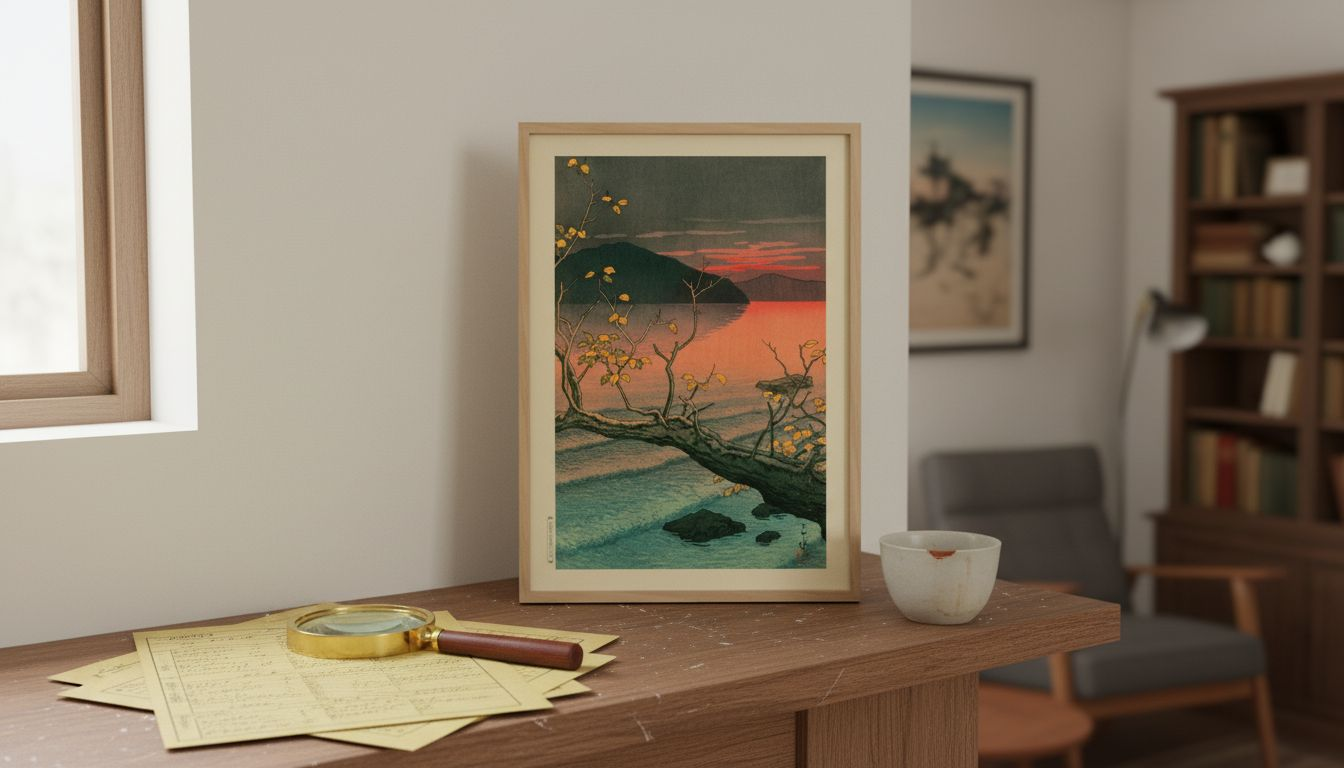
By blending traditional Japanese aesthetic principles with Western artistic techniques, Hasui created a unique visual language that transcends mere geographical representation. His prints capture the ephemeral beauty of Japanese landscapes, transforming ordinary scenes into profound emotional narratives that continue to captivate art enthusiasts worldwide.
Pro tip: When collecting Hasui prints, examine the print’s color transitions and lighting to appreciate the nuanced artistic techniques.
Valuing and Authenticating Hasui Prints
Art authentication requires meticulous attention to detail, especially when evaluating historic Japanese woodblock prints. Authenticating Hasui prints involves precise technical examination that goes far beyond casual visual inspection, demanding expertise and systematic analysis.
Critical factors for authenticating genuine Hasui prints include:
- Presence of Watanabe Shozaburo’s official publisher seal
- High-quality traditional Japanese paper
- Fine woodblock carving and printing details
- Clear evidence of original printing techniques
- Consistent color gradations and ink saturation
- Verifiable provenance documentation
Print valuation depends on multiple complex factors that determine collector interest and market price. Early limited edition prints in exceptional condition command significantly higher values, with rarity and historical significance playing crucial roles in determining worth.
Collectors and art enthusiasts should approach Hasui print authentication with professional guidance, understanding that genuine prints represent not just artistic artifacts but important cultural documents capturing Japan’s early 20th-century visual landscape. Expert appraisal remains the most reliable method for confirming authenticity and establishing accurate market valuation.
Pro tip: Always request detailed provenance documentation and professional authentication before investing in vintage Hasui prints.
Below is a quick reference for factors influencing Hasui print value:
| Factor | Effect on Value | Example |
|---|---|---|
| Publisher Seal Present | Increases authenticity | Watanabe Shozaburo seal |
| Paper Quality | Higher quality adds worth | Thick, handmade washi |
| Edition Rarity | Scarcity boosts value | Early limited editions |
| Condition | Flawless state commands premium | No tears, strong colors |
Avoiding Common Mistakes When Buying
Collecting vintage Japanese prints demands careful navigation through a complex market filled with potential pitfalls. Common purchasing errors can significantly impact investment value, making thorough research and expert guidance essential for serious collectors.
Most frequent mistakes collectors encounter include:
- Purchasing unsigned or unverified reproduction prints
- Neglecting to check official publisher seals
- Failing to assess printing quality and paper authenticity
- Overlooking subtle variations in original woodblock techniques
- Disregarding professional authentication recommendations
- Falling for modern prints marketed as original Hasui works
Understanding Hasui’s distinctive printing characteristics helps buyers distinguish genuine works from inferior reproductions. Experienced collectors develop a keen eye for detecting nuanced differences in color saturation, paper quality, and technical printing details that separate authentic prints from imitations.
Navigating the vintage print market requires patience, education, and willingness to seek expert consultation. Developing relationships with reputable dealers, attending specialized art exhibitions, and continuously expanding knowledge about Hasui’s artistic techniques can protect buyers from costly mistakes and ensure authentic acquisitions.
Pro tip: Always request comprehensive documentation and professional authentication before finalizing any vintage Hasui print purchase.
Styling Hasui Prints for Vintage Interiors
Vintage interior design transforms living spaces through carefully curated artistic elements that evoke historical elegance. Complementing rooms with serene Japanese aesthetics requires understanding how Hasui’s prints can create atmospheric depth and nostalgic tranquility.
Key strategies for integrating Hasui prints into vintage decor include:
- Selecting wooden frames with minimal, elegant designs
- Pairing prints with muted color palettes
- Creating contemplative display spaces
- Balancing prints with antique furniture pieces
- Using soft, ambient lighting to enhance print details
- Maintaining visual harmony through strategic placement
Framing techniques that highlight print characteristics can dramatically transform the visual impact of Hasui artwork. Simple wooden frames in neutral tones allow the prints’ subtle color gradations and atmospheric qualities to become focal points, drawing viewers into the serene landscapes.
Successful vintage interior styling with Hasui prints involves more than mere decoration—it represents a thoughtful dialogue between artistic heritage and contemporary living spaces. By understanding the prints’ nuanced aesthetic, collectors can create environments that feel both historically rich and intimately personal.
Pro tip: Group Hasui prints with complementary sizes and themes to create a cohesive visual narrative in your vintage-inspired interior.
Elevate Your Vintage Decor with Kawase Hasui Prints
Transforming your living space with authentic Japanese atmospheric landscapes can be a challenge when searching for art that truly captures the delicate mood and subtle light gradations that Kawase Hasui mastered. Many art collectors and interior decorating enthusiasts seek prints that evoke contemplation and serenity yet struggle to find pieces that harmonize perfectly with vintage interiors. Key goals include selecting artwork with nuanced color palettes, elegant framing options, and an emotional depth that enriches any room.
At ArtMandre.com, we understand the importance of blending traditional aesthetics with modern styling needs. Our curated selection of vintage and retro-themed wall art offers elegant solutions to bring the calming and evocative qualities of Hasui’s shin-hanga style into your home. Whether you want to create a tranquil nook or enhance a vintage-inspired living space, our exclusive deals and expert styling tips help you make the most of your decor vision.

Discover how you can enrich your vintage interior with prints that capture the essence of serene Japanese landscapes. Explore our wide range of art pieces and enjoy special offers like buy 2 get 1 free. Start creating your perfect ambiance today at ArtMandre.com and learn more about styling tips in our blog. Elevate your home with timeless elegance now.
Frequently Asked Questions
How can I incorporate Kawase Hasui prints into my vintage decor?
You can integrate Hasui prints by selecting wooden frames with minimal designs, pairing them with muted color palettes, and using soft, ambient lighting to enhance their details.
What are the key characteristics of Hasui’s landscape prints?
Hasui’s prints are known for their masterful manipulation of natural lighting, subtle color gradations that reflect seasonal transitions, and minimal human presence to emphasize the mood of the environment.
How do I ensure the authenticity of a Kawase Hasui print?
To authenticate a Hasui print, check for the official publisher seal from Watanabe Shozaburo, assess the quality of the paper and printing, and request provenance documentation.
What mistakes should I avoid when purchasing vintage Kawase Hasui prints?
Common mistakes include buying unsigned or unverified reproductions, neglecting the verification of publisher seals, and overlooking the quality of the printing and paper authenticity.