
Blog
Hasui Kawase Artwork: Vintage Charm in Your Home
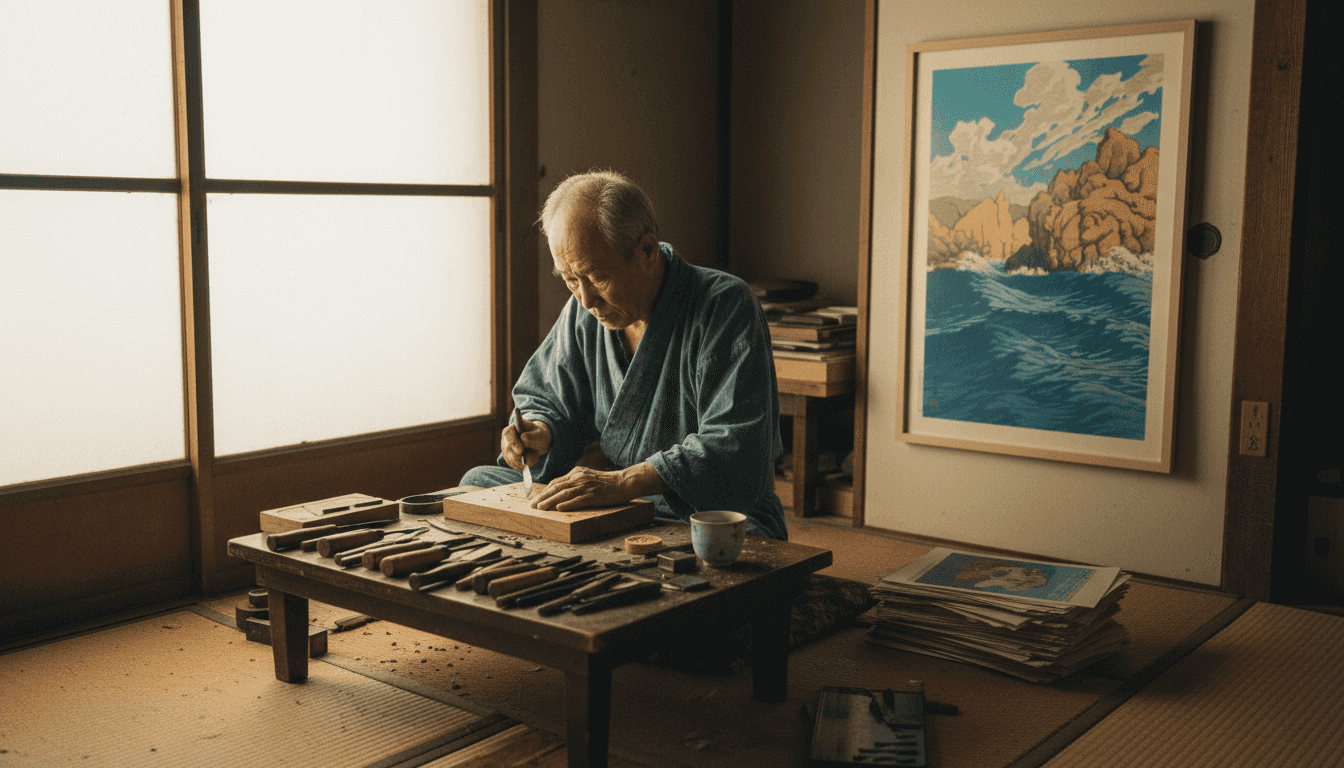
Finding unique wall art that blends vintage charm with authenticity can be a challenge for collectors and decorators who want more than generic reproductions. Hasui Kawase’s prints capture the subtle beauty of lesser-known Japanese places, combining traditional technique with natural lighting and atmospheric realism. His role in the shin-hanga movement brought new life to woodblock printmaking, offering interiors a touch of history and serenity. Timeless tranquillity and cultural depth are just some of the qualities his artwork brings to any space.
Table of Contents
- Defining Hasui Kawase’s Artistic Legacy
- Shin-Hanga Movement and Distinctive Styles
- Themes, Motifs, and Iconic Landscapes
- Collecting, Authenticity, and Market Value
- Decorating Interiors with Hasui Kawase Prints
Key Takeaways
| Point | Details |
|---|---|
| Hasui Kawase’s Contribution | Kawase blended traditional Japanese woodblock techniques with modern aesthetics, creating a new artistic language that resonates with contemporary audiences. |
| Significance of Shin-Hanga | The shin-hanga movement revitalised woodblock printing, merging Western influences with Japanese themes, ensuring ongoing international appeal. |
| Market Value Factors | Collectors should prioritise the edition status and condition of prints, as these aspects significantly impact market value. |
| Decorative Versatility | Kawase’s prints complement various interior styles, bringing a sense of tranquillity and cultural depth to modern spaces. |
Defining Hasui Kawase’s Artistic Legacy
Hasui Kawase stands as one of the most significant figures in twentieth-century Japanese art. Born in 1883, he transformed the traditional woodblock print into something distinctly modern, bridging centuries of artistic tradition with contemporary vision.
Kawase emerged as a central figure in the shin-hanga movement, which blended traditional Japanese subjects with Western-style painting. This revolutionary approach preserved the essence of ukiyo-e whilst embracing new techniques and perspectives that reflected Japan’s rapid modernisation.
Despite starting his artistic career later than many of his peers, Kawase trained under notable masters and formed a lifelong creative partnership with publisher Watanabe Shozaburo. Together, they revitalised traditional woodblock printing, proving that ancient techniques could speak to modern audiences.
Key achievements that defined his legacy include:
- Produced over 600 prints during his lifetime, demonstrating extraordinary prolific output
- Created nearly 1,000 woodblock prints total (sources vary on exact count)
- Focused on landscape and townscape scenes capturing atmospheric effects
- Depicted lesser-known Japanese locales rather than famous tourist destinations
- Integrated elements of modernisation such as electric poles into traditional landscape imagery
- Earned the prestigious title of Living National Treasure for his cultural contributions
Kawase’s artistic approach prioritised realism and natural lighting. His works showcase Japan’s changing scenery during an era of unprecedented transformation. Rather than retreating into nostalgia, he documented modernisation itself, creating a visual record of Japan’s transition.
His commitment to authenticity extended beyond technique. Kawase maintained deep engagement with Japan’s evolving landscape, capturing both serene temples and bustling streets illuminated by new electric lights. This balance between tradition and progress became his artistic signature.
Today, collectors and interior decorators appreciate Kawase’s work for its timeless quality. His prints transcend mere documentation; they preserve moments of beauty during extraordinary historical change. The combination of technical mastery and emotional restraint gives his compositions lasting appeal.
Here’s a comparison of Kawase Hasui and traditional ukiyo-e artists to highlight how his legacy stands apart:
| Attribute | Kawase Hasui | Traditional Ukiyo-e Artists |
|---|---|---|
| Focus of artworks | Regional landscapes | Urban and theatrical scenes |
| Approach to modernity | Embraced new elements | Preserved historical subjects |
| Lighting techniques | Natural, atmospheric | Stylised, flat colour |
| Human figure depiction | Sparse, background | Central to compositions |
| International appeal | Strong Western demand | Predominantly Japanese buyers |
Kawase proved that traditional woodblock printing could evolve without losing its soul, creating a bridge between past and future that resonates more than 70 years after his death in 1957.
Pro tip: When selecting Hasui Kawase prints for your home, choose pieces that match your room’s colour palette. His subtle use of atmospheric perspective and muted tones work beautifully with both modern minimalist and vintage eclectic décor schemes.
Shin-Hanga Movement and Distinctive Styles
The shin-hanga movement emerged around 1910 as a transformative force in Japanese art. Meaning “new prints,” it revitalised traditional woodblock printing by blending centuries-old techniques with Western artistic influences, particularly French Impressionism.
Publisher Watanabe Shozaburo was the driving force behind shin-hanga’s creation. He understood Western tastes and recognised an opportunity to preserve Japanese printmaking whilst making it appeal to international audiences. His vision proved revolutionary, proving that tradition and modernity could coexist beautifully.
The movement maintained the collaborative essence of ukiyo-e, where artist, carver, printer, and publisher worked together. However, shin-hanga elevated these roles to new standards, blending traditional themes with modern aesthetics. The collaborative production system from ukiyo-e remained central to shin-hanga’s success.
What made shin-hanga distinctive was its artistic approach. Artists incorporated Western elements whilst honouring Japanese traditions:
- Light and perspective from Western painting traditions
- Emotional depth and realism rather than stylised representations
- Atmospheric effects that conveyed mood and feeling
- Refined technical standards surpassing earlier ukiyo-e work
Shin-hanga themes stayed rooted in classic genres. Landscapes, beautiful women, kabuki actors, and birds-and-flowers remained popular subjects. Yet the execution transformed them into something entirely fresh and contemporary.
Kawase’s work exemplifies shin-hanga’s essence. His landscape prints capture Japan’s changing scenery with unprecedented authenticity. Electric poles alongside ancient temples, natural light illuminating quiet streets—these details ground his compositions in reality whilst maintaining poetic sensibility.
The movement catered significantly to Western collectors during Japan’s modernisation era. Foreign audiences appreciated the familiar subjects rendered with Western artistic techniques. This cross-cultural appeal ensured shin-hanga’s survival and evolution throughout the twentieth century.
Shin-hanga proved that respecting tradition didn’t mean rejecting progress. Instead, the movement created something entirely new by honouring the past whilst embracing the future.
Pro tip: When purchasing shin-hanga prints from ArtMandre, look for pieces showing atmospheric lighting and subtle colour gradations—these hallmarks distinguish true shin-hanga from other Japanese prints and ensure you’re investing in authentic twentieth-century artistry.
Themes, Motifs, and Iconic Landscapes
Kawase’s artistic vision centred on capturing the quiet beauty of Japan’s changing landscape. His prints reveal a deep sensitivity to atmosphere, light, and the emotional resonance of place rather than grand spectacle or drama.
His subject matter ranged widely across Japanese geography and urban life. Traditional Japanese landscapes including countryside lakes, mountains, rivers, and snow-covered streets formed the backbone of his body of work. Yet Kawase elevated these familiar subjects through his exceptional technical mastery.
Recurring themes throughout his career included:
- Tranquil shrines and temples nestled within natural settings
- Seasonal moods emphasising snow scenes, autumn colours, and spring awakening
- Water elements including flowing rivers, still lakes, and reflective surfaces
- Urban nightscapes capturing electric light transforming city streets
- Rural mountain villages depicting Japan’s disappearing countryside
Kawase’s use of light and shadow distinguished his work from earlier printmakers. He incorporated natural lighting effects that conveyed specific times of day and atmospheric conditions. A snow-covered temple at dusk, a quiet bridge reflecting moonlight, a rain-soaked street glistening beneath new electric lamps—these scenes pulse with mood and introspection.
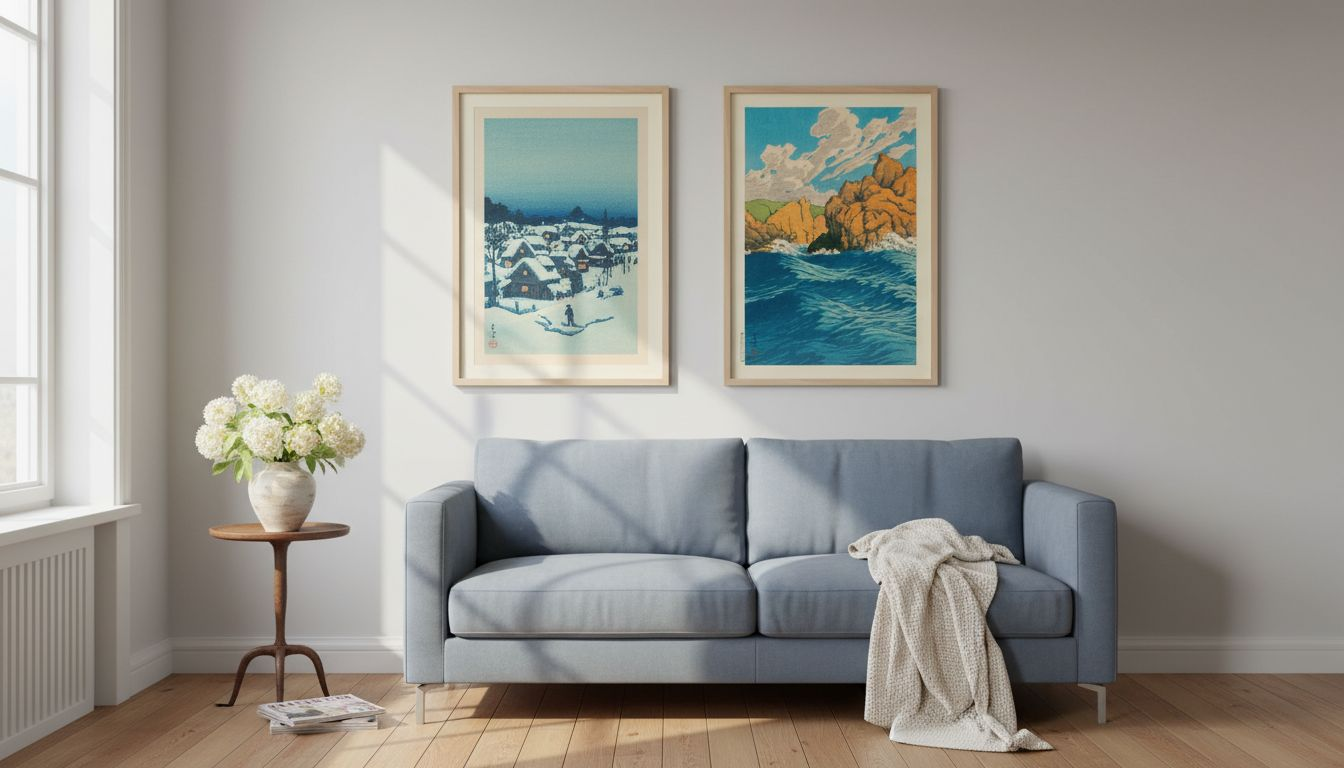
Human figures appear sparingly in his compositions, often isolated and positioned in the background. This minimalist approach adds profound emotional depth. The solitary figure crossing a bridge or walking through snow becomes a meditation on solitude, contemplation, and humanity’s small place within vast landscapes.
One of his most celebrated works, Zôjôji Temple in snow, exemplifies his genius. The composition evokes tranquillity and nostalgia whilst documenting a specific, lesser-known locale. This balance—between documentary realism and poetic sensibility—defined Kawase’s artistic achievement.
Kawase’s genius lay in finding profound beauty not in Japan’s famous landmarks, but in ordinary places where light, season, and human emotion converge.
Pro tip: Select Kawase prints featuring seasonal imagery for spaces requiring atmosphere—winter snow scenes create calm reflectiveness, whilst spring and autumn prints add warmth and visual movement to minimalist interiors.
Collecting, Authenticity, and Market Value
Hasui Kawase prints have become increasingly sought-after among collectors and interior decorators worldwide. His works consistently rank among the top-selling Japanese printmakers, particularly in international markets where demand remains strong and steadily appreciating.
Market demand varies considerably based on several key factors. Early editions and lifetime impressions command premium prices compared to later reproductions. Understanding these distinctions helps collectors make informed purchasing decisions and assess genuine value.
Factors affecting Kawase print values include:
- Edition status – first editions and early impressions worth significantly more
- Original publisher seals – authenticating marks that verify provenance
- Condition – unfaded colours and unblemished paper command higher prices
- Age – pre-1923 prints especially rare and valuable
- Seasonal themes – snow and night scenes particularly desirable to collectors
- Rarity – lesser-known subjects more accessible than famous works
Authenticity verification is crucial when purchasing vintage Kawase prints. Genuine pieces bear original publisher seals from the Watanabe publishing house. These seals confirm the print’s legitimacy and dating, directly influencing market value. Condition assessment matters equally—unfaded colours and pristine paper indicate careful storage and handling.
The market spans from accessible postwar prints to rare Taisho era impressions. Later twentieth-century prints offer entry points for new collectors without premium pricing. However, early lifetime impressions represent significant investments reserved for experienced collectors with substantial budgets.
International demand remains robust, with strong collector bases in America, Europe, and Asia. This broad appeal ensures consistent market interest and valuation stability. Kawase’s work transcends purely speculative collecting; the artistic merit sustains long-term appreciation.
To assist collectors, here is a summary of factors influencing Hasui Kawase print valuations:
| Factor | Impact on Value | Collector’s Consideration |
|---|---|---|
| Edition authenticity | Higher value for originals | Verify publisher’s seal |
| Condition | Pristine prints most valuable | Inspect paper and colour quality |
| Subject rarity | Unique works preferred | Seek less common locations |
| Season depicted | Winter/night command premiums | Match to market demand |
| Year of production | Early years are most prized | Research print’s date |
Authenticity and condition determine Kawase print value far more than rarity alone—a well-preserved later edition often exceeds a damaged early impression in marketplace value.
Pro tip: When purchasing from ArtMandre, request detailed condition reports and provenance information for any Kawase print; authentic pieces include publisher documentation that confirms dating and edition status, protecting your investment whilst ensuring you acquire genuine twentieth-century craftsmanship.
Decorating Interiors with Hasui Kawase Prints
Kawase Hasui prints bring timeless tranquillity and cultural depth to modern interiors. His atmospheric depictions transform ordinary walls into windows onto Japanese vintage charm. These works suit any space seeking refined, contemplative aesthetics without overwhelming visual presence.
The beauty of Kawase’s compositions lies in their restraint. Unlike bold, dramatic artwork, his prints complement rather than dominate a room’s design. This subtlety makes them remarkably versatile across various interior styles and colour palettes.
Ideal spaces for displaying Kawase prints include:
- Living areas – creating calm focal points above sofas or accent walls
- Bedrooms – establishing peaceful, meditative atmospheres for rest
- Meditation or study spaces – supporting contemplation and concentration
- Hallways – guiding viewers through spaces with gentle visual interest
- Home offices – inspiring creativity whilst maintaining professional aesthetics
- Entryways – setting refined, welcoming tones for your entire home
Colour harmony matters significantly when displaying Kawase prints. His muted palette of soft blues, greys, blacks, and warm neutrals pairs beautifully with both contemporary minimalist and vintage eclectic décor. Snow scenes work particularly well in cool-toned rooms, whilst night scenes complement warmer interiors with dark accent walls.
Framing choices enhance or diminish your print’s impact. Simple wooden frames in natural tones respect Kawase’s aesthetic, whilst understated metal frames suit modern spaces. Avoid ornate framing that competes with the artwork’s inherent elegance.
Grouping multiple Kawase prints creates a gallery wall with cohesive impact. Arrange them using consistent spacing, selecting complementary seasonal themes or landscape types. This approach transforms individual prints into a unified narrative celebrating Japanese geography and artistic vision.
Kawase’s prints succeed because they whisper rather than shout, inviting viewers into quiet moments of reflection rather than demanding immediate attention.
Pro tip: Position Kawase prints where natural or soft artificial light illuminates them without creating glare—his subtle atmospheric effects reveal their greatest beauty when light catches the paper at gentle angles, emphasising the delicate printing techniques ArtMandre’s curated collection preserves.
Bring Hasui Kawase’s Timeless Charm Into Your Home
Hasui Kawase’s distinctive blend of traditional Japanese woodblock techniques with modern atmospheric effects offers a unique opportunity to transform your living space with subtle sophistication. His tranquil landscapes and reflective scenes answer the common challenge of finding wall art that balances cultural depth with versatile style. If you aim to create a calm, contemplative atmosphere filled with genuine vintage appeal, Kawase’s prints deliver emotional resonance and authentic artistry.

Elevate your interior decoration by exploring our curated collection of vintage and themed art prints at ArtMandre. With exclusive offers like buy 2 get 1 free, you can enrich multiple rooms with seasonal or cityscape themes reflecting Kawase’s aesthetic. Discover how these timeless works complement minimalist, eclectic, or classic décor styles perfectly today. Don’t wait to bring these exquisite moments of Japanese heritage and modern flair into your home — start browsing our new arrivals now and unlock the full potential of your walls.
Frequently Asked Questions
What is the significance of Hasui Kawase in Japanese art?
Hasui Kawase is a vital figure in twentieth-century Japanese art, known for modernising traditional woodblock printing through the shin-hanga movement, which blended traditional subjects with Western influences.
How did Hasui Kawase contribute to the shin-hanga movement?
Kawase’s contributions to the shin-hanga movement included creating over 600 prints that featured realistic landscapes and urban scenes, integrating modern elements into traditional art forms, and elevating the standards of collaborative print production.
What themes are commonly found in Hasui Kawase’s artwork?
Kawase’s artwork is characterised by themes such as serene landscapes, tranquil shrines, seasonal moods, urban nightscapes, and water elements, all emphasising light, atmosphere, and emotional resonance.
How can I authentically incorporate Kawase prints into my home decor?
To authentically incorporate Kawase prints, consider their colour palette for harmony with your space, use simple framing to enhance their elegance, and display them in areas with soft lighting to highlight their atmospheric qualities.