
Blog
Kawase Hasui Artworks: Enhancing Vintage Decor
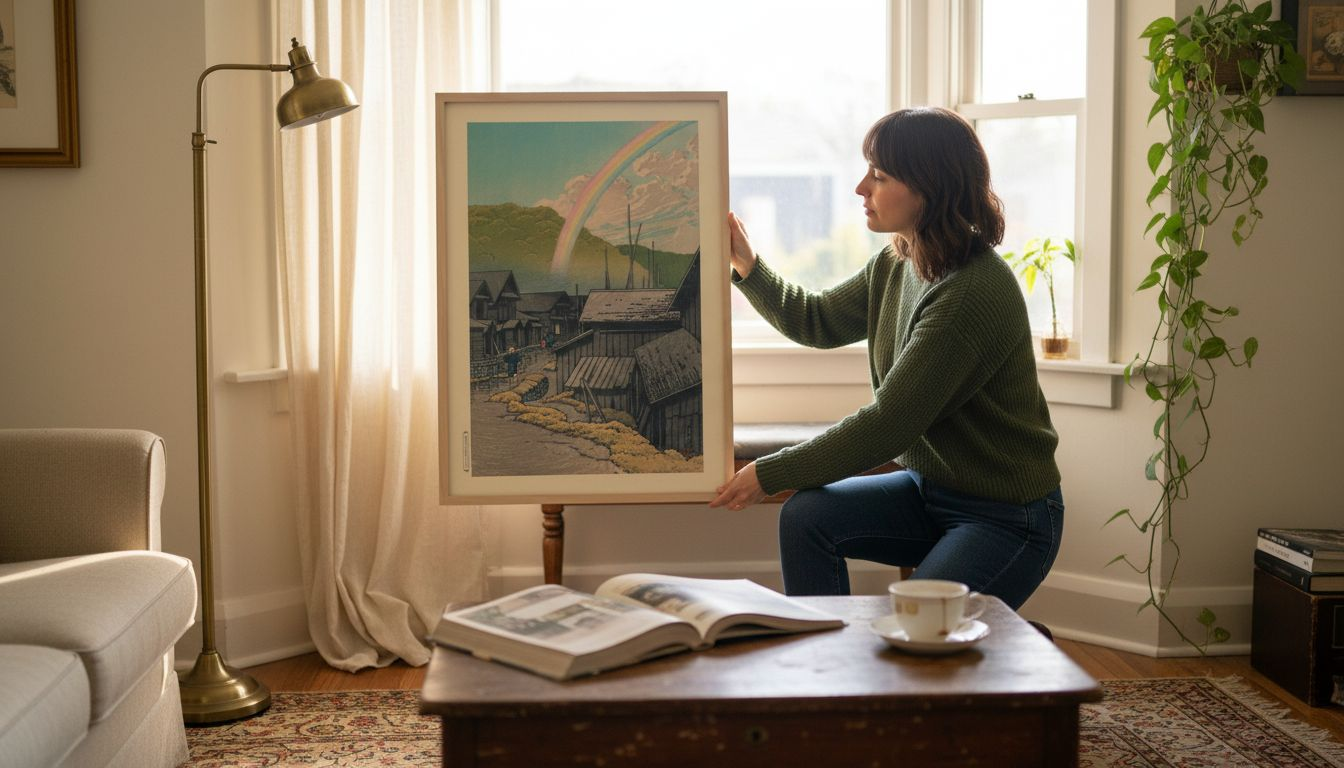
Finding authentic Japanese woodblock prints that blend tranquillity and historical significance can be a challenge for collectors and interior style lovers. Kawase Hasui produced nearly 1,000 distinct prints over a forty-year career, earning the rare honour of Living National Treasure in Japan. His mastery of the shin-hanga movement and unique perspective on both iconic and everyday Japanese scenes offer collectors and home decor enthusiasts a timeless way to enrich their spaces with affordable, vintage-inspired beauty.
Table of Contents
- Defining Kawase Hasui Artworks And Legacy
- Major Series And Distinctive Woodblock Styles
- Identifying Genuine Hasui Prints For Collectors
- Styling Interiors With Hasui Artworks
- Avoiding Pitfalls And Reproduction Issues
Key Takeaways
| Point | Details |
|---|---|
| Kawase Hasui’s Influence | He revolutionised 20th-century Japanese printmaking by blending traditional aesthetics with Western techniques, creating the shin-hanga style. |
| Prolific Output | Over his 40-year career, Hasui produced nearly 1,000 prints, showcasing his dedication and consistent quality. |
| Print Authenticity | Recognising genuine Hasui prints requires understanding key authentication markers such as publisher seals and paper texture. |
| Styling with Hasui Art | Hasui’s prints enhance interiors through their atmospheric qualities; thoughtful placement and framing can elevate the overall aesthetic of a space. |
Defining Kawase Hasui Artworks and Legacy
Kawase Hasui (1883–1957) stands as one of Japan’s most influential printmakers of the 20th century. He revolutionised the art world by creating shin-hanga woodblock prints that fused traditional Japanese aesthetics with Western artistic techniques.
Hasui’s approach was distinct and masterful. He combined objective realism with celebration of Japanese tradition during a period of rapid modernisation. This balance created works that felt both deeply rooted in Japan’s heritage and refreshingly contemporary.
Over his nearly 40-year career, Hasui produced an extraordinary body of work. He designed nearly 1,000 prints throughout his lifetime, showcasing his prolific talent and unwavering dedication to the craft. Each piece demonstrated remarkable consistency in quality and vision.
What Made His Work Special
Hasui’s prints depicted both iconic landscapes and lesser-known Japanese locales. Rather than focusing solely on famous destinations, he captured the serene beauty of everyday places that many overlooked. This approach gave his viewers fresh perspectives on their own surroundings.
His mastery of perspective and natural lighting came from Western influence:
- Western perspective techniques created depth and spatial realism
- Natural lighting effects added atmospheric quality to scenes
- Colour harmony demonstrated refined compositional skills
- Attention to detail brought landscapes to vivid life
Recognition and Legacy
The Japanese government honoured Hasui with the title of Living National Treasure before his death in 1957. This recognition reflected his immense contributions to preserving and evolving traditional printmaking.
Hasui created over 600 officially catalogued prints, blending objective realism with Japanese artistic tradition to define shin-hanga for future generations.
Today, collectors worldwide seek Hasui prints for their tranquil beauty and historical significance. His work remains accessible through vintage Hasui prints that capture the essence of Japanese landscape artistry. Whether you’re drawn to serene water scenes, architectural studies, or seasonal landscapes, Hasui’s versatility offers something for every aesthetic sensibility.
His influence extends beyond collectors and museums. Interior designers and home decor enthusiasts recognise his prints as timeless pieces that elevate any space with authenticity and sophistication.
Pro tip: When selecting a Hasui print, consider the seasonal elements and lighting depicted in the composition—these details determine how the artwork will complement your room’s natural light and colour scheme throughout the day.
Major Series and Distinctive Woodblock Styles
Hasui’s most celebrated work came through distinct series that showcased his evolving mastery of woodblock printing. His Twelve Views of Tokyo and multiple Souvenirs of Travel series remain amongst his most recognisable collections, each demonstrating refined technical skill and artistic vision.
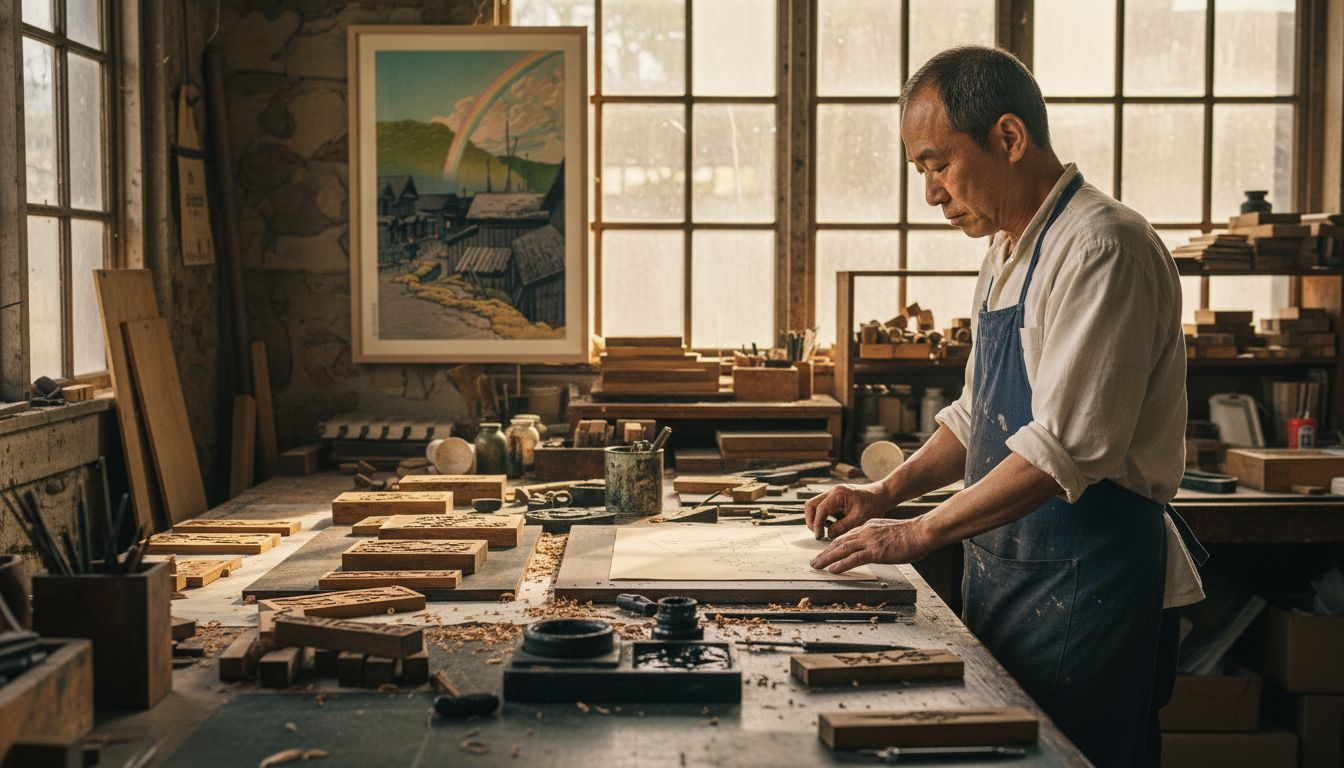
The Twelve Views of Tokyo series captured the capital’s transformation during Japan’s modernisation period. These prints presented iconic and overlooked locations with equal reverence, revealing Hasui’s belief that beauty existed everywhere if one looked closely enough.
His Souvenirs of Travel collections expanded across multiple iterations, documenting Japanese landscapes beyond Tokyo. These series invited viewers to experience regional beauty through his eyes, from coastal scenes to mountain vistas.
To better appreciate Hasui’s impact, here is a summary of his major print series and their distinguishing features:
| Series Name | Focus Locations | Artistic Focus | Distinctive Element |
|---|---|---|---|
| Twelve Views of Tokyo | Tokyo cityscapes | Urban transformation | Juxtaposes old and new Tokyo |
| Souvenirs of Travel I | Various regions | Rural and coastal scenery | Diverse weather and lighting |
| Souvenirs of Travel II | Mountainous areas | Seasonal landscapes | Emphasis on snow and rain |
| Souvenirs of Travel III | Provincial towns | Intimate local settings | Features lesser-known places |
Distinctive Printing Techniques
Hasui employed specialised woodblock methods that set his work apart. The zara-zuri technique created distinctive texture and visual depth in his prints, adding tactile quality to the imagery.
His technical innovations included:
- Atmospheric effects that conveyed mood and season
- Natural lighting suggesting specific times of day
- Nuanced colour gradations for visual sophistication
- Linear perspective combining Western and Japanese approaches
Thematic Elements and Mood
Hasui specialised in capturing specific atmospheric moments. His work emphasised seasonal landscapes, snow scenes, moonlight effects, and rain, which became signature elements of his artistic identity.
Hasui’s shin-hanga style blended traditional ukiyo-e woodblock methods with Western realism, creating prints that evoked profound emotional resonance through atmospheric mood and natural observation.
He often focused on less-travelled locales rather than famous destinations. This approach gave his prints an intimate, contemplative quality that resonated with collectors seeking authentic Japanese beauty.
Each series demonstrated consistent evolution in technique and conceptual depth. His mastery of composition allowed him to transform ordinary scenes into visually compelling narratives that captured viewers’ imagination and hearts.
Pro tip: When displaying Hasui prints from different series together, group them by season or thematic mood rather than chronologically—this creates visual harmony and tells a cohesive story throughout your space.
Identifying Genuine Hasui Prints for Collectors
Authenticity matters profoundly when acquiring Hasui prints. The high market value combined with widespread fakes means careful verification is essential before making any purchase decision.
Genuine Hasui prints display specific characteristics that distinguish them from reproductions. Understanding these markers protects your investment and ensures you own authentic works worthy of collection.
Key Authentication Markers
Several elements reveal whether a print is genuine or a reproduction. Publisher seals and censor marks appear on authentic Hasui prints and serve as critical authentication tools.
Look for these specific indicators:
- Publisher identification showing the original printing house
- Censor marks required during Japan’s historical periods
- Edition status indicating whether it’s an early or later impression
- Carving and printing quality demonstrating masterful woodblock technique
- Paper characteristics reflecting period-appropriate materials
Print Condition and Value
Condition significantly impacts a print’s desirability and market value. Early lifetime impressions with original publisher marks command the highest prices among collectors worldwide.
Colour vibrancy provides important clues about authenticity. Genuine Hasui prints display luminous, well-preserved colours even after decades, whilst reproductions often show unnatural or flat tones.
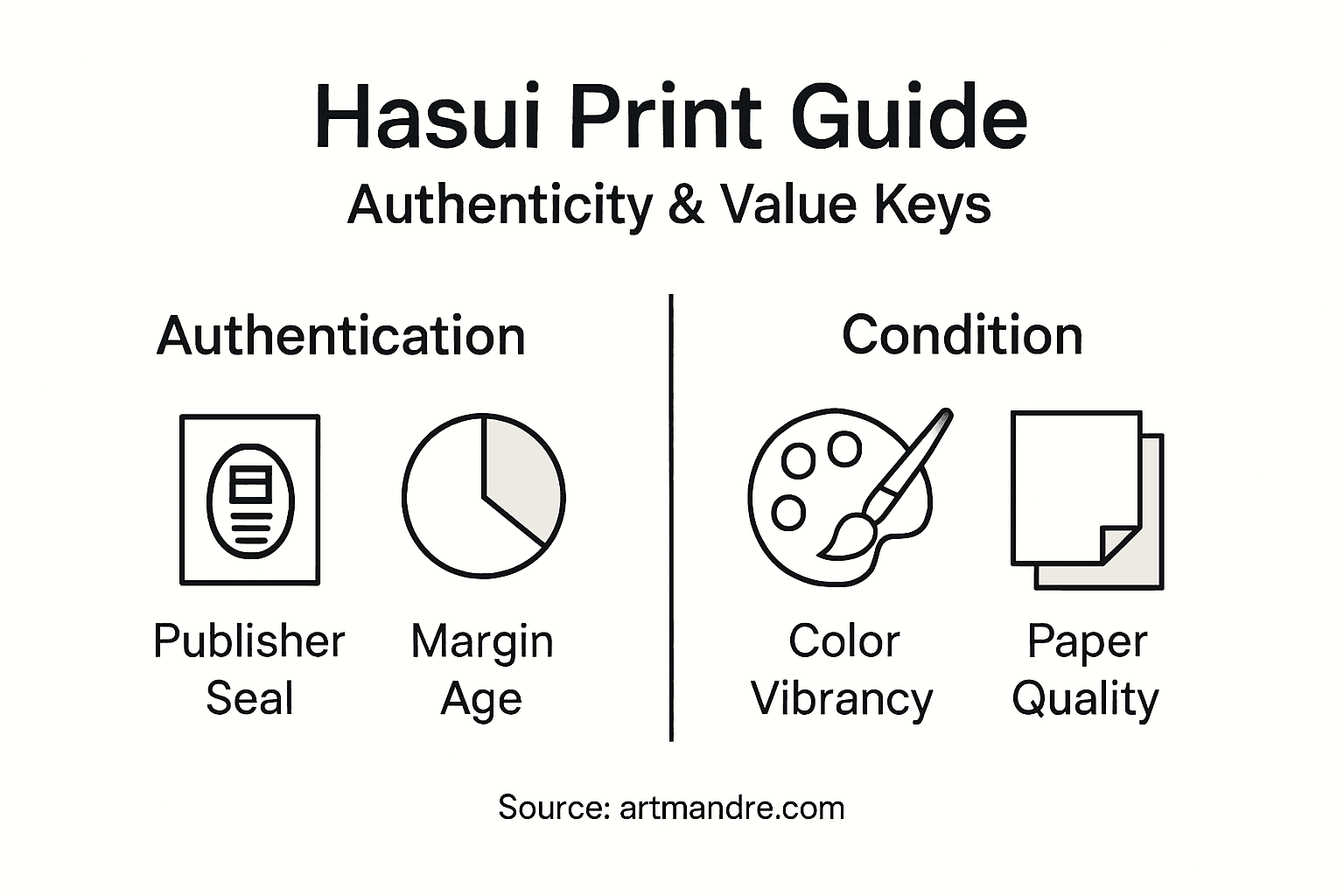
Margins also tell an important story. Authentic prints maintain proper margin spacing and show appropriate aging characteristics consistent with their production date.
Historical Context and Rarity
The Great Kanto Earthquake of 1923 destroyed many original woodblocks. This catastrophic event makes pre-1923 prints exceptionally rare and highly prised by serious collectors.
Posthumous editions and giclée reproductions exist in significant numbers but trade at substantial discounts to original Hasui woodblock prints from his lifetime.
Late-period Hasui prints have complex edition histories with limited early impressions. Multiple posthumous editions were produced after his death, creating confusion for buyers unfamiliar with print production methods.
Many fakes circulate as genuine pieces. Verifying provenance documentation helps confirm authenticity and protects collectors from costly deceptions.
The table below helps collectors quickly distinguish genuine Hasui prints from common reproductions and fakes:
| Aspect | Genuine Woodblock Print | Modern Reproduction | Counterfeit/Fake |
|---|---|---|---|
| Paper Texture | Handmade Japanese washi | Smooth, machine-made | Varies, often contemporary |
| Publisher Seals | Clear, period-correct | Absent or incorrect | Frequently forged or missing |
| Colour Vibrancy | Rich, subtle gradations | Flat, sometimes overly bright | Inconsistent, easily faded |
| Provenance | Traceable, well-documented | Minimal or generic | Missing or falsified records |
Pro tip: Request detailed provenance documentation and consider having high-value prints authenticated by specialist dealers before purchase—expert verification costs far less than discovering you own a reproduction after investing significantly.
Styling Interiors with Hasui Artworks
Hashui’s prints transform living spaces through their contemplative beauty and atmospheric depth. These woodblock works adapt seamlessly to diverse interior styles, from minimalist contemporary homes to traditionally-inspired rooms.
The key to successful styling lies in understanding what these prints convey. Seasonal and atmospheric effects create poignant moments that calm and quieten the surrounding environment, making them ideal focal points for any interior.
Creating Visual Harmony
Hashui prints feature subtle colour palettes that integrate beautifully with existing décor. Their muted tones, nature-focused subjects, and minimalist human figures create a sense of tranquillity without overwhelming the space.
Consider these styling approaches:
- Placement as focal points in bedrooms, studies, or living rooms where contemplation matters
- Grouping multiple prints by seasonal theme for cohesive visual narratives
- Highlighting contrast between light and dark areas to enhance dimensional depth
- Pairing with natural materials like wood frames and neutral wall colours
- Selecting complementary framing that respects the print’s original mood
Room-Specific Strategies
Bedrooms benefit enormously from Hasui’s calming presence. Snow scenes and moonlit landscapes promote rest and peaceful reflection ideal for sleep spaces.
Living areas showcase these prints as sophisticated conversation pieces. Rain scenes and seasonal transitions invite visitors to pause and appreciate the artist’s perspective on everyday moments.
Studies and home offices gain focus through Hasui’s concentrated imagery. Architectural scenes and urban landscapes inspire contemplation whilst maintaining professional ambiance.
Framing and Display Considerations
Proper framing enhances rather than distracts from the artwork. Quality glass or acrylic protection preserves the print whilst matting choices should complement the composition’s tones.
Frame selections should evoke the quietude and mood of Hasui’s depicted scenes, transforming individual prints into meditation points within your home.
Wall placement matters significantly for visual impact. Avoid direct sunlight to preserve colour vibrancy whilst ensuring adequate viewing distance for appreciating fine details.
Layering prints with other décor elements creates depth. Positioning a Hasui print alongside simple shelving, plants, or neutral textiles reinforces the natural, contemplative atmosphere.
Pro tip: Arrange Hasui prints at eye level in spaces where you naturally pause—beside reading chairs, above desk areas, or opposite entryway mirrors—to create intimate viewing moments that reward lingering attention.
Avoiding Pitfalls and Reproduction Issues
The thriving market for Hasui prints has unfortunately created opportunities for fraud and misrepresentation. Understanding common pitfalls protects your investment and ensures you acquire authentic, worthwhile pieces.
Reproductions exist in staggering numbers, often indistinguishable from originals to untrained eyes. Many sellers, whether intentionally or through ignorance, present digital reproductions and later printings as authentic Hasui woodblock works.
Understanding Print Editions
Not all Hasui prints carry equal value or authenticity. Early lifetime impressions with publisher seals represent the most desirable and authentic examples, commanding premium prices among serious collectors.
Edition status fundamentally affects both authenticity and value:
- First edition early impressions printed during Hasui’s lifetime with original publisher marks
- Later state impressions printed from the same blocks but with worn characteristics
- Posthumous editions produced after Hasui’s death with different publishers or seals
- Giclée reproductions created using modern digital printing that mimics woodblock appearance
- Completely counterfeit pieces designed to deceive through false documentation
Recognising Reproductions
Digital printing methods now replicate woodblock aesthetics convincingly. However, genuine woodblock prints display characteristics that reproductions cannot authentically replicate.
Paper quality differs noticeably between periods and printing methods. Original Hasui prints feature period-appropriate Japanese washi paper with distinct texture, whilst modern reproductions typically use standard contemporary paper stocks.
The 1923 Great Kanto Earthquake destroyed numerous original woodblocks, explaining why pre-1923 prints remain exceptionally scarce. This historical fact helps authenticate older pieces and justifies their premium valuations.
Essential Verification Steps
Examining edition marks and seals requires expertise but remains absolutely crucial for authentication. Reputable dealers can identify genuine seals and distinguish them from fabricated versions.
Prints lacking clear documentation, provenance records, or verifiable publisher information warrant immediate suspicion and should be avoided regardless of price.
Consult specialist dealers before significant purchases. Their expertise costs far less than acquiring a valuable-looking fraud that later proves worthless.
Demand complete provenance documentation showing ownership history and authentication records. Legitimate sellers expect these requests and provide thorough documentation without hesitation.
Pro tip: Request high-resolution photographs showing the print’s reverse side, seal details, and paper texture before committing to purchase—fraudsters rarely provide such scrutiny-inviting documentation.
Elevate Your Vintage Decor with Timeless Hasui Artworks
Kawase Hasui’s masterful shin-hanga prints capture the serene atmospheres and authentic beauty of Japan’s landscapes offering a perfect way to enrich your vintage or retro-inspired living spaces. If you seek to bring calm, sophistication, and genuine artistic heritage into your home Hasui’s work addresses the challenge of finding artwork that balances tradition with subtle modernity and evokes powerful emotional resonance through seasonal and atmospheric themes.

Discover a curated selection of vintage and retro wall art designed to complement prints like Hasui’s at ArtMandre.com where you can browse unique pieces that harmonise with classic woodblock aesthetics. Take advantage of attractive deals such as buy 2 get 1 free making it easier than ever to create a cohesive gallery wall or refresh your décor with art that speaks to your soul. Start transforming your space today by exploring our range and embracing the calming presence of authentic vintage style through art prints, all offered with multi-currency support and direct-to-door convenience.
Frequently Asked Questions
How can I identify genuine Kawase Hasui prints?
Authentic Kawase Hasui prints display specific characteristics, including publisher identification, censor marks, and high-quality craftsmanship. Look for clear publisher seals and well-preserved colour vibrancy as key indicators of authenticity.
What thematic elements are commonly found in Hasui’s artworks?
Hasui’s works often emphasise seasonal landscapes, atmospheric effects, such as snow and rain, and serene natural environments. He focused on capturing the intimate beauty of everyday scenes rather than just famous locations.
How do I properly display Kawase Hasui prints in my home?
To effectively display Hasui prints, consider placing them at eye level in areas where you naturally pause, such as reading nooks or entryways. Proper framing and avoiding direct sunlight will help preserve the artwork’s colour and texture while enhancing visual impact.
What should I consider when choosing a Hasui print for my decor?
When selecting a Hasui print, think about the seasonal elements and lighting depicted in the artwork, as these details can greatly influence how the print complements the natural light and colour scheme of your room.