
Blog
Vintage coffee wall art: 40 years of style for your home
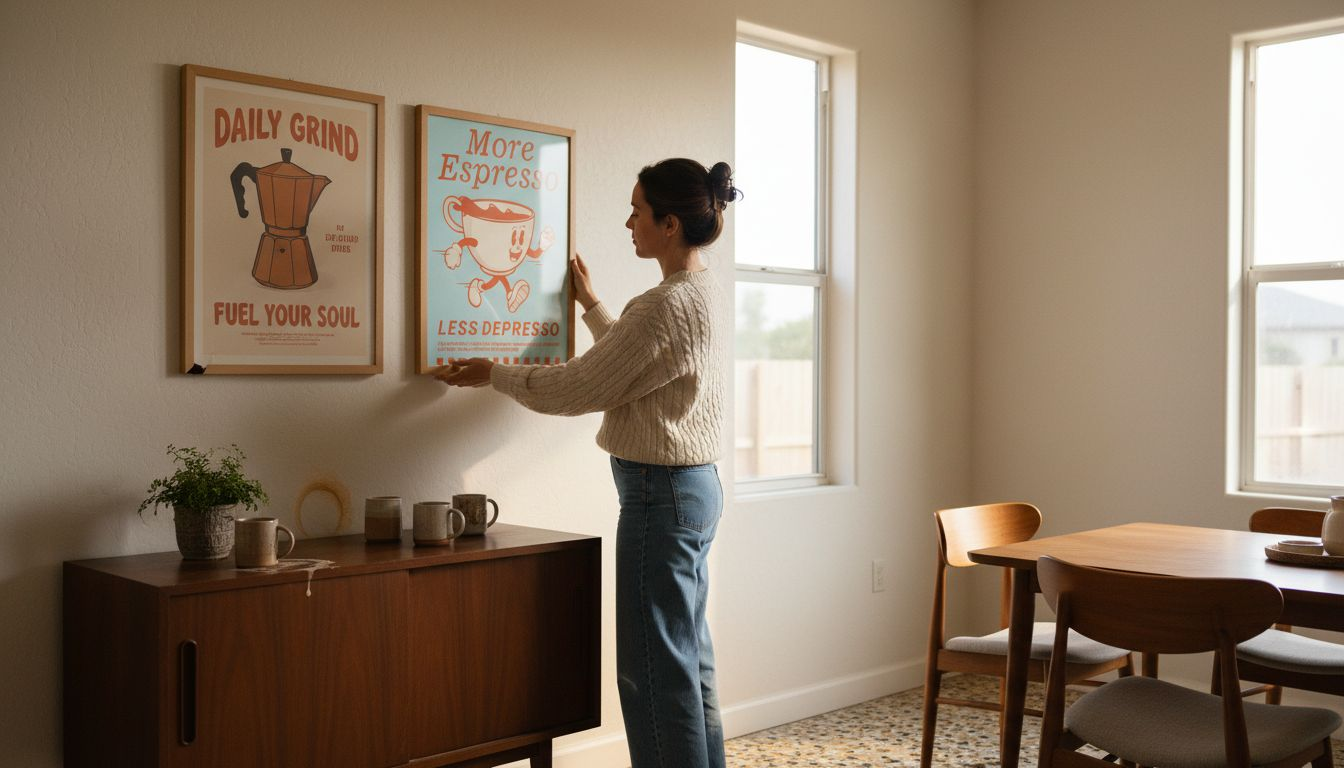
Vintage coffee wall art reflects nearly four decades of evolving print design trends from the 1920s through the 1960s. Yet many homeowners struggle to integrate these nostalgic pieces authentically within sleek, modern interiors. This guide equips you with expert knowledge on identifying genuine vintage styles, selecting pieces that harmonise with contemporary décor, mastering gallery wall composition, and preserving your collection’s beauty for years to come.
Table of Contents
- Understanding Vintage Coffee Wall Art Styles
- Authentic Vs Reproduction: Understanding Vintage Coffee Art
- How To Choose Vintage Coffee Wall Art For Modern Interiors
- Styling Vintage Coffee Art In Modern Interiors
- Creating Cohesive Gallery Walls With Vintage Coffee Art
- Common Misconceptions In Vintage Coffee Wall Art
- Practical Tips For Buying And Caring For Vintage Coffee Wall Art
- Explore Curated Vintage And Retro Posters At ArtMandre
- Frequently Asked Questions About Vintage Coffee Wall Art
Key takeaways
| Point | Details |
|---|---|
| Vintage coffee art spans four distinct design decades | Styles evolved from art deco typography in the 1920s to bold mid-century lettering by the 1960s |
| Authentic originals differ vastly from reproductions | Reproductions use archival materials lasting 50+ years indoors whilst originals are rare and fragile |
| Colour harmony determines successful modern integration | Interior designers recommend at least 70% stylistic coherence for impactful vintage display |
| Gallery walls maximise visual impact affordably | Multi-buy discounts enable cohesive themed collections without overspending |
| Common myths about fragility mislead buyers | Modern reproductions provide durable, practical quality suitable for everyday kitchen display |
Understanding vintage coffee wall art styles
Vintage coffee wall art evolved through distinct style phases across four decades. Each era brought unique visual characteristics shaped by cultural shifts and printing technology advances. Understanding these elements helps you distinguish authentic vintage style and select pieces that genuinely reflect historical design.
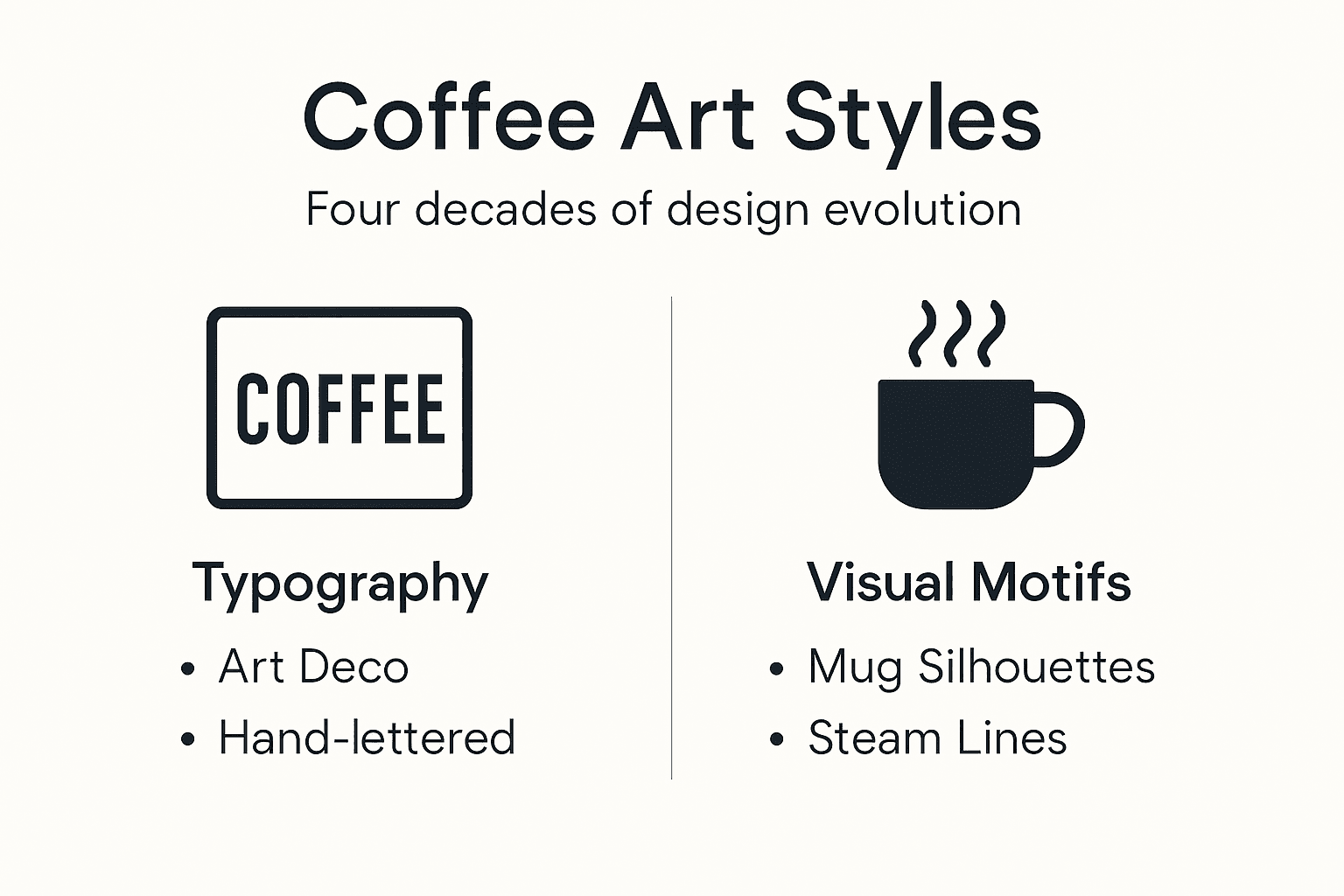
The 1920s introduced art deco influences with geometric patterns, streamlined fonts, and metallic accents celebrating coffee’s sophistication. By the 1930s and 1940s, wartime rationing shifted designs towards nostalgic home comfort messaging with softer colour palettes. The 1950s embraced bold, optimistic imagery featuring stylised coffee cups, vibrant reds and yellows, and playful illustrations of café culture. The 1960s brought psychedelic touches and experimental typography reflecting counterculture movements.
Common visual motifs across these decades include:
- Steaming coffee cups with exaggerated swirls conveying warmth and aroma
- Scattered coffee beans creating textural backgrounds
- Café scenes depicting social gathering spaces
- Advertising slogans promoting coffee brands or lifestyle benefits
- Illustrated servers, coffee pots, and brewing equipment
Typography ranged from elegant art deco fonts in early decades to chunky, hand-lettered styles in mid-century modern prints. These posters often conveyed cultural messages around coffee consumption as a daily ritual, social connector, or symbol of modern living. Recognising authentic vintage coffee wall art styles enables confident selection aligned with your aesthetic preferences.
The intersection of coffee culture and visual art created enduring design classics. These prints weren’t merely decorative; they shaped public perception of coffee as essential to contemporary lifestyle. Understanding this context enriches your appreciation and guides smarter purchasing decisions when building your collection. The influence of retro wall art extends beyond coffee themes into broader vintage design principles.
Authentic vs reproduction: understanding vintage coffee art
Authentic vintage posters are rare, costly, and potentially fragile. Original prints from the 1920s to 1960s command premium prices due to scarcity and historical significance. However, their delicate paper stock and aging inks make them challenging for everyday home display. Many collectors keep originals in controlled environments to prevent deterioration.
Reproductions offer practical advantages for modern homeowners. High-quality reproduction prints use archival paper and UV-resistant inks, lasting 50+ years indoors without significant fading. They’re widely available, affordable, and printed with materials specifically designed for long-term wall display. This durability makes reproductions ideal for kitchens, dining areas, and other spaces where vintage originals would risk damage from humidity or sunlight.
Key differences include:
- Rarity: Originals are limited by historical survival rates; reproductions can be reprinted
- Cost: Authentic pieces range from hundreds to thousands of pounds; reproductions typically cost under £50
- Durability: Originals fade and tear easily; reproductions withstand typical indoor conditions
- Availability: Finding specific original designs requires specialist dealers; reproductions offer broad selection
- Display practicality: Originals need museum-grade framing; reproductions work with standard frames
| Feature | Authentic Original | Modern Reproduction |
|---|---|---|
| Price range | £300-£3,000+ | £15-£80 |
| Lifespan (indoor) | 5-20 years without protection | 50+ years |
| Availability | Rare, specialist sources | Widely accessible |
| Maintenance | Requires professional conservation | Minimal care needed |
| Display risk | High (light, humidity damage) | Low (archival materials) |
Pro Tip: For daily enjoyment in your home, prioritise reproductions printed on archival paper with fade-resistant inks. Reserve authentic originals for special collections where preservation conditions can be controlled.
Buyers must balance authenticity desires against practical considerations. If you value historical provenance and have budget for proper conservation, authentic vintage coffee art offers tangible connection to the past. For most homeowners seeking beautiful, durable décor, reproductions deliver vintage character without fragility concerns. Understanding vintage poster authenticity helps you assess value versus utility for your specific needs.
How to choose vintage coffee wall art for modern interiors
Selecting vintage coffee wall art that harmonises with contemporary décor requires attention to colour palette, scale, and stylistic coherence. Modern interiors typically feature neutral foundations with accent colours, creating ideal backdrops for vintage prints to shine without visual chaos.
Start by identifying your room’s dominant colours. If you’ve built a scheme around whites, greys, and natural wood tones, choose vintage coffee art featuring one or two accent colours that complement existing textiles or accessories. Warm terracotta reds, mustard yellows, and sage greens from mid-century designs often blend beautifully with modern neutrals.
Measure your wall space before selecting print size. A general rule suggests artwork should occupy 60-75% of available wall width for balanced proportions. Smaller prints (A4-A3) suit compact spaces like breakfast nooks, whilst larger formats (A2-A1) create striking focal points in dining rooms or kitchen feature walls.
Framing bridges vintage and modern aesthetics. Interior designers recommend at least 70% stylistic coherence in room décor for impactful vintage art display. Choose frames that preserve the print’s nostalgic character whilst suiting contemporary interiors:
- Black or walnut wooden frames complement mid-century modern furniture
- Thin metal frames in brass or black suit minimalist spaces
- White or natural wood frames lighten traditional vintage imagery
- Avoid ornate gilt frames that clash with modern simplicity
Consider your existing décor style carefully. Vintage coffee art integrates most naturally with mid-century modern, transitional, or eclectic interiors. If your space leans ultra-minimalist or industrial, select vintage prints with cleaner compositions and limited colour palettes to maintain cohesion.
Pro Tip: Purchase a small print first to test colour harmony and style compatibility before committing to larger pieces or gallery wall collections.
Avoid mixing drastically clashing décor styles within the same space. If your furniture is sleek Scandinavian design, pair it with vintage coffee art featuring clean lines and limited ornamentation rather than busy Victorian-era compositions. Styling vintage coffee wall art successfully means respecting both the artwork’s historical character and your modern interior’s aesthetic requirements.
Styling vintage coffee art in modern interiors
Integrating vintage coffee wall art into modern spaces requires balancing nostalgic character with contemporary design principles. The key lies in creating dialogue between eras rather than forcing incompatible styles together.
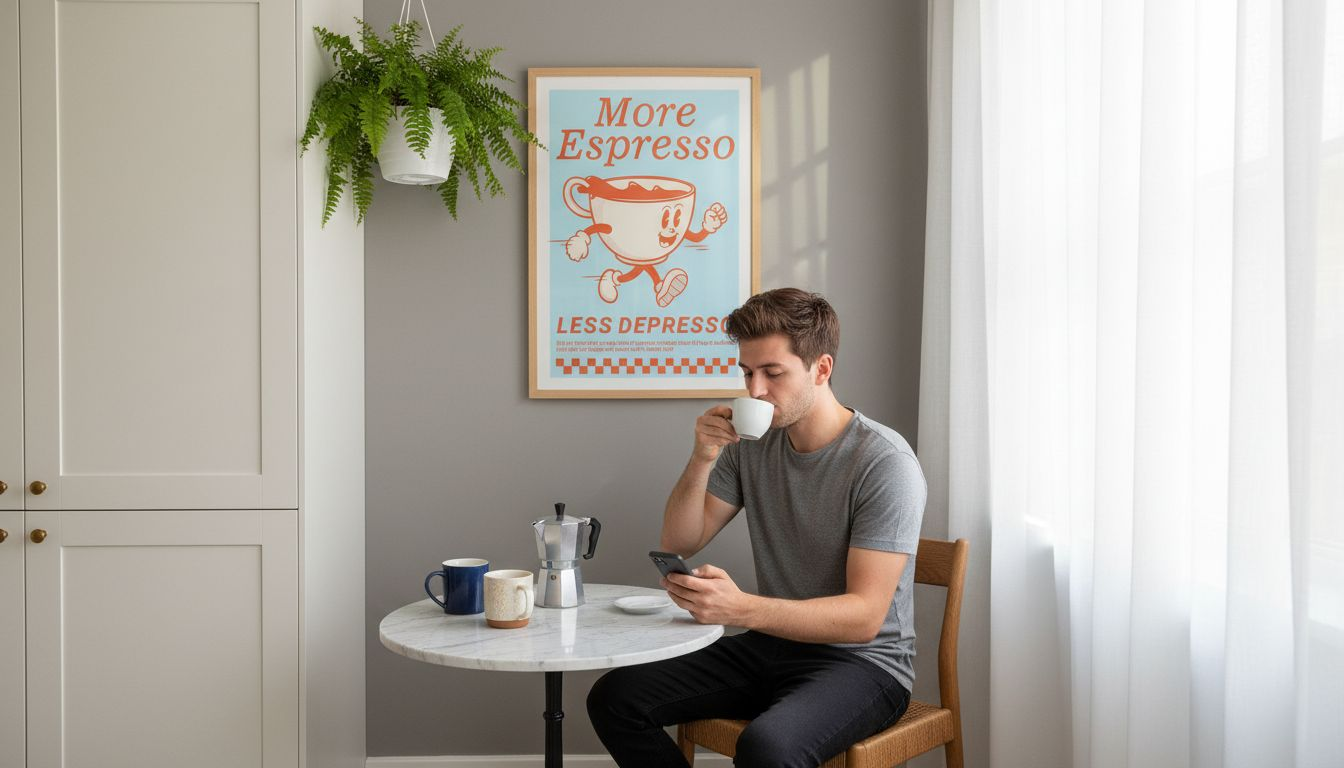
Combine vintage coffee art with mid-century modern furniture for natural harmony. Tapered wooden legs, organic curves, and warm wood tones characteristic of 1950s-1960s design complement the same era’s poster aesthetics. This pairing creates cohesive retro-modern environments where both elements feel intentionally curated rather than accidentally assembled.
Avoid decorative items that clash with vintage aesthetics. Contemporary chrome accessories, ultra-modern abstract sculptures, or heavily industrial elements can create visual discord. Instead, bridge styles with transitional pieces:
- Ceramic vessels in retro shapes and muted glazes
- Indoor plants in simple terracotta or neutral pots
- Vintage-inspired kitchen textiles featuring period-appropriate patterns
- Wooden serving boards and utensils with warm, natural finishes
- Copper or brass accents that echo mid-century metalwork
Stylistic coherence significantly enhances visual impact and ambience when combining vintage coffee art with modern furnishings. Create retro-modern gallery walls by maintaining consistent colour themes across multiple prints. If one poster features dominant terracotta tones, echo that warmth in adjacent pieces even if designs vary.
Balance prevents one style overpowering the other. In predominantly modern spaces, limit vintage elements to 30-40% of visual weight through wall art and select accent pieces. This ratio preserves contemporary cleanliness whilst injecting personality and warmth through nostalgic touches.
Pro Tip: Use negative space strategically around vintage prints. Modern interiors thrive on breathing room, so avoid clustering too many decorative elements near your coffee art.
Consider room function when placing vintage coffee art. Kitchens and dining areas naturally suit coffee-themed prints due to contextual relevance. However, breakfast nooks, home offices with coffee stations, or reading corners also provide appropriate settings. Styling vintage coffee art extends beyond kitchens when you consider where coffee consumption actually occurs in your daily routines.
Creating cohesive gallery walls with vintage coffee art
Gallery walls amplify vintage coffee art’s impact whilst offering economic advantages through multi-buy opportunities. Strategic arrangement transforms individual prints into curated collections that command attention and define spaces.
Plan your layout before hammering nails. Lay prints on the floor to experiment with arrangements, considering balance of colour, size, and visual weight. Symmetrical layouts create formal elegance, whilst asymmetrical compositions feel more organic and contemporary.
Follow these steps for successful gallery walls:
- Select 3-5 prints sharing a colour palette or thematic element (coffee preparation, café scenes, or specific decades)
- Choose varying sizes to create visual interest whilst maintaining overall balance
- Cut paper templates matching your frame dimensions and tape them to the wall
- Step back to assess spacing and adjust templates until arrangement feels harmonious
- Mark hanging points through templates, then remove paper and install hardware
- Hang frames starting from the centre and working outward
Multi-buy discounts make gallery walls economically accessible. Many retailers offer tiered savings: 5% off two prints, 10% off three, and 15% off four or more. Building a five-piece gallery wall becomes significantly more affordable than purchasing prints individually over time.
Pro Tip: Maintain 5-8 cm spacing between frames for cohesion without crowding. Consistent gaps create professional presentation.
Consider layout styles that suit your space:
| Layout Type | Best For | Visual Effect |
|---|---|---|
| Grid | Minimalist modern spaces | Clean, organised, formal |
| Salon style | Eclectic, maximalist décor | Dense, collected, organic |
| Linear | Hallways, narrow walls | Streamlined, directional |
| Cluster | Accent walls, above furniture | Casual, approachable |
Group posters by era or motif for thematic cohesion. A gallery wall featuring exclusively 1950s coffee advertising creates stronger impact than mixing disparate decades randomly. Alternatively, unite varied designs through consistent framing or mat colours.
Vintage coffee art gallery walls work particularly well above dining tables, along kitchen walls, or in breakfast nooks where coffee culture contextually belongs. The cumulative effect of multiple coordinated prints elevates perceived value and design sophistication beyond what single pieces achieve.
Common misconceptions in vintage coffee wall art
Several persistent myths prevent homeowners from confidently enjoying vintage coffee wall art. Addressing these misconceptions helps you make informed decisions without unnecessary concern.
Myth: Vintage coffee art is too fragile for everyday display. Whilst authentic originals require careful handling, modern reproductions are specifically engineered for durability. High-quality prints on archival paper with UV-resistant inks withstand typical indoor conditions for 50+ years without significant deterioration. Properly framed reproductions suit kitchens, dining areas, and other high-traffic spaces without special precautions.
Myth: Only original prints have lasting value and visual appeal. This misconception overlooks reproduction quality advances. Contemporary printing technology replicates vintage designs with remarkable fidelity, delivering the same nostalgic aesthetic at a fraction of the cost. For homeowners prioritising beautiful, functional décor over historical provenance, reproductions provide superior practical value.
Myth: Vintage coffee art fits any décor style regardless of context. Successfully integrating vintage pieces requires stylistic consideration. Placing ornate 1930s coffee advertising in ultra-minimalist Scandinavian interiors creates visual discord. The 70% stylistic coherence principle applies: your vintage art should share design language with surrounding décor through colour, line quality, or era-appropriate elements.
Myth: Vintage prints require expensive, specialised framing. Standard picture frames work perfectly well for reproduction prints. Whilst museum-grade materials benefit authentic originals, reproductions need only basic UV-protective glass and acid-free mats (widely available at affordable prices) to ensure longevity.
“The biggest mistake homeowners make is assuming vintage art won’t work in modern spaces. With proper colour coordination and framing choices, vintage coffee prints enhance contemporary interiors beautifully.”
Myth: Gallery walls require professional design skills. Creating cohesive arrangements is simpler than many believe. Following basic spacing guidelines (5-8 cm between frames) and using paper templates to plan layouts eliminates guesswork. Start small with three prints, then expand as confidence grows.
Understanding these realities empowers confident purchasing and display decisions. Vintage coffee wall art offers accessible, affordable ways to inject personality and warmth into modern homes without the fragility concerns or expense often assumed.
Practical tips for buying and caring for vintage coffee wall art
Smart purchasing and proper maintenance ensure your vintage coffee art remains beautiful for decades. These expert practices protect your investment whilst maximising enjoyment.
Purchase from reputable sellers specialising in vintage or reproduction prints. Established online retailers with detailed product information, customer reviews, and clear return policies minimise risk. Verify that reproductions use archival paper and fade-resistant inks for longevity.
Frame with preservation in mind:
- Use UV-protective glass or acrylic glazing to prevent colour fading from sunlight exposure
- Select acid-free mats that won’t yellow or damage prints over time
- Choose solid backing boards that prevent moisture infiltration
- Ensure frames seal properly to exclude dust and environmental contaminants
Choose sizes that balance wall space and visual focus. Measure your intended location carefully, then select prints occupying 60-75% of available width. Undersized art looks lost, whilst oversized pieces overwhelm spaces.
Place thoughtfully to avoid damage:
- Keep prints away from direct sunlight, which fades even archival inks over time
- Avoid high-humidity areas like directly above cookers or near steamy bathroom walls
- Position away from heating vents that circulate dust and dry out materials
- Maintain room temperature between 18-24°C to prevent paper warping
Regular maintenance preserves appearance. Dust frames monthly with soft, dry cloths. Check periodically for signs of fading, foxing (brown spots), or frame deterioration. If you notice issues, address them promptly before damage progresses.
Pro Tip: Use gallery hanging systems with adjustable hooks rather than permanent nails. These systems allow easy rearrangement as your collection grows or décor preferences evolve.
Buying vintage coffee wall art from established specialists ensures quality materials and accurate representation. Read product descriptions carefully to understand whether you’re purchasing reproductions or attempting to source authentic originals. For everyday home display, reproductions offer superior practicality without compromising visual appeal.
Document your collection with photos and purchase records. This practice helps track condition changes over time and provides useful reference if you later decide to expand or rearrange your gallery walls.
Explore curated vintage and retro posters at ArtMandre
Transforming your modern interior with vintage coffee wall art becomes effortless when you explore thoughtfully curated collections designed for contemporary living. ArtMandre specialises in retro-style posters that balance nostalgic character with modern simplicity, offering vintage-inspired coffee designs alongside complementary prints spanning cocktail themes, travel classics, and mid-century illustrations.

The multi-buy discount structure makes building cohesive gallery walls economically smart. Purchase two posters and save 5%, three for 10% off, or four or more to unlock 15% savings. This transparent pricing supports your vision for curated wall compositions without budget strain.
Beyond product selection, the platform provides editorial guidance on arrangement principles, colour coordination, and styling techniques. Whether you’re discovering iconic retro poster styles for the first time or refining existing collections, practical gallery wall ideas help you achieve professional results. Each design undergoes careful curation to ensure vintage authenticity meets contemporary quality standards, delivering prints that enhance your space for years to come.
Frequently asked questions about vintage coffee wall art
What is the best way to preserve vintage coffee posters at home?
Use UV-protective glass and acid-free mats when framing to prevent fading and material degradation. Keep prints away from direct sunlight and high-humidity areas. Maintain stable room temperatures between 18-24°C and dust frames monthly with soft cloths.
How can I tell if a coffee poster is an original or a reproduction?
Originals show age-related characteristics like paper yellowing, slight tears, or printing imperfections typical of historical production methods. Reproductions use modern archival paper with consistent, vibrant colours and crisp printing. Reputable sellers clearly label whether prints are authentic originals or contemporary reproductions.
Can vintage coffee wall art fit in minimalist modern interiors?
Yes, when selected thoughtfully. Choose prints with clean compositions, limited colour palettes, and simple typography rather than busy Victorian-era designs. Frame in thin black or natural wood to maintain minimalist aesthetic whilst introducing vintage warmth. The 70% stylistic coherence principle ensures compatibility.
Where is the best place to buy authentic vintage coffee prints?
Specialist online retailers focusing on vintage and retro poster reproductions offer the widest selection and best value for home display. For authentic originals, seek established dealers in vintage advertising ephemera, auction houses, or antique markets. Always verify seller credentials and return policies before purchasing.
Are reproduction prints suitable for everyday display in kitchens?
Absolutely. High-quality reproductions printed on archival paper with UV-resistant inks withstand typical kitchen conditions for 50+ years without significant fading. Avoid placing directly above cookers where steam and heat concentrate, but otherwise reproduction prints offer practical durability authentic originals cannot match for everyday home environments.