



Vintage Japanese Wall Art: Adding Timeless Beauty
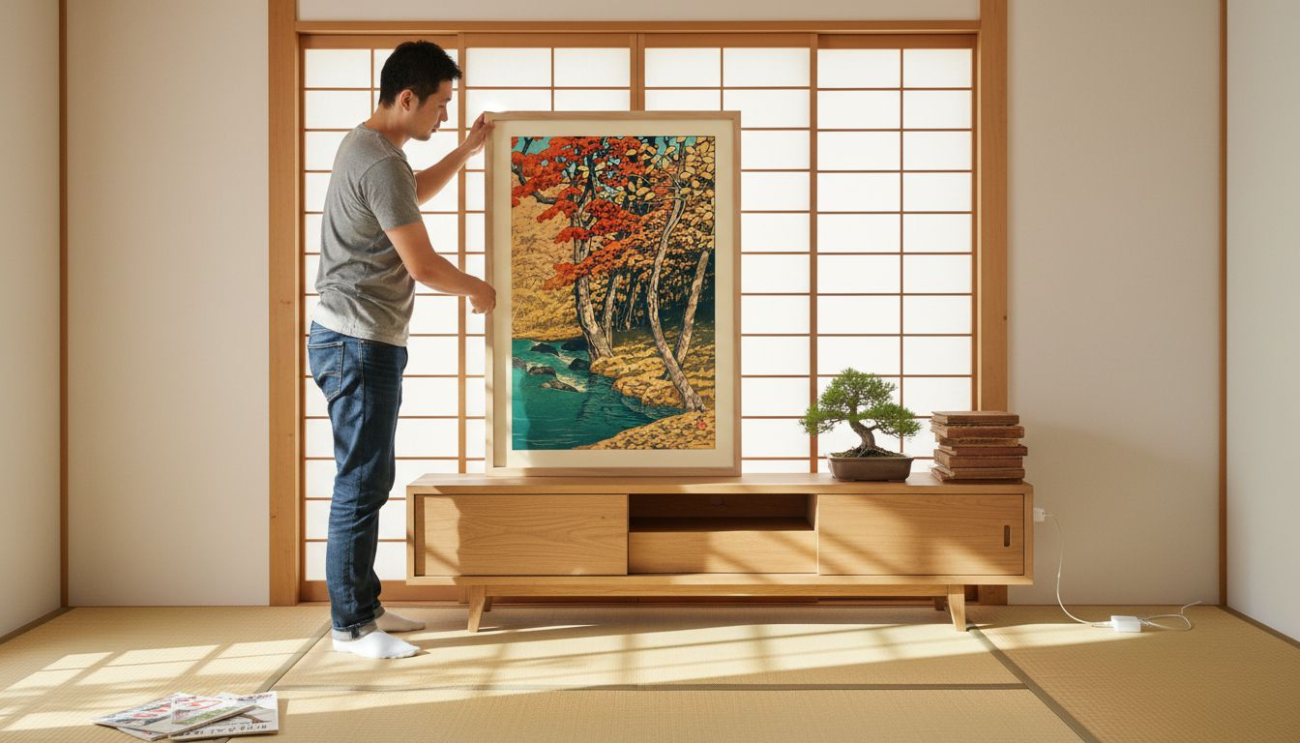
Choosing artwork that feels both timeless and deeply personal can be challenging for anyone curating a welcoming home. Vintage Japanese wall art offers a unique solution, weaving together tradition, nature, and human experience into visually stunning pieces. With techniques like ukiyo-e woodblock printing and minimalist brushwork, these works bring cultural storylines and a sense of harmony to modern interiors. Bold details and symbolic depth found in authentic vintage pieces can become the focal point of any space, allowing your personal style to shine.
Table of Contents
- Defining Vintage Japanese Wall Art
- Major Styles and Historical Influences
- Key Artistic Techniques and Materials
- Decorating With Vintage Japanese Prints
- Identifying Authentic and Reproduction Pieces
Key Takeaways
| Point | Details |
|---|---|
| Cultural Significance | Vintage Japanese wall art is a profound representation of Japanese aesthetics, intertwining tradition, nature, and human experience. |
| Artistic Techniques | Key techniques include woodblock printing and sumi-e ink painting, showcasing attention to detail and minimalism. |
| Historical Influence | Different periods, such as the Edo and Meiji periods, significantly shaped the evolution and themes present in vintage Japanese wall art. |
| Authenticity Awareness | Recognizing authentic pieces requires understanding characteristics like paper quality, pigment composition, and artist signatures. |
Defining Vintage Japanese Wall Art
Vintage Japanese wall art represents a profound cultural expression that captures centuries of artistic evolution and aesthetic philosophy. Japanese visual arts reflect a unique approach where tradition, nature, and human experience converge into stunning visual narratives.
At its core, vintage Japanese wall art encompasses several distinct artistic traditions that emerged during specific historical periods. These art forms are characterized by their remarkable attention to detail, symbolic depth, and intricate design principles. Key characteristics include:
- Minimalist color palettes
- Precise, intentional brushwork
- Profound connection to natural landscapes
- Storytelling through visual metaphors
- Emphasis on negative space and balance
Traditional techniques like ukiyo-e woodblock prints and scroll paintings represent the pinnacle of this artistic heritage. These works often depicted scenes from daily life, historical events, landscapes, and mythological narratives, providing viewers with a window into Japan’s rich cultural context.
The aesthetic principles underlying vintage Japanese wall art extend far beyond mere decoration. They embody philosophical concepts like wabi-sabi, which celebrates imperfection, transience, and the beauty of natural aging. This perspective transforms artwork from a visual object into a deeply meditative experience that invites contemplation and emotional resonance.
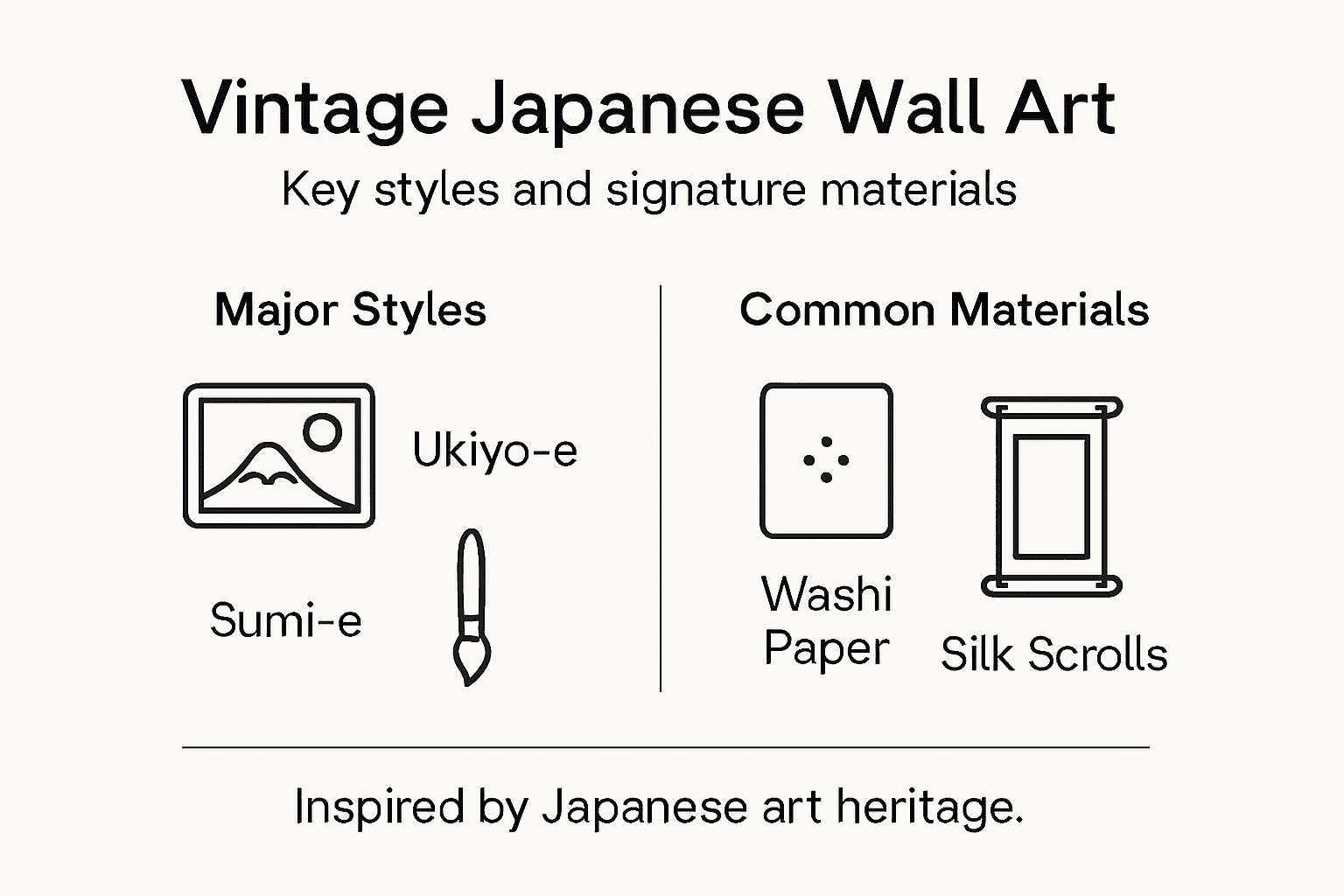
Pro tip: When selecting vintage Japanese wall art, look for pieces that demonstrate authentic traditional techniques and carry a sense of historical narrative.
Major Styles and Historical Influences
Vintage Japanese wall art represents a complex tapestry of artistic movements that have evolved through various historical periods, each contributing unique stylistic elements and cultural significance. The Japanese artistic traditions demonstrate remarkable diversity and depth across different eras.
Several pivotal artistic styles have defined vintage Japanese wall art throughout history:
- Heian Period (794-1185): Characterized by refined court aesthetics
- Kamakura Period (1185-1333): Emergence of samurai warrior culture influences
- Muromachi Period (1336-1573): Zen Buddhist minimalism and ink painting
- Edo Period (1603-1868): Peak of ukiyo-e woodblock print popularity
- Meiji Period (1868-1912): Western artistic techniques integration
Each period brought distinctive artistic approaches that transformed wall art from mere decoration to profound cultural expression. The ukiyo-e style, for instance, revolutionized visual storytelling through intricate woodblock prints that captured everyday life, landscapes, and historical narratives with extraordinary detail and emotional depth.
Here’s a comparison of major historical periods and their influence on vintage Japanese wall art:
| Historical Period | Artistic Focus | Key Influence |
|---|---|---|
| Heian (794-1185) | Elegant themes, courtly style | Aristocratic culture |
| Kamakura (1185-1333) | Realism, warrior iconography | Samurai traditions |
| Muromachi (1336-1573) | Zen-inspired minimalism | Buddhist philosophy |
| Edo (1603-1868) | Popular imagery, ukiyo-e prints | Urban life and entertainment |
| Meiji (1868-1912) | Western styles adapted | Modernization and global exchange |
The philosophical underpinnings of these artistic styles went far beyond aesthetic considerations. They embodied complex cultural values, spiritual perspectives, and social commentaries that reflected the nuanced Japanese worldview. Artists during these periods were not just creators but cultural historians who preserved and transmitted societal insights through their work.
Pro tip: When collecting vintage Japanese wall art, research the specific historical period of the piece to understand its deeper cultural context and artistic significance.
Key Artistic Techniques and Materials
Japanese vintage wall art represents a sophisticated fusion of artistic techniques and traditional materials that have been refined over centuries of cultural practice. The intricate craftsmanship behind these art forms reflects a deep respect for aesthetic precision and spiritual expression.
The primary artistic techniques in vintage Japanese wall art include:
- Woodblock Printing (Mokuhanga): Intricate multi-layered color printing
- Sumi-e Ink Painting: Minimalist brush techniques emphasizing negative space
- Calligraphy: Artistic writing as a visual and spiritual practice
- Scroll Painting: Narrative art on delicate hanging scrolls
- Screen Painting: Decorative panels with complex compositions
Materials played a crucial role in creating these extraordinary artworks. Washi paper, handcrafted from mulberry bark, provided a delicate yet resilient surface that absorbed ink and pigments with remarkable subtlety. Natural pigments derived from minerals, plants, and organic sources allowed artists to create vibrant yet harmonious color palettes that captured the essence of Japanese aesthetic principles.
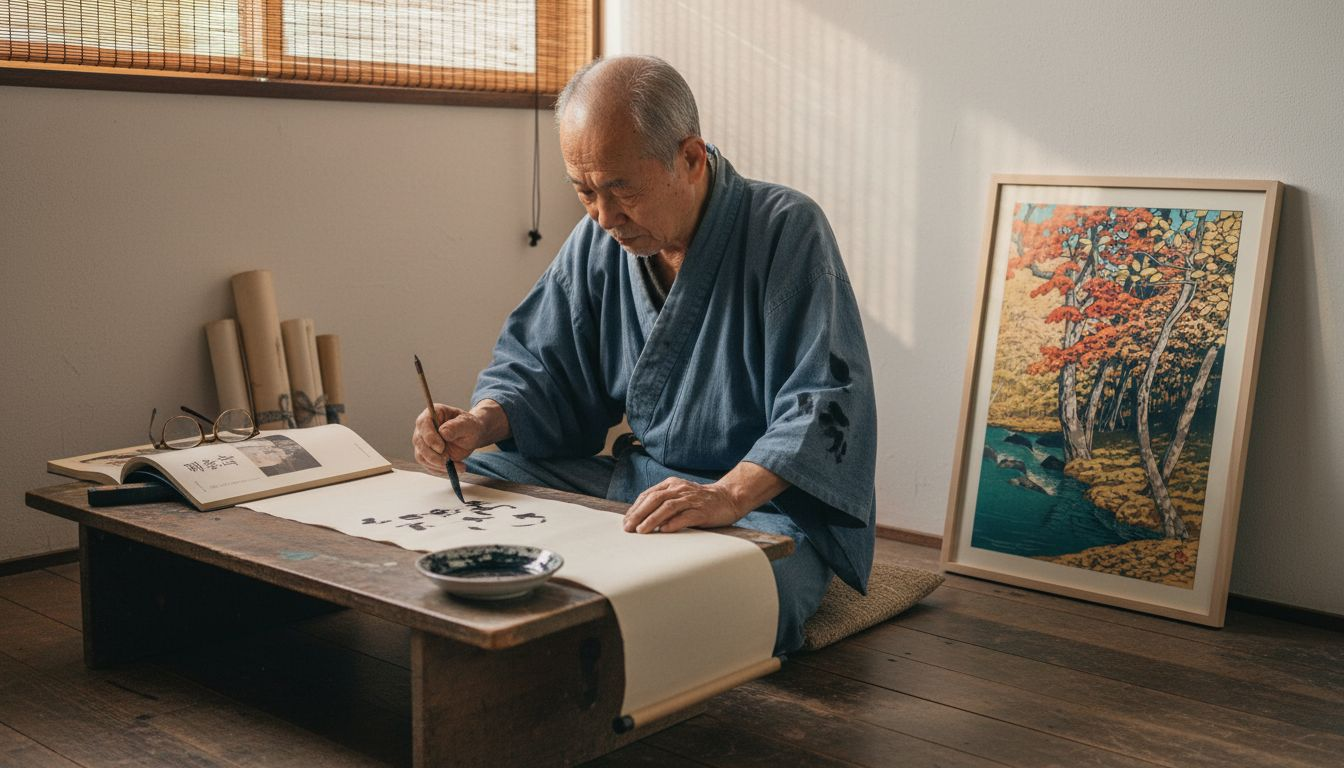
The techniques were not merely technical skills but profound expressions of philosophical and spiritual concepts. Artists approached their work as a meditative practice, believing that each brushstroke carried spiritual energy and represented a deeper connection between the creator, the artwork, and the universe. The deliberate restraint and careful composition reflected Zen Buddhist principles of mindfulness and inner harmony.
Pro tip: When appreciating vintage Japanese wall art, observe the subtle techniques and material choices that reveal the artist’s deeper cultural and spiritual intentions.
Decorating With Vintage Japanese Prints
Transforming interior spaces with vintage Japanese prints requires a nuanced understanding of wall art styling techniques. These artworks offer more than aesthetic appeal – they bring cultural depth and spiritual resonance to contemporary living environments.
Strategic placement and styling of vintage Japanese prints involve several key considerations:
- Color Harmony: Match prints with room’s neutral color palette
- Framing Options: Choose simple frames or traditional scroll mounting
- Grouping Techniques: Create visual interest through asymmetrical arrangements
- Complementary Decor: Select minimalist furniture that doesn’t compete with artwork
- Lighting Considerations: Use soft, indirect lighting to highlight print details
Authenticity matters significantly when incorporating these prints. Vintage Japanese artwork communicates a refined aesthetic that transcends mere decoration, representing a profound cultural narrative. Careful selection involves understanding the print’s historical context, artistic technique, and spiritual significance.
Interior designers recommend treating these prints as focal points rather than background elements. The delicate brushwork, subtle color gradations, and symbolic imagery invite viewers to pause and contemplate. Whether featuring a serene landscape, a dynamic kabuki scene, or an intricate botanical illustration, each print tells a unique story that enriches the living space.
Pro tip: Rotate your vintage Japanese prints periodically to prevent sun damage and maintain their vibrant aesthetic quality.
Identifying Authentic and Reproduction Pieces
Navigating the intricate world of vintage Japanese wall art requires a discerning eye and sophisticated understanding of authenticity markers. Distinguishing between genuine historical pieces and high-quality reproductions demands careful examination of multiple intricate details.
Key indicators of authenticity include:
- Paper Quality: Original prints use handmade washi paper with unique fiber characteristics
- Pigment Composition: Traditional natural pigments differ from modern synthetic colors
- Printing Techniques: Authentic woodblock prints show specific textural nuances
- Artist Signatures: Genuine pieces feature traditional signature and seal placement
- Aging Characteristics: Natural patina and subtle color degradation on original works
Collectors and art enthusiasts must develop a trained perspective to recognize subtle differences between authentic vintage pieces and contemporary reproductions. Historical context plays a crucial role in understanding the artwork’s genuine provenance, requiring research into specific artistic periods, printing techniques, and cultural significance.
Use this quick reference to distinguish authentic vintage Japanese wall art from reproductions:
| Authentic Piece Indicator | Historical Reproductions |
|---|---|
| Handcrafted washi paper | Machine-made modern paper |
| Natural mineral pigments | Synthetic commercial colors |
| Signature with personal seal | Printed or missing signature |
| Subtle, aged color fading | Uniform bright coloration |
| Textured woodblock surface | Flat, smooth print finish |
Technical examination involves multiple assessment strategies, including microscopic paper fiber analysis, pigment spectroscopy, and comparative historical documentation. Professional appraisers often employ advanced scientific techniques to validate the artwork’s authenticity, understanding that each piece represents not just a visual artifact but a profound cultural narrative.
Pro tip: Consult multiple expert sources and request detailed provenance documentation before investing in vintage Japanese wall art pieces.
Elevate Your Space with Authentic Vintage Japanese Wall Art
Discover how vintage Japanese wall art brings timeless beauty and profound cultural meaning into your home. This style embraces minimalist color palettes, storytelling through visual metaphors, and mindful craftsmanship that invites calm and contemplation. If you want to transform your interior with pieces that go beyond decoration and embody the spirit of wabi-sabi, you are in the right place.

Browse our carefully curated collection at ArtMandre.com to find authentic vintage prints and wall decor that match your unique aesthetic goals. Take advantage of our special offers like buy 2 get 1 free to refresh your living spaces with meaningful artwork. Inspire your design journey with expert tips on decorating and styling by visiting our blog. Start exploring now to own art that resonates with history, elegance, and spiritual depth.
Frequently Asked Questions
What defines vintage Japanese wall art?
Vintage Japanese wall art is characterized by its attention to detail, minimalist color palettes, and connection to nature. It often incorporates traditional techniques like ukiyo-e woodblock prints and scroll paintings, reflecting a rich cultural narrative.
How can I effectively decorate with vintage Japanese prints?
To decorate with vintage Japanese prints, consider the room’s color harmony, choose appropriate framing options, and group prints in visually interesting arrangements. Use soft lighting to enhance their details and treat them as focal points in your space.
What are some key artistic techniques used in vintage Japanese wall art?
Key techniques include woodblock printing (mokuhanga), sumi-e ink painting, calligraphy, scroll painting, and screen painting. These methods emphasize precision and often use traditional materials like washi paper and natural pigments.
How can I identify authentic vintage Japanese wall art?
Authenticate vintage Japanese wall art by examining the paper quality, pigment composition, printing techniques, and artist signatures. Genuine pieces typically show signs of natural aging and have unique textures distinct from modern reproductions.