
Blog
The Latest Art Print Trends and How to Integrate Them at Home
The Latest Art Print Trends and How to Integrate Them at Home
Walking into a well-decorated space, your eyes are immediately drawn to the walls. What hangs there can transform a room from ordinary to extraordinary in an instant. Art prints aren’t just decorative afterthoughts—they’re the soul of your living spaces, expressing your personality and setting the emotional tone of your home. As we move through 2025, art prints have evolved from simple wall fillers to conversation-starting focal points that can completely reinvent your space.
In this comprehensive guide, we’ll explore the freshest wall art trends taking over homes this year, from bold color statements to sustainable materials. You’ll discover how to thoughtfully select pieces that speak to you, position them effectively in different rooms, and create a cohesive look that balances trendy elements with timeless appeal. Looking for more creative decor inspiration? Check out these retro wall art ideas and design tips.
Why art print trends matter in home decor
Art prints have undergone a significant evolution in recent years. No longer relegated to “nice-to-have” status, they’ve become essential components of interior design that can anchor a room’s identity. The right wall art doesn’t just fill empty space—it communicates your personal narrative and creates an emotional atmosphere that transforms how people experience your home.
Today’s interior designers recognize wall art as a pivotal element rather than a finishing touch. A striking print can determine a room’s color palette, influence furniture selections, and even alter the perceived dimensions of a space. In smaller apartments or minimalist homes, thoughtfully chosen wall prints often replace physical objects, reducing clutter while maintaining visual interest and personality.
What’s particularly exciting about the current art print landscape is its accessibility. With the democratization of art through digital platforms and print-on-demand services, everyone can participate in these trends regardless of budget constraints. This accessibility has fueled experimentation, allowing homeowners to refresh their spaces more frequently and take design risks they might have avoided with more permanent or expensive decor elements.
2025’s must-know art print trends
This year brings a fascinating contrast in wall art preferences, with some homeowners gravitating toward bold, expressive statements while others embrace serene simplicity. What unites these seemingly opposite approaches is a renewed emphasis on intentional curation and emotional resonance. Let’s explore the most influential movements shaping wall spaces this year.
Vivid color statements
After years of neutral domination, vibrant hues are making a triumphant return to our walls. Deep terracotta, reminiscent of Mediterranean landscapes, adds warmth to contemporary spaces. Bold blues—ranging from cobalt to oceanic teal—create focal points that ground airy rooms. Cherry red accents, once considered too daring for sophisticated interiors, now punctuate minimalist spaces with welcome energy.
Dill green has emerged as an unexpected favorite, bringing a natural yet sophisticated element to urban apartments. Plaster pink continues its reign but with added depth and complexity, while butter yellow introduces subtle warmth without overwhelming quieter spaces. These colors aren’t just randomly selected—they reflect our collective desire for spaces that energize and comfort simultaneously.
Color psychology plays an increasingly important role in print selection, with homeowners choosing specific hues to influence mood and behavior in different rooms. Energizing tones for workout spaces and home offices contrast with soothing palettes in bedrooms and meditation corners, creating environments that support our various activities and emotional needs.
Texture-rich prints
As our digital lives expand, so does our craving for tactile experiences at home. This year’s most coveted prints feature dimensional elements that engage multiple senses. Impasto technique reproductions—where paint appears thick and raised from the surface—add sculptural quality to otherwise flat walls. These prints create dynamic shadows that shift throughout the day as natural light changes.
Prints featuring textural photography—close-ups of natural elements like tree bark, stone, or textile weaves—satisfy our biophilic instincts while maintaining a sophisticated aesthetic. Similarly, prints that incorporate actual textural elements or simulate three-dimensional surfaces bring depth to modern interiors that might otherwise feel sterile.
The appeal of these textured prints extends beyond visual interest—they create moments of discovery in our homes. Guests are drawn to examine these pieces up close, making them natural conversation starters and focal points. Even in digital reproductions, the illusion of texture adds a premium quality that elevates the entire room.
Sustainable & ethical art
Environmental consciousness has firmly established itself in the wall art sector, with consumers increasingly seeking pieces that align with their values. Recycled paper prints, once niche products, have entered the mainstream with improved quality and durability. Innovation in natural dyes has expanded the available color spectrum while reducing chemical usage, allowing eco-conscious consumers to enjoy vibrant art without environmental compromise.
Responsibly sourced frames—using certified woods or reclaimed materials—complete the sustainable package. Many collectors now research an art print’s entire lifecycle, from creation to eventual disposal, before making purchasing decisions. This holistic approach has pushed manufacturers to improve transparency about their processes and materials.
Beyond materials, the subject matter of eco-friendly prints often celebrates nature and promotes environmental awareness. Botanical illustrations, wildlife photography, and landscapes remind us of what we’re working to preserve. These pieces serve dual purposes—beautifying our spaces while reinforcing our commitment to environmental stewardship.
Abstract maximalism vs. serene minimalism
The interior design world is experiencing a fascinating polarization in wall art preferences. On one end of the spectrum, abstract maximalism embraces energetic compositions with multiple elements, clashing colors, and experimental techniques. These “dopamine art” pieces, named for the joy they trigger, reject design restraint in favor of exuberant self-expression.
At the opposite end, serene minimalism continues to evolve beyond stark white spaces into what designers call “comfort luxe”—simplified compositions with subtle texture variations and limited color palettes that create calm, contemplative environments. These pieces often feature negative space as a deliberate design element rather than an absence of content.
Interestingly, many homes now incorporate both approaches, designating specific rooms for either energizing or calming activities. A vibrant, maximalist print might enliven a dining area where conversation flows, while minimalist pieces create restful retreats in bedrooms or reading nooks. This room-specific approach allows homeowners to experience the benefits of both aesthetic philosophies.
Personalized & AI-generated prints
Technology’s influence on wall art continues to expand through customization options and artificial intelligence. Made-to-order prints—where elements like color, composition, or text can be tailored to the buyer’s preferences—are increasingly popular for those seeking truly unique pieces that complement specific spaces.
AI-influenced design represents the cutting edge of wall art innovation. These tools allow consumers to generate unique compositions based on input parameters or modify existing works to better suit their spaces. Some platforms even create pieces based on a room’s existing color scheme or furniture, ensuring perfect integration.
Despite technological advances, the human element remains crucial. The most successful personalized and AI prints still incorporate artistic direction and curation. Rather than replacing artists, these technologies are becoming collaborative tools that expand creative possibilities and accessibility.
Real-world examples and “Shop the look”
To visualize how these trends manifest in actual homes, consider a light-filled Scandinavian apartment featuring an oversized abstract print in butter yellow and cobalt blue.
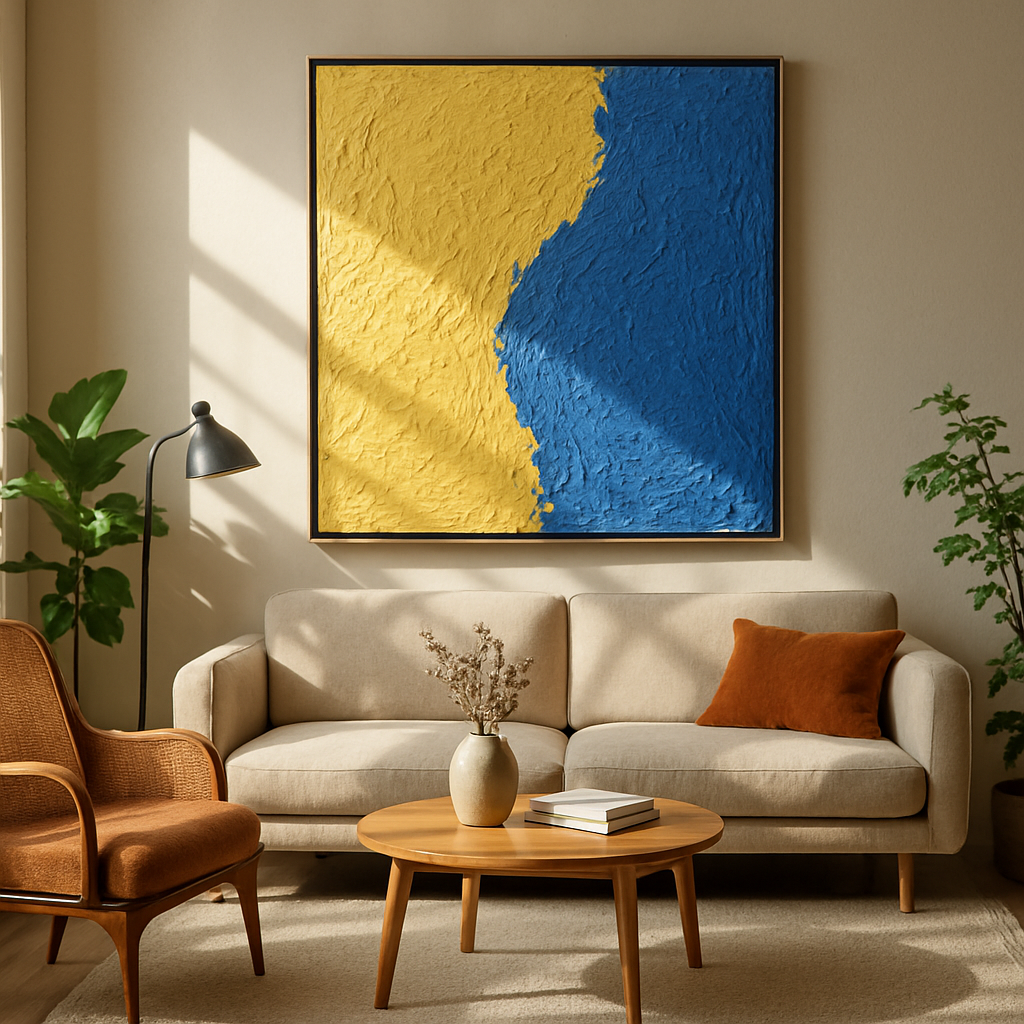
The textural elements create a focal point visible from every angle, while the color palette influences smaller accessories throughout the space, creating cohesion without obvious matching.
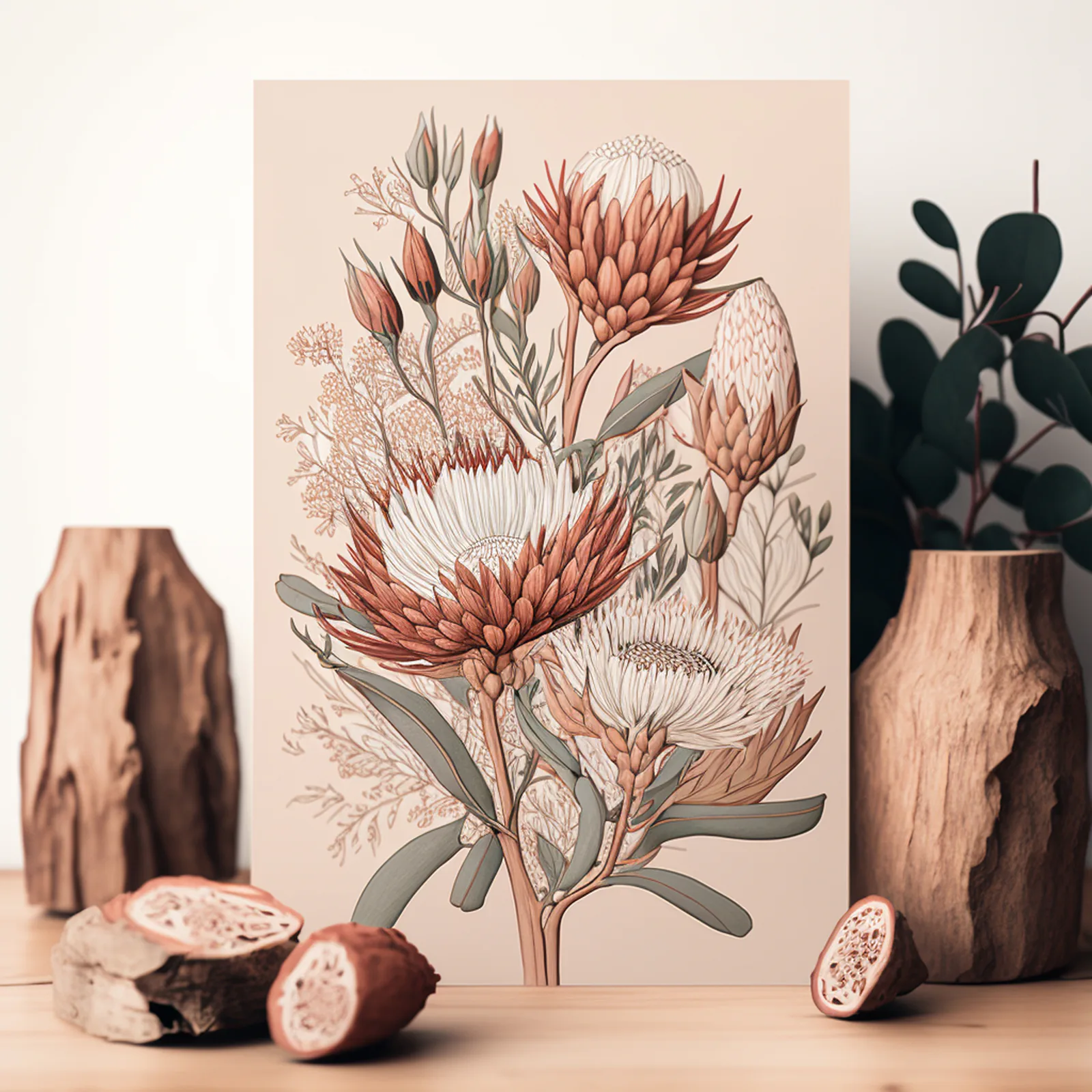
In contrast, a maximalist approach might pair vintage-inspired botanical prints in varying sizes with modern abstract pieces, uniting them through complementary frames or color elements. This curated eclecticism tells a personal story while maintaining visual harmony through thoughtful arrangement and proportion.
For those drawn to sustainable options, imagine a series of landscape photographs printed on recycled cotton paper and displayed in reclaimed wood frames.
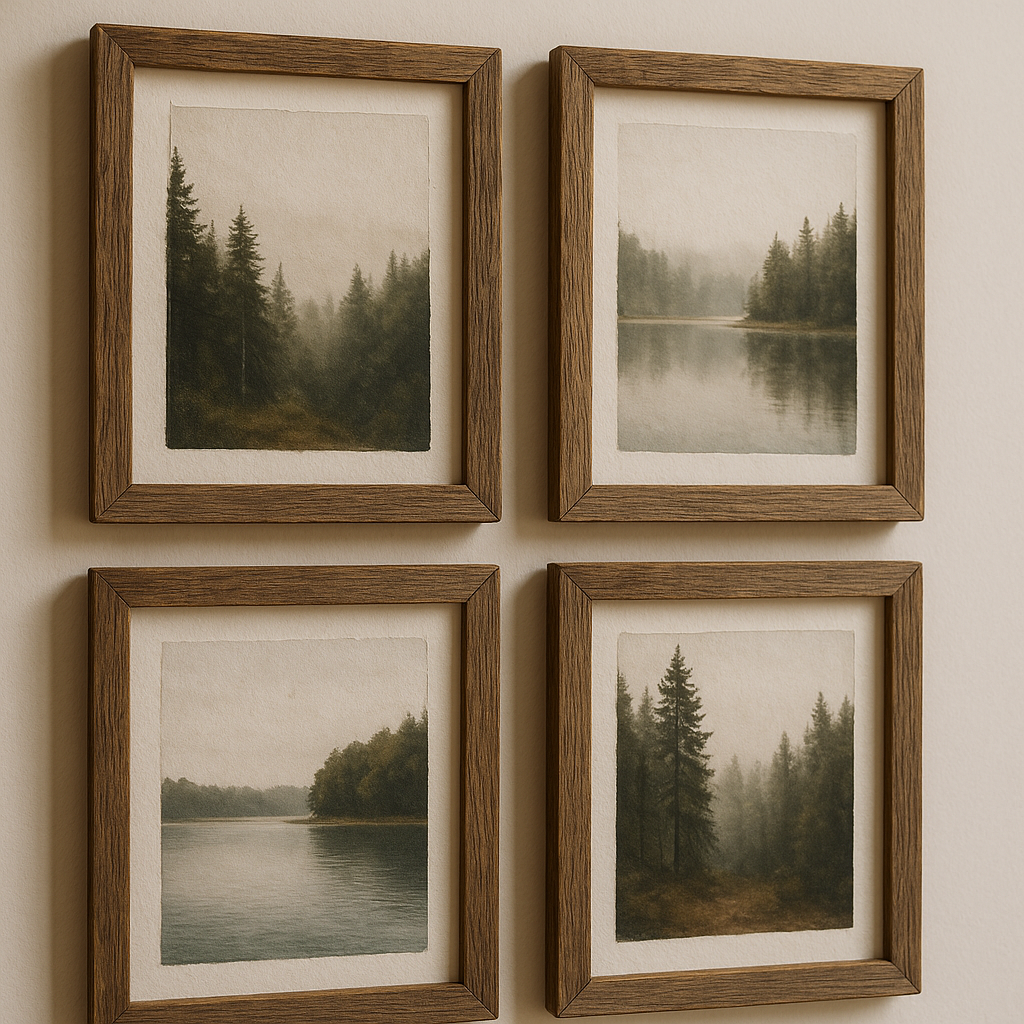
The natural materials echo the content of the images, creating a multi-layered appreciation of our environment. Browse original art prints and retro posters for every style here.
How to seamlessly integrate art print trends at home
Incorporating trending wall art into your space requires thoughtful consideration beyond simply following what’s popular. The most successful interiors use trends as starting points for personal expression rather than rigid formulas to follow.
Begin by assessing your existing decor elements—furniture, textiles, architectural features—and identify which trends might complement them. A mid-century modern sofa might pair beautifully with abstract prints featuring geometric elements, while a rustic farmhouse table could harmonize with botanical or landscape photography.
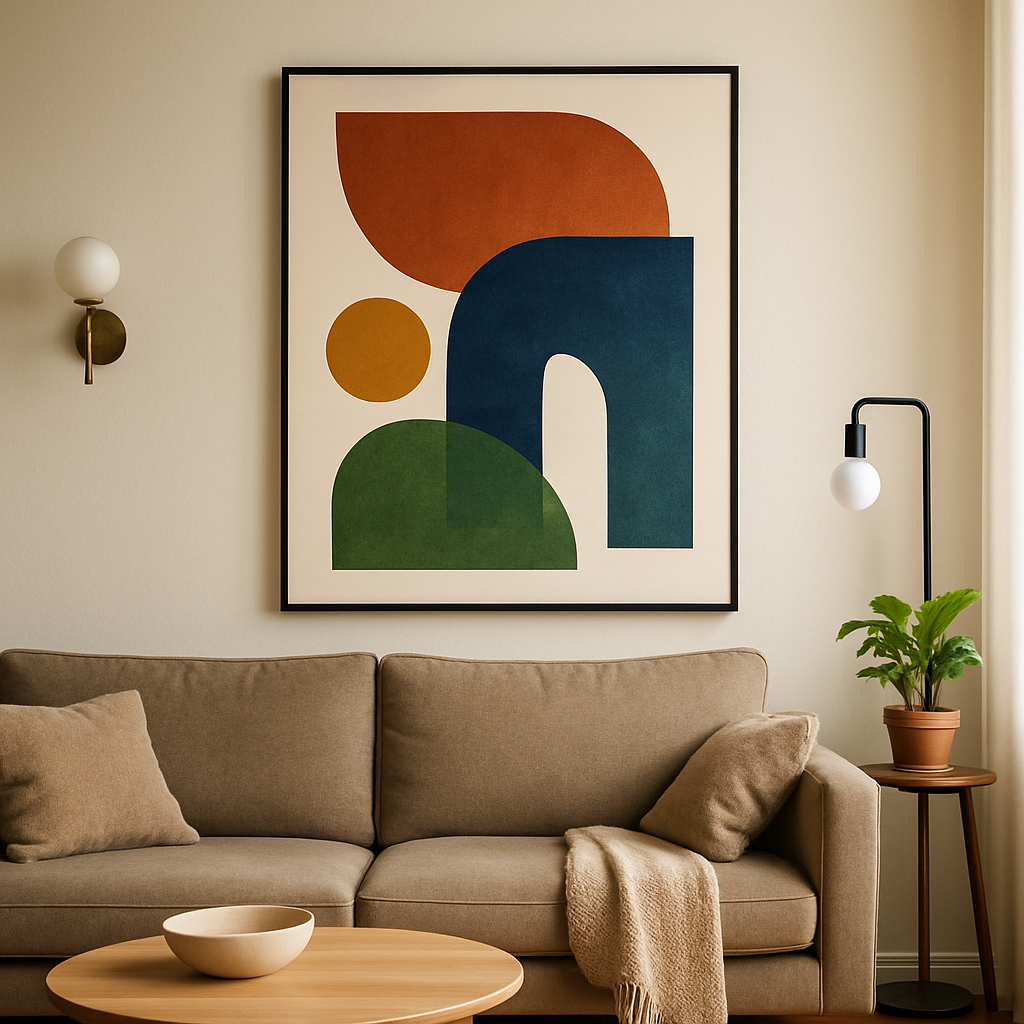
Consider your space’s natural light when selecting prints. Rooms with abundant sunlight can support darker, more saturated colors that might overwhelm dimmer spaces. Similarly, textural prints show best in areas where changing light throughout the day reveals their dimensional qualities. For a deeper dive on styling with vintage vibes, see why we’re so obsessed with vintage wall art and what makes it timeless.
Remember that scale and proportion fundamentally impact a print’s integration success. An oversized piece can anchor a large wall and eliminate the need for multiple smaller elements, while a carefully curated collection of smaller prints creates rhythm and visual interest in more intimate spaces. Experiment with paper templates cut to your desired print sizes before purchasing to visualize the impact.
Room-by-room art print integration examples
Living rooms benefit from statement pieces that reflect the social nature of the space. Consider a large-format abstract in colors that complement your furniture, positioned at eye level when seated. This creates a focal point that grounds conversation areas while expressing your aesthetic sensibilities. In open-concept living areas, art prints can subtly delineate functional zones without physical barriers.
Bedrooms call for more personally meaningful pieces that promote restfulness. Nature-inspired prints in soothing color palettes create sanctuary-like atmospheres conducive to sleep. Position these pieces where they’ll be visible from bed, creating the last and first images you see each day. For maximum impact, pair wall art with complementary textiles that echo colors or patterns from your chosen prints.
Kitchen spaces, traditionally overlooked for art display, have become creative showcases in contemporary homes. Food-related prints, abstract compositions in appetizing colors, or black-and-white photography add personality without competing with the functional elements. Consider protective glass coverings for prints in areas susceptible to moisture or cooking splatter.
Home offices require prints that inspire productivity without causing distraction.
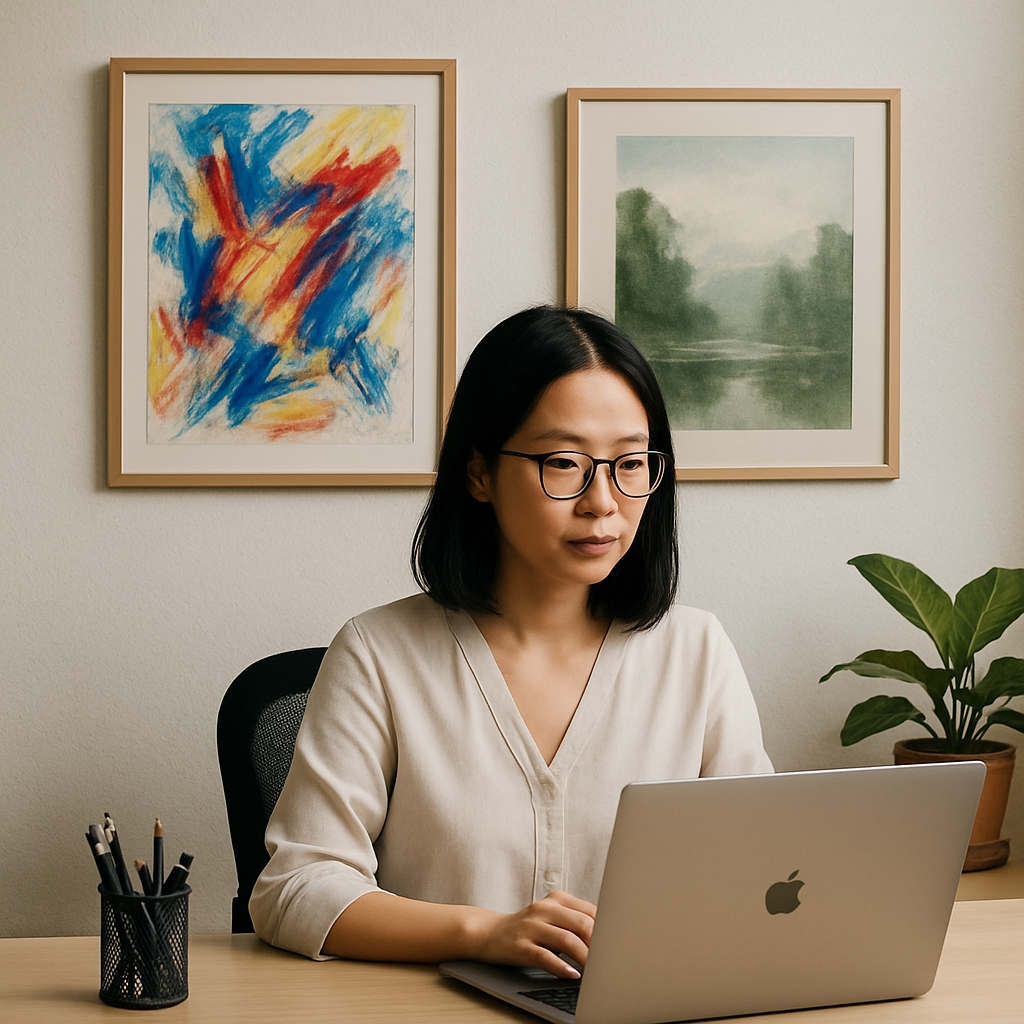
Abstract compositions with directional elements create energy, while nature scenes provide mental refreshment during intense work periods. Position these pieces where they’ll be visible during video calls to create professional yet personalized backgrounds. Explore our full shop of art styles, from Bauhaus to line art, for every room.
Sourcing and sustaining your wall art choices
The provenance of your wall art contributes significantly to its meaning and longevity in your collection. Beyond aesthetic considerations, conscious consumers increasingly factor ethical and environmental aspects into their purchasing decisions.
Independent artists and small studios offer unique perspectives you won’t find in mass-produced prints. Many online platforms now connect artists directly with consumers, eliminating middlemen and ensuring creators receive fair compensation for their work. These direct relationships often result in higher-quality products and the satisfaction of supporting creative economies.
When evaluating print quality, examine the substrate (paper, canvas, or alternative materials), ink specifications, and color fastness ratings. Archival-quality prints using pigment-based inks on acid-free papers cost more initially but maintain their appearance significantly longer than budget alternatives, ultimately providing better value and reducing waste from replacements.
For those with specific space requirements, print-on-demand services solve common decorating challenges. Custom sizing accommodates awkward wall dimensions, while color customization ensures perfect coordination with existing decor elements. These services reduce overproduction waste since each piece is created specifically for its intended home. Refresh your walls with premium art prints for a complete home transformation.
Consider the full lifecycle of your wall art when making selections. Frames designed for disassembly allow for easier recycling or repurposing when your style preferences eventually change. Some forward-thinking companies now offer take-back programs for prints and frames, ensuring materials remain in circulation rather than entering landfills.
As your collection evolves, establish a rotation system that allows you to enjoy your entire art collection over time. Seasonal swaps refresh your spaces without requiring new purchases, while proper storage solutions protect unused pieces until their next display period. This approach satisfies our desire for novelty while promoting more sustainable consumption patterns.
Conclusion
The transformative power of thoughtfully selected wall art cannot be overstated. As we’ve explored throughout this guide, today’s print trends offer something for every aesthetic preference and living situation—whether you’re drawn to bold color statements, textural experiences, sustainable materials, maximalist expressions, or serene minimalism.
The most successful approach to incorporating these trends involves balancing current influences with personal meaning. Rather than chasing every new direction, select pieces that genuinely resonate with you while complementing your living spaces. This intentional curation creates homes that feel both contemporary and authentically yours.
Remember that your walls tell your story—they should reflect who you are rather than simply what’s momentarily popular. By understanding current trends as options rather than obligations, you gain the freedom to create spaces that evolve naturally alongside your life experiences and preferences.
Whether you’re refreshing a single wall or reimagining your entire home, approach the process with curiosity and playfulness. Experiment with unexpected combinations, trust your instincts, and prioritize pieces that spark joy when you see them. Your walls are waiting to become canvases for personal expression—what story will you choose to tell?
Frequently asked questions
How do I choose which art print trend is right for my home?
Start by identifying your space’s mood and your personal style. Choose trends—like bold colors, textural prints, or minimalist designs—that complement your existing decor and reflect what you love. Test new trends with affordable prints or smaller pieces before committing to a bigger statement.
What’s the best way to arrange art prints on my wall?
Try a gallery wall with a mix of sizes, shapes, and frame styles for an eclectic look. For impact, center a large standout print over major furniture. Leave enough negative space to let each piece breathe.
Are sustainable art prints really better for my home and the environment?
Yes! Eco-friendly art prints often use recycled papers, non-toxic inks, and ethically sourced frames. They reduce your carbon footprint and support responsible production.
Where can I find unique or custom art prints?
Shop online boutiques devoted to original and retro posters, support local artists, or explore customizable print-on-demand stores for made-to-order options in your preferred style and size.
How often should I update my wall art to keep up with trends?
There’s no set rule—choose a few versatile pieces you can rotate seasonally or swap when you crave change. Quality, personally meaningful art remains stylish year after year.