
Blog
Transform your home with unique orchid posters
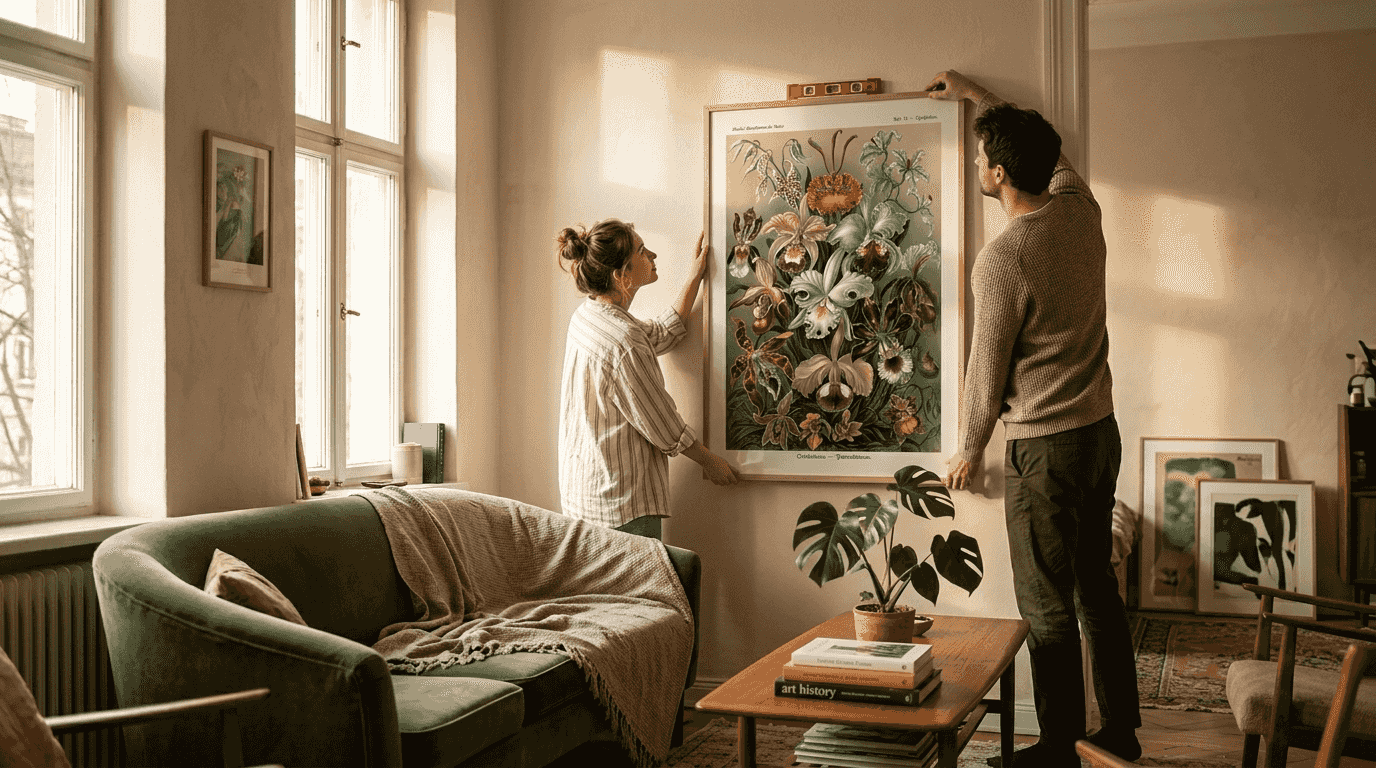
Orchid posters are experiencing a remarkable resurgence in retro home decor, with auction sales rising 20-30% in recent years. These distinctive botanical artworks merge scientific precision with artistic elegance, offering a sophisticated alternative to conventional floral prints. Whether you’re curating a nostalgic gallery wall or seeking statement pieces for contemporary spaces, understanding the heritage and styling potential of orchid posters transforms them from simple decoration into conversation starters that bridge historical craftsmanship with modern interior design sensibilities.
Table of Contents
- The Historical Roots Of Orchid Posters And Their Retro Appeal
- What Makes Vintage Orchid Posters A Must-Have For Modern Interiors
- Choosing And Displaying Orchid Posters For Maximum Retro Impact
- The Botanical Beauty And Scientific Detail In Orchid Poster Designs
- Explore Stunning Orchid Posters To Elevate Your Home’s Retro Charm
- Frequently Asked Questions
Key takeaways
| Point | Details |
|---|---|
| Historic influence | Ernst Haeckel’s 1889 drawings shaped Art Nouveau and retro botanical aesthetics. |
| Dual appeal | Orchid posters combine scientific accuracy with artistic beauty for timeless visual impact. |
| Authentication matters | Verifying watermarks and pigment types protects your investment in genuine vintage prints. |
| Display strategy | Floating frames and strategic placement maximise retro charm in modern interiors. |
| Market growth | Rising collector demand reflects orchid posters’ enduring relevance in contemporary home styling. |
The historical roots of orchid posters and their retro appeal
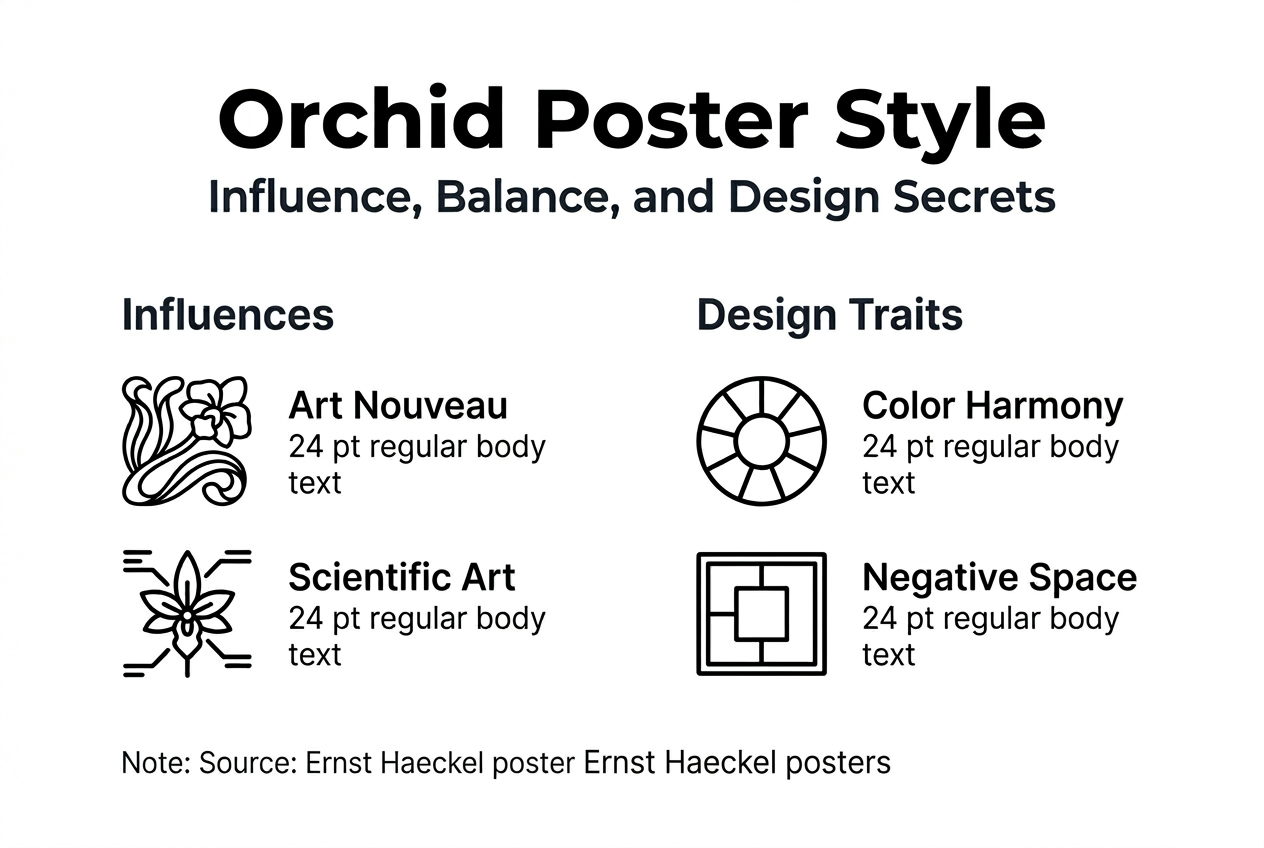
The distinctive visual language of orchid posters traces directly to Ernst Haeckel’s revolutionary late 19th-century botanical illustrations. His Art Forms of Nature series transformed scientific documentation into artistic expression, establishing aesthetic principles that define retro botanical art today. Haeckel’s orchid drawings merged meticulous anatomical detail with stylised compositions, creating works that functioned simultaneously as scientific references and decorative objects.
This dual nature proved instrumental in shaping Art Nouveau’s flowing organic forms. Designers and artists studying Haeckel’s work absorbed his approach to natural subjects, translating botanical curves and asymmetrical balance into architecture, furniture, and graphic design. The sinuous lines characteristic of Art Nouveau posters directly echo the petal arrangements and stem structures documented in Haeckel’s orchid plates.
“Haeckel’s illustrations demonstrated that scientific accuracy need not compromise artistic beauty, establishing a template for decorative botanical prints that remains influential over a century later.”
For modern collectors, this heritage adds substantial value beyond mere decoration. Ernst Haeckel vintage posters carry the weight of art history, representing a pivotal moment when natural science and visual culture merged. Their retro appeal stems from this authenticity, offering contemporary interiors a connection to genuine artistic innovation rather than manufactured nostalgia.
The enduring influence extends to colour palettes, compositional balance, and the treatment of negative space. Haeckel’s methodical arrangement of specimens against neutral backgrounds created visual breathing room that modern minimalist aesthetics naturally complement. His attention to symmetry within organic forms provides structure that grounds retro designs in contemporary spaces without feeling dated or cluttered.
What makes vintage orchid posters a must-have for modern interiors
The intersection of scientific documentation and artistic interpretation gives vintage orchid posters unusual versatility in interior design. Unlike purely decorative florals, these prints carry intellectual depth that appeals to collectors valuing substance alongside aesthetics. Their detailed rendering of botanical structures satisfies curiosity about natural forms whilst providing sophisticated visual interest that elevates room styling beyond conventional decor choices.
Market data confirms this growing appreciation. Christie’s reports 20-30% increases in antique botanical print sales, with orchid specimens commanding particular attention from both seasoned collectors and newcomers to vintage art. This demand reflects broader interior design trends favouring authenticity, craftsmanship, and pieces with documented provenance over mass-produced alternatives.
Several factors drive this popularity surge:
- Educational value: Orchid posters function as conversation pieces, inviting discussion about botanical classification, artistic movements, and natural history.
- Colour versatility: Vintage printing techniques produced subtle, muted palettes that coordinate effortlessly with contemporary neutral schemes.
- Scale flexibility: Botanical subjects work equally well as standalone focal points or arranged in curated gallery configurations.
- Investment potential: Authenticated vintage prints appreciate steadily, offering decorative value with financial upside.
The scientific accuracy combined with artistic beauty creates visual complexity that rewards extended viewing. Fine details emerge gradually, maintaining interest over years rather than becoming visually exhausted after initial impact. This quality distinguishes genuine vintage orchid posters from modern reproductions attempting superficial retro styling.
Pro Tip: When evaluating orchid posters for purchase, examine printing techniques closely. Authentic vintage pieces show slight irregularities from hand-colouring or early lithography processes, adding character absent from digitally reproduced versions. These imperfections actually increase value for serious collectors.
Integrating orchid posters into styling floral decor with vintage prints requires understanding their historical context. Pairing them with period-appropriate framing and complementary furniture pieces amplifies their retro impact. Modern interiors benefit from this juxtaposition, gaining visual depth through temporal contrast whilst maintaining cohesive overall aesthetics.
Current interior design philosophy increasingly values pieces with documented stories and authentic origins. Vintage orchid posters satisfy this desire perfectly, bringing tangible history into homes through floral art prints that transcend temporary trends.
| Orchid poster appeal | Market indicator | Interior benefit |
|---|---|---|
| Scientific heritage | 20-30% sales increase | Educational conversation pieces |
| Artistic craftsmanship | Rising auction prices | Investment-grade decoration |
| Colour sophistication | Growing collector demand | Versatile styling options |
| Historical authenticity | Strong provenance value | Depth beyond trends |
Choosing and displaying orchid posters for maximum retro impact
Authenticating vintage orchid posters protects both aesthetic integrity and financial investment. Genuine pieces exhibit specific characteristics distinguishing them from modern reproductions attempting vintage aesthetics. Verification through watermarks and pigment analysis provides certainty when acquiring pieces for serious collections or high-value interior schemes.
Key authentication markers include:
- Paper quality: Vintage prints use rag-based papers with distinct texture and weight compared to modern wood-pulp alternatives.
- Plate marks: Original lithographs show impressed borders where printing plates contacted paper under pressure.
- Colour consistency: Hand-colouring exhibits subtle variations between supposedly identical prints, whilst reproductions show mechanical uniformity.
- Provenance documentation: Reputable dealers provide authentication certificates and ownership history for valuable specimens.
Framing choices dramatically influence how orchid posters integrate with retro interior schemes. Floating frames are recommended for botanical prints, creating visual breathing room that honours the original composition’s negative space. This approach particularly suits Art Nouveau-influenced pieces where the relationship between subject and background carries intentional design significance.
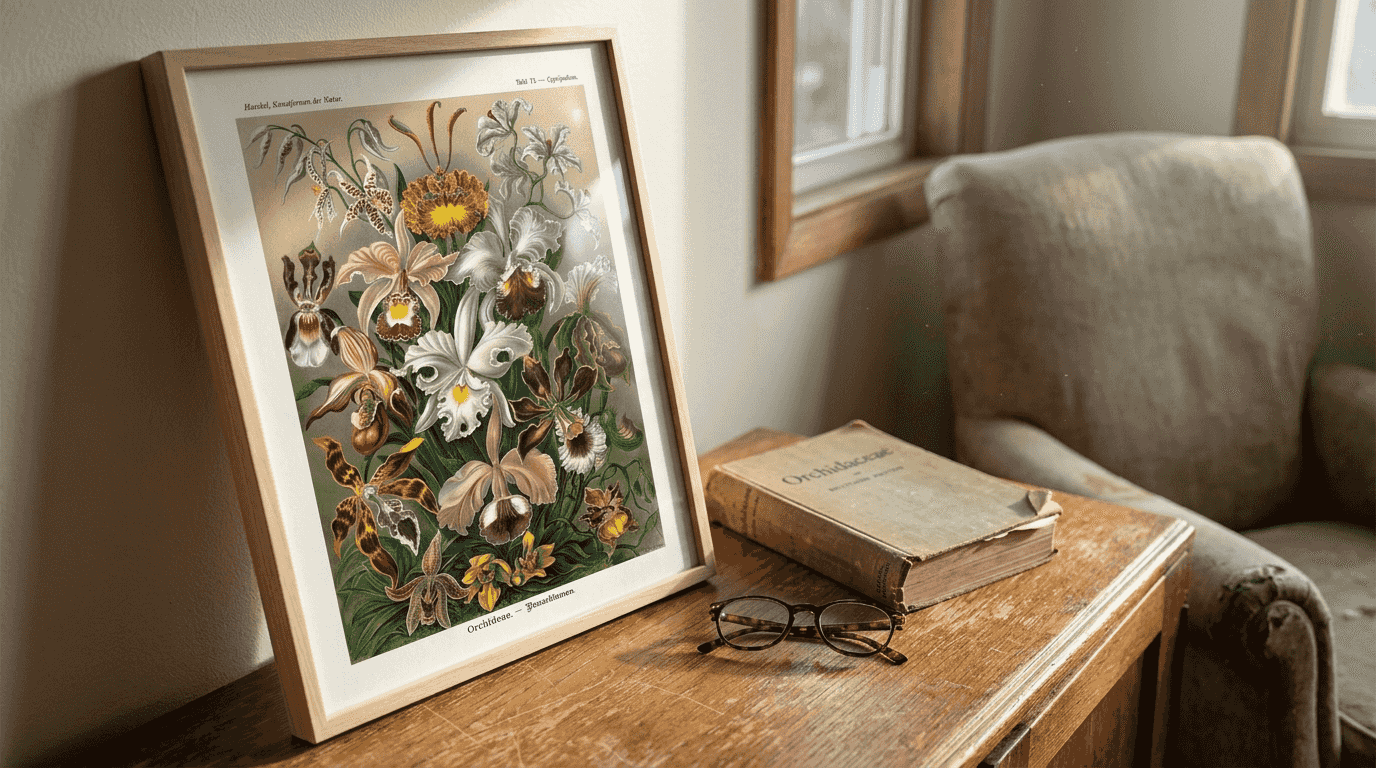
Placement considerations extend beyond simple wall space availability. Orchid posters function best as deliberate focal points rather than afterthought decoration. Position them at eye level in areas receiving natural light without direct sun exposure, which degrades vintage pigments over time. Consider sight lines from seating areas to ensure the detailed botanical features remain visible and appreciated during daily use.
Pro Tip: Avoid overcrowding orchid posters with competing visual elements. Their scientific detail and artistic nuance require surrounding simplicity to shine. A single well-chosen specimen often creates stronger impact than multiple pieces fighting for attention.
For those exploring contemporary mounting options, metal poster systems offer durability but sacrifice some authentic retro character. Traditional framing better preserves vintage aesthetics whilst protecting delicate papers from environmental damage. The comparison below clarifies trade-offs:
| Mounting method | Retro authenticity | Protection level | Installation ease |
|---|---|---|---|
| Traditional frame | High | Excellent | Moderate |
| Floating frame | High | Excellent | Moderate |
| Metal poster rail | Low | Good | Easy |
| Clip system | Medium | Fair | Very easy |
Successful orchid poster display balances preservation with accessibility. Frame choices should complement both the artwork’s historical period and surrounding interior design elements. Art Nouveau print selection benefits from coordinating frame styles that echo the era’s characteristic curves and ornamental details without overwhelming the botanical subject matter.
Consider creating thematic groupings when working with multiple orchid prints. Arranging specimens by colour family, species type, or artistic style builds visual coherence whilst showcasing collection depth. Wall art hanging tips emphasise maintaining consistent spacing and alignment to achieve professional gallery aesthetics in residential settings.
For international collectors, proper shipping methods ensure vintage pieces arrive undamaged. Protective packaging, climate control, and insurance coverage become essential when transporting delicate antique prints across regions with varying environmental conditions.
The botanical beauty and scientific detail in orchid poster designs
Understanding the anatomical precision captured in vintage orchid posters deepens appreciation for their dual artistic and scientific merit. These illustrations document complex floral structures with accuracy satisfying botanical classification requirements whilst presenting subjects through aesthetically considered compositions. The technical expertise required for such work elevated botanical artists to specialist status during the golden age of natural history illustration.
Orchid flower anatomy features distinctive elements consistently highlighted in quality vintage posters:
- Petal arrangement: Orchids display three sepals and three petals in characteristic symmetrical patterns specific to genus and species.
- Labellum: The modified petal forming the distinctive “lip” receives particular artistic attention due to its role in pollinator attraction and species identification.
- Column structure: The fused reproductive organs unique to orchids present complex forms challenging artists’ technical skills.
- Colour patterns: Intricate markings guide pollinators in nature and provide visual interest in artistic renderings.
- Root and stem details: Complete botanical documentation includes growth habits and supporting structures beyond flower components.
Historical orchid posters frequently featured specimens with full Latin nomenclature, positioning them as legitimate scientific references. Classification details including genus and species names provided educational value alongside decorative appeal, explaining these prints’ continued relevance in both academic and residential contexts.
The precision required for accurate botanical illustration demanded artists possess both technical drawing skills and genuine botanical knowledge. This expertise shines through in vintage orchid posters, where minute details like pollen structure, vein patterns, and growth habit variations receive careful attention. Modern viewers benefit from this thoroughness, gaining insight into natural design principles that inform contemporary art and architecture.
Haeckel orchid print details exemplify this marriage of science and aesthetics. His systematic approach to documenting natural forms created reference works functioning simultaneously as research tools and artistic achievements. This dual purpose explains their lasting appeal across diverse audiences from academic botanists to interior design enthusiasts.
The scientific accuracy underlying vintage orchid posters adds intellectual substance distinguishing them from purely decorative floral art. Viewers engaging with these pieces access genuine botanical knowledge whilst enjoying compositions crafted according to established artistic principles. This combination creates decoration with educational dimension, enriching home environments beyond superficial visual appeal.
Explore stunning orchid posters to elevate your home’s retro charm
Having explored the rich heritage and practical considerations surrounding orchid posters, you’re equipped to make informed choices that transform your living spaces with authentic retro sophistication. ArtMandre.com specialises in curating vintage-inspired botanical prints that honour historical artistic traditions whilst suiting contemporary interior aesthetics perfectly.

Our carefully selected retro art prints collection features orchid designs reflecting the Art Nouveau influences and scientific precision discussed throughout this guide. Each piece undergoes quality assessment ensuring you receive artwork worthy of prominent display in your curated home environment. From Haeckel-inspired compositions to Art Nouveau print elegant vintage wall art, our range offers options suiting diverse styling preferences and room configurations.
Beyond product selection, ArtMandre provides comprehensive guidance for styling floral decor using vintage art prints effectively. Our editorial resources complement your purchases with practical advice on creating gallery walls, coordinating colour schemes, and maintaining prints for lasting beauty. This holistic approach positions us as partners in your interior design journey rather than simply product suppliers.
Frequently asked questions
What is the origin of orchid posters in retro art?
Orchid posters trace their aesthetic lineage to Ernst Haeckel’s late 19th-century scientific illustrations that profoundly influenced Art Nouveau design movements. His stylised botanical drawings established visual principles combining natural accuracy with artistic interpretation, creating the foundation for retro orchid artwork appreciated today.
How can I verify the authenticity of a vintage orchid poster?
Authentication requires examining specific markers including watermarks, plate impressions from original printing processes, and age-appropriate pigment characteristics. Consulting specialist buying guides or working with reputable dealers provides expert verification protecting your investment in genuine vintage pieces.
What framing styles best suit retro orchid posters?
Floating frames are particularly recommended for botanical prints, creating visual space that complements both the artwork’s historical character and modern interior aesthetics. Proper hanging techniques ensure orchid posters become distinctive focal points commanding attention without overwhelming surrounding decor elements.
Why are orchid posters popular in modern home decor?
Their unique combination of scientific detail and artistic beauty creates versatile decoration suiting diverse interior styles from minimalist contemporary to richly layered vintage schemes. The retro charm adds nostalgic sophistication whilst botanical accuracy provides intellectual depth, making them ideal for styling floral decor with genuine substance beyond superficial trends.