
Blog
Ernst Haeckel art: vintage prints for modern interiors
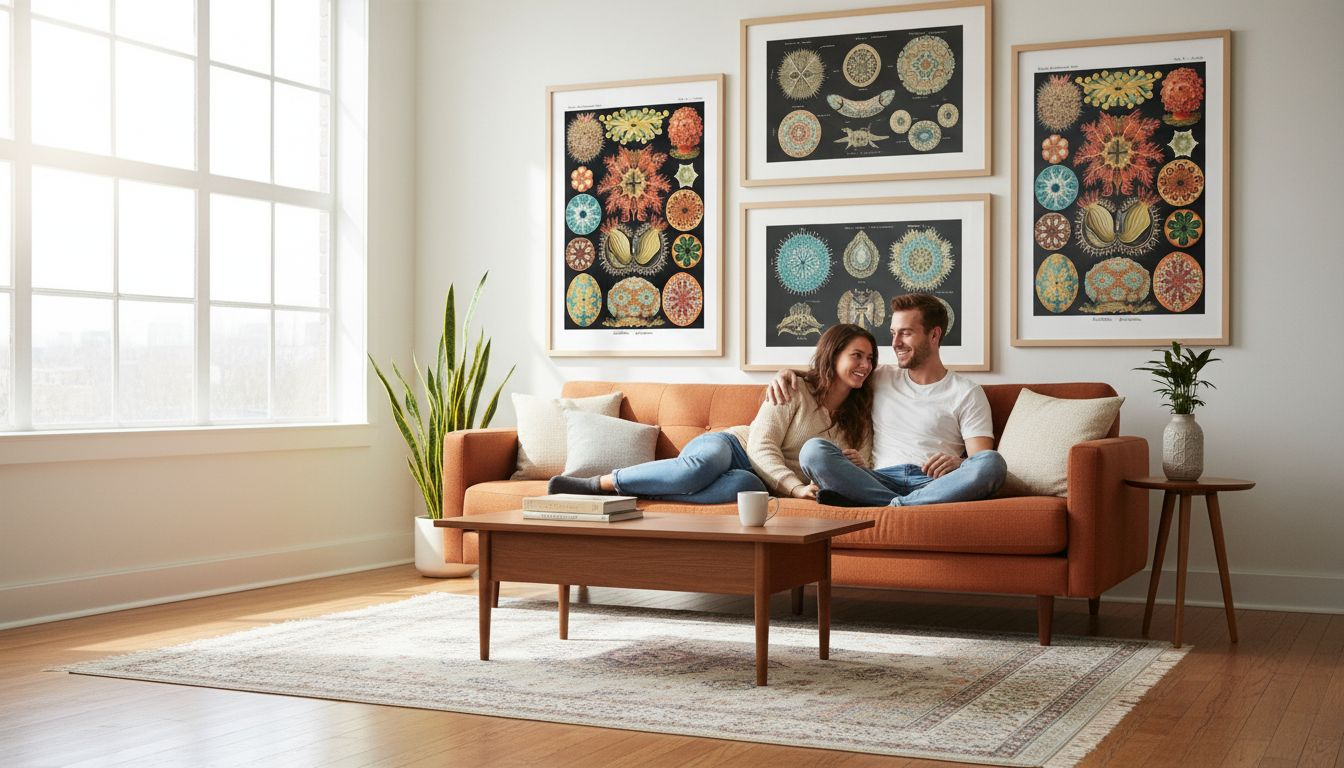
Many assume Ernst Haeckel’s illustrations are mere scientific documentation. They’re not. These vintage prints deliberately fuse biological observation with artistic vision, creating timeless decorative pieces. Haeckel enhanced natural symmetry and form to maximise visual impact, producing works that belong equally in galleries and contemporary homes. This article explores his artistic legacy, clears common myths, and shows how to incorporate these striking prints into your interior design.
Table of Contents
- Introduction To Ernst Haeckel And His Artistic Legacy
- The Unique Artistic And Scientific Style Of Ernst Haeckel
- Common Misconceptions About Haeckel Art
- Incorporating Haeckel Prints Into Modern Interior Design
- Selecting The Right Haeckel Prints For Your Space
- Market Relevance Of Haeckel Art In Modern Times
- Explore Vintage And Retro Art Prints At ArtMandre
- Frequently Asked Questions
Key takeaways
| Point | Details |
|---|---|
| Science meets art | Haeckel combined rigorous biological study with deliberate artistic stylisation to create visually stunning prints. |
| Symmetry and rhythm | His works balance natural patterns with enhanced compositional harmony, making them ideal for modern decor. |
| Artistic licence matters | Common myths overlook the creative choices Haeckel made beyond pure scientific accuracy. |
| Versatile decor potential | These prints suit vintage, minimalist, and eclectic interiors, adding organic interest without clutter. |
| Quality ensures longevity | Choosing archival materials and UV-resistant inks protects your investment and maintains visual appeal. |
Introduction to Ernst Haeckel and his artistic legacy
Ernst Haeckel (1834-1919) was a German biologist, naturalist, and artist whose work bridged two worlds. Between 1899 and 1904, he published Kunstformen der Natur containing 100 detailed plates that showcased marine organisms, radiolarians, plants, and other natural forms. These weren’t dry scientific records. Haeckel infused each illustration with rhythmic symmetry and compositional elegance that influenced the Art Nouveau movement and early 20th-century design.
His prints remain iconic because they speak to both intellect and emotion. Scientific communities valued his taxonomic contributions, while artists and designers drew inspiration from his visual language. This dual legacy means Ernst Haeckel vintage prints continue to resonate in 2026, offering timeless appeal for those seeking artwork that combines natural beauty with historical significance.
Key aspects of Haeckel’s legacy include:
- Fusion of biological observation with artistic composition
- Influence on Art Nouveau’s organic, flowing forms
- Recognition as both scientific documentation and fine art
- Enduring popularity across scientific and design communities
- Cultural impact extending well beyond academic circles
Understanding Haeckel’s dual role helps you appreciate why his prints work so effectively in contemporary interiors. They carry intellectual weight while delivering immediate visual pleasure.
The unique artistic and scientific style of Ernst Haeckel
Haeckel’s subjects ranged from jellyfish and diatoms to sea anemones and orchids. What set his work apart was how he enhanced symmetry and form to maximise aesthetic appeal. Natural organisms rarely display perfect symmetry, but Haeckel adjusted proportions, emphasised radial patterns, and refined details to create visual harmony. This wasn’t deception. It was artistic interpretation serving a higher purpose: making natural beauty accessible and captivating.
His technique involved several deliberate choices:
- Radial symmetry enhancement: Organisms like radiolarians were arranged to emphasise their geometric perfection.
- Colour stylisation: Haeckel used vibrant, carefully chosen palettes that heightened visual impact beyond natural tones.
- Compositional balance: Each plate featured rhythmic spacing and visual weight distribution for pleasing flow.
- Detail refinement: Fine lines and intricate textures were sharpened to draw the eye and hold attention.
- Scale adjustment: Elements were sized relative to one another to create cohesive visual narratives.
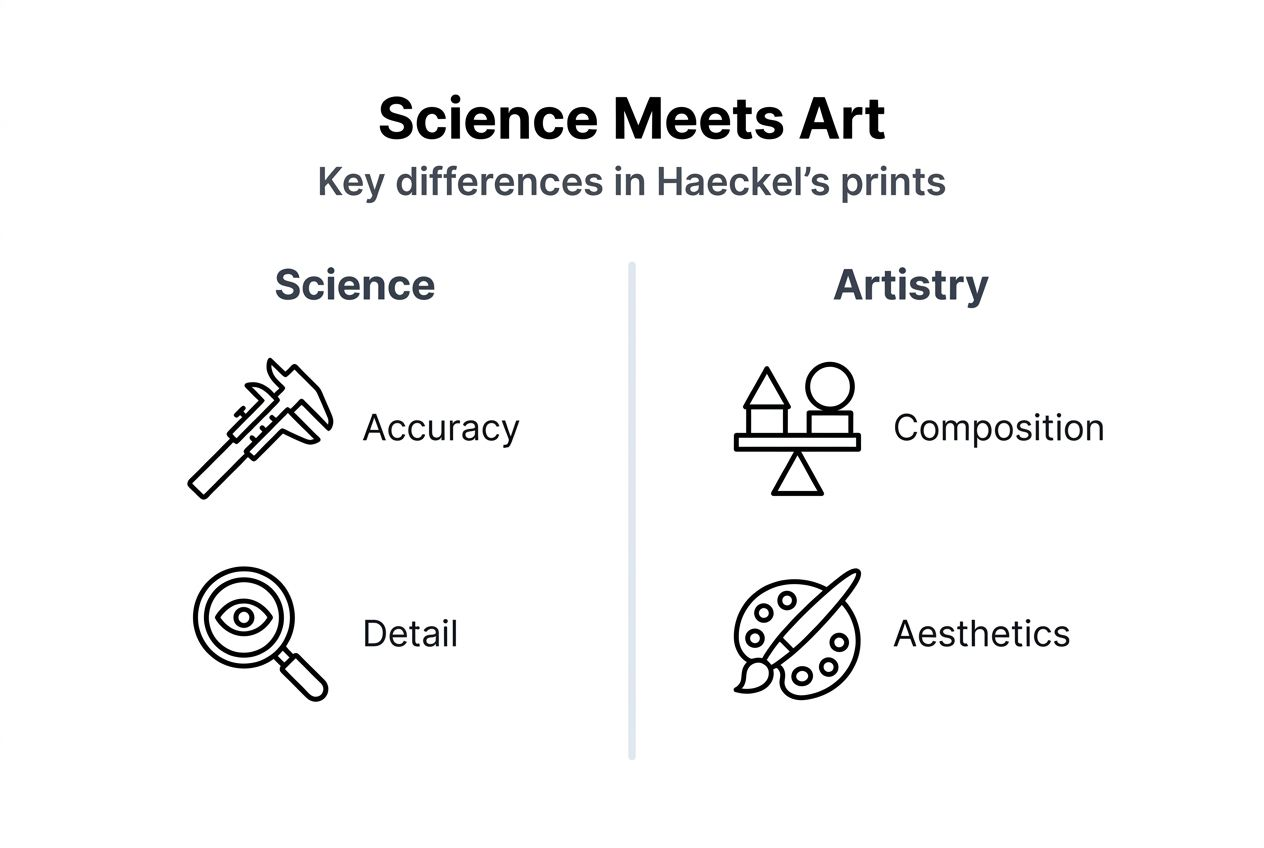
The following table compares pure scientific illustration with Haeckel’s artistic style:
| Aspect | Scientific illustration | Haeckel’s approach |
|---|---|---|
| Symmetry | Shown as observed | Enhanced for visual harmony |
| Colour | Accurate to specimen | Stylised for aesthetic impact |
| Composition | Functional layout | Rhythmic, balanced arrangement |
| Detail level | Precisely documented | Refined for clarity and beauty |
| Purpose | Pure documentation | Education through visual pleasure |
Pro Tip: When selecting Haeckel prints, look for subjects with strong radial patterns like sea urchins or diatoms. These translate beautifully as focal points in minimalist or vintage-inspired rooms.
This fusion made Haeckel’s work uniquely powerful. Scientists could study his accurate representations, while artists found inspiration in his compositional mastery. Both audiences benefited from his refusal to separate fact from beauty.
Common misconceptions about Haeckel art
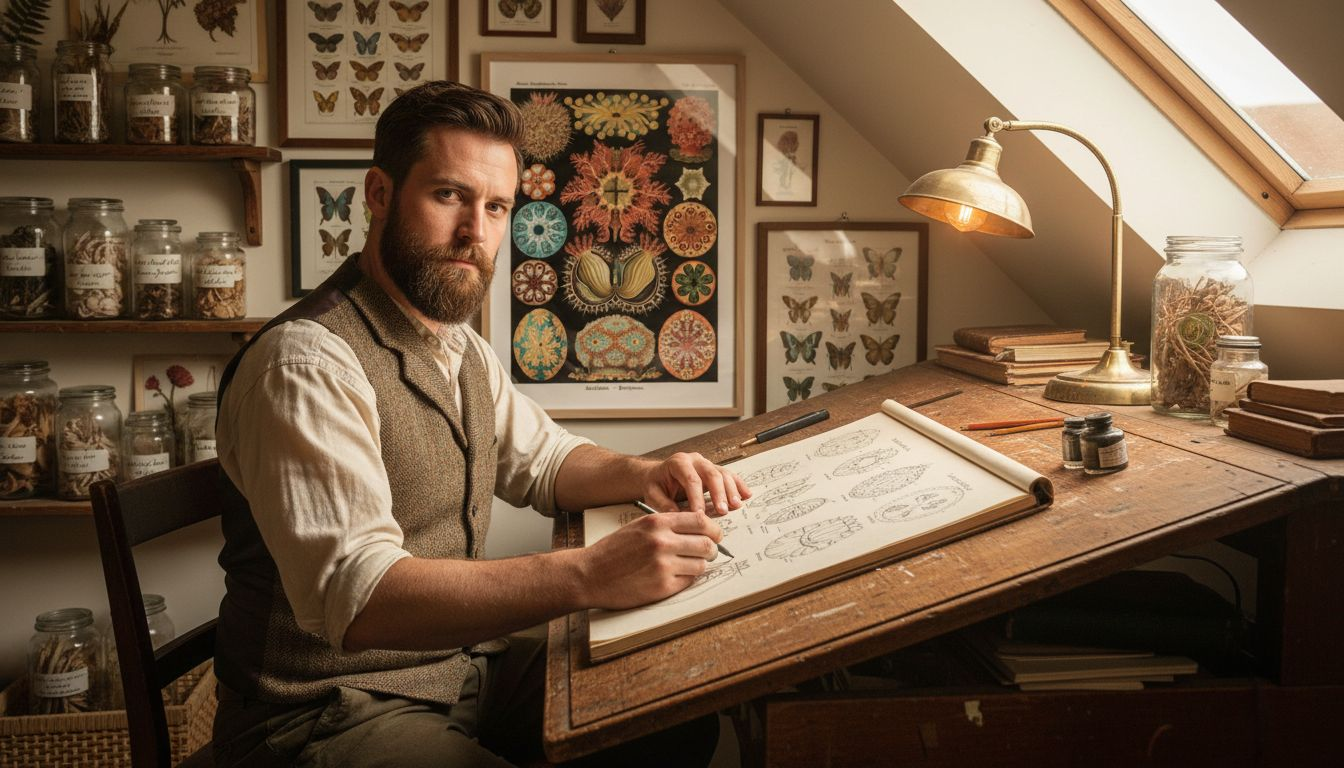
A persistent myth suggests Haeckel’s illustrations are exact photographic records of nature. They’re not. While grounded in observation, his work balances scientific documentation with artistic stylisation, a fact often overlooked by casual viewers. This misunderstanding can lead collectors to undervalue the creative skill involved or expect purely literal representations.
Haeckel took deliberate liberties:
- Adjusted organism proportions to fit compositional needs
- Emphasised certain features while downplaying others for visual flow
- Combined specimens from different viewings into single idealised forms
- Used artistic colour choices rather than strictly natural hues
- Arranged elements for maximum decorative and educational impact
One art historian noted:
“Haeckel’s prints reveal more about his vision of natural order than nature’s actual chaos. His genius lay in making that vision compelling enough to influence generations.”
Recognising this balance enriches your appreciation. These prints aren’t scientific textbooks. They’re artistic statements about nature’s potential for beauty when filtered through human imagination. Understanding Haeckel art misconceptions helps you select pieces that align with your aesthetic goals rather than purely scientific interests.
This also explains why Haeckel’s work fits so naturally into modern interiors. You’re not hanging laboratory diagrams. You’re displaying carefully crafted visual compositions that happen to draw inspiration from biological forms.
Incorporating Haeckel prints into modern interior design
Haeckel’s prints excel in diverse settings because natural forms provide universal appeal. The symmetry and organic shapes create calm, thoughtful atmospheres that suit vintage and minimalist decor alike. Living rooms gain focal points that spark conversation. Bedrooms benefit from the soothing effect of natural patterns. Home offices and studios find inspiration in the blend of science and creativity.
Practical placement strategies include:
- Gallery walls: Combine three to five Haeckel prints of similar size to create a cohesive botanical or marine-themed display.
- Statement pieces: Use a single large-format print as a room’s visual anchor, especially in minimalist spaces.
- Thematic pairing: Match subjects to room function (calming jellyfish in bedrooms, energetic radiolarians in workspaces).
- Colour coordination: Select prints with palettes that complement existing furniture and textiles.
- Frame consistency: Use uniform framing across multiple prints for professional gallery presentation.
The prints work particularly well in spaces where you want to add visual interest without overwhelming simplicity. Their detailed linework and organic forms draw the eye gently, making them ideal for styling vintage art prints in both maximalist and restrained environments.
Pro Tip: For smaller rooms, choose prints featuring delicate subjects like diatoms or ferns. Their intricate detail rewards close viewing without dominating the space. Larger rooms can accommodate bold jellyfish or sea anemone prints that command attention from across the room.
You can also mix Haeckel prints with complementary styles. Pair them with vintage botanical print sets for layered texture, or contrast their organic forms against geometric Bauhaus designs for dynamic visual tension.
Selecting the right Haeckel prints for your space
Quality matters when investing in Haeckel reproductions. Collectors prefer archival and UV-resistant materials to ensure prints maintain colour vibrancy and paper integrity over decades. Cheap reproductions fade quickly, losing the crisp detail that makes Haeckel’s work compelling. Archival-quality prints use acid-free paper and fade-resistant inks that preserve the original’s visual impact.
Key selection criteria include:
- Print material: Archival-quality paper or museum-grade canvas
- Ink type: UV-resistant pigment inks rather than dye-based alternatives
- Size appropriateness: Match print dimensions to wall space and viewing distance
- Subject relevance: Choose botanical, marine, or radiolarian themes based on room mood
- Framing quality: Invest in UV-protective glass and acid-free matting
The following comparison helps you evaluate print quality:
| Feature | Standard print | Archival print |
|---|---|---|
| Paper | Regular stock | Acid-free, museum-grade |
| Inks | Dye-based | UV-resistant pigment |
| Lifespan | 5-10 years | 100+ years |
| Colour stability | Fades noticeably | Maintains vibrancy |
| Investment value | Disposable | Collectible |
When choosing vintage posters, consider room lighting. Spaces with strong natural light demand extra UV protection. South-facing walls require the highest-grade materials to prevent deterioration. North-facing walls are more forgiving, but quality materials still outperform budget alternatives.
Size selection depends on viewing distance. Prints under 40cm work well in intimate spaces like reading nooks. Mid-size prints (50-70cm) suit most living areas. Large formats (80cm+) create dramatic focal points in spacious rooms. High quality art prints reward this attention to scale with lasting visual satisfaction.
Proper framing protects your investment while complementing decor. Simple wooden frames suit vintage aesthetics, while sleek metal frames work for minimalist interiors. Always use spacers to prevent the print from touching the glass, allowing air circulation that prevents moisture damage.
Market relevance of Haeckel art in modern times
The market for vintage scientific illustration has grown substantially. Sales of Ernst Haeckel prints increased 45% over the past decade, reflecting broader interest in retro decor and biophilic design. Collectors value these prints as both aesthetic objects and cultural artefacts, bridging art history with natural science.
Several factors drive this demand:
- Rising interest in vintage and retro interior aesthetics
- Growing appreciation for biophilic design elements in homes
- Increased awareness of Haeckel’s influence on Art Nouveau
- Collector recognition of limited-edition archival prints
- Social media showcasing vintage scientific art in styled interiors
Market insight: Archival Haeckel reproductions from reputable sources hold value better than mass-market alternatives. Limited editions and authenticated prints command premium prices, with some rare original plates fetching thousands at auction.
This momentum suggests continued relevance in 2026 and beyond. As more people seek meaningful artwork that combines beauty with intellectual depth, Haeckel’s prints occupy a unique niche. They offer conversation-starting visual interest without the pretension of purely abstract modern art or the commercialism of mass-produced decorative prints.
The investment case strengthens when you consider longevity. Quality Haeckel prints don’t follow fleeting trends. Their timeless appeal means they remain appropriate through multiple decor updates, providing lasting value that justifies initial costs.
Explore vintage and retro art prints at ArtMandre
Now that you understand Haeckel’s artistic legacy and practical decor applications, it’s time to find pieces that match your vision. ArtMandre offers curated collections of vintage and retro art prints, including high-quality Ernst Haeckel vintage posters reproduced with archival materials. Each print combines historical authenticity with modern production standards, ensuring you receive museum-quality artwork ready to enhance your interior.

Browse themed categories to discover complementary styles. Pair Haeckel’s organic forms with retro art prints featuring vintage travel posters or classic cocktail illustrations. Create gallery walls that tell visual stories, mixing natural history with cultural nostalgia. The site’s multi-buy discounts support cohesive compositions, offering 5% off two prints, 10% off three, and 15% off four or more.
Explore Art Nouveau vintage wall art to see how Haeckel’s influence extended into decorative movements. These connections deepen your appreciation while helping you build thoughtfully curated collections. Whether you’re starting fresh or expanding existing displays, ArtMandre provides the quality and variety needed to bring your vintage-inspired vision to life.
Frequently asked questions
What makes Ernst Haeckel’s illustrations unique compared to other vintage art?
Haeckel’s work stands apart through its deliberate fusion of scientific accuracy with artistic stylisation. Unlike purely documentary botanical illustrations, he enhanced natural symmetry and patterns to create visually harmonious compositions. This approach influenced Art Nouveau design while maintaining educational value, making his prints functional as both scientific reference and decorative art. The dual nature gives them unique versatility in modern interiors.
How can I best preserve the quality of Haeckel vintage prints over time?
Use UV-resistant glass or acrylic glazing when framing to prevent colour fading from sunlight exposure. Keep prints away from direct sunlight, high humidity, and temperature fluctuations that cause paper deterioration. Always use acid-free matting and backing materials, as regular cardboard releases acids that yellow paper over time. Proper archival framing ensures your prints maintain their original appearance for generations.
Are Ernst Haeckel prints suitable for modern minimalist interiors?
Absolutely. Haeckel’s prints add organic visual interest without creating clutter, making them ideal for minimalist spaces. The natural symmetry and geometric patterns in his radiolarian and diatom illustrations complement clean lines and neutral colour palettes. A single large-format print provides a focal point that enhances rather than overwhelms simplicity. The detailed linework rewards close viewing while maintaining overall compositional restraint.
Where can I find high-quality Haeckel posters for purchase?
Quality reproductions are available through specialist retailers focused on vintage scientific art. ArtMandre offers Ernst Haeckel vintage posters printed with archival materials and UV-resistant inks. You’ll also find vintage botanical print sets from HAUS AND HUES with archival quality. Always verify sellers provide detailed information about paper stock, ink type, and reproduction methods before purchasing.