
Blog
Enhance your interior with Ernst Haeckel art in 2026
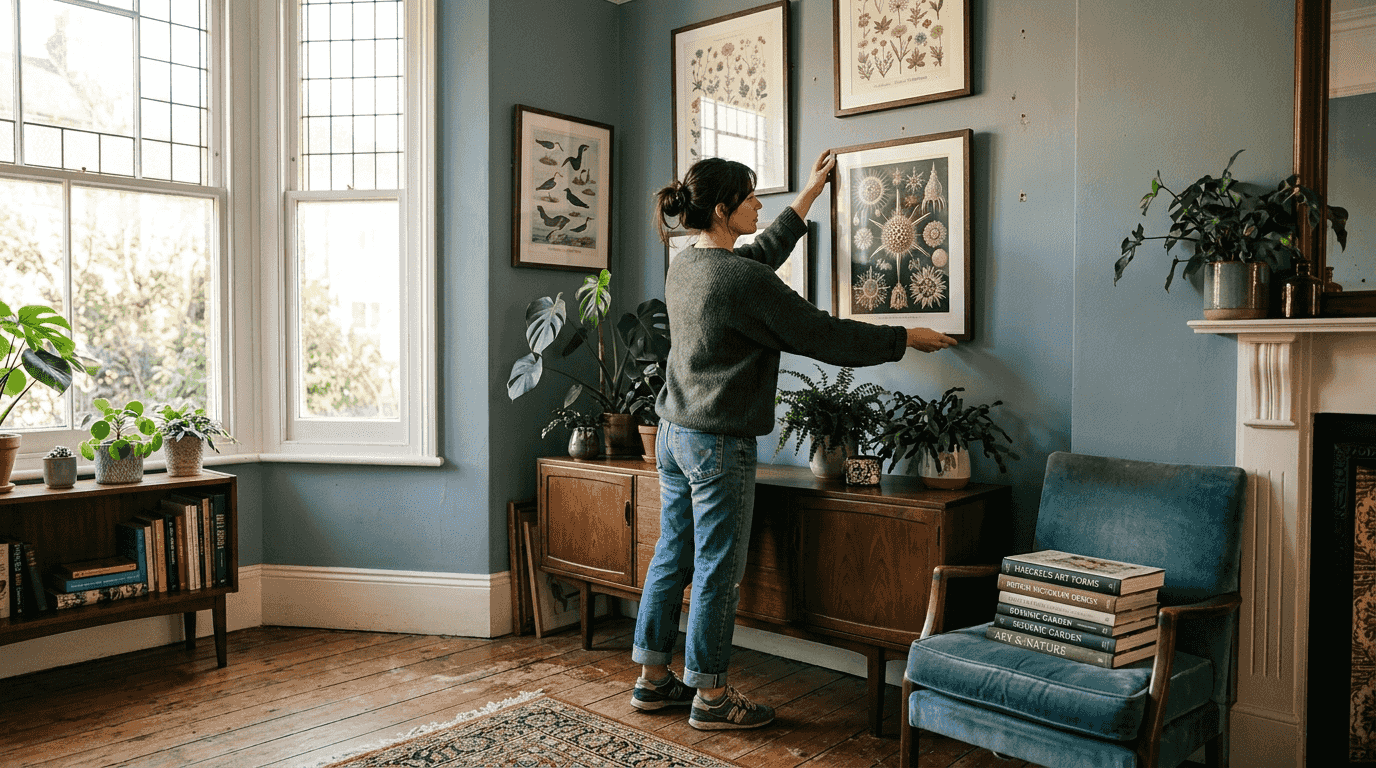
Few scientists have shaped modern interior design as profoundly as Ernst Haeckel, whose microscopic observations of marine life influenced Art Nouveau and continue inspiring vintage poster collections today. His meticulous drawings transformed biological specimens into decorative masterpieces that bridge scientific curiosity and aesthetic beauty. This guide explores how Haeckel’s legacy offers timeless elegance for contemporary homes seeking natural, vintage-inspired wall art.
Table of Contents
- The Scientific Artistry Behind Ernst Haeckel’s Drawings
- How Haeckel’s Art Influenced The Art Nouveau Movement And Design
- Using Ernst Haeckel Vintage Posters To Enhance Modern Interiors
- Understanding The Historical Context And Critiques Of Haeckel’s Work
- Find And Style Authentic Ernst Haeckel Vintage Posters
Key takeaways
| Point | Details |
|---|---|
| Scientific artistry | Haeckel’s illustrations blend precise biological observation with stunning artistic composition, creating works valued both scientifically and aesthetically. |
| Art Nouveau influence | His ‘Kunstformen der Natur’ collection directly shaped the Art Nouveau movement through organic forms and symmetrical patterns. |
| Modern interior appeal | Vintage Haeckel posters complement minimalist and contemporary spaces whilst adding natural elegance and visual interest. |
| Historical awareness | Understanding Haeckel’s controversial legacy enriches responsible appreciation of his artistic contributions. |
| Styling versatility | Detailed natural motifs work as focal points or grouped displays, pairing beautifully with clean, modern furnishings. |
The scientific artistry behind Ernst Haeckel’s drawings
Ernst Haeckel approached illustration with extraordinary patience and precision. Meticulous observation and detailed rendering transformed biological specimens into aesthetic compositions that balanced scientific accuracy with artistic interpretation. He spent months perfecting individual plates, ensuring each organism appeared exactly as observed under his microscope.
His subjects ranged from delicate radiolarians to intricate jellyfish and exotic sea anemones. These microscopic life forms revealed symmetrical patterns and organic geometries invisible to the naked eye. Haeckel’s precise linework captured structural details whilst emphasising the inherent beauty of natural design.
The process required both scientific rigour and artistic vision. He sketched specimens directly from microscope observations, then refined these drawings into polished lithographs. Scientific accuracy combined with artistic interpretation created illustrations that served dual purposes: educating fellow scientists whilst inspiring artists and designers.
Key elements of Haeckel’s methodology included:
- Direct microscopic observation ensuring anatomical precision
- Multiple sketching phases refining composition and balance
- Careful colour selection highlighting natural pigmentation
- Symmetrical arrangements emphasising organic patterns
- Detailed labelling maintaining scientific utility
Pro Tip: When selecting Ernst Haeckel vintage posters, look for reproductions that preserve the intricate linework and subtle colour gradations essential to his original plates.
This marriage of science and art explains why Haeckel’s illustrations transcend their original educational purpose. They function equally well in natural history museums and contemporary living rooms, offering visual complexity that rewards closer inspection.
How Haeckel’s art influenced the Art Nouveau movement and design
Published between 1899 and 1904, Haeckel’s ‘Kunstformen der Natur’ became a visual bible for Art Nouveau designers. Stylised depictions of flora and fauna featuring flowing lines and symmetry provided architects, jewellers, and illustrators with endless organic motifs. His detailed plates demonstrated how natural forms could translate into decorative elements.
The influence spread rapidly across creative disciplines. Architects incorporated his symmetrical patterns into building facades and ironwork. Textile designers adapted his organic forms into fabric prints. Jewellers replicated his delicate structures in metal and gemstones. Artists like Karl Blossfeldt and Emil Gall drew direct inspiration from his biological illustrations.
Key ways Haeckel shaped Art Nouveau aesthetics:
- Introducing asymmetrical balance found in natural organisms
- Popularising whiplash curves mimicking plant tendrils and jellyfish tentacles
- Demonstrating decorative potential of microscopic life forms
- Validating nature as primary design reference over historical styles
- Providing detailed templates for organic ornamentation
| Haeckel’s Original Elements | Art Nouveau Adaptations |
|---|---|
| Radiolarian geometric shells | Stained glass window patterns and lamp designs |
| Flowing jellyfish tentacles | Wrought iron railings and furniture curves |
| Symmetrical sea anemones | Architectural ornaments and poster borders |
| Delicate botanical structures | Textile patterns and wallpaper designs |
| Intricate cellular patterns | Jewellery settings and decorative metalwork |
This historical connection explains why Haeckel art for interiors feels inherently vintage yet timeless. The Art Nouveau movement embedded his visual language into design history, creating aesthetic continuity between Victorian scientific illustration and modern retro style.
Pro Tip: Group multiple Haeckel prints featuring related organisms to create a gallery wall that echoes Art Nouveau’s love of natural pattern repetition.
Understanding this lineage helps you recognise why these prints pair beautifully with both period furnishings and contemporary minimalist spaces. They bridge historical design movements whilst maintaining fresh visual appeal.
Using Ernst Haeckel vintage posters to enhance modern interiors
Haeckel’s detailed organic forms offer unexpected versatility in contemporary spaces. Natural beauty and scientific curiosity combine to create focal points that spark conversation without overwhelming minimalist aesthetics. The muted colour palettes typical of vintage reproductions complement neutral modern interiors whilst adding visual texture.
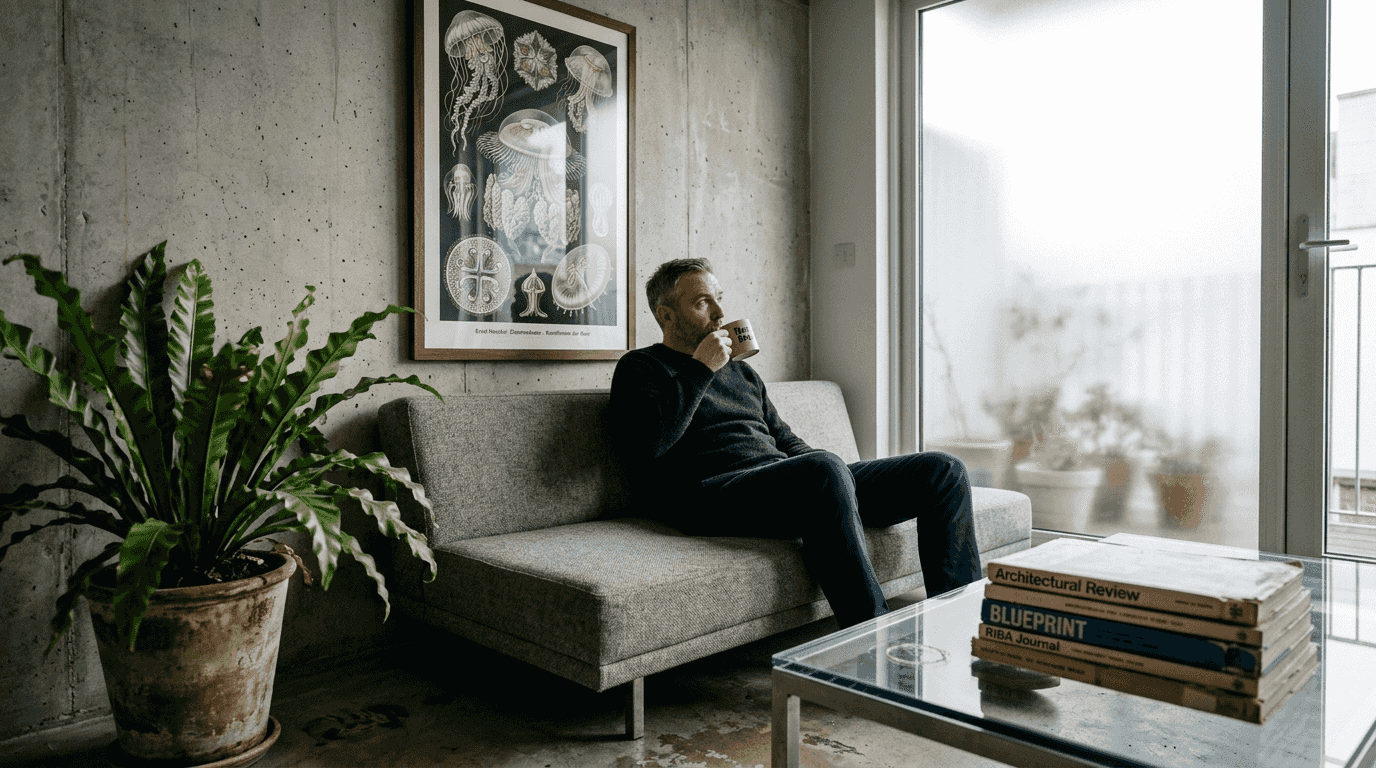
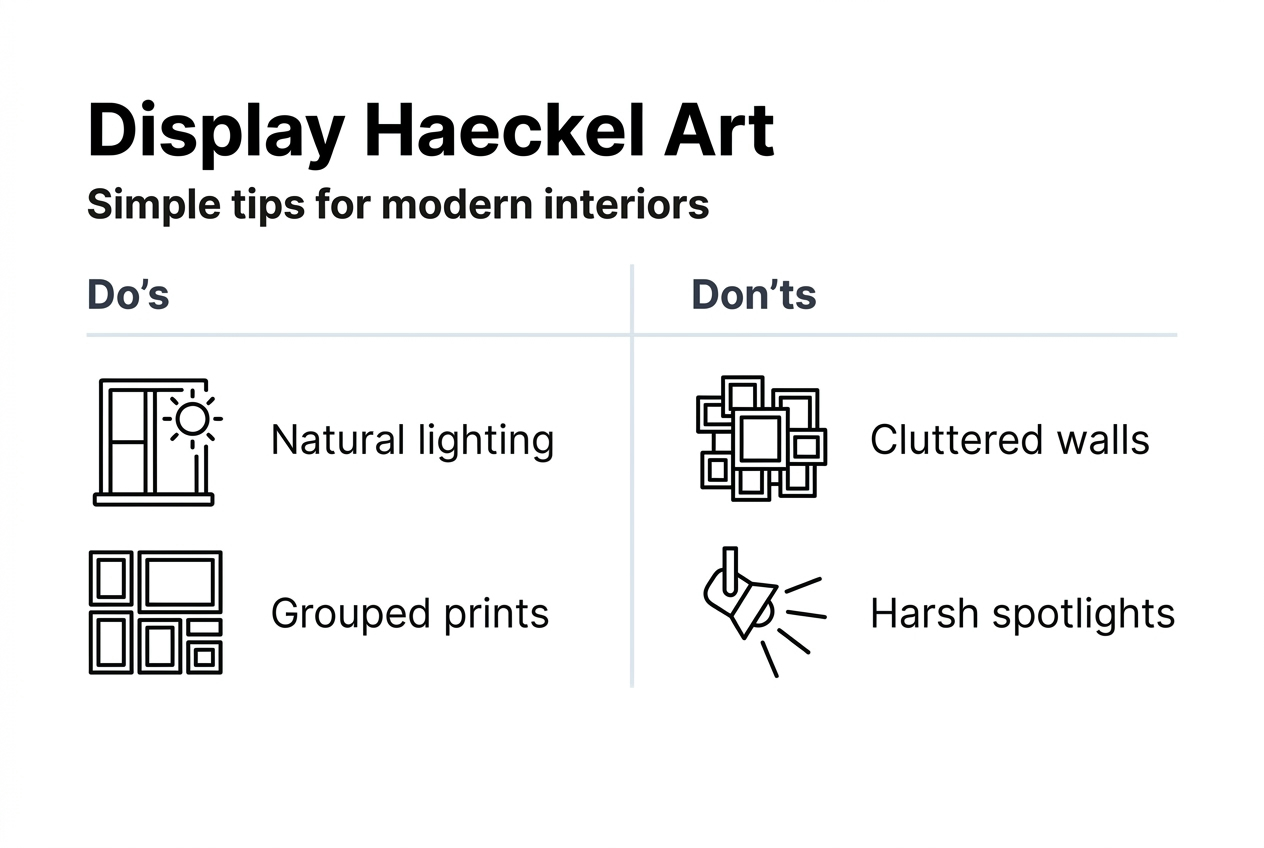
Placement strategies significantly impact how these prints function within your space. Large-scale radiolarian illustrations work beautifully as solitary statement pieces above sofas or beds. Smaller prints gain impact when grouped in threes or fours, creating cohesive displays that echo natural history museum arrangements.
Effective styling approaches include:
- Pairing Haeckel prints with clean-lined Scandinavian furniture for contrast between organic and geometric forms
- Using simple black or natural wood frames to avoid competing with intricate illustration detail
- Positioning prints at eye level in well-lit areas where fine linework remains visible
- Combining Haeckel vintage posters with botanical specimens or natural materials like driftwood
- Creating thematic groupings around colour families or organism types
Lighting deserves special attention when displaying these prints. Natural daylight reveals subtle colour variations and delicate line work that artificial lighting may flatten. Avoid direct sunlight to prevent fading, but position prints near windows where indirect light enhances their detail.
Pro Tip: Reference our styling vintage art prints guide for techniques on balancing vintage botanical illustrations with modern decor elements.
These posters function particularly well in spaces where you want to introduce natural elements without actual plants. Home offices, reading nooks, and bedrooms benefit from their calming organic geometry. The scientific precision underlying their beauty adds intellectual depth that purely decorative artwork may lack.
Consider scale relationships carefully. A single oversized jellyfish print creates dramatic impact in spacious rooms, whilst smaller clustered prints suit intimate spaces. The detailed nature of Haeckel’s work means viewers naturally move closer to examine specifics, making these pieces ideal for areas where people linger rather than pass through quickly.
Understanding the historical context and critiques of Haeckel’s work
Appreciating Haeckel’s artistic legacy requires acknowledging the complexities of his scientific contributions. His biogenetic law and evolutionary theories became largely discredited as biology advanced, yet they represented serious scientific inquiry within his historical context. Modern viewers should understand these ideas as products of 19th-century science rather than current biological understanding.
More troubling aspects of Haeckel’s legacy demand thoughtful consideration. His evolutionary diagrams were misused to support racial hierarchies and eugenic ideologies he may not have intended but his work unfortunately facilitated. This historical reality complicates but need not eliminate appreciation for his artistic achievements.
Key considerations for informed appreciation:
- Haeckel worked within Victorian scientific frameworks now recognised as flawed
- His theories about evolutionary development reflected period assumptions rather than malicious intent
- Subsequent misappropriation of his work by racist ideologues occurred beyond his direct control
- Separating artistic merit from problematic scientific legacy requires conscious historical awareness
- Displaying his art can coexist with understanding these troubling associations
This nuanced perspective enriches rather than diminishes engagement with his illustrations. Recognising that beautiful art can emerge from complicated historical contexts makes us more thoughtful consumers and decorators. The organic forms and meticulous craftsmanship retain their aesthetic value whilst we acknowledge the fuller picture of their creator’s impact.
Many contemporary scientists and historians argue for continued appreciation of Haeckel’s artistic contributions precisely because they sparked widespread public interest in marine biology and natural history. His illustrations made invisible worlds accessible, fostering scientific curiosity across social classes. This democratising effect represents a genuinely positive legacy worth preserving.
Engaging critically with historical art demonstrates intellectual maturity. You can display Haeckel’s radiolarian drawings whilst understanding the problematic aspects of his broader work. This balanced approach respects both aesthetic appreciation and historical responsibility.
Find and style authentic Ernst Haeckel vintage posters
Transform your living space with scientifically inspired vintage elegance that bridges natural history and contemporary design. Our curated Ernst Haeckel vintage posters collection features his most iconic illustrations, reproduced with careful attention to original colour palettes and intricate detail.

Explore complementary pieces like Art Nouveau vintage wall art that echo the organic forms Haeckel pioneered. Our vintage art styling guide provides practical techniques for integrating these scientific beauties into modern interiors, whether you prefer minimalist Scandinavian aesthetics or richly layered vintage environments. Multi-buy discounts make creating cohesive gallery walls both affordable and visually rewarding.
FAQ
What makes Ernst Haeckel’s art unique compared to other vintage posters?
Haeckel’s illustrations uniquely combine rigorous scientific observation with exceptional artistic composition, capturing microscopic organisms rarely featured in decorative art. His meticulous methodology produced works that function equally as scientific documentation and aesthetic objects. This dual nature distinguishes his prints from purely ornamental vintage designs.
Can Ernst Haeckel’s vintage prints fit modern decorating styles?
Absolutely, their detailed natural motifs complement minimalist and contemporary interiors beautifully. The organic geometry and muted colour palettes typical of vintage reproductions add visual interest without overwhelming clean modern lines. Check our guide on Haeckel art in modern interiors for specific styling strategies.
Are there any controversies I should know about before displaying Haeckel’s art?
Haeckel’s evolutionary theories were unfortunately misappropriated to support racial ideologies in ways that complicate his legacy. Understanding this historical context allows for informed appreciation that acknowledges both his artistic achievements and the problematic uses of his scientific work. Many choose to display his art whilst maintaining awareness of these complexities.
Where can I purchase authentic Ernst Haeckel vintage posters?
Specialised retailers focusing on vintage scientific illustration offer the most reliable reproductions. Purchase Ernst Haeckel vintage posters from curated collections that prioritise accurate colour reproduction and detail preservation. Quality reproductions maintain the intricate linework essential to Haeckel’s original plates.
How should I frame Haeckel prints to preserve their vintage character?
Simple black, natural wood, or gilded frames work best, avoiding ornate designs that compete with the illustration’s intricate detail. Museum-quality glass protects against UV damage whilst maintaining clarity. Consider the print’s colour palette when selecting frame finishes to ensure cohesive presentation that honours the vintage scientific aesthetic.