
Blog
Ernst Haeckel art: vintage prints for modern interiors
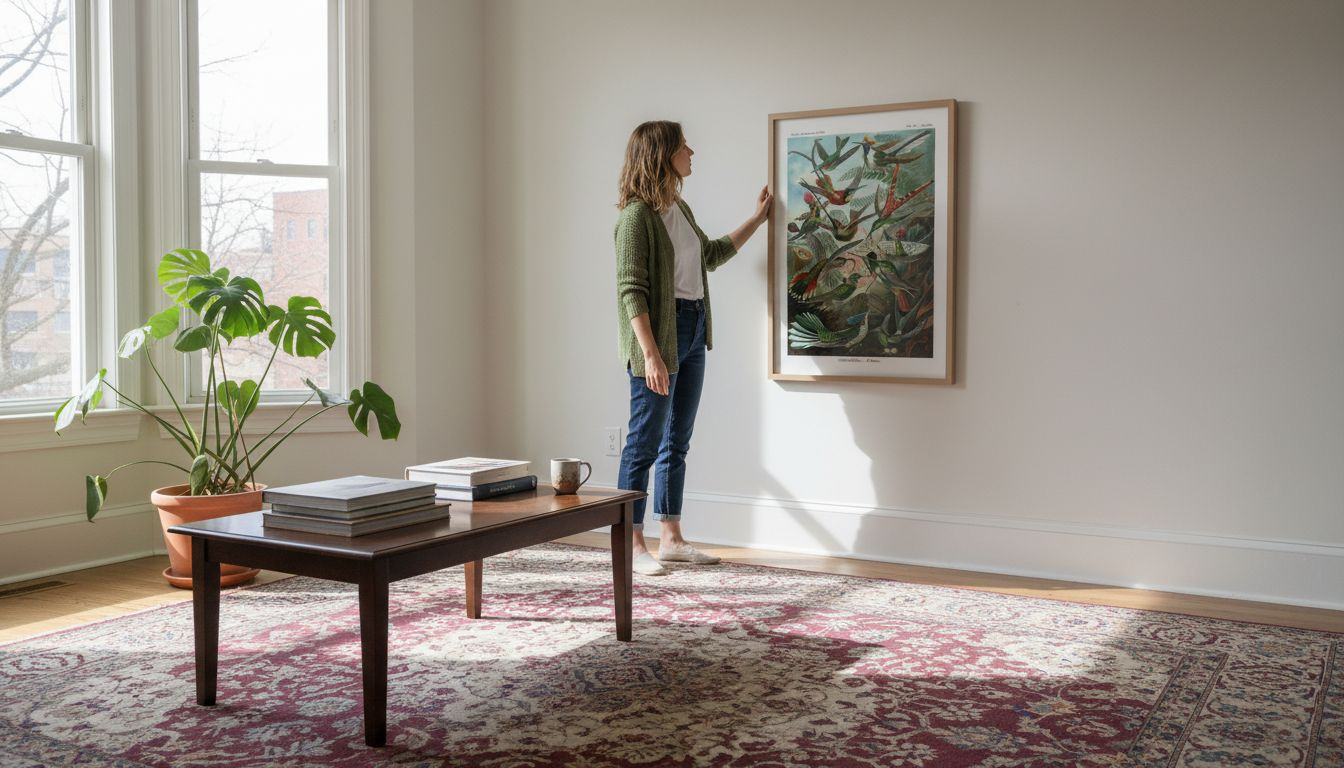
Ernst Haeckel’s vintage scientific illustrations have experienced a remarkable resurgence, with sales increasing 45% over the past decade. Many assume these prints are purely scientific records, yet they represent a sophisticated fusion of biological observation and artistic vision. This guide explores how to select, style, and incorporate Haeckel’s iconic marine and microscopic imagery into contemporary home decor.
Table of Contents
- Introduction To Ernst Haeckel And His Artistic Legacy
- The Unique Artistic And Scientific Style Of Ernst Haeckel
- Common Misconceptions About Haeckel Art
- Incorporating Haeckel Prints Into Modern Interior Design
- Selecting The Right Haeckel Prints For Your Space
- Market Relevance Of Haeckel Art In Modern Times
- Explore Vintage And Retro Prints For Stylish Home Decor
- Frequently Asked Questions
Key takeaways
| Point | Details |
|---|---|
| Artistic fusion | Haeckel’s work combines scientific precision with deliberate aesthetic stylisation, creating prints that educate and inspire. |
| Common subjects | His illustrations predominantly feature marine organisms, radiolarians, and symmetrical botanical forms ideal for retro interiors. |
| Quality matters | Authentic reproductions use archival paper and UV-resistant inks to preserve colour vibrancy and detail over decades. |
| Styling versatility | Haeckel prints complement both vintage-themed spaces and modern minimalist rooms when thoughtfully arranged. |
| Market growth | Collector demand for vintage scientific illustration has driven significant sales increases across interior design markets. |
Introduction to Ernst Haeckel and his artistic legacy
Ernst Haeckel (1834-1919) stands as a pivotal figure where Victorian science meets artistic expression. The German biologist spent decades documenting marine life and microscopic organisms, producing thousands of detailed illustrations that transcended mere scientific record-keeping. His most celebrated work, “Kunstformen der Natur” (Art Forms in Nature), published between 1899 and 1904, showcased 100 plates of intricate biological drawings that influenced Art Nouveau designers across Europe.
The scientific and artistic legacy of Ernst Haeckel demonstrates how one individual could master both microscope and sketchpad. Unlike typical scientific illustrators who prioritised accuracy above all else, Haeckel deliberately enhanced symmetry, refined colour palettes, and composed his subjects to maximise visual impact. This approach created a unique hybrid genre that appeals equally to biology enthusiasts and interior design aficionados.
His work profoundly shaped 19th and early 20th-century visual culture:
- Inspired Art Nouveau architects and jewellery designers with organic forms
- Introduced European audiences to exotic marine species through accessible, beautiful imagery
- Established a precedent for scientific communication through artistic presentation
- Created a lasting market for Ernst Haeckel vintage posters in contemporary decor
Haeckel’s dual expertise allowed him to observe specimens under laboratory conditions, then translate those observations into prints that balanced scientific detail with compositional elegance. This methodology distinguished his work from purely technical diagrams, positioning his illustrations as both educational tools and decorative art suitable for modern living spaces.
The unique artistic and scientific style of Ernst Haeckel
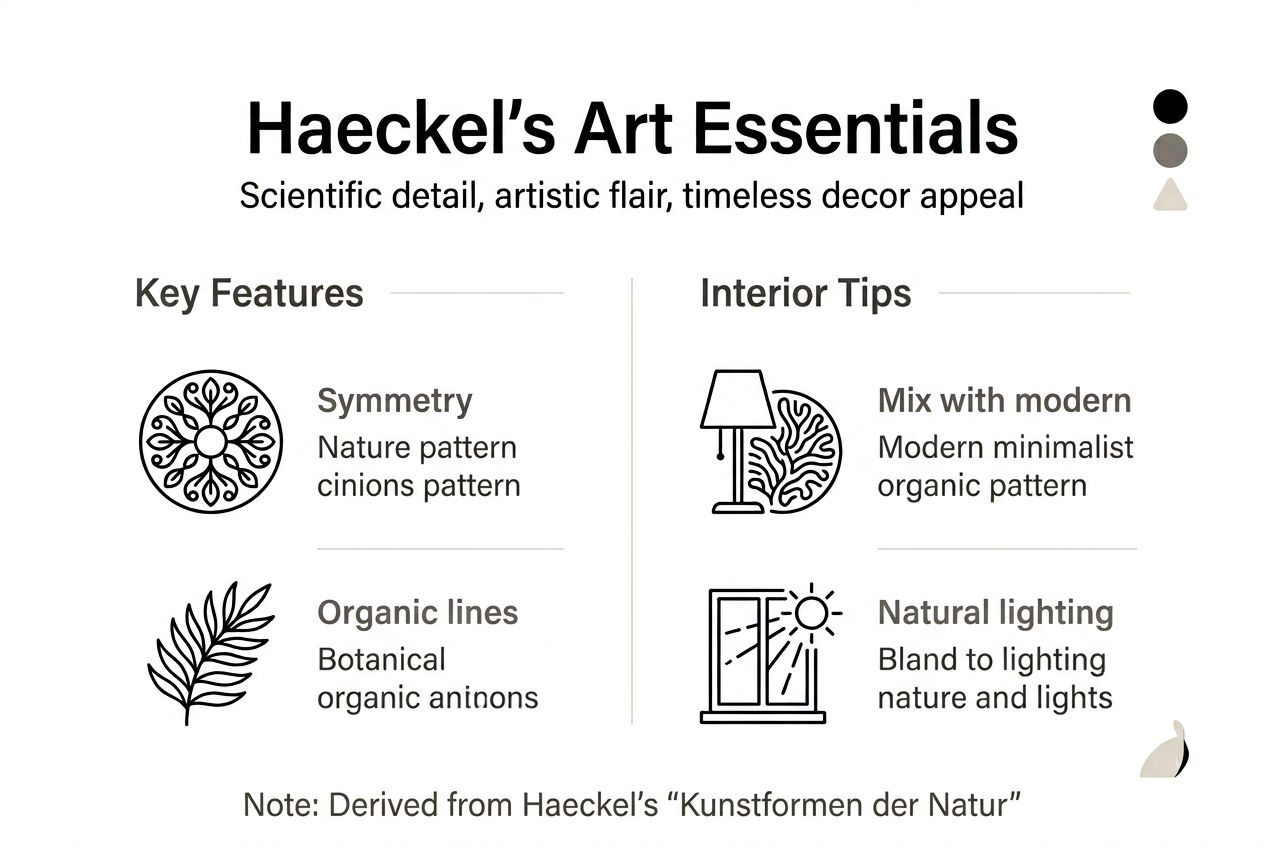
Haeckel’s distinctive visual language emerged from his commitment to presenting nature as simultaneously accurate and aesthetically captivating. The blend of science and art in Haeckel’s work demonstrates his intentional choices to enhance natural forms through artistic techniques whilst maintaining biological credibility. His illustrations feature radial symmetry, vibrant colour gradations, and carefully balanced compositions that transform microscopic organisms into striking visual statements.
Common motifs in Haeckel’s portfolio include:
- Radiolarians: microscopic marine protozoa with intricate skeletal structures
- Jellyfish and sea anemones: translucent forms with flowing tentacles
- Diatoms: single-celled algae with geometric silica shells
- Botanical specimens: orchids, ferns, and other plants arranged symmetrically
| Artistic Element | Scientific Approach | Aesthetic Enhancement |
|---|---|---|
| Symmetry | Natural bilateral forms | Exaggerated balance for visual harmony |
| Colour | Observed pigmentation | Intensified hues and contrasts |
| Composition | Random organism placement | Deliberate arrangement for maximum impact |
| Detail | Microscopic accuracy | Selective emphasis on decorative features |
These techniques positioned Haeckel’s prints as perfect sources for Art Nouveau designers seeking organic inspiration. The flowing lines and natural patterns found in his marine illustrations directly influenced architectural details, textile patterns, and decorative metalwork throughout Europe during the early 1900s. This historical connection makes Haeckel prints particularly suitable for retro-themed interiors today.
Pro Tip: When creating stylish gallery wall ideas using retro vintage prints, select Haeckel illustrations with complementary colour schemes rather than matching subjects to achieve visual cohesion without monotony.
His approach differed fundamentally from contemporaries who produced stark, diagrammatic scientific illustrations. Haeckel treated each plate as both a teaching tool and an artwork, applying watercolour techniques and compositional principles borrowed from fine art traditions. This dual focus explains why his prints remain popular 120 years after initial publication, transcending their original educational purpose to function as standalone decorative pieces.
Common misconceptions about Haeckel art
Despite widespread admiration, Haeckel’s work suffers from persistent misunderstandings that affect how collectors and decorators approach his prints. Over 50% of popular references inaccurately portray Haeckel’s art as purely scientific documentation, overlooking his intentional artistic liberties. Understanding these misconceptions helps buyers make informed decisions when selecting pieces for their homes.
The primary myths include:
- Pure accuracy myth: Many assume every detail in Haeckel’s illustrations reflects exact biological reality without artistic interpretation.
- Photographic equivalence: Some believe his prints function as 19th-century photography, capturing organisms exactly as they appear in nature.
- Scientific objectivity: The notion persists that Haeckel prioritised data over aesthetics, when evidence shows the opposite.
Haeckel openly acknowledged his artistic enhancements, viewing them as essential for public engagement with scientific subjects. He deliberately idealised specimens, selecting the most visually striking examples and sometimes combining features from multiple organisms into composite illustrations. This approach served his broader goal of revealing nature’s inherent beauty rather than producing strictly technical diagrams.
“Art forms in nature are not mere copies but interpretations that reveal the underlying harmony and symmetry often invisible to casual observation.”
This philosophical stance explains apparent discrepancies between Haeckel’s illustrations and modern scientific photography. His goal was revealing patterns and aesthetic principles within biological diversity, not creating field guides for species identification. Contemporary critics sometimes fault Haeckel for these choices, yet they represent conscious artistic decisions rather than scientific errors.
For interior design purposes, these distinctions matter less than understanding what you’re purchasing. Haeckel prints offer decorative value through their visual appeal rather than serving as precise scientific references. When you choose vintage posters, prioritise aesthetic fit with your space over concerns about absolute biological accuracy. The prints function as art first, educational content second.
Recognising Haeckel’s artistic intent also clarifies why certain prints work better in specific design contexts. His more stylised, symmetrical compositions suit formal spaces, whilst illustrations with naturalistic elements complement casual, eclectic rooms.
Incorporating Haeckel prints into modern interior design
Haeckel’s vintage scientific illustrations adapt remarkably well to contemporary spaces when thoughtfully selected and arranged. Their neutral colour palettes, geometric compositions, and educational appeal make them versatile additions to various room types and design styles. The key lies in balancing their retro character with modern furnishings to create cohesive, visually interesting environments.
Ideal room placements include:
- Home offices and studies: The educational aspect adds intellectual atmosphere whilst maintaining visual interest during work hours.
- Living rooms: Larger Haeckel prints serve as conversation pieces, particularly when grouped thematically.
- Bedrooms: Calming marine subjects in muted tones create tranquil environments conducive to rest.
- Dining areas: Botanical prints complement natural materials like wood tables and linen textiles.
Combining Haeckel prints with other vintage artwork requires attention to visual weight and colour harmony. Consider these approaches:
- Pair marine illustrations with vintage botanical prints for a cohesive natural history theme
- Mix black and white Haeckel drawings with coloured retro travel posters for dynamic contrast
- Group multiple small Haeckel prints in matching frames for gallery wall impact
- Combine single large Haeckel statement piece with minimalist modern furniture
Pro Tip: When learning to display art in small spaces, select Haeckel’s more intricate radiolarian or diatom illustrations as they reward close viewing and work well in compact areas like hallways or powder rooms.
Gallery wall arrangements benefit from Haeckel’s modular nature. His individual organism studies allow flexible configurations, enabling you to adjust layouts based on wall dimensions. Start with a central anchor piece, then surround it with smaller complementary prints, maintaining consistent frame styles and mat colours for unity.
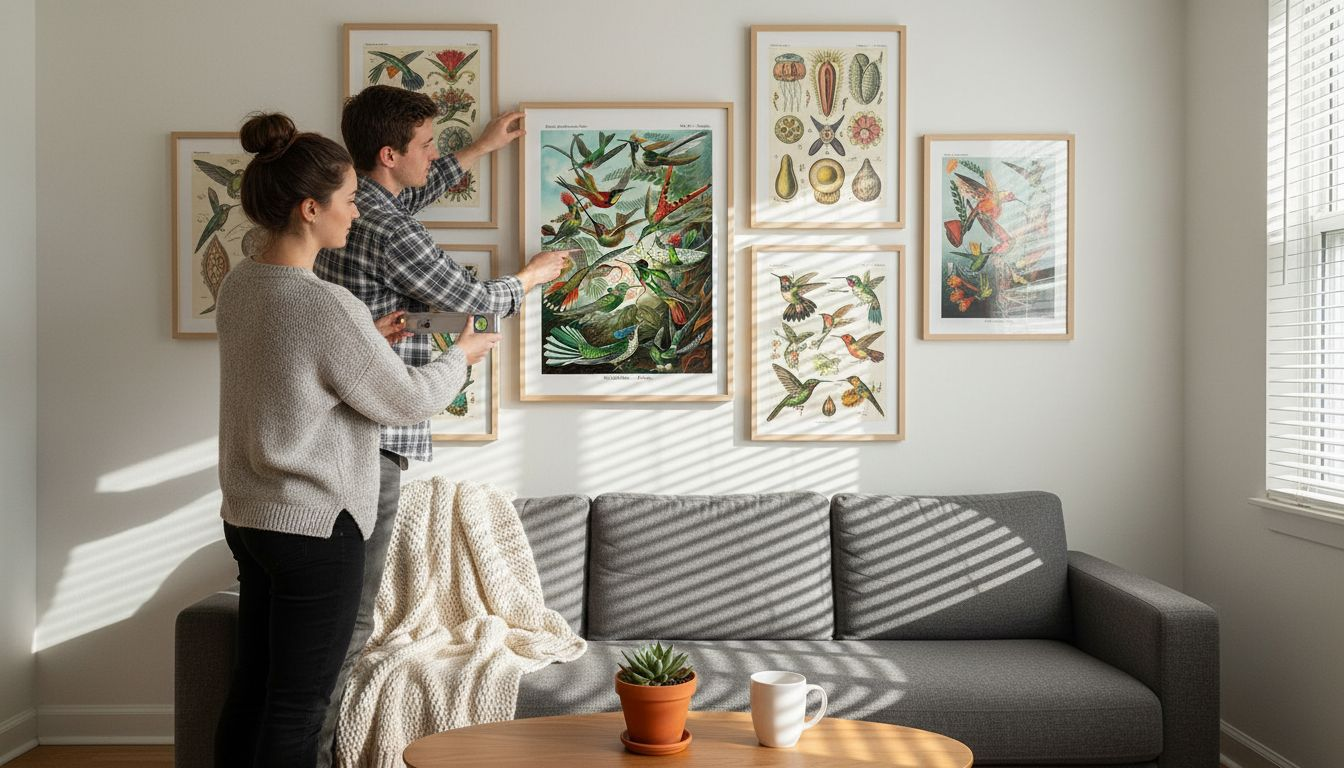
Balancing vintage scientific art with modern decor elements requires restraint. Avoid overwhelming contemporary spaces with excessive historical references. Instead, use Haeckel prints as accent pieces that introduce warmth and character without dominating the overall aesthetic. Pair them with clean-lined furniture, neutral wall colours, and strategic lighting to let the intricate details shine.
For maximum impact, consider the viewing distance when selecting print sizes. Detailed radiolarian studies work best where viewers can appreciate fine lines up close, whilst bold jellyfish or sea anemone prints function effectively from across larger rooms. This strategic placement ensures each piece fulfils its decorative potential within your specific space.
Explore additional retro vintage gallery wall ideas to discover how Haeckel prints complement other historical illustration styles in curated arrangements.
Selecting the right Haeckel prints for your space
Quality reproduction distinguishes lasting decorative investments from disappointing purchases that fade or deteriorate within months. When acquiring Haeckel prints, prioritise archival materials and professional printing techniques that preserve the intricate details and subtle colour variations characteristic of his original work.
Essential quality indicators include:
- Archival paper: Acid-free, lignin-free stock prevents yellowing and brittleness over decades
- UV-resistant inks: Fade-resistant pigments maintain colour vibrancy despite sunlight exposure
- High resolution: Minimum 300 DPI printing captures fine線 details in radiolarian skeletons and botanical structures
- Colour accuracy: Reproductions should match original plate colours, not oversaturated modern interpretations
| Print Size | Suitable Rooms | Viewing Distance | Impact Level |
|---|---|---|---|
| A4 (21×30cm) | Studies, bathrooms | Close quarters | Intimate detail |
| A3 (30×42cm) | Bedrooms, hallways | Medium range | Balanced presence |
| A2 (42×59cm) | Living rooms, dining areas | Across room | Statement piece |
| A1 (59×84cm) | Feature walls, large spaces | Long distance | Dramatic focal point |
Authentic Haeckel reproductions come from verified sources that licence images from original “Kunstformen der Natur” plates or museum collections. When browsing choosing vintage posters, verify the seller provides provenance information and uses professional printing methods rather than basic digital copies.
Framing considerations significantly affect longevity:
- Use UV-protective glass or acrylic to shield prints from sunlight damage
- Select acid-free mats that won’t discolour the print edges over time
- Ensure proper backing boards prevent moisture absorption and warping
- Choose frame depths that accommodate mat thickness without compressing materials
Size selection depends on both room dimensions and the specific illustration’s composition. Dense, intricate prints like radiolarian studies maintain visual interest at smaller sizes, whilst flowing jellyfish or sea anemone illustrations benefit from larger formats that showcase their graceful forms. Consider wall space, surrounding furniture scale, and desired visual impact when deciding dimensions.
Lighting dramatically affects how viewers experience Haeckel’s detailed work. Position prints where natural light illuminates them during daytime without direct sun exposure that accelerates fading. Supplement with focused accent lighting for evening viewing, using LED bulbs that emit minimal UV radiation.
For those seeking authentic Haeckel reproductions, prioritise retailers specialising in vintage scientific illustration who understand archival standards and offer multiple size options to suit different interior applications.
Market relevance of Haeckel art in modern times
Vintage scientific illustration has experienced remarkable commercial resurgence, with Haeckel prints leading this trend. Market analysis reveals a 45% sales increase over the past decade, driven by interior designers, collectors, and homeowners seeking distinctive wall art that combines aesthetic appeal with educational value. This growth reflects broader cultural interest in historical scientific imagery and retro design aesthetics.
45% sales growth in Haeckel prints (2016-2026)
Several factors drive contemporary demand:
- Educational decor trend: Parents and educators increasingly select art that sparks curiosity and conversation about natural sciences
- Retro aesthetic popularity: Vintage scientific prints align with widespread interest in mid-century and Victorian design elements
- Sustainability values: Timeless vintage imagery offers an alternative to disposable, trend-driven mass-market art
- Unique visual identity: Haeckel prints provide distinctive character compared to generic landscape or abstract prints
Collectors particularly value first-edition “Kunstformen der Natur” plates, with original lithographs commanding significant prices at auction. However, the reproduction market serves broader audiences, making Haeckel’s imagery accessible to budget-conscious decorators who appreciate the aesthetic without requiring museum-quality originals.
Interior design publications increasingly feature Haeckel prints in styled room photographs, exposing new audiences to his work. This media presence reinforces his illustrations as design classics rather than niche scientific curiosities. The prints appear regularly in boutique hotels, upscale restaurants, and professional offices seeking sophisticated, conversation-starting wall art.
Social media platforms, particularly Instagram and Pinterest, amplify Haeckel’s contemporary relevance. Design enthusiasts share gallery wall arrangements featuring his prints, generating viral interest and driving sales. The hashtag #haeckelart attracts thousands of posts showcasing diverse styling approaches, from minimalist modern to maximalist eclectic.
The market accommodates various price points, from affordable digital reproductions to premium giclée prints on artist-grade paper. This accessibility ensures Haeckel’s work reaches diverse demographics, from university students decorating first apartments to established collectors curating sophisticated home galleries.
For those exploring broader vintage aesthetics, vintage retro posters complement Haeckel illustrations in thematic collections that celebrate historical design across multiple genres and periods.
Explore vintage and retro prints for stylish home decor
Now that you understand how to select and style Ernst Haeckel’s distinctive scientific illustrations, discovering the perfect prints for your space becomes the natural next step. ArtMandre offers a carefully curated collection of authentic vintage and retro artwork designed specifically for modern interiors. Each reproduction meets archival standards, ensuring your investment maintains its visual impact for decades.

Browse retro art prints spanning multiple categories, from Haeckel’s marine studies to complementary botanical illustrations and Art Nouveau designs. The collection includes pieces like this Art Nouveau print that pairs beautifully with scientific illustrations for cohesive vintage-themed gallery walls. Access expert guidance through articles on stylish gallery wall ideas to transform your vision into reality with professional results.
Frequently asked questions
What makes Ernst Haeckel’s art unique compared to other vintage scientific illustrations?
Haeckel deliberately balanced scientific observation with artistic stylisation, creating prints that function as both educational tools and decorative art. His emphasis on symmetry, enhanced colour palettes, and compositional elegance distinguishes his work from purely technical biological diagrams. This dual purpose explains why his illustrations remain popular in contemporary interior design whilst other Victorian scientific prints appeal primarily to specialist collectors.
How can I ensure the authenticity of an Ernst Haeckel print?
Authentic reproductions use archival paper, UV-resistant inks, and high-resolution printing that captures fine details from original “Kunstformen der Natur” plates. Purchase from reputable sources that provide provenance information and specify printing methods. Review guidance on choosing vintage posters to understand quality indicators that distinguish professional reproductions from low-grade digital copies.
What room types are best suited for displaying Haeckel art?
Home offices and studies benefit from Haeckel’s educational character, creating intellectually stimulating environments. Living rooms accommodate larger statement pieces that serve as conversation starters, whilst bedrooms suit calming marine subjects in muted tones. Consider display art in small spaces techniques for incorporating detailed radiolarian studies into compact areas like hallways or powder rooms where close viewing reveals intricate beauty.
Can Haeckel art be mixed with modern decor styles?
Haeckel prints adapt exceptionally well to contemporary spaces when balanced with clean-lined furniture and neutral backgrounds. Their vintage character adds warmth and historical depth without overwhelming modern aesthetics. Use them as accent pieces rather than dominant themes, pairing scientific illustrations with minimalist furnishings for sophisticated contrast. Explore mixing modern and vintage decor strategies to achieve harmonious combinations that honour both historical and contemporary design principles.