
Blog
Difference Between Posters and Prints – What Every Decorator Should Know
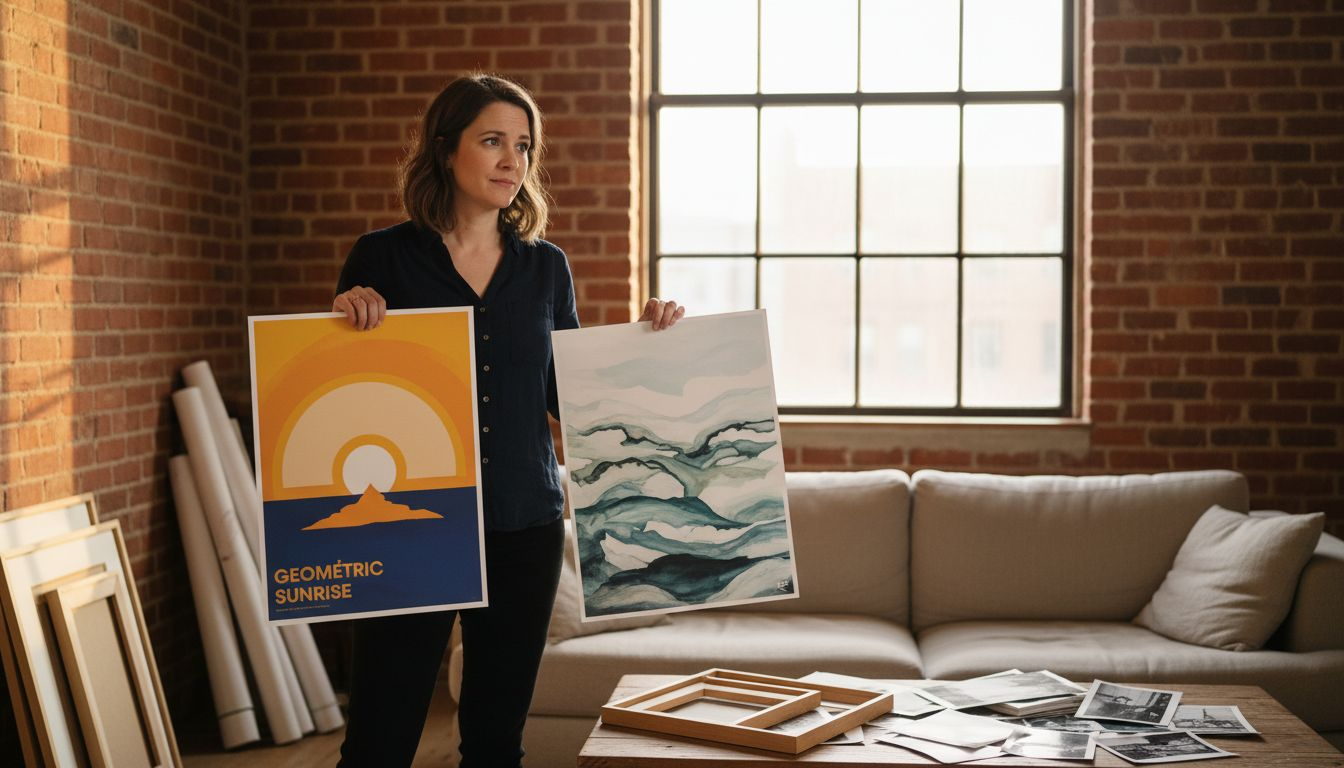
Choosing wall art for your home often means deciding between posters and prints, each offering unique benefits for style and longevity. For anyone struggling to balance affordability with lasting beauty, understanding these options is crucial. Posters provide bold, accessible décor for quick updates, while art prints crafted with archival pigment-based inks and premium paper can remain vibrant for decades. This guide helps you make informed decisions that reflect your taste, budget, and desire for durability.
Table of Contents
- Defining Posters And Art Prints
- Materials, Techniques, And Production Methods
- Visual Impact And Durability In Homes
- Value, Collectability, And Pricing Differences
- Choosing The Right Art For Your Space
Key Takeaways
| Point | Details |
|---|---|
| Posters vs Art Prints | Posters are affordable and temporary, while art prints are long-lasting investments made from quality materials. |
| Longevity and Durability | Posters typically last 1-5 years; art prints can last over 20 years with proper care and framing. |
| Investment Value | Art prints can appreciate in value, while posters generally have minimal resale potential. |
| Choosing Wisely | Consider the purpose of your space and the lighting conditions when deciding between posters and art prints. |
Defining Posters and Art Prints
When you’re decorating your home, understanding the difference between posters and art prints transforms how you approach wall décor. These two seem similar at first glance, yet they serve fundamentally different purposes and offer distinct qualities that affect longevity, appearance, and value.
Posters are mass-produced decorative items designed for short-term display and affordability. They typically feature semi-gloss paper with quick shipment in protective plastic sheaths, making them convenient for temporary installations. You’ll find posters rolled up and easy to transport, perfect for renters or those constantly refreshing their spaces.
Art prints, by contrast, represent long-lasting reproductions crafted with archival-quality materials. These use pigment-based inks designed for permanence on premium papers like matte, lustre, or metallic finishes. Art prints are investments meant to remain vibrant for decades, not months.
Here’s what sets them apart functionally:
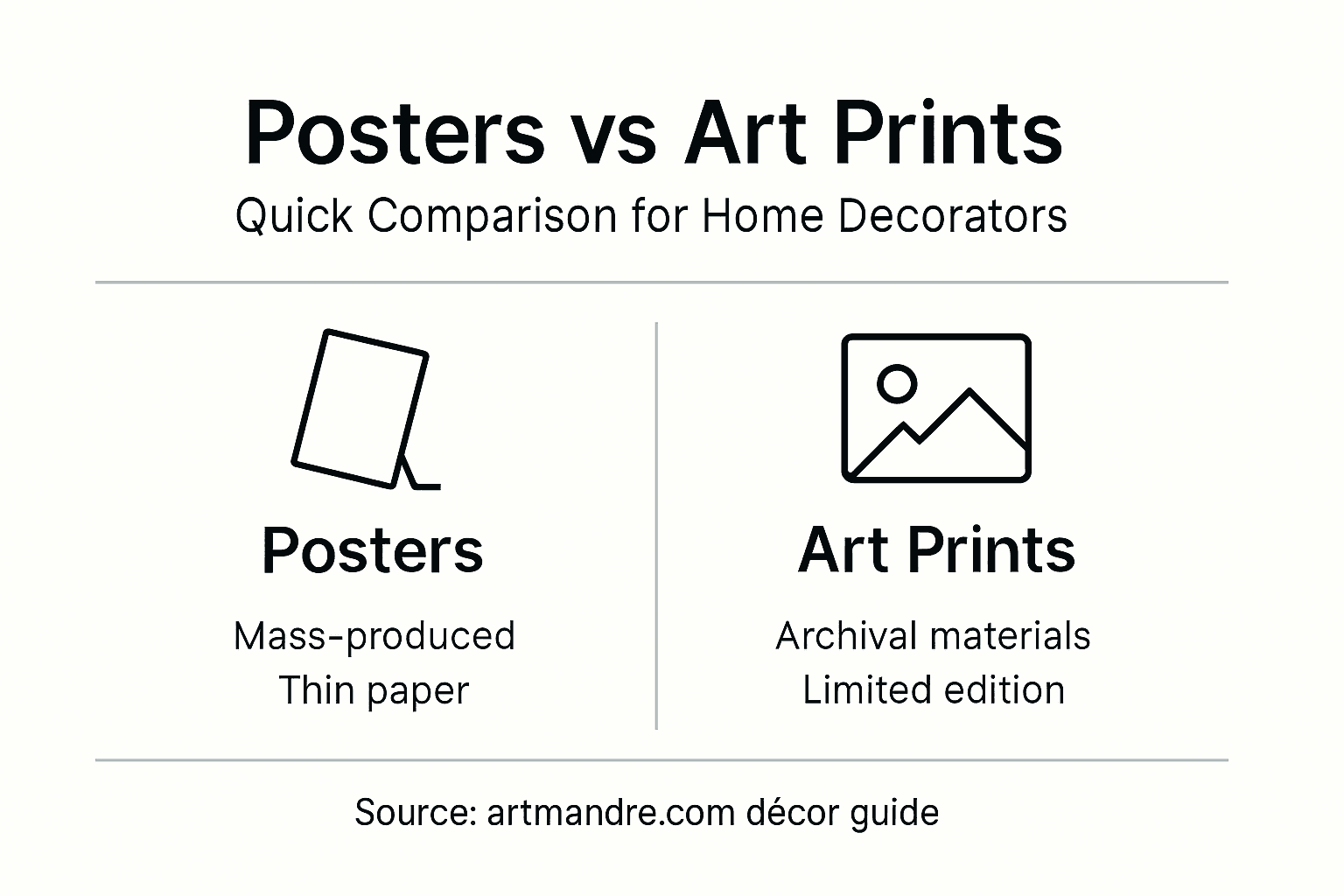
- Posters: Thin paper, economical pricing, bright colours, temporary display
- Art prints: Heavyweight archival paper, higher cost, archival pigments, collectible quality
- Posters: Typically unframed or in basic frames, suited for casual spaces
- Art prints: Often benefit from professional framing to enhance preservation and aesthetic impact
The choice between posters and prints reflects your decorating timeline and how you value permanence in your home.
Art prints work brilliantly when you’re creating a curated collection that evolves with your taste and investment. Posters excel when you want bold, trendy designs without commitment. Some decorators mix both—using posters for experimental colour schemes and prints for statement-making, heirloom-quality pieces.
Understanding why framing art prints matters becomes crucial once you decide on prints, as proper framing extends their lifespan significantly. Your choice depends on your space, budget, and how long you want your wall art to last.
Pro tip: Start with one quality art print in your most-viewed room to experience the difference in visual impact and longevity compared to posters you may have owned previously.
To help clarify the core distinctions, here’s a summary comparing posters and art prints across four essential factors:
| Aspect | Posters | Art Prints |
|---|---|---|
| Intended Use | Trendy, temporary decoration | Curated, lasting collection |
| Lifespan | 1–5 years | 20+ years |
| Investment Value | Minimal, rarely appreciated | Potential to gain value |
| Common Display Method | Unframed or basic frame | Professionally framed |
Materials, Techniques, and Production Methods
The materials and printing techniques used determine how your wall art looks and lasts. Posters and prints diverge significantly here, which explains their different price points and longevity.
Poster production relies on efficiency and cost-effectiveness. Most posters use standard poster paper or glossy photo paper, rolled and shipped in protective plastic. Outdoor posters often employ vinyl for weather resistance, making them suitable for patios or commercial spaces. The printing process typically involves offset lithography for mass production, which produces bright colours quickly at low cost.
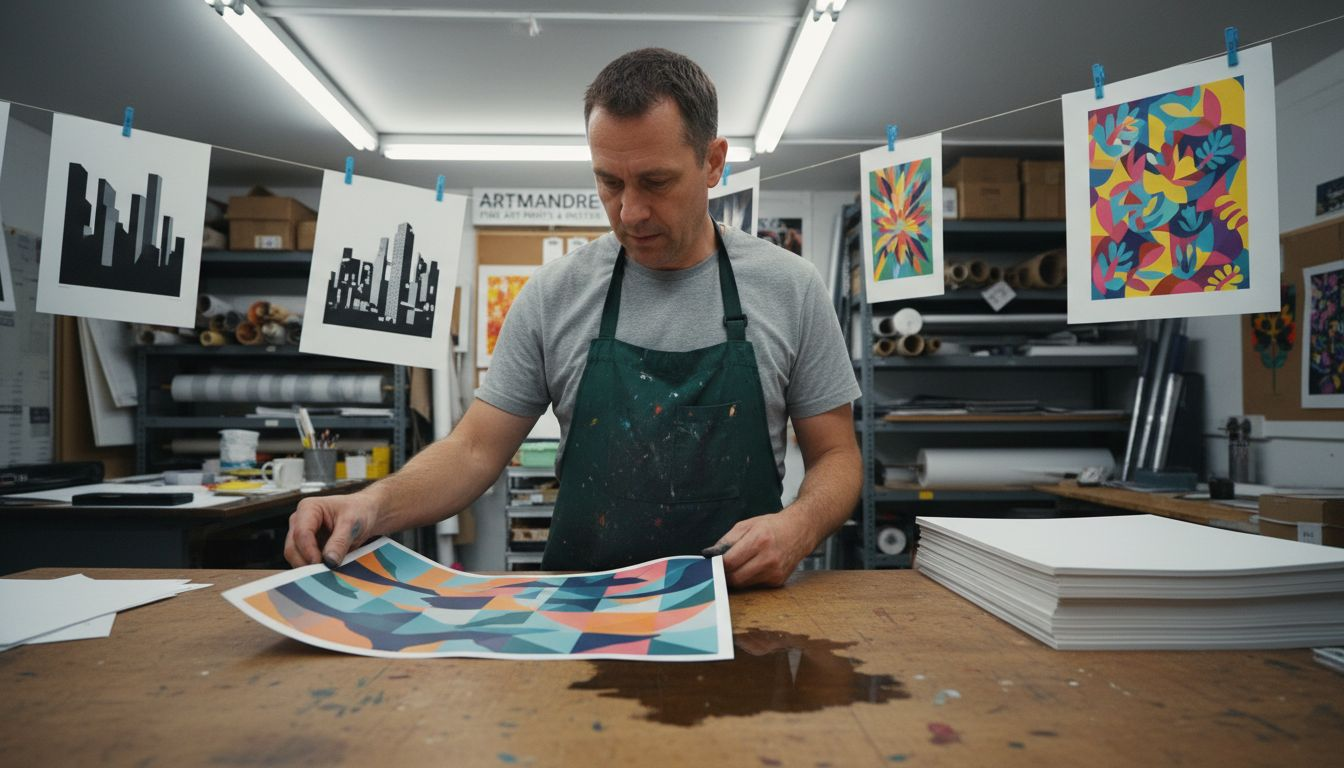
Art print production prioritises permanence and quality. Printers select from heavyweight archival papers—matte, lustre, or metallic finishes—each offering distinct aesthetic qualities. Archival-quality pigment-based inks resist fading far longer than standard dyes, sometimes lasting 100+ years under proper conditions. Digital inkjet technology allows precise colour reproduction and smaller print runs without sacrificing quality.
Here’s how the production methods differ:
- Posters: Offset lithography, standard or glossy paper, dye-based inks, rapid production
- Art prints: Digitally controlled inkjet, archival paper varieties, pigment-based inks, slower, more precise process
- Posters: Thin stock (80-100 gsm), economical approach, mass-market volumes
- Art prints: Heavyweight stock (200+ gsm), individual care, limited editions possible
The paper you choose and the ink formulation fundamentally shape whether your art remains vibrant or fades within years.
Paper weight matters tremendously. Thinner poster paper feels insubstantial and buckles easily, whilst heavyweight archival stock feels substantial and resists warping from humidity changes. When selecting art for your home, understanding these material choices helps you assess what you’re actually purchasing.
Ink quality separates temporary decoration from lasting investment. Standard dyes fade noticeably after 5-10 years, especially in sunlit spaces. Archival pigments maintain vibrancy for decades because they’re chemically stable and less reactive to light exposure.
Pro tip: If you’re buying prints online, check whether the product description mentions archival inks and acid-free paper—these two details signal whether you’re getting decorative posters or collectible-quality prints worth framing.
Visual Impact and Durability in Homes
How your wall art looks today and five years from now depends heavily on material choices and display conditions. Posters and prints behave differently in home environments, and understanding these differences helps you make decisions aligned with your decorating goals.
Visual appeal starts with finish selection. A matte finish reduces glare effectively, creating a softer aesthetic that works beautifully in bedrooms, living areas, and spaces with abundant natural light. Glossy finishes deliver punchy colour and vibrant impact but can create unwanted reflections, especially in sunny rooms. Lustre finishes split the difference, offering slight sheen without glare problems.
Posters on lightweight paper struggle with durability challenges. They’re prone to creasing, tearing, and colour fade, particularly when exposed to direct sunlight. Humidity swings cause poster paper to ripple and buckle, distorting the artwork. These issues intensify if posters remain unframed, absorbing moisture and dust directly.
Art prints exhibit superior durability across the board. Heavyweight archival paper resists creasing and warping, remaining flat and stable for decades. Pigment-based inks resist fading far longer, maintaining colour saturation even in bright spaces. This longevity makes framing worthwhile—the investment compounds as your prints age gracefully rather than deteriorate.
Here’s what impacts longevity in your home:
- Sunlight exposure: Direct UV rays fade posters rapidly; prints handle it far better
- Humidity and temperature: Fluctuations cause poster paper to warp; archival stock remains stable
- Framing protection: Glass shields artwork from dust and moisture, extending lifespan considerably
- Wall placement: Avoid damp bathrooms or kitchens for posters; prints can handle these spaces better
The difference between decorating temporarily and building a lasting collection comes down to how materials respond to your home’s actual living environment.
Consider your space honestly. Rental accommodation? Posters make perfect sense—bold, affordable, replaceable. Permanent home where you’re curating a collection? Art prints justify the investment because they’ll genuinely look better a decade from now.
Pro tip: Place posters in interior walls away from windows and moisture, and frame them behind glass to extend their lifespan by 3-4 years—but reserve prime spaces for archival art prints that’ll look fresh for generations.
Value, Collectability, and Pricing Differences
Price differences between posters and prints reflect fundamental distinctions in production, materials, and market positioning. Understanding these differences helps you allocate your decorating budget wisely and avoid overpaying for items that won’t appreciate.
Posters are designed for affordability and accessibility. Mass production using economical materials keeps costs low, typically ranging from £5 to £25 per piece. You’re paying for instant visual impact and trendy designs, not longevity or investment potential. Posters have minimal resale value—most people discard them rather than sell them.
Art prints command significantly higher prices, often starting at £30 and climbing to £200+ for limited editions or renowned artists. This pricing reflects superior materials, careful production processes, and genuine collectability. When limited edition prints are signed and numbered by artists, they become genuine collectible assets with potential for appreciation over time.
Several factors drive collectability and pricing in art prints:
- Edition size: Smaller print runs increase rarity and value significantly
- Artist reputation: Established or emerging artists with followings command higher prices
- Print quality: Archival pigments and premium paper justify premium pricing
- Provenance: Documentation of authenticity and artist signature boost desirability
- Condition: Well-preserved prints retain and gain value more reliably
Art prints frequently appreciate in value because they’re produced thoughtfully and in limited quantities, whereas posters depreciate immediately after purchase.
Fine art giclée prints represent the sweet spot for serious collectors—affordable enough for homeowners yet crafted with quality and rarity that influence appreciation potential. Their investment value compounds over years, making them genuinely worthwhile acquisitions.
Posters serve a different purpose entirely. They’re decorative tools for experimenting with colour, style, and themes without financial commitment. Perfect for rental spaces, dorm rooms, or quick seasonal refreshes. They’re not meant to build wealth—they’re meant to build atmosphere affordably.
Consider your decorating intent. Quick refresh? Poster budget works beautifully. Building a collection that reflects your taste and grows in value? Art prints justify the investment with compound returns in both aesthetics and potential resale.
Pro tip: Buy limited edition art prints from emerging artists you genuinely love—their work often appreciates 15-30% over five years whilst remaining affordable at purchase, giving you both beauty and investment upside.
Choosing the Right Art for Your Space
Deciding between posters and prints comes down to your room’s purpose, your decorating timeline, and how you want the space to feel. The right choice transforms a blank wall into a statement that reflects your personality and complements your home’s aesthetic.
Start by assessing your space honestly. High-traffic areas like living rooms and hallways benefit from bold, eye-catching designs that command attention. Intimate spaces like bedrooms and reading nooks suit softer, more contemplative artwork. Temporary spaces where you’re renting or frequently changing décor call for posters. Permanent installations in homes you own justify art print investments.
Consider lighting conditions carefully. Rooms flooded with natural sunlight need artwork that won’t fade—archival art prints excel here. Dimly lit corridors and interior walls work beautifully with posters since UV exposure isn’t a concern. Gloss finishes create visual pop in darker spaces; matte finishes suit naturally lit areas where glare matters.
Think about your colour scheme and existing décor:
- Match undertones in artwork to wall colours for cohesion
- Use contrasting colours to create focal points and drama
- Consider whether the piece will feel dated in two years
- Ask whether the design complements furniture and accessories
- Assess whether the mood matches the room’s purpose
Your choice between posters and prints should align with how permanently you want to commit to the artwork and its visual role in your space.
Budget matters, but think beyond initial cost. A £15 poster lasting eighteen months costs roughly 83p monthly. A £120 art print lasting twenty years costs just 50p monthly—plus you build a collection with genuine value. When selecting art for stylish spaces, quality often provides better value over time despite higher upfront investment.
Trust your instincts. If you love a piece, it probably works for your space. Hesitation suggests it might not be the right fit, regardless of price or trend.
Pro tip: Buy one art print for your most-visible wall and one poster for an experimental space, then live with both for a month before deciding which approach feels right for your home and decorating style.
Here’s a quick reference showing suitable locations for posters versus art prints in the home:
| Room Type | Ideal for Posters | Ideal for Art Prints |
|---|---|---|
| Rental Bedroom | Yes—budget friendly | Rarely—unless planning to keep |
| Main Living Area | Occasionally—low risk | Absolutely—long-term investment |
| Hallway | Good for quick updates | Great for permanent statement |
| Kitchen/Bathroom | Not suitable—humidity risk | More suitable with framing |
Discover The Perfect Wall Art That Matches Your Style And Lasts
Choosing between posters and art prints can feel overwhelming when you want your home to reflect your personality while standing the test of time. This article highlights common challenges such as selecting materials that endure, understanding archival quality, and balancing budget with lasting value. Whether you seek vibrant, affordable posters or premium, collectible art prints, recognising these distinctions empowers you to make informed decorating decisions that truly elevate your space.
At ArtMandre.com, we specialise in curating a diverse range of wall décor from retro maps to Bauhaus-inspired prints that combine style with substance. Our collection features carefully selected materials and finishes that cater both to those experimenting with temporary trends and to collectors investing in long-term beauty.

Explore our exclusive selection today and enjoy promotional offers such as buy 2 get 1 free designed to make building your personalised gallery easier. Visit our landing page now and transform your walls with art that speaks to your taste and stands strong against fading or damage. Don’t wait to invest in prints that grow in value and visual impact as time goes by.
Frequently Asked Questions
What is the main difference between a poster and an art print?
Posters are typically mass-produced on thin paper and designed for temporary display, while art prints are created using archival-quality materials and meant for long-term collection.
How long do posters and art prints usually last?
Posters generally last between 1 to 5 years, while art prints can last over 20 years when produced with archival materials and properly cared for.
Why is framing art prints important?
Framing art prints is crucial as it helps protect them from dust, moisture, and sunlight exposure, significantly extending their lifespan and maintaining their visual impact.
What factors should I consider when choosing between posters and art prints for my home?
Consider the intended use of the artwork, the space’s lighting conditions, the room’s traffic, your budget, and how long you plan to keep the decor before making a decision.