

Blog
Japanese Wall Print: Elevate Urban Home Style
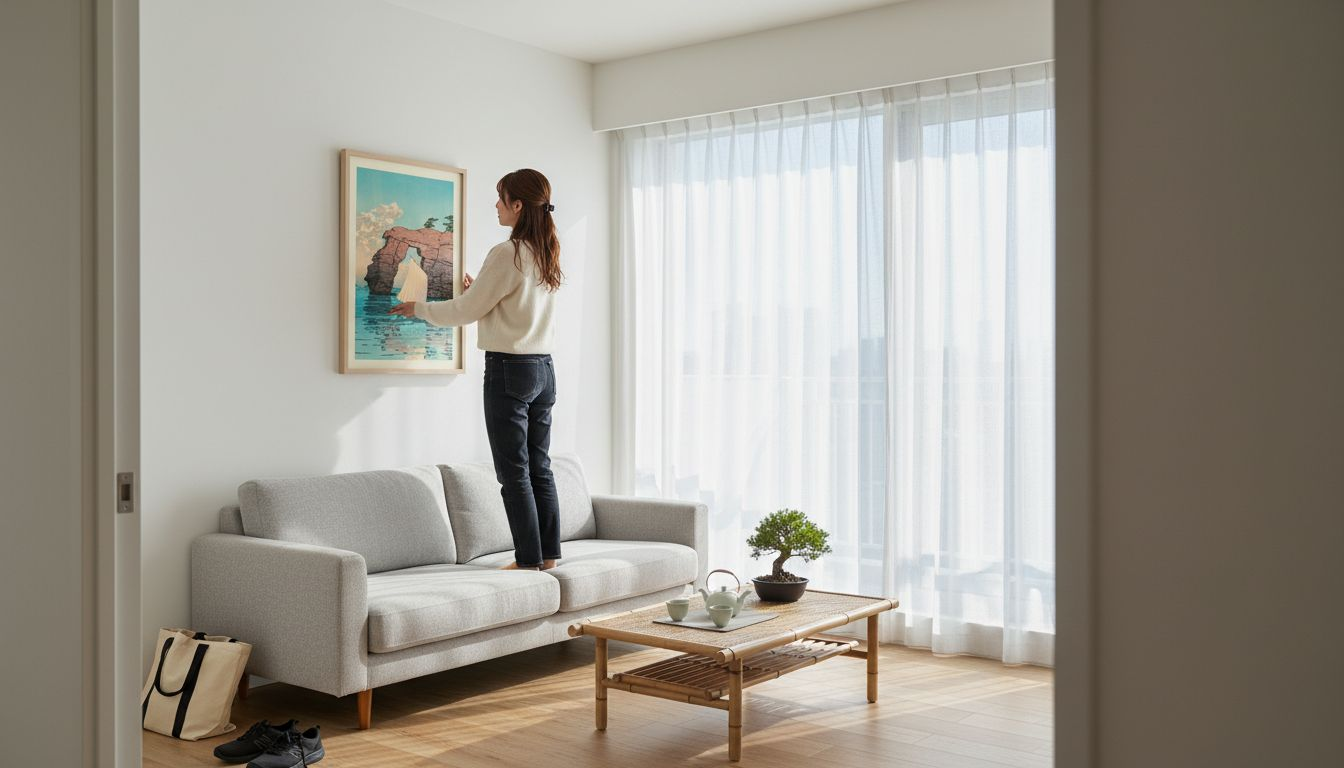
Finding art that speaks to both style and heritage can turn any modern apartment into a place with real character. Japanese wall prints blend intricate stories with clean minimalist vibes, making them a perfect fit for urban homes worldwide. From famous Edo-period woodblock techniques to contemporary design influences, these prints offer a unique way to show your appreciation for Japanese culture while keeping your living space visually fresh and inviting. Discover how authentic style meets meaningful storytelling in Japanese wall prints.
Table of Contents
- Defining Japanese Wall Print Art
- Popular Styles and Themes Explored
- Signature Design Elements and Materials
- Cultural Symbolism in Wall Prints
- Buying, Displaying, and Care Essentials
Key Takeaways
| Point | Details |
|---|---|
| Cultural Significance | Japanese wall prints are cultural artifacts that convey complex narratives and philosophies through art. |
| Artistic Techniques | Traditional woodblock printing techniques blend with modern aesthetics to create unique visual experiences. |
| Symbolic Depth | Common symbols in these prints have deep meanings, reflecting values such as perseverance, beauty, and spirituality. |
| Conservation Needs | Proper care and display techniques are essential to preserve the integrity and longevity of Japanese wall prints. |
Defining Japanese Wall Print Art
Japanese wall prints represent a rich artistic tradition that transforms urban home decor with profound cultural storytelling. Rooted in the historic woodblock printing techniques of the Edo period, these artworks blend intricate visual narratives with minimalist aesthetic principles.
The core characteristics of Japanese wall prints encompass several distinctive elements:
- Delicate line work and precise visual composition
- Symbolic representations of natural and cultural scenes
- Harmonious color palettes reflecting seasonal transitions
- Narrative depth beyond mere decorative function
Traditionally, these prints emerged from ukiyo-e, a genre capturing fleeting moments of everyday life. Artists like Hokusai transformed mundane scenes into extraordinary visual experiences, capturing everything from landscapes to human interactions with remarkable precision. The woodblock printing method allowed for mass reproduction while maintaining artistic integrity.
Contemporary Japanese wall prints have evolved to incorporate modern design sensibilities. They now blend traditional techniques with graphic design principles, creating artwork that speaks to both cultural heritage and current aesthetic trends. These prints aren’t just decorations – they’re cultural artifacts that communicate complex stories through visual language.
Pro tip: When selecting a Japanese wall print, look for pieces that resonate with your personal narrative and complement your existing interior design elements.
Popular Styles and Themes Explored
Japanese wall prints offer an extraordinary range of artistic expressions, with printmaking traditions spanning multiple stylistic approaches that reflect cultural complexity and aesthetic evolution. These artworks capture diverse narratives through distinctive visual languages, each representing unique perspectives of Japanese artistic heritage.
The most prominent styles include:
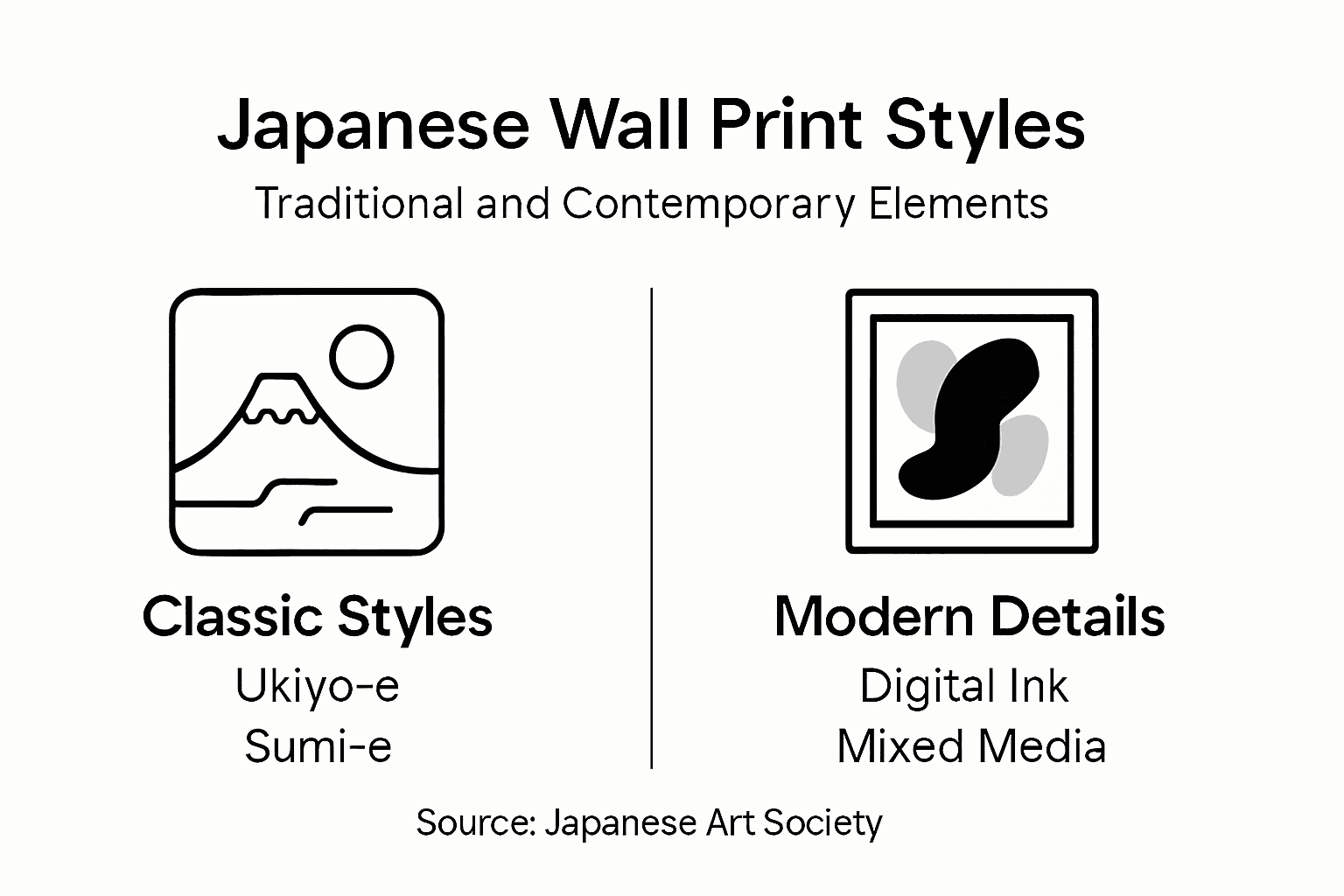
- Ukiyo-e: Scenes of urban life and everyday experiences
- Sumi-e: Minimalist ink wash paintings emphasizing negative space
- Shin-hanga: Modern interpretations of traditional woodblock printing
- Sosaku-hanga: Experimental prints highlighting individual artistic expression
Traditional Japanese wall prints frequently explore thematic territories that transcend mere decoration. Natural landscapes, seasonal transitions, mythological narratives, and human interactions form the core visual vocabularies. Artists like Hokusai transformed ordinary scenes into extraordinary visual poetry, capturing mountains, rivers, and human experiences with remarkable emotional depth.
Contemporary Japanese prints have dramatically expanded these traditional boundaries. Modern artists now incorporate digital techniques, graphic design principles, and global aesthetic influences while maintaining core Japanese artistic sensibilities. These prints communicate complex cultural narratives, serving as visual bridges between historical traditions and contemporary urban lifestyles.
Here’s a helpful summary of classic and modern Japanese wall print styles:
| Style | Key Features | Typical Subjects |
|---|---|---|
| Ukiyo-e | Bold lines, vivid colors | Urban life, landscapes |
| Sumi-e | Ink wash, minimal composition | Nature, seasons |
| Shin-hanga | Realism, modern techniques | Landscapes, beauty images |
| Sosaku-hanga | Individual artist expression | Abstract, experimental |
Japanese wall prints are not just decorative elements – they are cultural artifacts that speak complex visual languages.
Pro tip: Select Japanese wall prints that resonate with your personal aesthetic and create visual dialogues within your living space.
Signature Design Elements and Materials
Japanese wall prints distinguish themselves through intricate design authentication techniques that transform each artwork into a unique cultural artifact. These prints are not merely decorative elements but complex visual narratives crafted through meticulous processes and meaningful material selections.
Key design elements typically include:
- Artist’s signature carved into woodblocks
- Distinctive publisher’s marks
- Handmade authentication seals
- Organic pigment color selections
- Intentional compositional techniques
Traditional Japanese prints utilize extraordinary materials that contribute to their distinctive aesthetic. Washi paper, handcrafted from mulberry bark, provides a delicate yet resilient foundation for these artworks. Organic pigments derived from minerals and plants create nuanced color palettes that capture subtle atmospheric qualities, ranging from soft pastels to vibrant earth tones.
The woodblock printing process involves multiple specialized artisans, each contributing unique skills to create a harmonious final piece. Woodcarvers meticulously craft intricate design blocks, while painters carefully apply pigments, ensuring each print maintains exceptional visual integrity. This collaborative approach transforms each print from a simple artwork into a sophisticated cultural expression.
The magic of Japanese wall prints lies not just in their visual beauty, but in the profound cultural narrative embedded within their materials and creation process.
Pro tip: When selecting Japanese wall prints, examine the authentication marks and material quality to ensure you’re acquiring a piece with genuine artistic heritage.
Cultural Symbolism in Wall Prints
Japanese wall prints are profound visual languages that communicate complex cultural narratives through carefully selected artistic symbols, transforming simple decorative elements into deeply meaningful cultural artifacts. Each motif carries layers of philosophical and poetic significance that extend far beyond aesthetic appeal.
Traditional symbolic elements frequently featured in Japanese wall prints include:
- Chrysanthemum: Representing purity and imperial nobility
- Carp: Symbolizing determination and personal transformation
- Mount Fuji: Embodying spiritual sacredness and national identity
- Dragons: Signifying power, wisdom, and supernatural protection
- Cherry Blossoms: Representing life’s transient beauty and renewal
These symbols are not mere decorative choices but intricate representations of Japanese philosophical and cultural worldviews. They communicate complex emotional landscapes, philosophical perspectives, and spiritual concepts through visual metaphors that resonate deeply with viewers. A single carp might represent personal resilience, while a delicate chrysanthemum could symbolize the nuanced beauty of impermanence.
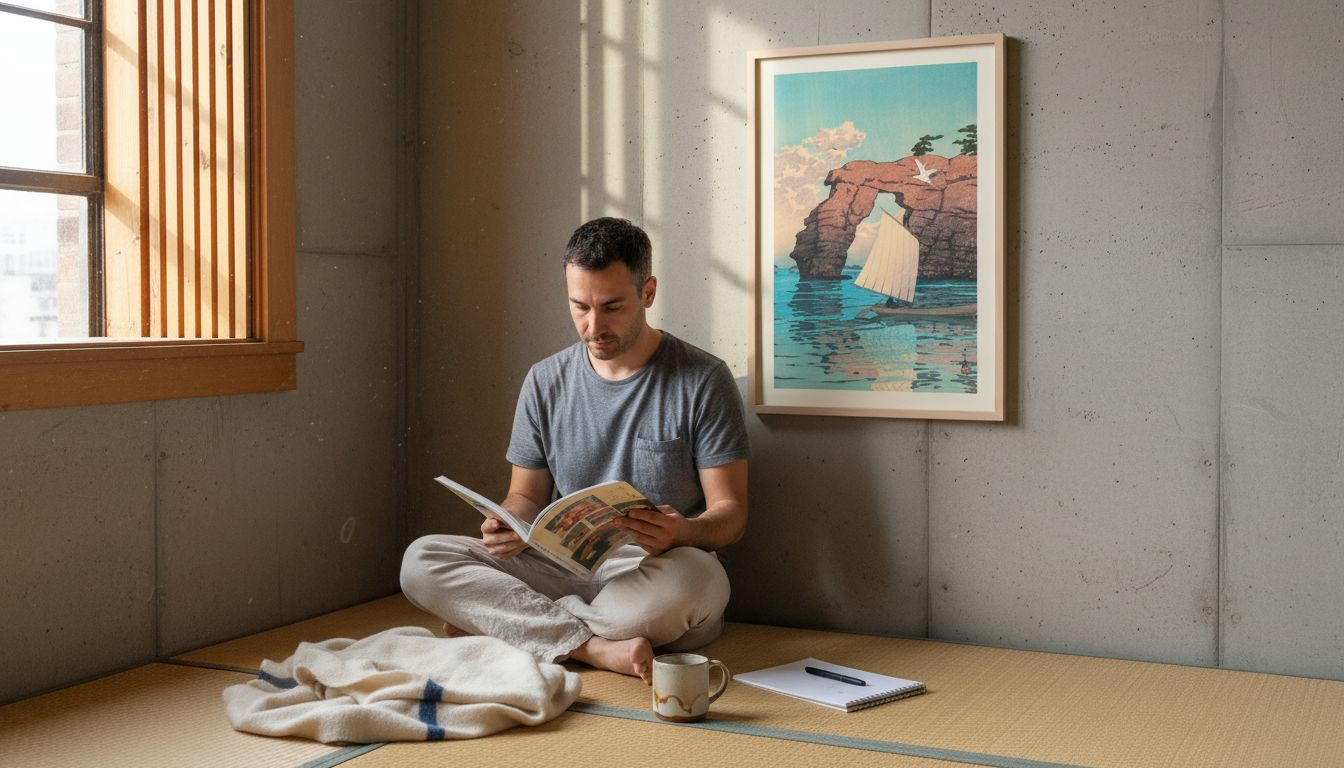
This table outlines common Japanese print symbols and their deeper meaning:
| Symbol | Concept Conveyed | Cultural Significance |
|---|---|---|
| Chrysanthemum | Purity, imperial nobility | The emperor’s flower |
| Carp | Perseverance, transformation | Overcoming adversity |
| Mount Fuji | Sacredness, national identity | Japan’s iconic landmark |
| Dragon | Power, wisdom, protection | Mythical guardian |
| Cherry Blossom | Life’s fleeting nature | Beauty of impermanence |
Contemporary Japanese wall prints continue this rich symbolic tradition, adapting ancient motifs to modern aesthetic sensibilities. Artists skillfully blend traditional symbolism with contemporary design principles, creating artworks that speak to both cultural heritage and current urban sensibilities. These prints serve as visual bridges connecting historical narrative traditions with modern interpretive experiences.
Symbols in Japanese art are not decorations, but profound conversations about human experience encoded in visual language.
Pro tip: When selecting Japanese wall prints, look beyond aesthetic beauty and explore the deeper symbolic meanings embedded in each artwork.
Buying, Displaying, and Care Essentials
Purchasing and preserving Japanese wall prints requires a strategic approach that balances aesthetic appreciation with careful conservation techniques. These delicate artworks demand thoughtful selection, display, and maintenance to ensure their longevity and visual impact.
Key considerations when acquiring Japanese wall prints include:
- Verifying print authenticity and artist provenance
- Assessing print condition and preservation state
- Understanding paper quality and printing technique
- Checking for original signatures and publisher marks
- Evaluating historical and artistic significance
Display strategies play a crucial role in protecting these fragile artworks. Ideal display conditions involve minimizing environmental risks that could potentially damage the print. This means carefully controlling factors like light exposure, humidity, and temperature to prevent gradual deterioration.
Conservation requires meticulous attention to detail. Archival framing with UV-protective glass, acid-free mounting materials, and controlled lighting environments can significantly extend a print’s lifespan. Avoid hanging prints in direct sunlight, near heating sources, or in areas with high humidity fluctuations. Periodic rotation of displayed prints helps distribute potential light damage and preserves the artwork’s intricate details.
Treat Japanese wall prints as living cultural artifacts, not just decorative objects – their preservation is an act of cultural respect.
Pro tip: Invest in professional conservation consultation for valuable or vintage Japanese prints to develop a personalized preservation strategy.
Elevate Your Living Space with Authentic Cultural Art
Japanese wall prints offer far more than decoration. They bring deep cultural symbolism and authentic craftsmanship into your home. If you want to enhance your urban interior with pieces that tell a story and resonate with timeless beauty, choosing the right art can be challenging. You need prints that reflect genuine artistic heritage, feature meaningful motifs like Mount Fuji or cherry blossoms, and visually complement your personal style.

Discover a curated selection of wall art that captures these qualities at artmandre.com. Our collection includes art prints inspired by classic and modern design traditions, all carefully chosen for their aesthetic impact and storytelling power. Take advantage of our special offers such as buy 2 get 1 free to start your journey toward a home filled with inspiring cultural narratives. Visit artmandre.com today and transform your space with art that speaks to your soul.
Frequently Asked Questions
What are Japanese wall prints?
Japanese wall prints are traditional artworks that showcase rich cultural narratives, often created using historic woodblock printing techniques. They combine intricate visual storytelling with a minimalist aesthetic.
What styles of Japanese wall prints are popular?
Popular styles of Japanese wall prints include Ukiyo-e, Sumi-e, Shin-hanga, and Sosaku-hanga, each with unique features and themes ranging from urban life to nature and individual artistic expression.
How do you care for Japanese wall prints?
To care for Japanese wall prints, ensure they are displayed in stable environments with controlled light, humidity, and temperature. Use archival framing and UV-protective glass to prevent damage, and avoid direct sunlight and high humidity zones.
What cultural symbols are found in Japanese wall prints?
Common cultural symbols in Japanese wall prints include the chrysanthemum, carp, Mount Fuji, dragons, and cherry blossoms. Each symbol carries deep philosophical meanings, representing concepts like purity, transformation, and the transient beauty of life.