



Blog
Road to Nikko: Journey Through Art and History
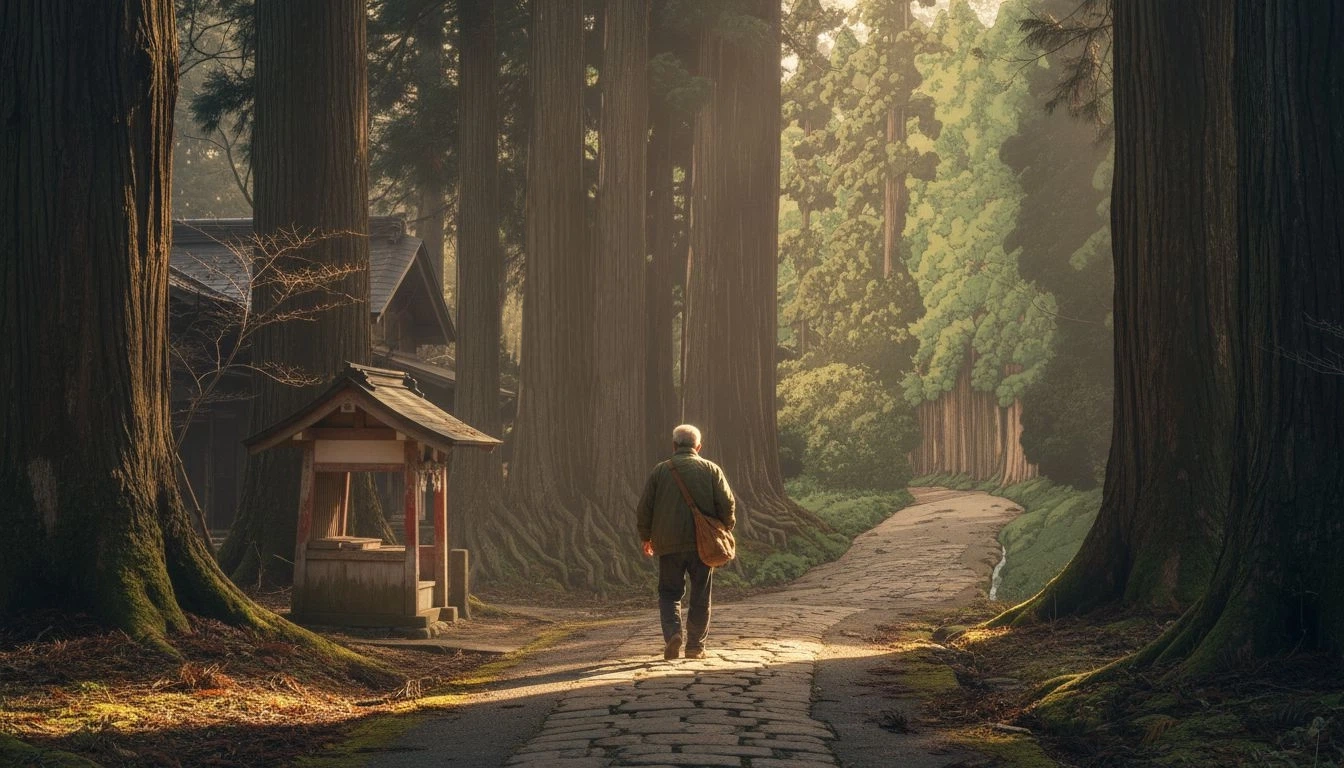
Refreshing a city apartment often means finding art that feels connected yet timeless. The Road to Nikko, a renowned pathway celebrated for its striking cultural legacy and scenic beauty, inspires both vintage travel posters and affordable prints that evoke the allure of historic Japanese landscapes. By blending traditional artistry with modern design, these works offer a bold way to add character and a sense of spiritual significance to contemporary living spaces without sacrificing style or budget.
Table of Contents
- Origin And Significance Of The Road To Nikko
- Evolution In Art: Prints And Vintage Posters
- Landmarks Along The Route And Their Stories
- Travel Tips And Visitor Experiences Today
- Impact On Interior Decorating And Home Styling
Key Takeaways
| Point | Details |
|---|---|
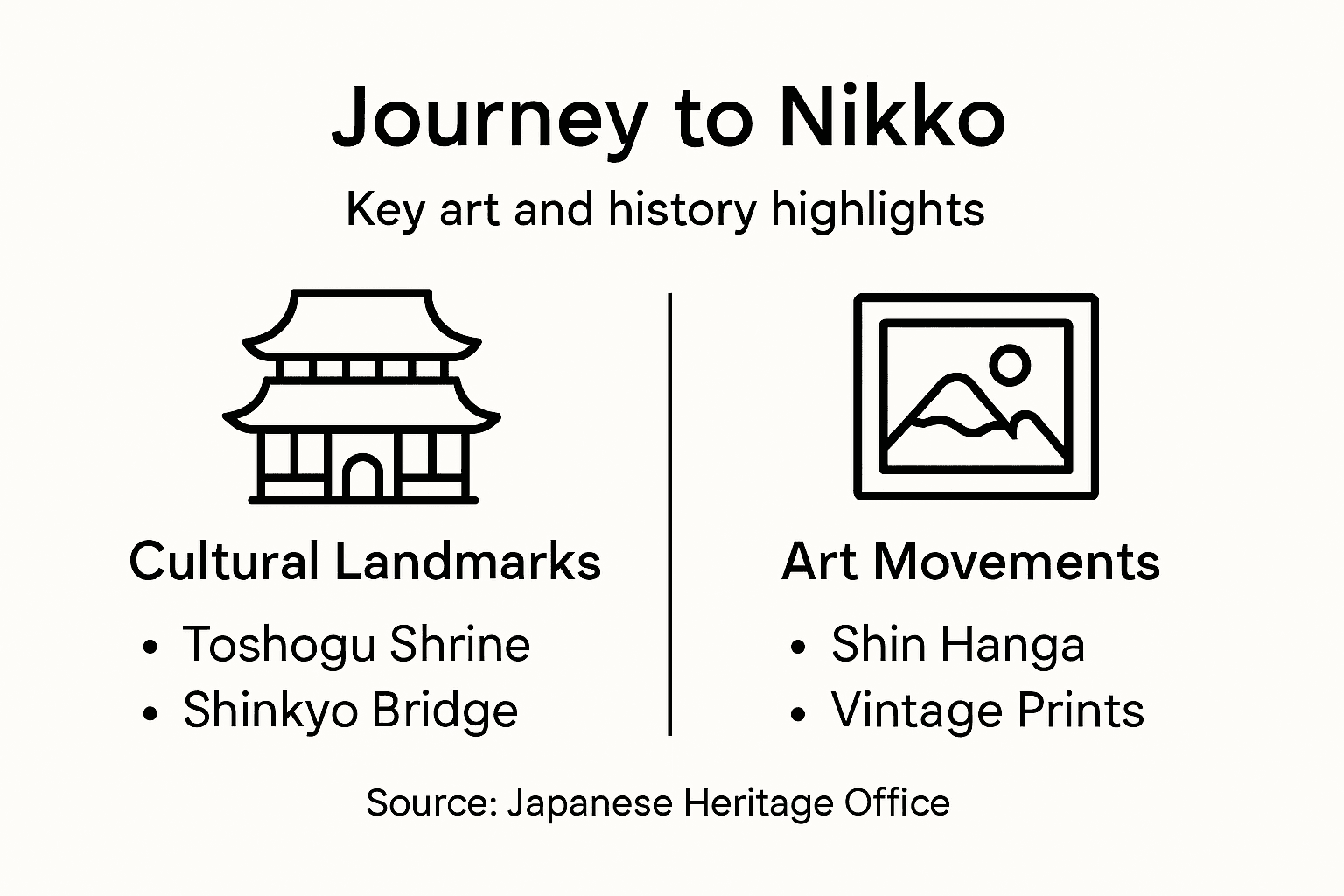
| Historical Significance | The Road to Nikko evolved as a vital cultural artery connecting spiritual practices and architectural marvels in Japan. |
| Artistic Evolution | The Shin Hanga movement transformed Japanese prints by integrating Western techniques, enriching both artistic expression and cultural narratives. |
| Landmark Importance | Key sites like Toshogu Shrine and Shinkyo Bridge reveal the interconnectedness of nature, spirituality, and history in Japan. |
| Modern Visitor Experience | Contemporary travelers are encouraged to engage with the rich cultural heritage of Nikko through guided tours and seasonal explorations. |
Origin and Significance of the Road to Nikko
The historical journey of Nikko represents a profound intersection of spiritual devotion, cultural evolution, and architectural magnificence. Mountain worship traditions established this region as a sacred landscape long before its eventual recognition as a pivotal cultural center in Japan. Founded in the 8th century by Buddhist monk Shodo, Nikko emerged as a transformative spiritual location where Shinto mountain worship and Buddhist philosophies harmoniously merged.
Nikko’s significance dramatically intensified during the Tokugawa shogunate, particularly through the construction of the ornate Toshogu Shrine. Religious pilgrimage routes connected this spiritual epicenter with broader Japanese cultural networks, transforming the road to Nikko into more than a mere transportation corridor. This pathway became a profound cultural artery, carrying pilgrims, officials, and spiritual seekers across challenging mountainous terrain.
Key historical developments that shaped the Road to Nikko include:
- Establishment of mountain temples in the 8th century
- Integration of Shinto and Buddhist spiritual practices
- Construction of Toshogu Shrine in the 17th century
- Development of dedicated pilgrimage routes
- Increasing political and cultural importance during the Tokugawa period
The road itself represents more than geographical connectivity; it symbolizes a spiritual and cultural journey through Japan’s rich historical landscape. Travelers traversing this route experienced not just physical movement, but a transformative passage through centuries of religious and philosophical tradition.
Pro tip: When exploring historical routes like the Road to Nikko, research the cultural context to truly appreciate the deeper significance beyond mere geographical travel.
Evolution in Art: Prints and Vintage Posters
The artistic journey of Japanese prints represents a profound transformation in visual storytelling, particularly exemplified by the Shin Hanga movement. Japanese landscape prints emerged as a powerful medium that bridged traditional artistic techniques with modern sensibilities. Artists like Hasui Kawase revolutionized woodblock printing by incorporating Western artistic principles such as sophisticated perspective and nuanced shading techniques.
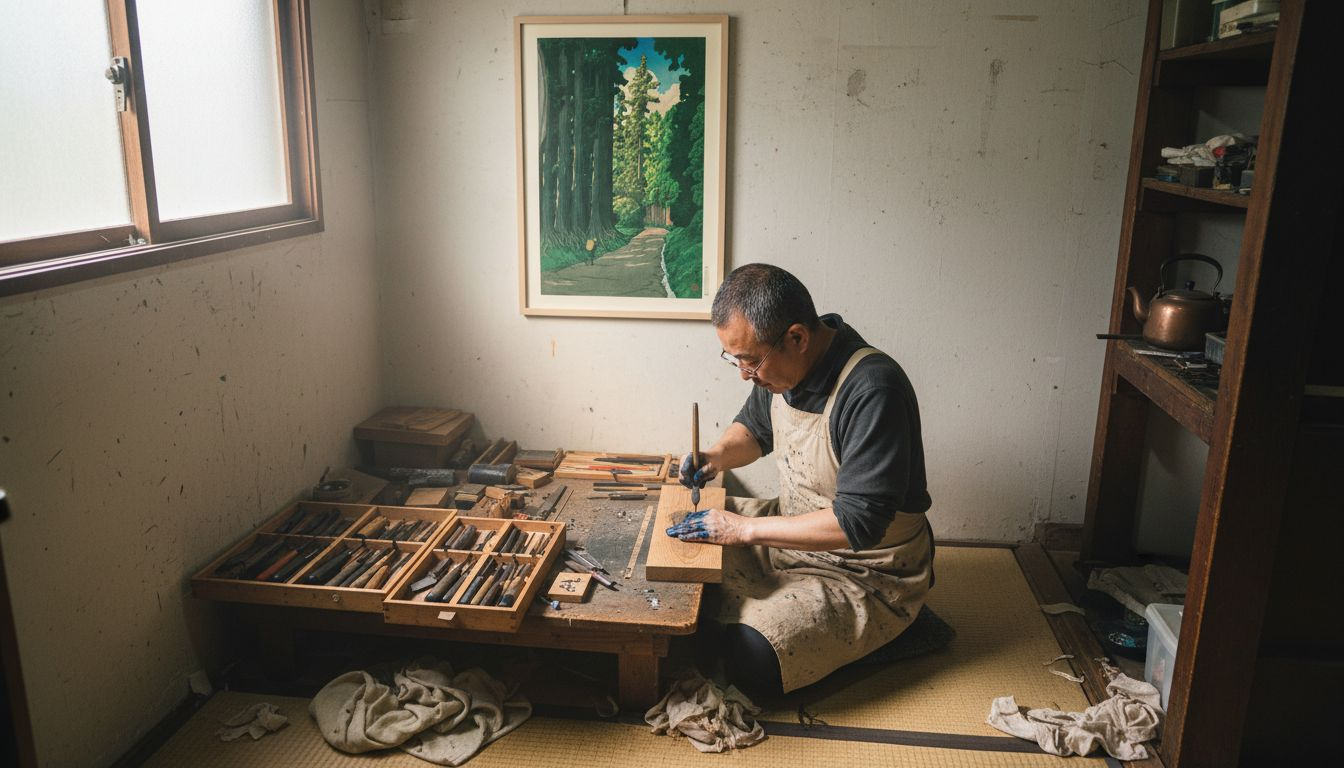
During the early 20th century, Japanese print art underwent a significant metamorphosis. Woodblock printing techniques evolved from traditional ukiyo-e styles to more contemporary interpretations that captured atmospheric landscapes with unprecedented emotional depth. This artistic evolution was not merely a stylistic shift but a cultural dialogue that translated complex Japanese aesthetic philosophies into visual narratives.
Key characteristics of this artistic transformation include:
- Integration of Western perspective techniques
- Enhanced color palettes and atmospheric rendering
- Preservation of traditional Japanese artistic principles
- Increased narrative complexity in landscape representations
- Development of more sophisticated printing methods
The Shin Hanga movement represented more than an artistic style – it was a cultural bridge between traditional Japanese art and global modernist aesthetics.
Vintage posters and travel imagery drew significant inspiration from these artistic innovations, translating the delicate visual language of woodblock prints into promotional materials that celebrated Japan’s scenic beauty. The Road to Nikko became not just a geographical route, but a metaphorical journey through artistic evolution, capturing the transformative spirit of early 20th-century Japanese visual culture.
Pro tip: When collecting vintage art prints, pay close attention to the printing techniques and cultural context that inform their unique aesthetic.
Landmarks Along the Route and Their Stories
UNESCO World Heritage Sites transform the Road to Nikko into an extraordinary journey through Japanese cultural and spiritual landscapes. The route is punctuated by remarkable landmarks that tell stories of religious devotion, political power, and artistic innovation. Prominent among these are the Toshogu Shrine, Rinnoji Temple, and Futarasan Shrine, each representing a unique chapter in Japan’s rich historical narrative.
The spiritual significance of these landmarks is deeply intertwined with the region’s natural beauty. Sacred mountain pathways reveal a profound connection between human architectural achievement and the surrounding landscape. The Shinkyo Bridge, a sacred entryway to Nikko’s mountainous sites, exemplifies this relationship, serving as both a physical crossing and a symbolic threshold between the mundane and the spiritual worlds.
Key landmarks along the Road to Nikko include:
- Toshogu Shrine: Tokugawa shogunate’s architectural masterpiece
- Rinnoji Temple: Buddhist spiritual center
- Futarasan Shrine: Ancient Shinto religious site
- Shinkyo Bridge: Symbolic sacred gateway
- Lake Chuzenji: Stunning natural landscape
- Irohazaka Winding Road: Scenic mountain passage
The Road to Nikko is more than a journey – it’s a living museum of Japanese cultural heritage, where each landmark tells a story of spiritual and historical significance.
Beyond their individual histories, these landmarks collectively narrate the complex tapestry of Japanese cultural evolution. From the intricate carvings of Toshogu Shrine to the serene waters of Lake Chuzenji, each location offers a glimpse into the profound interconnectedness of nature, spirituality, and human creativity that defines the Japanese aesthetic and philosophical tradition.
Here’s a summary of how key Nikko landmarks contribute to Japan’s cultural and spiritual heritage:
| Landmark | Cultural Impact | Spiritual Significance | Unique Feature |
|---|---|---|---|
| Toshogu Shrine | Symbol of Tokugawa power | Honors Tokugawa Ieyasu | Lavish carvings and gold leaf |
| Rinnoji Temple | Center of mountain Buddhism | Center for religious rituals | Houses three Buddhist sculptures |
| Futarasan Shrine | Ancient Shinto institution | Maintains mountain worship | Linked to sacred bridges |
| Shinkyo Bridge | Gateway to religious sites | Sacred passage for pilgrims | Vivid red arch over river |
| Lake Chuzenji | Promotes scenic tourism | Place for contemplation | Panoramic mountain views |
| Irohazaka Road | Historic travel route | Challenge for spiritual seekers | Famous winding turns |
Pro tip: When visiting historical sites, take time to understand the cultural context behind each landmark to truly appreciate its deeper significance.
Travel Tips and Visitor Experiences Today
Modern travel itineraries offer travelers an immersive journey through Nikko’s rich cultural landscape. The historic road transforms from a centuries-old spiritual pathway into an accessible adventure for contemporary explorers. Visitors can now experience this remarkable destination through carefully curated experiences that blend historical significance with modern travel conveniences, making the journey both educational and deeply inspiring.
National park attractions provide diverse experiences for travelers seeking cultural and natural encounters. The region’s accessibility has been significantly enhanced by multilingual information centers, guided tours, and well-maintained trails that welcome international visitors. Hiking trails, hot springs, and temple complexes offer multiple entry points for experiencing Nikko’s unique cultural tapestry.
Key recommendations for modern travelers include:
- Book guided tours for in-depth historical insights
- Visit during different seasons for unique perspectives
- Explore local bamboo farms and regional cuisine
- Purchase multilingual guidebooks and audio tours
- Respect cultural sites with appropriate behavior
- Prepare for varied mountain terrain and weather conditions
Nikko offers more than a destination – it provides a transformative journey through Japan’s living cultural heritage.
The contemporary traveler’s experience is enriched by the region’s commitment to preserving its historical essence while providing modern amenities. From traditional ryokans to sophisticated visitor centers, Nikko bridges historical authenticity with comfortable, accessible tourism, ensuring that each visitor can connect deeply with the area’s profound cultural significance.
Pro tip: Research seasonal variations and local festival dates to maximize your cultural immersion and travel experience in Nikko.
Impact on Interior Decorating and Home Styling
Japanese landscape art has profoundly transformed contemporary interior design by introducing serene, minimalist aesthetic principles. The Shin Hanga movement, particularly exemplified by artists like Hasui Kawase, has inspired home styling approaches that emphasize tranquility, natural harmony, and understated elegance. These artistic influences encourage interior designers to create spaces that reflect contemplative and balanced environments.
Decorative artwork trends have been significantly shaped by the nuanced color palettes and atmospheric qualities of Japanese prints. The Road to Nikko artworks specifically introduce design elements that prioritize:
- Muted, harmonious color schemes
- Minimalist composition techniques
- Natural landscape integration
- Spiritual and contemplative design approaches
- Balanced spatial arrangements
- Subtle textural contrasts
Japanese art transforms interior spaces from mere physical environments into narrative landscapes of cultural meaning and emotional resonance.
The contemporary interior design movement increasingly embraces these artistic principles, moving beyond purely decorative approaches to create living spaces that tell stories. By incorporating artworks like ‘The Road to Nikko’, designers craft environments that are not just visually appealing but emotionally meaningful, bridging cultural traditions with modern aesthetic sensibilities.
Compare how Shin Hanga print art influences interior design:
| Shin Hanga Art Element | Interior Design Effect | Emotional/Atmospheric Outcome |
|---|---|---|
| Muted color palette | Creates visual harmony | Evokes serene ambiance |
| Nature-inspired scenes | Integrates outdoor motifs | Fosters connection to nature |
| Minimalist composition | Encourages uncluttered space | Highlights tranquility |
| Narrative depth | Adds meaningful focus | Inspires contemplation |
Pro tip: Select art pieces that communicate a narrative and emotional depth, transforming your living space from a mere room into a personal sanctuary.
Bring the Spirit of the Road to Nikko Into Your Home
The journey through the Road to Nikko reveals a rich tapestry of Japanese history, art, and spirituality that can inspire your living space. If you are inspired by the serene landscapes and timeless elegance of Shin Hanga prints described in the article you just read, now is the perfect time to transform your home with art that captures this unique aesthetic. Discover how the muted color palettes, minimalist composition, and natural harmony of traditional Japanese prints elevate interior design by adding calm and meaningful character.

Explore our carefully curated collection at artmandre.com to find vintage-inspired prints and wall decor that echo the artistic spirit of the Road to Nikko. Whether you want to create a serene sanctuary or a striking cultural statement, our range of retro and thematic designs offers something for every style enthusiast. Act now to take advantage of our special offers like buy 2 get 1 free and start your own transformative journey in home decor today.
Delve deeper into styling tips and elevate your space with meaningful artwork by visiting artmandre.com and embracing the beauty of Japanese-inspired interiors.
Frequently Asked Questions
What is the historical significance of the Road to Nikko?
The Road to Nikko represents a spiritual and cultural journey in Japan, connecting important landmarks like Toshogu Shrine and Rinnoji Temple, and reflecting the integration of Shinto and Buddhist practices over centuries.
How did the Shin Hanga movement influence Japanese art?
The Shin Hanga movement introduced Western artistic principles such as perspective and shading to traditional woodblock printing, enhancing the emotional depth of Japanese landscape prints and bridging cultural aesthetics.
What are some key landmarks along the Road to Nikko?
Prominent landmarks include Toshogu Shrine, Rinnoji Temple, Futarasan Shrine, and Shinkyo Bridge. Each site carries unique historical and spiritual significance that contributes to Japan’s cultural heritage.
How can modern travelers experience the Road to Nikko?
Modern travelers can explore the Road to Nikko through guided tours, hiking trails, and cultural experiences, all while learning about the area’s rich history and natural beauty.