
Blog
How to Use Bauhaus Art in Interiors for Modern Style
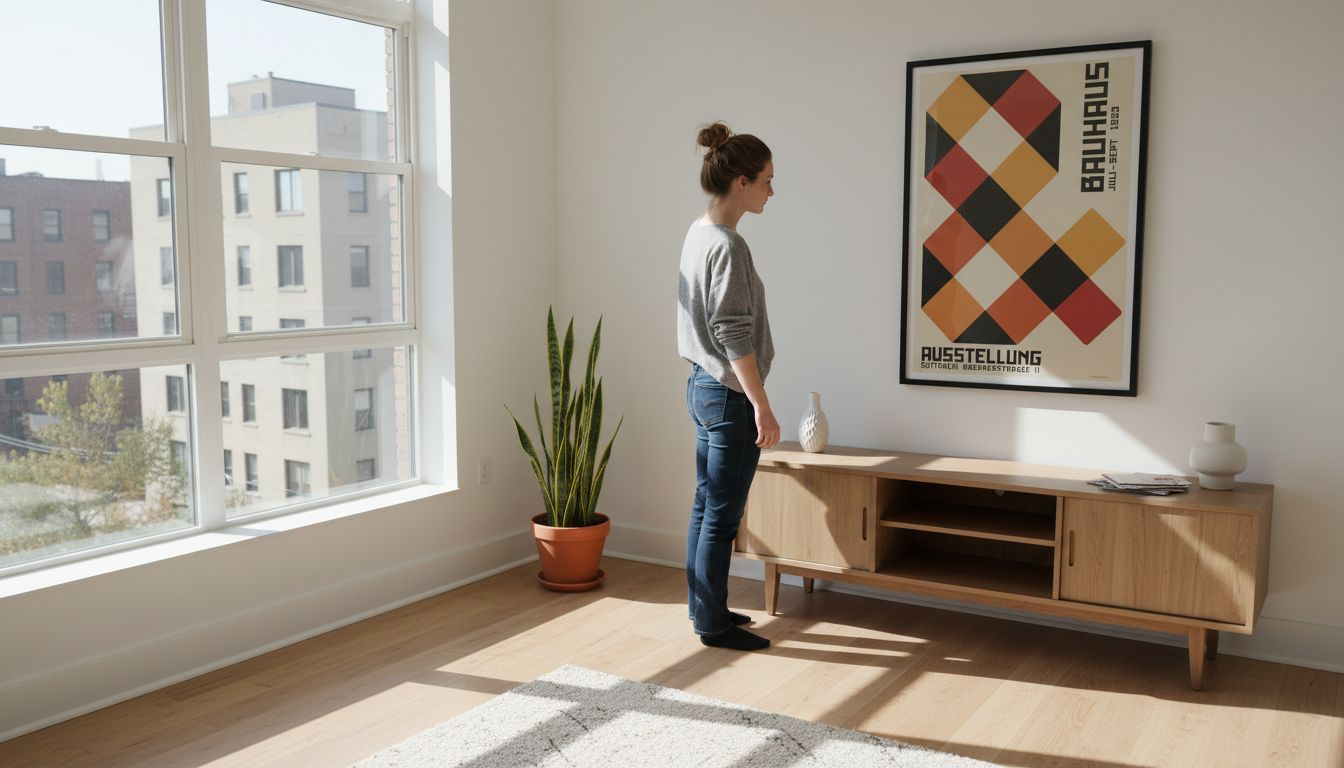
Bold lines, open layouts, and geometric art grab attention in homes looking for a fresh update. Whether you love retro charm or sleek modern style, making Bauhaus art work in your space means balancing simplicity with intention. By focusing on open floor plans, practical lighting, and geometric harmony, you can create a calm, visually engaging environment that honors Bauhaus principles. This guide shares smart, easy strategies to help you choose and place artwork that brings both order and character to your home decor.
Table of Contents
- Step 1: Assess Your Interior Layout And Lighting
- Step 2: Select Bauhaus Art Prints That Match Your Palette
- Step 3: Position Your Art To Create Visual Balance
- Step 4: Layer Bauhaus Pieces With Existing Decor
- Step 5: Evaluate The Overall Aesthetic Impact
Quick Summary
| Key Point | Explanation |
|---|---|
| 1. Assess interior layout and lighting | Evaluate your space for open layouts and natural light to enhance minimalist design. |
| 2. Choose complementary Bauhaus art prints | Select geometric art that harmonizes with your color palette and promotes visual order in the room. |
| 3. Position art for visual balance | Arrange artworks along geometric lines in your space for a harmonious and intentional design. |
| 4. Layer Bauhaus pieces with existing decor | Integrate new art thoughtfully to maintain balance, using similar shapes and colors to connect styles. |
| 5. Regularly evaluate overall aesthetic | Continuously assess your design choices to ensure they align with Bauhaus principles of simplicity and function. |
Step 1: Assess your interior layout and lighting
To successfully integrate Bauhaus art into your home, you’ll need to carefully evaluate your current interior space, focusing on layout and lighting conditions. This assessment will help you create a minimalist environment that honors the design principles of simplicity and functionality.
Start by examining your floor plan through a Bauhaus lens. Bauhaus interior design emphasizes open layouts that promote visual unity and maximize natural illumination. Walk through each room and imagine removing unnecessary walls or furniture that interrupt smooth spatial flow. Look for opportunities to create clean lines and geometric arrangements that allow light to move freely. Pay special attention to how existing architectural elements like windows and doorways can be leveraged to enhance your space’s openness.
Lighting plays a critical role in Bauhaus interiors. Fixtures should be both functional and sculptural, contributing to the overall aesthetic while providing effective illumination. Assess your current lighting setup by noting natural light sources, overhead fixtures, and potential areas where strategic lighting can highlight architectural features or art pieces. Consider replacing ornate or overly decorative light fixtures with simple, geometric designs that reflect Bauhaus principles of form following function.
Pro tip: Use a white or neutral color palette to amplify natural light and create a sense of spaciousness typical of Bauhaus design principles.
Step 2: Select Bauhaus art prints that match your palette
Choosing the right Bauhaus art prints requires understanding how geometric design and color interact within your interior space. Your goal is to select artwork that enhances your room’s aesthetic while maintaining the core principles of Bauhaus design.
Bauhaus art features geometric precision and primary color contrasts that create visual order. Start by analyzing your existing color palette and identifying neutral or complementary tones that will harmonize with potential art selections. Look for prints with clean lines and bold geometric shapes that echo the minimalist principles of this design movement. Consider how circles, rectangles, and grid patterns can create visual rhythm within your space without overwhelming the existing decor.

When selecting prints, focus on creating a balanced composition. Choose artwork with color palettes that either match your room’s existing scheme or provide a deliberate contrast that draws the eye. Pay attention to the scale of the prints relative to your wall space. Larger geometric prints can serve as focal points in minimalist rooms, while smaller pieces can be grouped to create visual interest. Aim for a selection that tells a cohesive visual story about simplicity, functionality, and elegant design.
Here’s a quick reference for common Bauhaus geometric shapes and their visual effects:
| Geometric Shape | Visual Impact | Typical Placement |
|---|---|---|
| Circle | Softens lines, adds unity | Mirrors, prints, textiles |
| Rectangle | Defines structure, emphasizes order | Frames, furniture, shelves |
| Grid Pattern | Creates rhythm, suggests orderliness | Feature walls, rugs, tiles |
Pro tip: Create a color swatch board with your room’s existing palette to help you precisely match or strategically contrast your Bauhaus art prints.
Step 3: Position your art to create visual balance
Perfecting the placement of Bauhaus art prints requires a thoughtful approach that transforms your walls into a harmonious visual experience. Your goal is to arrange artwork that communicates the principles of balance and intentional design.
Art positioning is crucial to maintaining harmony in Bauhaus interiors by complementing architectural elements and furniture. Start by identifying key geometric lines in your room such as window frames, furniture edges, or architectural features. Align your art prints along these lines to create a sense of visual rhythm and precision. Consider the relationship between each piece and the surrounding space. Symmetrical arrangements work well for creating a sense of order, while asymmetrical placements can add subtle dynamic tension to your design.
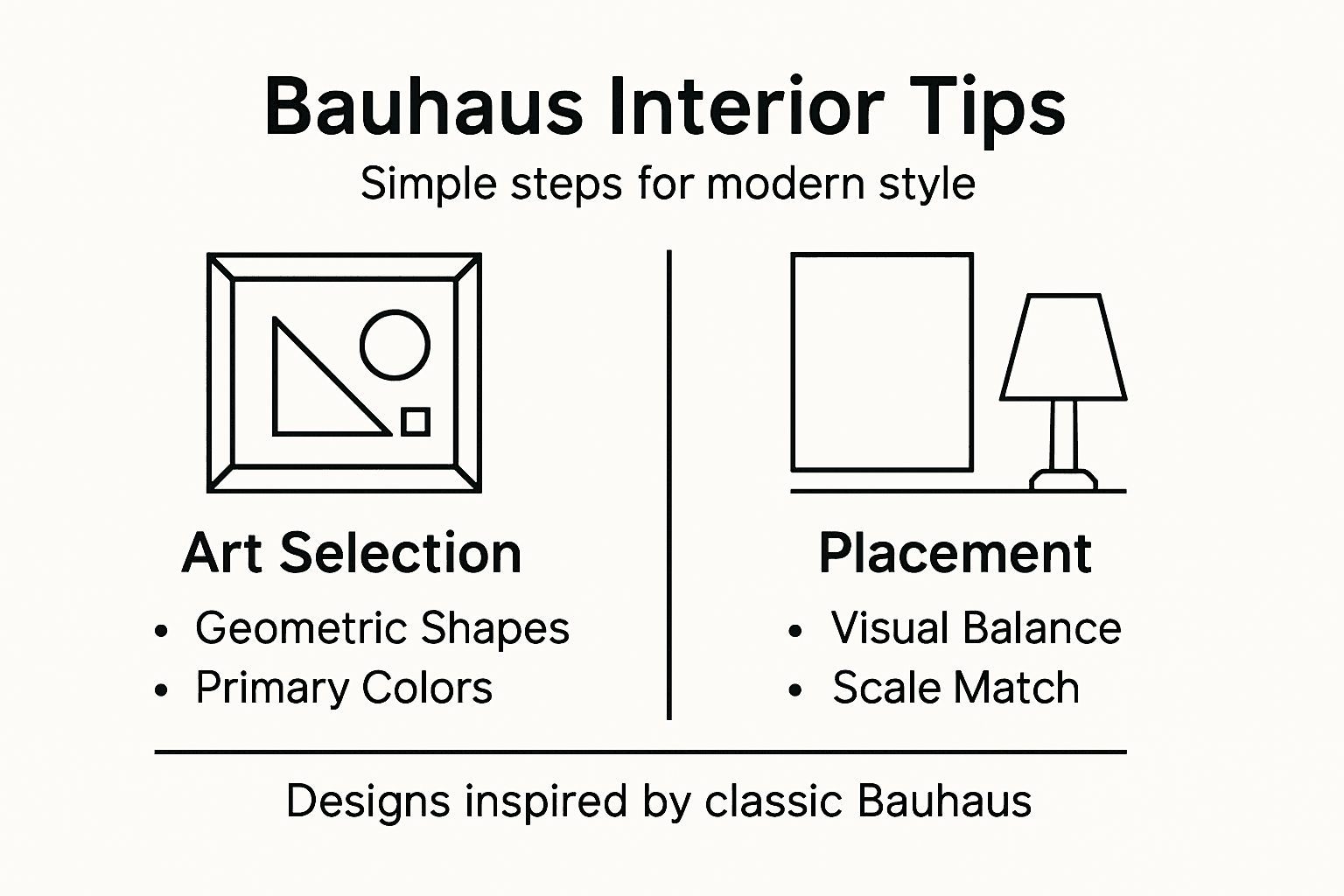
When positioning your art, pay attention to scale and proportion. Larger prints can anchor a space and serve as focal points, while smaller pieces can be grouped to create visual interest. Maintain consistent spacing between artworks to preserve the minimalist aesthetic. Focus on creating a balanced composition that allows each piece to breathe and contribute to the overall spatial narrative. Avoid overcrowding walls and remember that in Bauhaus design, negative space is just as important as the artwork itself.
Pro tip: Use painter’s tape to create precise layout mockups on your wall before making permanent hanging decisions.
Step 4: Layer Bauhaus pieces with existing decor
Successfully integrating Bauhaus art into your current interior design requires a strategic approach that respects both the minimalist aesthetic and your personal style. Your mission is to create a harmonious blend that highlights the geometric precision of Bauhaus while maintaining the character of your existing space.
Layering Bauhaus elements demands thoughtful integration of geometric patterns with your current furnishings. Begin by selecting Bauhaus pieces that complement your existing color palette and furniture lines. Focus on creating visual connections between new and existing elements by choosing prints or decor items that echo similar shapes or color tones. Metal and glass accents work particularly well for bridging modern and Bauhaus styles, offering a sleek transition that feels intentional rather than forced.
Pay special attention to texture and proportion when introducing Bauhaus pieces. Mix industrial materials like chrome or steel with softer textiles to create depth and prevent the space from feeling too rigid. Primary color accents can provide strategic visual interest when used sparingly. Consider placing a bold geometric print near a neutral piece of furniture or using a minimalist sculpture to break up more traditional design elements. The key is balance create a dialogue between your existing decor and the new Bauhaus inspired pieces.
Pro tip: Start with one or two statement Bauhaus pieces and gradually build your collection to avoid overwhelming your existing design.
Compare these integration strategies for blending Bauhaus with existing decor:
| Strategy | Aesthetic Benefit | Best For |
|---|---|---|
| Statement Piece Focus | Highlights Bauhaus as focal point | Minimalist or modern rooms |
| Gradual Layering | Maintains balance, avoids clutter | Transitional or eclectic spaces |
| Material Mixing | Adds depth, visual contrast | Spaces with mixed finishes |
Step 5: Evaluate the overall aesthetic impact
Successfully incorporating Bauhaus design requires a critical eye for assessing how your artistic choices contribute to the space’s overall harmony and functionality. Your objective is to create an environment that feels intentional and reflects the core principles of Bauhaus design.
Evaluating a Bauhaus interior involves balancing function and form with meticulous attention to detail. Step back and analyze your space from multiple perspectives. Consider how each element interacts with the others examine the visual rhythm created by your art prints, furniture placement, and color selections. Look for clean lines, geometric precision, and a sense of order that communicates both simplicity and purpose. Check if the space feels cohesive yet not overcrowded if the Bauhaus pieces enhance rather than compete with your existing decor.
Apply a holistic assessment approach by examining key design elements. Evaluate the color palette for its clarity and intentionality. Assess how natural and artificial lighting interact with your Bauhaus pieces. Consider the functional aspects of each design choice does every element serve a clear purpose? Notice how the geometric forms create visual connections and how the minimalist approach allows each piece to breathe. The ultimate goal is to create an environment that feels simultaneously elegant, practical, and true to the Bauhaus philosophy of design.
Pro tip: Take photographs of your space and review them in black and white to objectively assess the composition and balance of your design.
Transform Your Space with Authentic Bauhaus Art Prints
Struggling to achieve that perfect balance of form and function in your home just like Bauhaus design teaches? The main challenge is integrating minimalist geometric art that enhances your room’s flow without overcrowding. If you want to amplify natural light, create clean lines, and bring harmony using iconic Bauhaus shapes and colors Bauhaus-inspired art prints from artmandre.com offer a stylish solution. These curated prints help you effortlessly layer geometric precision with your existing decor to create a modern look that feels intentional and elegant.

Explore our exclusive collection of Bauhaus wall art including posters that emphasize circles, rectangles, and grids as highlighted in the article. With attractive offers like buy 2 get 1 free you can start your journey today with multiple statement pieces that build visual rhythm and balance in any room. Don’t wait to elevate your interiors with designs that embody simplicity and functionality perfect for modern living. Visit artmandre.com now and find your ideal Bauhaus prints for a timeless and practical style.
Frequently Asked Questions
How do I assess my interior layout for incorporating Bauhaus art?
To assess your interior layout, examine your floor plan and identify spaces that can benefit from open layouts and natural light. Remove any unnecessary walls or clutter to enhance the flow, and focus on creating clean lines that maintain a minimalist aesthetic.
What types of Bauhaus art prints should I select for my space?
Choose Bauhaus art prints that feature geometric shapes and primary colors that resonate with your existing color palette. Look for prints that have clean lines and balance, as these will enhance your overall aesthetic without overpowering your decor.
How should I position my Bauhaus art prints for maximum impact?
Position your Bauhaus art prints along key geometric lines in your space to create visual harmony. Ensure your arrangements maintain consistent spacing and balance, allowing each piece to breathe within the overall design.
How can I layer Bauhaus art with my existing decor?
To layer Bauhaus art successfully, select pieces that complement the colors and shapes of your current furnishings. Mix materials and use a few bold accents strategically to create depth while keeping the overall aesthetic cohesive and intentional.
What should I evaluate when assessing the overall impact of my Bauhaus design?
Evaluate how well the elements of your design work together by analyzing their visual rhythm, functionality, and color palette. Step back and consider whether the space feels cohesive and uncluttered, ensuring that the Bauhaus art enhances your existing decor.