



Bauhaus Poster: Modern Art for Timeless Interiors
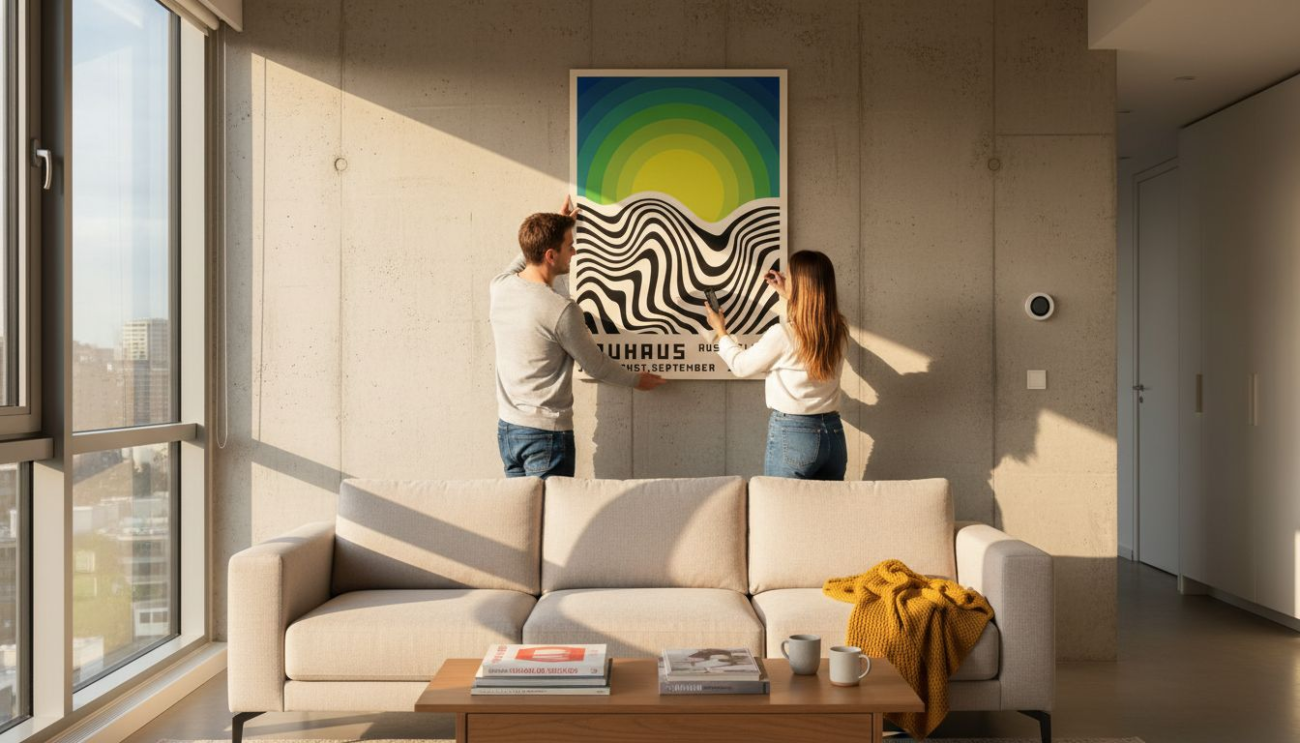
Most american homeowners want their spaces to reflect a unique artistic vision without breaking the bank. With over 60 percent of design enthusiasts searching for affordable wall art inspired by global movements, Bauhaus posters continue to attract those who admire clarity and innovation. This guide uncovers the roots, signature characteristics, and practical tips for incorporating authentic Bauhaus style into your home, helping you merge modernist sophistication with accessible design.
Table of Contents
- What Is a Bauhaus Poster and Its Roots
- Distinguishing Characteristics and Style Elements
- Key Variations and Popular Poster Types
- How Bauhaus Posters Enhance Interior Design
- Choosing, Buying, and Displaying Bauhaus Posters
- Common Mistakes and How to Avoid Them
Key Takeaways
| Point | Details |
|---|---|
| Bauhaus Poster Aesthetic | Bauhaus posters emphasize minimalist design, featuring geometric shapes and primary colors to promote clear communication. |
| Historical Significance | The Bauhaus movement redefined visual communication between 1919 and 1933, blending art with technology and challenging traditional design norms. |
| Display and Authenticity | When displaying Bauhaus posters, opt for minimal framing and use quality reproductions that maintain the movement’s core design principles. |
| Versatility in Design | Bauhaus posters function effectively in various interior styles, making them both artistic statements and elegant design elements. |
What Is a Bauhaus Poster and Its Roots
The Bauhaus poster represents a groundbreaking visual communication style emerging from one of the most influential design schools of the 20th century. Originating from the Staatliches Bauhaus, these artistic creations embodied a revolutionary approach that merged functional design with artistic expression, challenging traditional decorative art forms.
Bauhaus posters are distinguished by their radical minimalist aesthetic – characterized by geometric shapes, clean lines, primary color palettes, and strategic typography. The core philosophy behind these designs was eliminating unnecessary ornamentation while emphasizing clarity, simplicity, and purposeful communication. Graphic designers associated with the Bauhaus movement believed that art should serve practical purposes and be accessible to mass audiences, rejecting previous ornate and elaborate design traditions.
The visual language of Bauhaus posters emerged during a critical period between 1919 and 1933, when the school actively challenged existing artistic conventions. These posters weren’t merely decorative objects but powerful communication tools that embodied modernist principles of integrating art, technology, and industrial production. Designers like Wassily Kandinsky, László Moholy-Nagy, and Herbert Bayer pioneered graphic techniques that would profoundly influence subsequent generations of visual communicators worldwide.
Pro tip: When selecting a Bauhaus poster for your space, focus on pieces that feature bold geometric shapes and a limited color palette to capture the authentic modernist spirit.
Distinguishing Characteristics and Style Elements
Bauhaus posters are defined by their revolutionary visual language that breaks traditional design boundaries. Characterized by minimalist geometric forms, these artistic compositions prioritize simplicity and purposeful communication through strategic visual elements.
The style’s most distinctive features include a radical approach to geometry and color. Designers deliberately employed simple shapes like circles, triangles, and squares, creating dynamic compositions that communicate complex ideas through minimal visual language. Primary colors – red, blue, and yellow – were strategically used to create visual hierarchy and emotional impact. Experimental typography with universal sans-serif fonts became another hallmark, designed to transcend linguistic barriers and promote clear, direct communication.

Unique compositional techniques set Bauhaus posters apart from previous artistic movements. Artists like Herbert Bayer and László Moholy-Nagy developed asymmetrical layouts that challenged traditional design principles. These compositions often featured bold diagonal lines, overlapping geometric shapes, and innovative negative space usage. The goal was not mere aesthetic pleasure but creating visual systems that could effectively convey information while maintaining remarkable visual elegance.
Pro tip: When analyzing Bauhaus posters, look for the interplay between geometric shapes, strategic color placement, and how typography integrates with the overall compositional design.
Key Variations and Popular Poster Types
Bauhaus posters represent a diverse range of artistic expressions, encompassing multiple design approaches and purposes. Iconic posters from various Bauhaus periods showcase the movement’s incredible graphic design versatility, ranging from event advertisements to experimental art forms that challenged traditional visual communication.
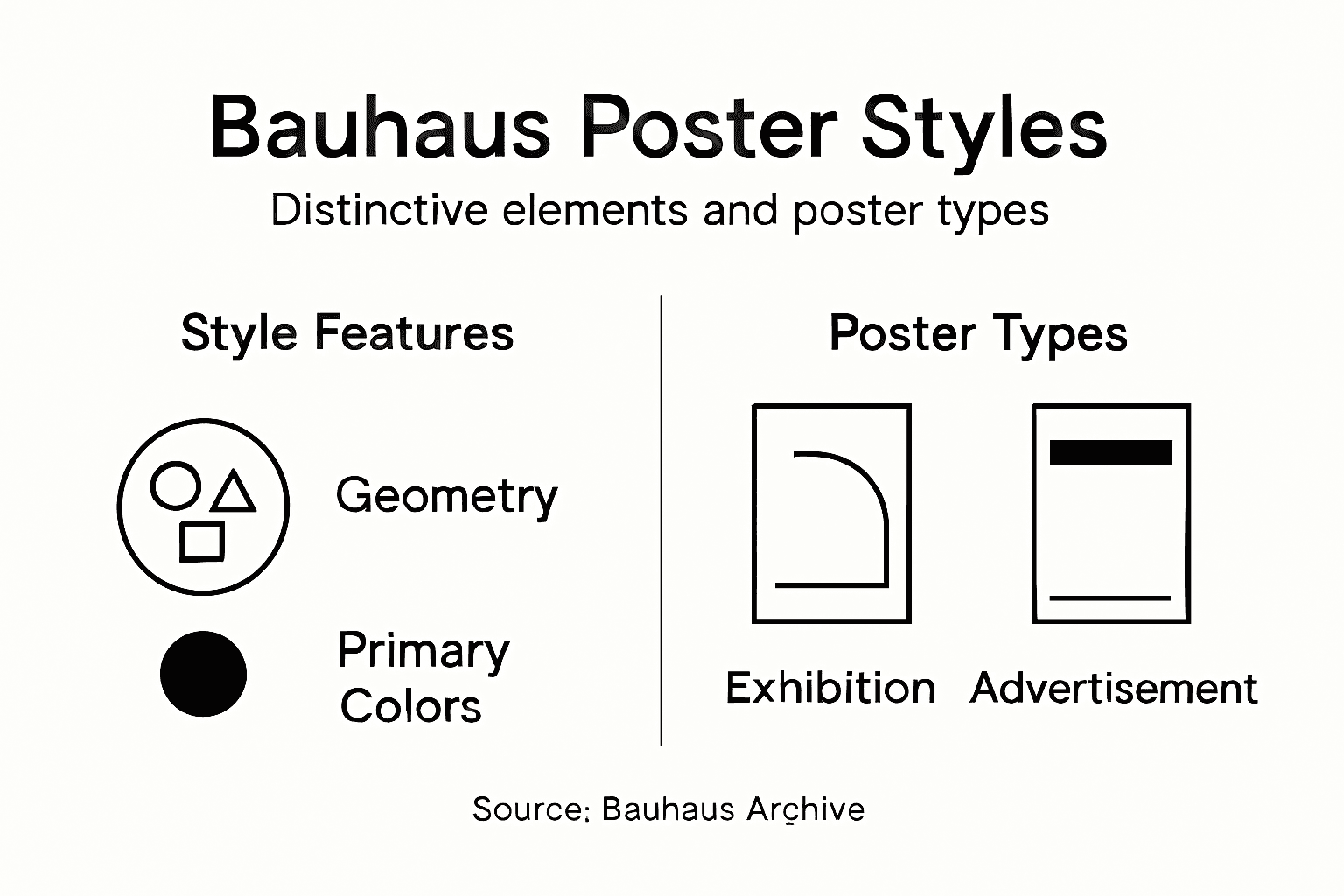
The most prominent poster types can be categorized into several distinctive groups. Exhibition promotion posters were particularly significant, often featuring bold geometric compositions and innovative typography that reflected the school’s revolutionary design philosophy. Event advertisement posters frequently utilized photomontage techniques, combining abstract geometric elements with photographic imagery to create visually striking communications. Experimental typography-focused compositions emerged as another critical variation, with artists like László Moholy-Nagy and Wassily Kandinsky pushing the boundaries of visual communication.
These poster variations shared fundamental characteristics while maintaining unique individual expressions. Some focused on industrial and educational themes, while others explored pure abstract art concepts. The posters typically incorporated modular grid systems, flat color fields, and dynamic asymmetrical layouts that challenged viewers’ traditional visual expectations. Artists deliberately used these design strategies to communicate complex ideas through seemingly simple visual languages, transforming graphic design from decorative art to a powerful communication medium.
Here’s a comparison of Bauhaus poster types and their design focus:
| Poster Type | Visual Focus | Common Techniques | Typical Subjects |
|---|---|---|---|
| Exhibition Promotion | Bold geometric layouts | Modular grids, flat colors | Art shows, events |
| Event Advertisement | Dynamic photomontages | Photo + geometry blends | Lectures, performances |
| Experimental Typography | Innovative text treatments | Asymmetry, overlapping | Type-centric concepts |
| Abstract Art Exploration | Pure geometric abstraction | Minimalism, negative space | Non-objective designs |
Pro tip: When collecting Bauhaus posters, prioritize pieces that demonstrate the most innovative design principles and represent different stylistic periods of the movement.
How Bauhaus Posters Enhance Interior Design
Bauhaus posters transcend traditional wall decor, functioning as sophisticated design elements that transform living spaces. Iconic Bauhaus poster artists create visual statements that inject intellectual sophistication and geometric precision into modern interiors, bridging artistic expression with architectural aesthetics.
These art pieces strategically enhance interior design through their unique visual properties. Their minimalist geometry acts as a visual anchor, creating focal points that draw the eye and establish visual balance within a room. The deliberate use of primary colors and clean lines helps integrate artwork seamlessly with contemporary furniture, making Bauhaus posters particularly versatile across different design styles – from mid-century modern to industrial and minimalist environments. The graphic clarity of these posters allows them to complement existing decor without overwhelming the space.
Beyond aesthetic appeal, Bauhaus posters communicate a design philosophy that celebrates functional beauty. Their compositions reflect principles of simplicity, intentionality, and visual harmony that resonate deeply with design-conscious homeowners. By selecting Bauhaus posters, interior designers and homeowners can introduce visual narratives that speak to innovation, cultural history, and a commitment to thoughtful, purposeful design. These artworks are not mere decorative objects but powerful design statements that reflect an appreciation for artistic movements that revolutionized visual communication.
Pro tip: Select Bauhaus posters that complement your room’s color palette and architectural lines to create a cohesive and intentional design experience.
Choosing, Buying, and Displaying Bauhaus Posters
Selecting authentic Bauhaus posters requires a nuanced understanding of design principles and artistic authenticity. Understanding Bauhaus design principles helps collectors and design enthusiasts make informed choices that capture the movement’s core aesthetic philosophy.
When purchasing Bauhaus posters, consider several critical factors. Original vintage prints from the 1919-1933 period are rare and expensive, making high-quality reproductions an excellent alternative for most collectors. Look for prints that demonstrate key Bauhaus characteristics: geometric shapes, primary color palettes, sans-serif typography, and asymmetrical compositions. Authenticity matters – seek prints that genuinely reflect the movement’s design principles rather than generic modernist interpretations. Hanging posters without traditional frames can also enhance the minimalist aesthetic inherent in Bauhaus design, allowing the artwork’s graphic elements to take center stage.
Displaying Bauhaus posters requires strategic consideration of space and surrounding design elements. These artworks work brilliantly in minimalist, mid-century modern, and contemporary interiors. Consider creating visual dialogues by grouping multiple posters with complementary geometric forms or using a single statement piece as a room’s focal point. The key is maintaining the artwork’s graphic integrity while ensuring it integrates seamlessly with your overall interior design approach.
Pro tip: Invest in archival-quality reproduction prints that capture the original Bauhaus design essence, and select display methods that highlight the poster’s graphic precision and historical significance.
Common Mistakes and How to Avoid Them
Collecting and displaying Bauhaus posters requires careful navigation of design nuances that can easily undermine the artwork’s aesthetic integrity. Common design pitfalls often emerge from misunderstanding the movement’s core design principles, leading collectors and design enthusiasts to make critical errors.
One significant mistake is selecting reproductions that lack authentic Bauhaus design characteristics. Generic modernist prints frequently misinterpret the movement’s precise visual language. Authentic Bauhaus posters maintain strict design discipline: geometric precision, limited color palettes, strategic typography, and intentional negative space. Collectors should scrutinize prints for genuine geometric abstraction, avoiding overly decorative or complex designs that deviate from the movement’s minimalist philosophy. Another common error involves improper framing and display – Bauhaus posters demand presentation that respects their graphic purity.
Framing and mounting present additional challenges for preserving poster authenticity. Traditional ornate frames contradict Bauhaus principles of functional design, while poor mounting techniques can damage delicate prints. Opt for minimal, borderless mounting techniques that allow the poster’s graphic elements to communicate without visual interference. Consider archival-quality materials that protect the print while maintaining its graphic integrity. Understanding these nuanced presentation strategies ensures the poster remains true to its original modernist vision.
The following table summarizes key Bauhaus poster display tips and potential pitfalls:
| Practice | Benefit | Common Mistake | Solution |
|---|---|---|---|
| Minimal framing | Preserves clean aesthetic | Using ornate frames | Opt for borderless mount |
| Indirect lighting | Prevents color fading | Direct sunlight exposure | Use shaded locations |
| Authentic reproduction | Maintains style integrity | Choosing generic modern prints | Research print sources |
Pro tip: Invest in professional archival mounting and choose display locations with consistent, indirect lighting to preserve your Bauhaus poster’s visual impact and historical significance.
Elevate Your Space with Authentic Bauhaus Posters from Artmandre
Struggling to find art that captures the clarity, simplicity, and geometric precision of true Bauhaus design? Bauhaus posters are not just decoration. They are powerful statements that bring modernist philosophy and intellectual sophistication into your home. At Artmandre, we understand how important it is to choose prints that embody authentic Bauhaus principles like minimalist geometry, primary color palettes, and strategic typography to avoid common design pitfalls.

Discover a carefully curated selection of Bauhaus-inspired artwork designed to enhance any room’s aesthetic and reflect your passion for timeless, purposeful design. Benefit now from promotional offers such as buy 2 get 1 free to build your own gallery of impactful, stylish wall art. Visit Artmandre today and select from our new arrivals and hot sellers to start transforming your living space with authentic Bauhaus posters that preserve the movement’s revolutionary spirit.
Frequently Asked Questions
What are the defining characteristics of a Bauhaus poster?
Bauhaus posters are characterized by their radical minimalist aesthetic, featuring geometric shapes, clean lines, primary color palettes, and experimental typography that emphasizes clarity and purposeful communication.
How do Bauhaus posters enhance interior design?
Bauhaus posters act as sophisticated design elements by creating visual balance and focal points with their minimalist geometry, making them versatile across various design styles. They also communicate a design philosophy that values functional beauty and visual harmony.
What types of poster variations exist within the Bauhaus movement?
Bauhaus posters can be categorized into several types, including exhibition promotion posters, event advertisements, experimental typography compositions, and abstract art explorations, each with its own visual focus and techniques.
What should I consider when displaying Bauhaus posters in my home?
When displaying Bauhaus posters, consider factors like maintaining their graphic integrity through minimal framing, positioning them in indirect lighting, and grouping them strategically to enhance visual dialogue within your interior design.