
Blog
Bauhaus Wall Art: Transforming Modern Interiors
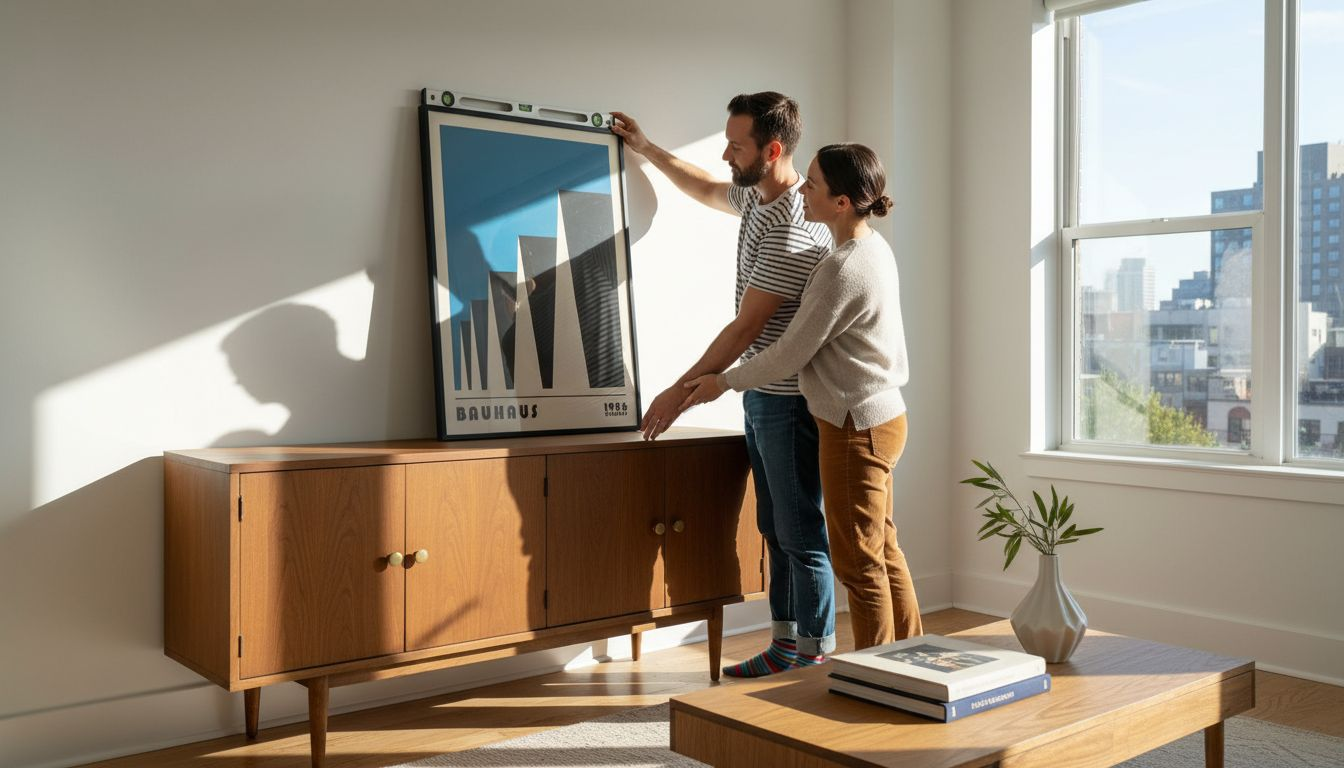
Finding wall art that feels both modern and meaningful can be a real challenge for those wanting their space to do more than just look stylish. Bauhaus wall art offers a fresh solution by blending bold geometric design with a deeper purpose rooted in a school founded in Germany that aimed to transform everyday living. With its focus on balancing form and function, authentic Bauhaus pieces deliver more than surface appeal—giving your home the visual edge you want and the thoughtful philosophy you value, while promotional offers make it even easier to bring this design legend into reach. For anyone interested in affordable upgrades, Bauhaus wall art brings modern interiors to life with intention and style.
Table of Contents
- Defining Bauhaus Wall Art And Common Myths
- Varieties Of Bauhaus-Inspired Wall Decor
- Key Features: Shapes, Colors, And Functionality
- Using Bauhaus Art In Contemporary Spaces
- Cost Considerations And Style Missteps To Avoid
Key Takeaways
| Point | Details |
|---|---|
| Bauhaus Principle | Bauhaus wall art unifies art, craft, and technology, promoting a design philosophy that emphasizes functionality and aesthetics. |
| Common Misconceptions | Many mistakenly associate Bauhaus only with minimalism, overlooking its rich, interdisciplinary nature and global influence. |
| Design Elements | Authentic Bauhaus art features geometric shapes, purposeful color schemes, and a commitment to utility, ensuring every element serves a function. |
| Contemporary Application | Bauhaus design principles adapt seamlessly to modern interiors, enhancing visual harmony and simplicity across various styles and spaces. |
Defining Bauhaus Wall Art and Common Myths
Bauhaus wall art represents far more than geometric shapes and minimalist aesthetics. Founded in 1919 by Walter Gropius in Germany, the Bauhaus school pioneered modern design by unifying art, craft, and technology into one revolutionary educational philosophy. The movement wasn’t simply about creating stripped-down, industrial-looking prints. Instead, it represented a utopian vision where design could transform everyday life by integrating art directly into society and human experience. When you hang Bauhaus wall art in your home, you’re not just decorating. You’re embracing a design philosophy that believed art should serve both functional and aesthetic purposes while advancing social progress.
The most persistent myth about Bauhaus is that it equals minimalism and nothing more. People often assume Bauhaus means bare walls, cold industrial vibes, and emotionless geometric patterns. This oversimplification ignores the movement’s experimental, interdisciplinary nature. The Bauhaus blended fine arts with crafts across architecture, graphics, and interiors, creating work that was sophisticated, intentional, and deeply human. Artists and craftspeople worked together as equals, rejecting the traditional hierarchy between fine art and applied design. Another common misconception is that Bauhaus was purely German in scope. While it originated in Germany, its influence spread globally, reshaping design across multiple continents and industries. Understanding Bauhaus principles and wall art applications helps you appreciate why these pieces work so well in contemporary spaces today.
When you select Bauhaus wall art for your modern interior, you’re choosing work that balances bold geometry with genuine artistic purpose. These pieces aren’t decoration for decoration’s sake. Each composition was thoughtfully designed to communicate an idea, provoke thought, or enhance the functionality of a space. Colors were chosen deliberately. Typography served specific purposes. Shapes aligned with the movement’s belief that form and function should be inseparable. This intentionality is what separates authentic Bauhaus work from imitative geometric art that lacks substance.
Pro tip: When shopping for Bauhaus wall art, look beyond surface-level design appeal and consider whether each piece communicates a clear concept or purpose. Authentic Bauhaus work has philosophical weight behind its visual simplicity, which is exactly what makes it timeless in modern interiors.
Varieties of Bauhaus-Inspired Wall Decor
Bauhaus wall decor comes in far more forms than you might expect. While many people picture stark geometric prints, the reality spans a diverse range of styles and mediums. Bauhaus-inspired decor includes wall hangings, textiles, graphic prints, and metalwork that all reflect the movement’s core principle that form and function must work together. This variety exists because Bauhaus designers rejected the idea that decoration was separate from purpose. A wall hanging wasn’t just beautiful—it also served a functional role in the space. Textiles weren’t merely ornamental—they could absorb sound, define areas, or add warmth to industrial materials. This philosophy opened doors to countless ways to bring Bauhaus aesthetics into your home.
When you explore modern Bauhaus wall decor, you’ll encounter several distinct categories. Abstract wall art dominates the category, featuring geometric compositions with bold colors, clean lines, and carefully balanced negative space. Minimal furniture-integrated decor blends seamlessly into walls, often appearing as sculptural elements or functional pieces like shelving units that double as visual interest. Practical decorative elements like lighting fixtures and textile wall hangings demonstrate how Bauhaus merges form with function, making everyday objects into design statements. You’ll also find vintage and reproduction posters featuring bold typography and striking color palettes. Metalwork pieces—from steel wall sculptures to brass-accented frames—bring industrial elements that ground a room’s aesthetic. Many contemporary designs pull inspiration from these foundational categories while adding modern twists that appeal to today’s design-conscious homeowners.
The contrast between Bauhaus and earlier movements like Art Nouveau highlights what makes these varieties special. Where Art Nouveau embraced ornament for ornament’s sake, Bauhaus varieties strip away excess while maintaining visual impact. This restraint actually creates more versatility. A single Bauhaus print can work alongside mid-century modern furniture, complement minimalist décor, or anchor a maximalist room through sheer intentionality. The beauty lies in knowing that each piece you select has been thoughtfully designed to balance aesthetic pleasure with practical purpose. Whether you choose a geometric print, a textile wall hanging, or a sculptural light fixture, you’re selecting work that respects both your space and your intelligence as a viewer.
Here’s a breakdown of how Bauhaus wall art compares to Art Nouveau in key aspects:
| Aspect | Bauhaus Wall Art | Art Nouveau Wall Art |
|---|---|---|
| Design Approach | Minimal, function-driven | Decorative, ornament-focused |
| Typical Shapes | Geometric, abstract forms | Organic, flowing curves |
| Color Palette | Primary colors, bold contrasts | Pastels, earth tones |
| Role in Home | Anchor, creates visual order | Decorative, adds visual flourish |
| Historical Context | Modernism, industrial roots | Pre-modern, artisanal craft |
Pro tip: Mix different varieties of Bauhaus decor within a single room to create visual interest without chaos—pair a graphic print with a textile hanging and a functional element like a metalwork shelf to showcase the movement’s versatility while maintaining cohesion.
Key Features: Shapes, Colors, and Functionality
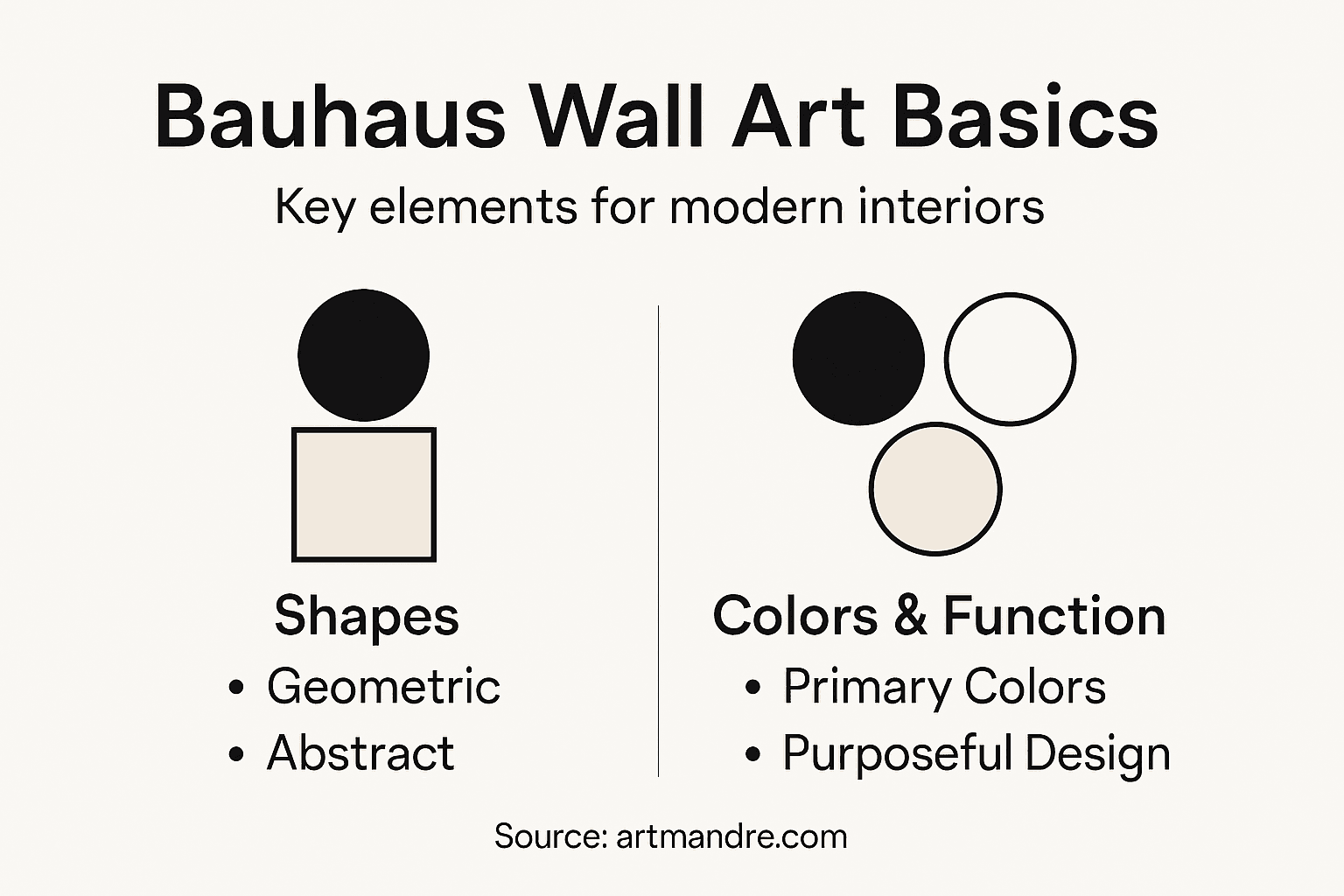
Bauhaus wall art succeeds because it masters three interconnected design elements: geometric shapes, a purposeful color palette, and unwavering commitment to utility. These features work together rather than existing separately. When you examine a Bauhaus print from ArtMandre or any authentic collection, you’re looking at a composition where nothing appears by accident. Bauhaus emphasizes geometric shapes and primary colors to create modernist aesthetics that feel both timeless and deliberately crafted. Circles, squares, triangles, and rectangles form the visual vocabulary. These basic shapes interact with one another, creating rhythm and balance. The color choices—typically reds, blues, yellows, blacks, and whites—aren’t decorative flourishes. Each hue serves a purpose, whether directing your eye through the composition or evoking a specific emotional response.
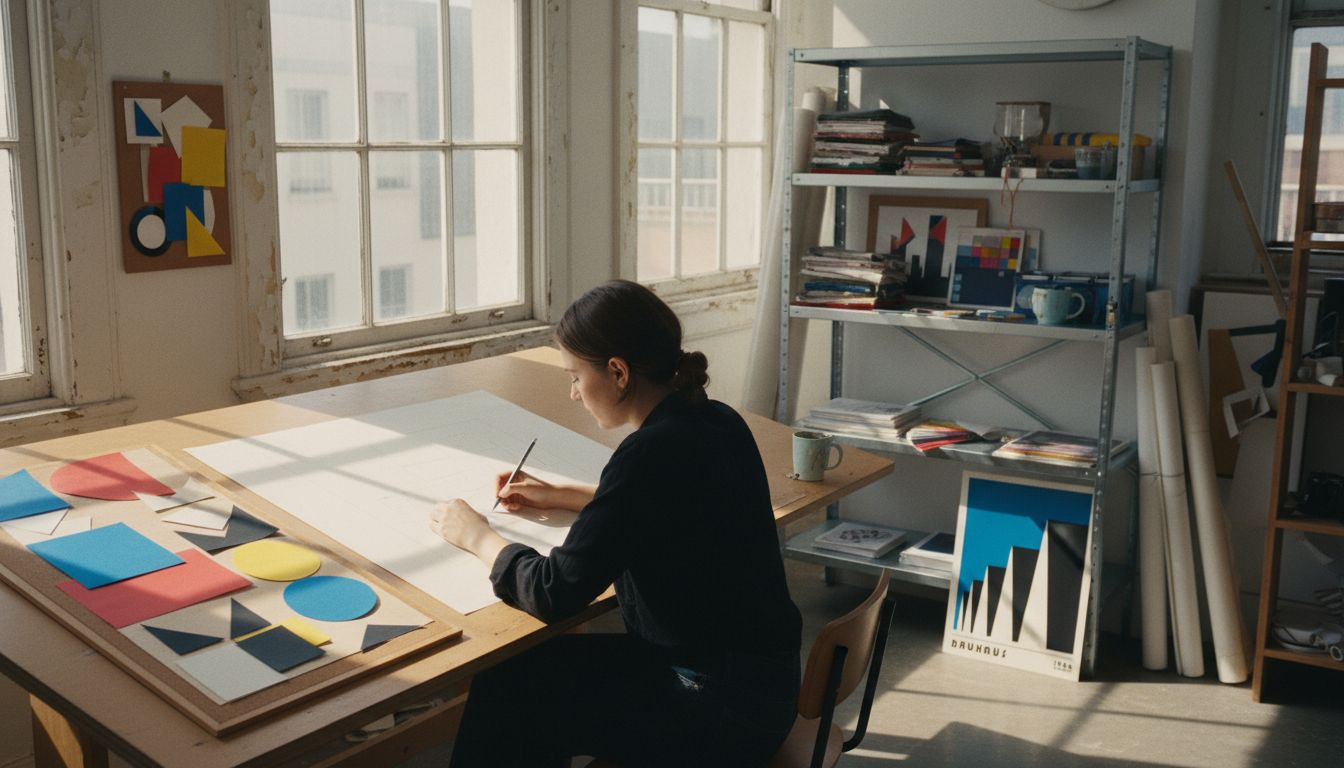
The shapes in Bauhaus design operate on a principle called visual balance. A large rectangle might be offset by smaller circles. Bold lines create tension against negative space. This isn’t chaos disguised as minimalism. Instead, it’s controlled composition. When you place a Bauhaus print on your wall, the geometric arrangement actually makes surrounding furniture appear more organized. The eye naturally follows the shapes’ implied movement, which can visually expand or organize a room depending on the artwork’s placement and the room’s layout. Primary colors amplify this effect. Red draws attention and energy to a space. Blue brings calm and stability. Yellow adds optimism and light. The combination creates emotional resonance beyond what neutral colors could achieve.
Functionality separates genuine Bauhaus from merely geometric-looking art. Bauhaus designs strip away superfluous ornamentation to prioritize usability and mass production. This means every element serves a purpose. Bold typography in Bauhaus posters wasn’t chosen for elegance alone—it ensured legibility and clear communication. Composition choices weren’t arbitrary—they guided the viewer’s attention systematically. Color combinations weren’t random—they created visual hierarchy. When shopping for wall art, ask yourself whether each component contributes to the overall message. Authentic Bauhaus wall decor respects your intelligence by communicating clearly rather than overwhelming with decoration.
These features combine to create wall art that works harder than it appears. A well-chosen Bauhaus piece becomes a design anchor for an entire room. It doesn’t fade into the background or compete for attention awkwardly. Instead, it establishes a visual and conceptual foundation that makes decorating surrounding spaces feel more intuitive and cohesive.
Pro tip: When selecting Bauhaus wall art, choose pieces where geometric shapes create clear visual rhythm and primary colors feel intentional rather than random—this indicates authentic design principles rather than surface-level aesthetics.
Using Bauhaus Art in Contemporary Spaces
Bauhaus art translates seamlessly into modern interiors because its core principles address timeless design problems. Whether you live in a compact apartment, a suburban home, or an urban loft, Bauhaus principles balance simplicity, practicality, and visual harmony in ways that work across different styles and spaces. The geometric compositions and primary colors create a sense of order without feeling rigid or cold. A Bauhaus print on your wall doesn’t demand that you change everything else in your room. Instead, it establishes a focal point that makes surrounding elements feel more intentional. This adaptability explains why you see Bauhaus art working in minimalist studios alongside industrial furniture, in maximalist apartments paired with eclectic collections, and in traditional homes providing a contemporary counterpoint to classic pieces.
The practical application of Bauhaus art in contemporary spaces requires thoughtful placement and pairing. Start by identifying your room’s visual anchor—the piece that naturally draws the eye first. A Bauhaus print often functions beautifully in this role because its geometric clarity reads well from multiple viewing distances. From across the room, the composition still communicates its message. Up close, the craftsmanship and color precision reveal themselves. Consider your existing color palette before selecting pieces. Bauhaus works best when it either complements your current scheme or deliberately contrasts with it. A room dominated by grays and whites can absorb a bold red and blue Bauhaus geometric print without chaos. Conversely, a colorful space might benefit from a Bauhaus piece using only black, white, and one accent color to provide visual rest and hierarchy.
Contemporary applications extend beyond static wall art. Modern Bauhaus integrates eco-friendly materials and culturally responsive design through the New Bauhaus movement, which revives the original ethos while addressing 21st-century concerns about sustainability and inclusivity. This means today’s Bauhaus-inspired pieces often use responsibly sourced materials, sustainable printing methods, and designs that reflect diverse cultural perspectives. When you purchase from collections emphasizing these values, you’re not just decorating. You’re supporting design that aligns with contemporary consciousness about environmental and social impact. The flexibility of Bauhaus aesthetics means you can introduce these values without sacrificing visual coherence or style.
The beauty of using Bauhaus art in contemporary spaces lies in how it simplifies decision-making. Because every element in genuine Bauhaus design serves a purpose, you can trust that each piece will contribute meaningfully to your space rather than adding visual noise. This functional aesthetic gives you confidence when making purchases and arranging your home.
This table summarizes how primary Bauhaus principles translate to practical benefits for your space:
| Principle | Practical Benefit | Contemporary Impact |
|---|---|---|
| Form and Function | Enhances room organization | Promotes intentional design |
| Color Purpose | Evokes specific moods | Enables easy color pairing |
| Visual Balance | Establishes clear focal point | Makes decorating intuitive |
| Simplicity | Reduces visual clutter | Supports versatile placement |
Pro tip: Start with one statement-making Bauhaus piece rather than filling your walls at once—allow one work to establish the visual foundation for your room, then add complementary pieces gradually to maintain intentionality and avoid overwhelming the space.
Cost Considerations and Style Missteps to Avoid
Affordable Bauhaus wall art from ArtMandre doesn’t mean compromising on authenticity or quality. The real cost trap isn’t the price you pay upfront—it’s choosing pieces that look Bauhaus-adjacent without understanding the movement’s core principles. When you buy a cheap geometric print without considering composition, color purpose, or functional clarity, you’ve wasted money regardless of the actual price tag. Smart shopping means recognizing that common style mistakes include misunderstanding the balance between function and form and disrupting visual harmony with excessive ornamentation. A budget-friendly Bauhaus piece should still maintain simplicity and utility at its foundation. This means spending slightly more on one authentic print often costs less in the long run than filling your walls with multiple inexpensive pieces you’ll eventually replace because they feel visually wrong.
The most expensive mistakes happen when people add unnecessary decorative elements around Bauhaus art. You place a geometric print on your wall, then surround it with ornamental frames, competing artwork, and cluttered shelving. This contradicts everything Bauhaus represents. The movement rejected ornamentation for a reason—it distracts from purpose and clarity. Instead, invest in simple, clean framing that complements the artwork without drawing attention to itself. Leave breathing room around your pieces. Avoid stacking multiple busy prints in close proximity. Inaccurate color or shape usage disrupts Bauhaus authenticity, so resist the temptation to pair authentic Bauhaus work with pieces that merely look geometric. When you’re tempted by inexpensive alternatives that mimic Bauhaus styling, ask yourself whether the composition actually communicates something or whether it’s just shapes arranged decoratively. Authentic Bauhaus has purpose. If you can’t articulate that purpose, the piece probably isn’t worth buying at any price.
Budget strategy should focus on thoughtful selection rather than quantity. Purchase promotional offers like ArtMandre’s buy 2 get 1 free deals strategically. Don’t fill your collection because pieces are discounted. Instead, use these offers to acquire multiple works you’ve already carefully selected. Plan your purchases around your actual spaces and color schemes. A single well-chosen Bauhaus print transforms a room far more effectively than several mediocre ones. Consider starting with smaller, more affordable pieces to establish your taste before investing in larger statement works. This approach lets you experiment without financial risk while building confidence in your design instincts.
The affordability angle matters because Bauhaus itself was rooted in making quality design accessible to ordinary people, not elite collectors. You honor that philosophy by purchasing thoughtfully rather than impulsively, regardless of price. Value comes from intention, not from how much or how little you spend.
Pro tip: Use promotional offers to buy complementary pieces you’ve already researched and loved rather than impulse-purchasing discounted items—this ensures your budget investment supports authentic Bauhaus principles instead of filling walls with mediocre alternatives.
Elevate Your Space with Authentic Bauhaus Wall Art
Bringing balance between form and function into your home can be a challenge when choosing wall decor. As the article highlights, authentic Bauhaus wall art goes beyond simple geometric patterns by offering purposeful compositions that create visual order and evoke emotion while harmonizing with your existing style. If you want to avoid common style mistakes like clutter or mismatched pieces, the key is selecting pieces that communicate clear ideas and fit your space with intentionality.
At ArtMandre, you will find a carefully curated collection of Bauhaus-inspired art prints that combine bold primary colors, clean shapes, and thoughtful design. We understand the importance of functionality paired with aesthetic appeal and offer exclusive promotional deals like buy 2 get 1 free, so you can build a cohesive gallery wall without sacrificing quality or authenticity. Explore our selection to discover pieces that not only anchor your room but also support your modern design goals.
Discover Bauhaus-Inspired Prints
Shop the Latest Arrivals
Your ideal modern interior starts with one statement piece. Take the first step today by visiting artmandre.com and transform your living space with art that truly means something.
Frequently Asked Questions
What is Bauhaus wall art?
Bauhaus wall art refers to artworks that embody the principles of the Bauhaus movement, emphasizing the integration of art and design through geometric shapes, primary colors, and functionality. It seeks to create a connection between aesthetics and utility, transforming everyday spaces.
How can I incorporate Bauhaus wall art into my home?
Bauhaus wall art can be integrated into your home by selecting pieces that serve as visual anchors, complementing existing decor. Choose pieces thoughtfully based on their color palette and design principles to enhance the overall harmony of the space.
What are the key features that define genuine Bauhaus wall art?
Genuine Bauhaus wall art is characterized by its use of geometric shapes, a purposeful color palette, and a commitment to functionality. Each element is designed to communicate effectively and contribute meaningfully to the surrounding environment.
What are common misconceptions about Bauhaus wall art?
A common misconception is that Bauhaus art equates to minimalism and cold, emotionless designs. However, Bauhaus is an experimental and interdisciplinary movement that merges fine arts with functional designs, resulting in sophisticated works that can evoke deep emotions and serve practical purposes.