

Blog
Japanese Wall Art: Timeless Style for Modern Homes
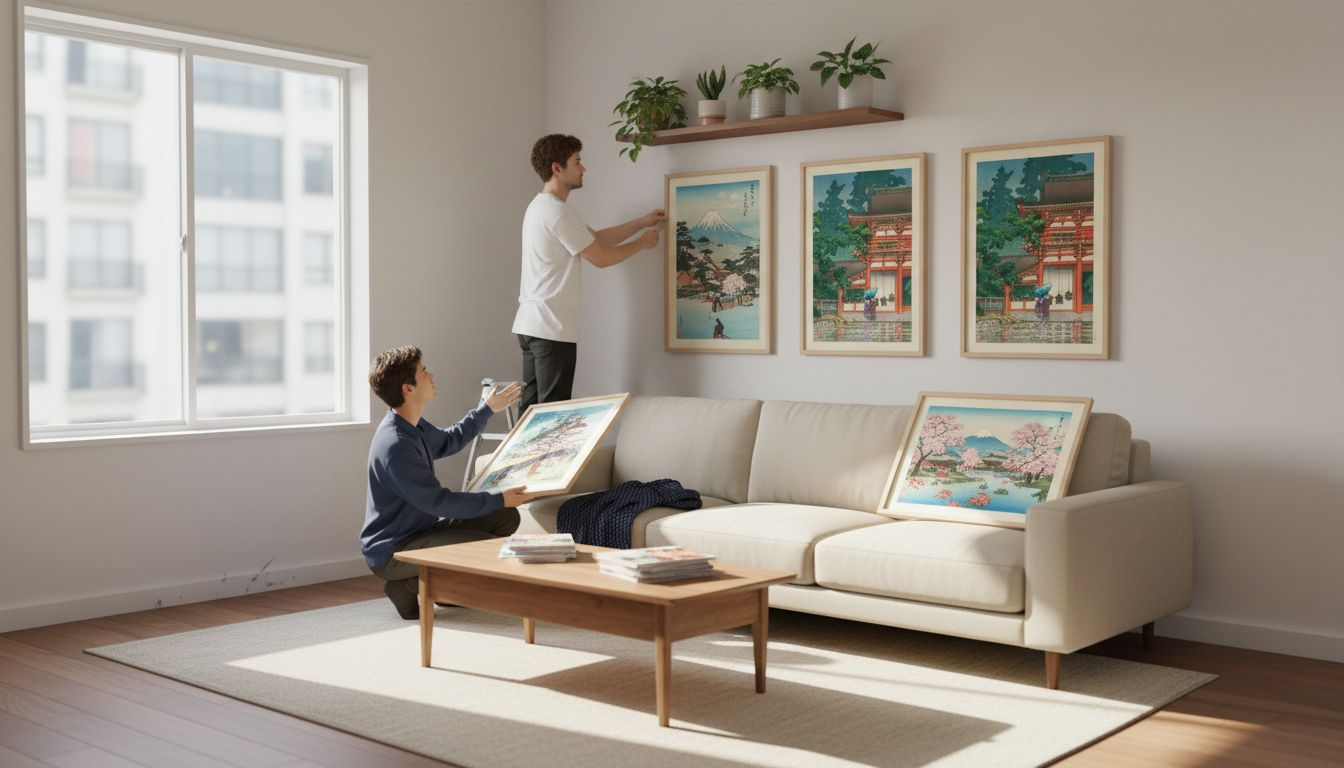
Choosing wall art often feels like searching for pieces that reflect both style and meaning. Homeowners and millennials looking to update their spaces want decor that does more than fill a wall—they want to introduce beauty and cultural depth. Japanese wall art stands out for its elegant minimalism and philosophies of harmony and impermanence, bringing a sense of calm and deeper connection into any modern home.
Table of Contents
- Defining Japanese Wall Art’s Distinctive Elegance
- Traditional Styles and Their Cultural Symbolism
- Modern Japanese Prints and Popular Variations
- Aesthetic Principles Shaping Display Choices
- Styling Advice for Serene, Contemporary Interiors
Key Takeaways
| Point | Details |
|---|---|
| Cultural Depth | Japanese wall art encapsulates centuries of cultural wisdom and philosophical principles, emphasising harmony and the beauty of impermanence. |
| Artistic Techniques | Traditional methods like woodblock printing and calligraphy inform modern pieces, creating a dialogue between past and present aesthetics. |
| Display Principles | Key aesthetic concepts such as Wa and Wabi-Sabi guide the display of artwork, promoting emotional resonance and intentional spaces. |
| Styling Strategies | To achieve a serene interior, focus on a neutral colour palette and purposeful arrangement, allowing for visual breathing space around each piece. |
Defining Japanese Wall Art’s Distinctive Elegance
Japanese wall art represents a profound cultural expression that transcends mere visual decoration. Rooted in artistic traditions spanning two millennia, these artworks embody deep philosophical principles of harmony, impermanence, and aesthetic subtlety.
The distinctive elegance of Japanese wall art emerges from several key characteristics that set it apart from Western artistic traditions:
- Minimalism: Emphasising negative space and restrained design elements
- Natural Motifs: Incorporating seasonal landscapes, flora, and fauna
- Spiritual Symbolism: Reflecting Zen Buddhist and Shinto philosophical perspectives
- Asymmetrical Balance: Creating visual interest through intentional compositional techniques
These artworks are not merely decorative objects but profound cultural narratives that communicate complex emotional and spiritual experiences. They invite viewers to contemplate deeper meanings beyond surface-level aesthetics, transforming living spaces into meditative environments.
Japanese wall art transforms interior spaces by translating centuries of cultural wisdom into visual poetry.
Traditional techniques like woodblock printing, calligraphy, and ink wash painting continue to influence contemporary Japanese wall art designs. Modern interpretations blend ancient artistic principles with minimalist contemporary aesthetics, creating pieces that feel simultaneously timeless and innovative.
Pro tip: When selecting Japanese wall art, consider pieces that resonate with your personal aesthetic while honouring the cultural depth of the artistic tradition.
Traditional Styles and Their Cultural Symbolism
Japanese art forms represent intricate cultural expressions that extend far beyond visual aesthetics. Traditional artistic practices embody profound cultural values of harmony, balance, and spiritual connection, transforming everyday experiences into meaningful artistic statements.
Several quintessential Japanese art styles illuminate the rich cultural symbolism embedded in visual traditions:
- Ukiyo-e: Woodblock prints capturing transient moments of urban life
- Ikebana: Flower arranging symbolising harmony and natural balance
- Shodō: Calligraphy expressing spiritual and emotional depth
- Nihonga: Traditional painting techniques representing natural landscapes
Each artistic style communicates complex narratives through carefully selected visual elements. Woodblock printing, for instance, represents more than a creative technique; it serves as a historical document capturing social dynamics, cultural shifts, and human experiences with remarkable precision.
Traditional Japanese art transforms visual representation into a profound philosophical dialogue.
These art forms are not merely decorative but serve as powerful mediums of cultural transmission, preserving generational wisdom through intricate visual language. Contemporary Japanese wall art continues this legacy, blending ancient symbolism with modern aesthetic sensibilities.
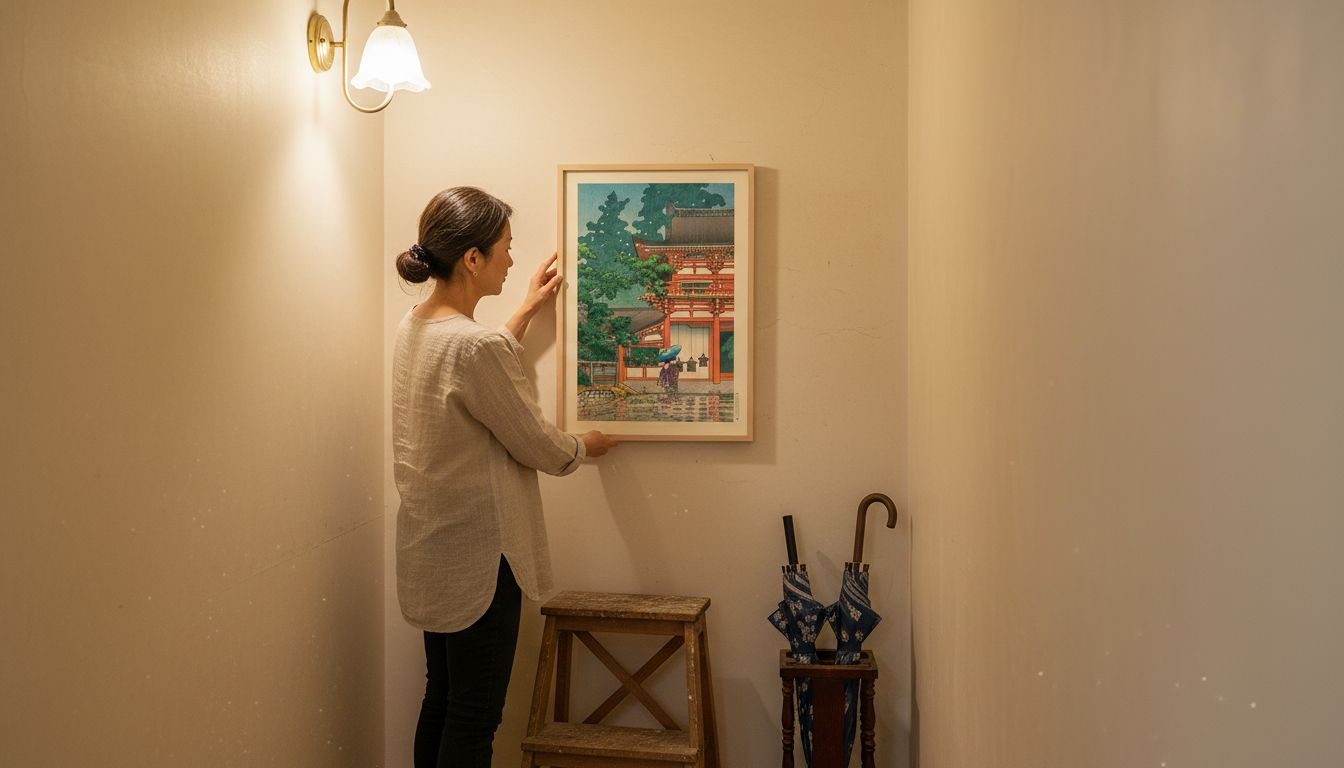
Pro tip: When selecting traditional Japanese wall art, look for pieces that tell a story and resonate with your personal connection to cultural symbolism.
Modern Japanese Prints and Popular Variations
The landscape of Japanese printmaking has undergone remarkable transformation since the early 20th century. Modern printmaking techniques dramatically reimagined traditional artistic expressions, blending cultural heritage with innovative approaches that challenge conventional artistic boundaries.
Contemporary Japanese print styles encompass several distinctive variations:
- Abstract Minimalism: Geometric forms and reduced colour palettes
- Digital Hybrid Prints: Combining digital technologies with traditional techniques
- Neo-Ukiyo-e: Reinterpreting classic woodblock styles with contemporary perspectives
- Experimental Mixed Media: Incorporating silkscreen, lithography, and unconventional materials
Graphic design principles have profoundly influenced these modern interpretations, allowing artists to explore new aesthetic territories while maintaining deep connections to cultural roots. The result is a dynamic visual language that speaks to both historical traditions and contemporary sensibilities.
Modern Japanese prints represent a powerful dialogue between tradition and innovation.
These artistic innovations reflect broader cultural shifts, demonstrating how Japanese artists continually reinterpret their visual heritage. By embracing experimental techniques and global artistic influences, contemporary prints offer nuanced perspectives on cultural identity and artistic expression.
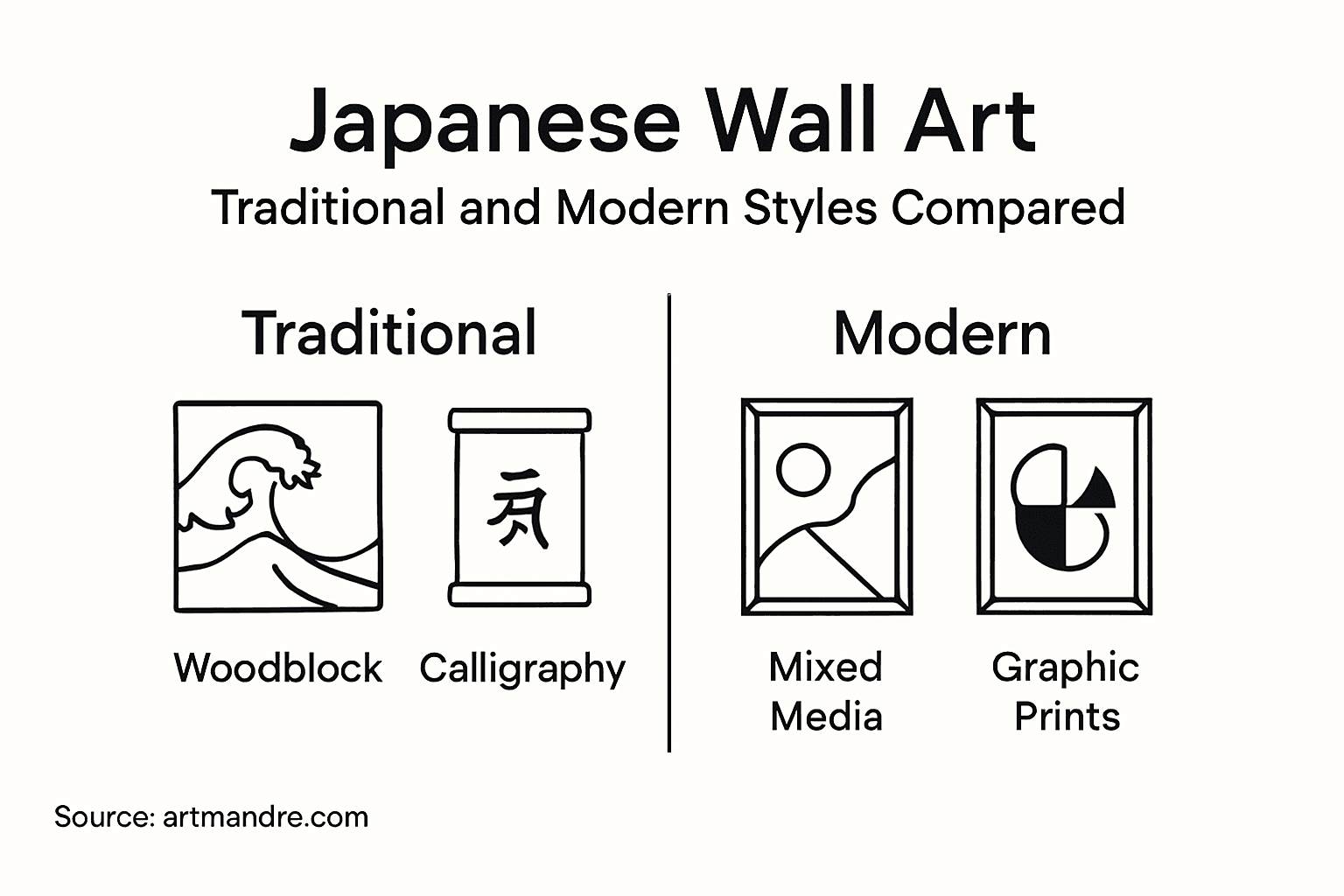
Here is a comparison of traditional and modern Japanese wall art styles to enhance your understanding:
| Aspect | Traditional Japanese Wall Art | Modern Japanese Wall Art |
|---|---|---|
| Dominant Techniques | Woodblock, calligraphy, ink wash | Digital, mixed media, silkscreen |
| Thematic Focus | Nature, spirituality, social history | Abstraction, innovation, hybrid motifs |
| Cultural Representation | Preserves historical narratives | Explores evolving identities |
| Colour Use | Subdued, natural tones | Expanded palettes, bold contrasts |
Pro tip: When collecting modern Japanese prints, look for pieces that demonstrate both technical mastery and innovative conceptual approaches.
Aesthetic Principles Shaping Display Choices
Japanese aesthetic principles profoundly influence art display strategies, transforming wall spaces into meditative landscapes that invite contemplation and emotional resonance. These deeply philosophical approaches go beyond mere decoration, creating holistic environments that reflect cultural wisdom and spiritual understanding.
Key aesthetic principles guiding Japanese wall art display include:
- Wa (Harmony): Creating balanced, interconnected visual experiences
- Ma (Negative Space): Utilising emptiness as an active design element
- Wabi-Sabi: Celebrating imperfection and transient beauty
- Asymmetrical Composition: Rejecting strict geometric perfection
Minimalist sensibilities emerge as a fundamental characteristic of Japanese aesthetic approaches. Each art piece is carefully selected to communicate subtle emotional narratives, with display choices emphasising restraint, natural materials, and muted colour palettes that encourage introspection.
Japanese wall art display is a meditation on beauty, simplicity, and profound cultural meaning.
These principles extend beyond visual aesthetics, representing philosophical perspectives on life, nature, and human experience. By understanding these nuanced display strategies, homeowners can transform ordinary spaces into extraordinary environments that speak to deeper cultural traditions.
The following table summarises key principles for displaying Japanese wall art in contemporary interiors:
| Principle | Influence on Display | Suggested Application |
|---|---|---|
| Wa | Encourages integration and balance | Pair artwork with complementary objects |
| Ma | Highlights emptiness as art | Leave ample space around pieces |
| Wabi-Sabi | Embraces imperfection and uniqueness | Feature handmade or weathered works |
| Asymmetry | Fosters visual interest | Arrange pieces in dynamic groupings |
Pro tip: When arranging Japanese wall art, prioritise breathing space around each piece and consider how the artwork interacts with surrounding elements.
Styling Advice for Serene, Contemporary Interiors
Japanese interior styling transforms living spaces into tranquil sanctuaries, blending minimalist design principles with profound cultural sensibilities. This approach goes beyond mere decoration, creating environments that breathe with intentional simplicity and mindful aesthetic choices.
Key strategies for achieving a serene contemporary interior include:
- Neutral Colour Palette: Utilising soft, muted tones like dove grey, warm beige, and gentle whites
- Natural Material Integration: Incorporating wood, bamboo, and stone elements
- Purposeful Furniture Placement: Embracing clean lines and functional design
- Seasonal Art Rotation: Reflecting natural rhythms through artwork selection
Negative space becomes a critical design element in Japanese-inspired interiors. By allowing visual breathing room around art pieces and furniture, homeowners create a sense of calm and intentionality that transforms ordinary rooms into meditative environments.
Serenity is not about emptiness, but about creating space for meaningful experiences.
Contemporary Japanese-inspired styling requires a delicate balance between minimalism and warmth. Each design choice should serve a purpose, communicating a narrative of simplicity, functionality, and deep aesthetic appreciation.
Pro tip: Select wall art that creates visual harmony and allows enough surrounding space to let each piece breathe and communicate its unique story.
Bring Timeless Japanese Elegance Into Your Home Today
If you love the subtle beauty of Japanese wall art described in this article you know how challenging it can be to find pieces that truly embody harmony, minimalism, and cultural depth while fitting modern interiors. Many struggle to balance traditional aesthetics like Wabi-Sabi and Asymmetrical Composition with contemporary living spaces.

Discover a curated selection of artistic prints that channel serene sophistication and simplicity at ArtMandre.com. Our collection offers art that respects the Japanese philosophy of Ma (Negative Space) and embraces natural motifs for a peaceful yet stylish environment. Act now to take advantage of exclusive promotions such as buy 2 get 1 free and find your perfect piece to create a calm sanctuary. Transform your rooms with thoughtful wall decor designed to inspire mindfulness and elevate your home’s aesthetic. Start exploring our new arrivals and hot sellers today and bring harmony into your life.
Frequently Asked Questions
What are the key characteristics of Japanese wall art?
Japanese wall art is distinguished by its minimalism, natural motifs, spiritual symbolism, and asymmetrical balance, setting it apart from Western artistic traditions.
How can I incorporate Japanese wall art into modern interiors?
To incorporate Japanese wall art into modern interiors, choose pieces that resonate with your personal aesthetic and respect the cultural depth, ensuring a harmonious balance with surrounding decor.
What traditional art forms influence modern Japanese wall art?
Modern Japanese wall art continues to be influenced by traditional forms such as ukiyo-e (woodblock prints), ikigana (flower arranging), shodō (calligraphy), and nihonga (traditional painting techniques).
What aesthetic principles should I consider when displaying Japanese wall art?
Key aesthetic principles for displaying Japanese wall art include harmony (wa), negative space (ma), wabi-sabi (embracing imperfection), and asymmetrical composition to create a tranquil and balanced visual experience.