



Japanese Vintage Posters: Enhancing Modern Interiors
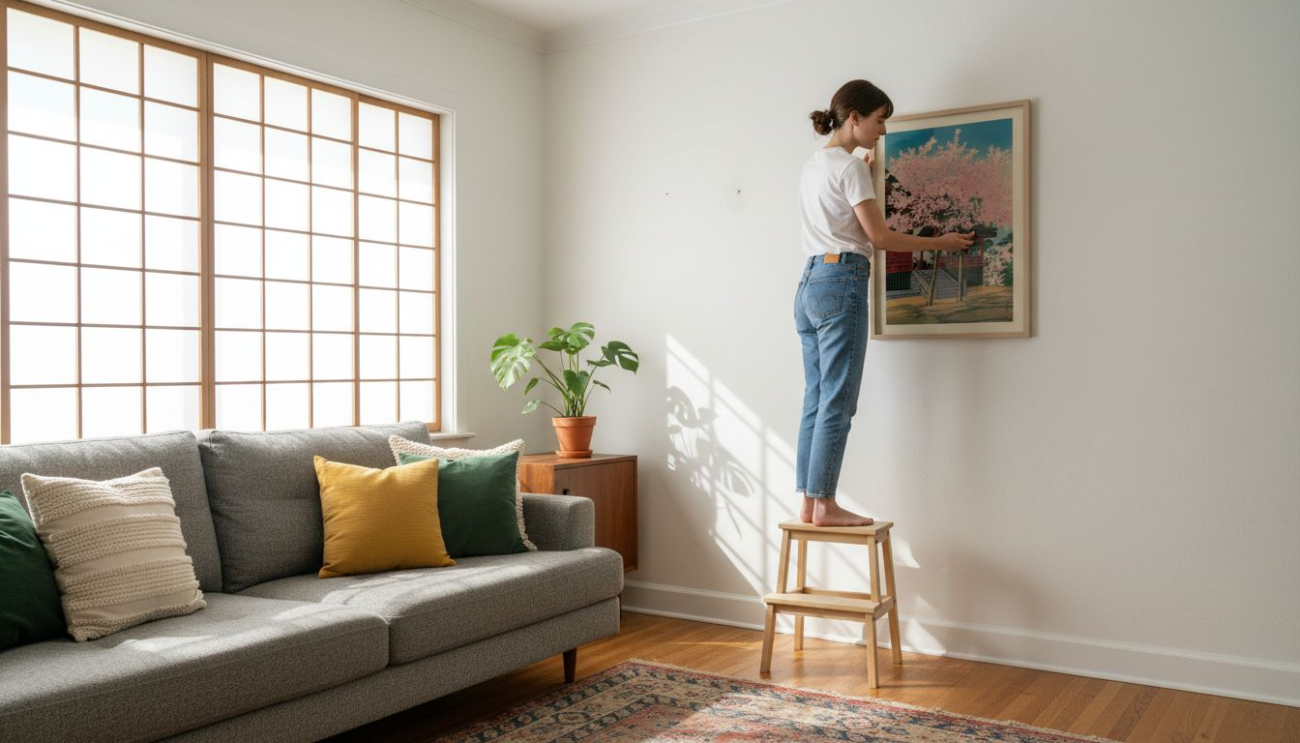
Finding authentic Japanese vintage posters that capture both artistic integrity and historic significance can feel daunting for American collectors and decorators aiming for a refined mid-century modern aesthetic. These posters offer more than visual appeal, blending traditional Japanese motifs with Western design influences and vivid colour schemes. By understanding the rich evolution and cultural complexity behind each piece, you can curate a collection that balances affordability with genuine artistic value. Explore how these iconic posters become sophisticated centrepieces for modern interiors.
Table of Contents
- Defining Japanese Vintage Posters And Misconceptions
- Major Styles And Iconic Design Periods
- Key Features And Cultural Significance
- How Authenticity Is Verified In Collecting
- Common Pitfalls And Avoiding Repros
- Styling Japanese Posters For Modern Decor
Key Takeaways
| Point | Details |
|---|---|
| Understanding Japanese Vintage Posters | These posters are complex visual narratives that capture cultural dynamics and societal transformations in Japan. |
| Evolution of Styles | Japanese poster art has evolved significantly across decades, each period showcasing distinctive aesthetic innovations and cultural contexts. |
| Authentication Methods | Genuine vintage posters require thorough provenance research and detailed analysis to verify their authenticity. |
| Interior Design Integration | Japanese vintage posters can enhance modern decor, serving as sophisticated design elements that communicate cultural narratives. |
Defining Japanese Vintage Posters and Misconceptions
Japanese vintage posters represent far more than simple decorative art – they are complex visual narratives capturing societal transformations and cultural dynamics. Post-war graphic design evolution reveals these artistic artefacts as profound expressions of Japan’s rapid modernisation and global cultural interchange.
Traditionally misunderstood as mere commercial propaganda, Japanese vintage posters encompass rich artistic traditions that blend multiple aesthetic influences. These posters emerged from a unique historical context, reflecting pivotal moments in Japanese cultural identity:
- Fusion of traditional Japanese artistic elements
- Significant Western design influences
- Symbolic representation of societal transformations
- Sophisticated graphic communication techniques
The aesthetic complexity of these posters challenges simplistic interpretations. Japanese poster art transformation demonstrates how graphic designers transcended commercial objectives, creating internationally recognised artworks that communicate nuanced cultural narratives.
Understanding Japanese vintage posters requires recognising them as sophisticated visual dialogues. They represent more than historical documents – they are intricate artistic statements reflecting Japan’s dynamic cultural landscape, blending traditional symbolism with modern graphic design principles.
Pro tip: When collecting Japanese vintage posters, focus on pieces that demonstrate both artistic integrity and historical significance.
Major Styles and Iconic Design Periods
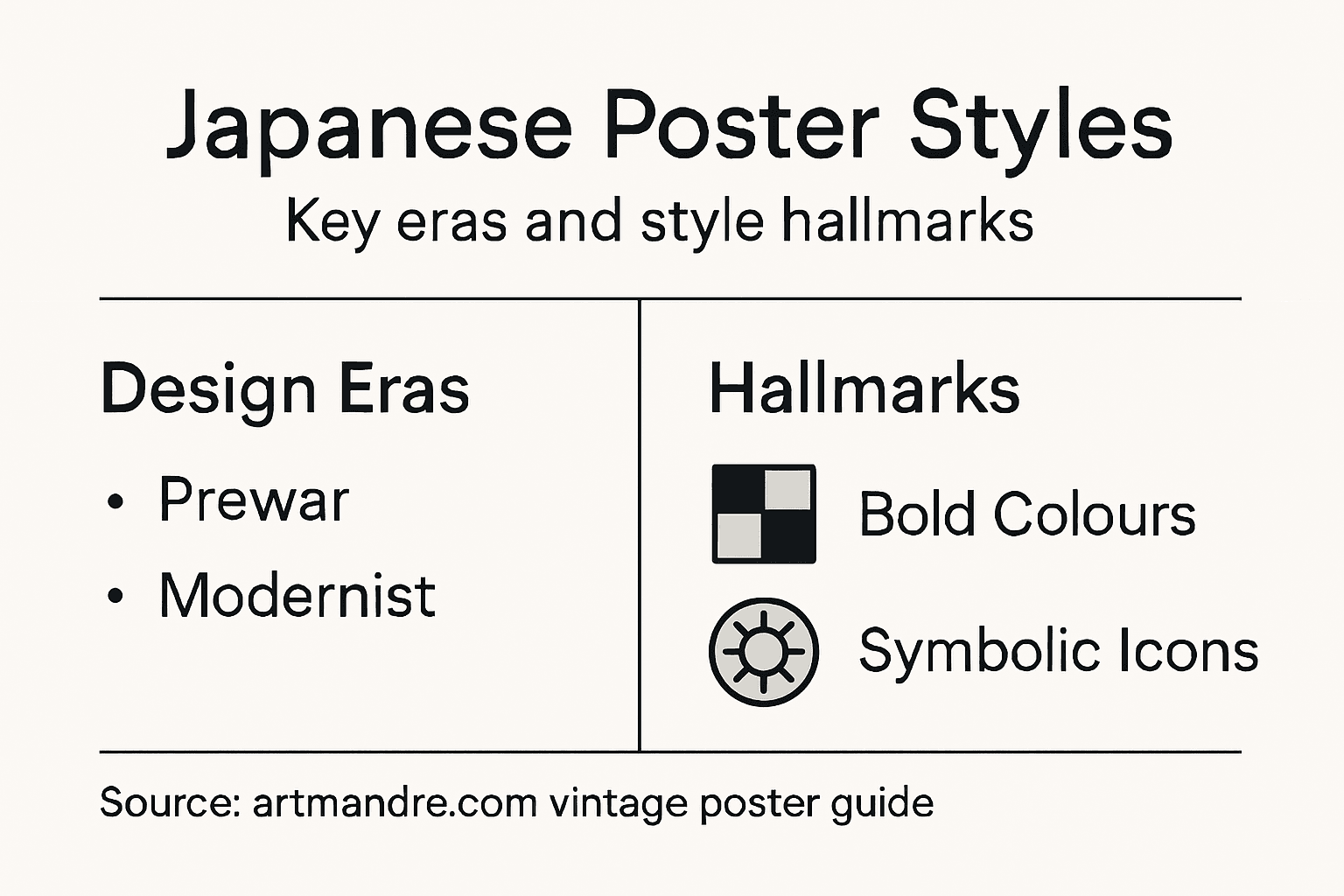
Japanese poster art represents a dynamic visual chronicle of societal transformation, with each decade bringing distinctive aesthetic innovations. Japanese graphic design evolution reveals a remarkable journey from post-war reconstruction to global artistic recognition, showcasing remarkable stylistic diversity and cultural sophistication.
The progression of Japanese poster styles can be mapped across several pivotal periods:
- 1950s: Modernist ideals and international design recognition
- 1960s: Experimental printing techniques and psychedelic influences
- 1970s: Minimalist design principles and graphic abstraction
- 1980s: Consumerist imagery blending fashion and photography
Wartime propaganda gradually transformed into nuanced graphic communication, with designers employing increasingly complex visual languages. Postwar cultural messaging demonstrated how Japanese graphic artists navigated societal changes, creating artwork that transcended mere commercial objectives.
Each design period reflected broader cultural shifts, from traditional artistic elements to global modernist influences. The posters became sophisticated visual dialogues, representing Japan’s dynamic cultural landscape through intricate graphic design principles that seamlessly blended historical symbolism with contemporary aesthetic sensibilities.
Pro tip: Explore poster collections from different decades to understand the rich stylistic evolution of Japanese graphic design.
Here is a concise overview of major Japanese poster art periods and their typical characteristics:
| Period | Defining Aesthetic | Typical Subjects | Graphic Hallmarks |
|---|---|---|---|
| 1950s | Modernist fusion | Reconstruction themes | Clean lines, bold typography |
| 1960s | Psychedelic, experimental | Social change motifs | Vivid colours, layered printing |
| 1970s | Minimalist, abstract | Abstract concepts | Sparse layouts, geometric shapes |
| 1980s | Consumer culture | Fashion, lifestyle | Photography, pop culture icons |
Key Features and Cultural Significance
Japanese poster art transcends mere visual communication, serving as a profound cultural artifact that reflects societal dynamics and collective values. Japanese manner poster analysis reveals these design elements as intricate narratives of social behaviour and urban transformation.
The key features of Japanese posters encompass several distinctive characteristics:
- Sophisticated visual metaphors
- Culturally coded symbolic language
- Nuanced textual and graphic interactions
- Multilayered communication strategies
Public communication design in Japan represents a unique approach to social messaging. Semiotic visual communication demonstrates how these posters function beyond traditional signage, creating complex dialogues about social expectations and collaborative urban living.

Beyond aesthetic appeal, these posters represent a sophisticated mechanism for cultural transmission. They capture the delicate balance between individual expression and collective harmony, using graphic design as a powerful tool for social communication and normative guidance.
Pro tip: Examine the subtle visual cues and symbolic language in Japanese posters to understand deeper cultural narratives.
How Authenticity Is Verified in Collecting
Poster authentication represents a sophisticated process combining scholarly research and meticulous technical examination. Institutional archival practices reveal complex methodologies for verifying the genuine nature of vintage Japanese graphic art.
Authenticity verification involves several critical investigative techniques:
- Comprehensive provenance research
- Detailed material composition analysis
- Expert historical contextual evaluation
- Comparative assessment with authenticated collections
- Digital and forensic print examination
Collector’s verification strategies require a multifaceted approach to establishing genuine Japanese poster origins. Vintage poster authentication procedures recommend comprehensive documentation review, understanding print techniques specific to different historical periods, and consulting specialised scholarly resources.
The most reliable authentication emerges from collaboration between collectors, museums, academic institutions, and graphic design historians. This interdisciplinary approach ensures rigorous verification, protecting both the cultural heritage and investment value of these remarkable graphic art pieces.
Pro tip: Always request detailed documentation and expert verification before acquiring significant vintage Japanese posters.
Compare the main authentication methods for vintage Japanese posters and their strengths:
| Method | What It Involves | Unique Strength |
|---|---|---|
| Provenance Research | Tracing ownership history | Confirms original issue timeline |
| Material Composition Analysis | Examining paper/ink type | Detects period-correct materials |
| Forensic Print Examination | Microscopic inspection | Reveals printing process details |
| Historical Context Review | Analysing cultural connections | Verifies alignment with events |
Common Pitfalls and Avoiding Repros
Vintage poster collecting demands sophisticated discernment to navigate the complex landscape of potential reproductions. Japanese vintage poster identification reveals critical strategies for distinguishing authentic artworks from modern imitations.
Collectors should be vigilant about several key warning signs:
- Artificially aged paper with uniform distressing
- Inconsistent colour saturation
- Incorrect printing techniques for historical period
- Suspicious paper weight and texture
- Digital artefacts in supposedly original prints
- Lack of verifiable provenance documentation
Reproduction detection techniques require meticulous examination of multiple visual and material characteristics. Genuine vintage Japanese posters possess nuanced details that mass-produced copies cannot replicate, including subtle printing imperfections, unique paper fibres, and historically accurate graphic design elements.
Successful collectors develop a trained eye by studying archival materials, consulting expert resources, and understanding the precise technical specifications of different historical printing methods. Comparative analysis with museum-authenticated specimens provides the most reliable verification approach.
Pro tip: Invest in a high-quality magnifying glass to scrutinise minute print details and potential reproduction markers.
Styling Japanese Posters for Modern Decor
Contemporary interior design increasingly embraces Japanese vintage posters as sophisticated design elements that transcend mere wall decoration. Japanese poster design integration offers remarkable opportunities to infuse living spaces with cultural depth and artistic expression.
Effective styling strategies include:
- Creating dramatic focal points in minimalist environments
- Balancing colour palettes with bold graphic elements
- Complementing neutral interior schemes
- Introducing cultural narrative through visual storytelling
- Mixing traditional and contemporary design aesthetics
Poster placement techniques require careful consideration of spatial dynamics and room composition. Vintage poster styling approaches recommend selecting pieces that harmonise with existing architectural elements while maintaining individual artistic integrity.
Successful integration involves understanding the nuanced visual language of Japanese graphic design. These posters are not simply decorative items but sophisticated cultural artefacts that communicate complex narratives through precise composition, symbolic imagery, and refined colour palettes.
Pro tip: Select Japanese vintage posters that resonate with your existing interior palette and architectural style for seamless visual integration.
Elevate Your Space with Authentic Vintage Prints Inspired by Japanese Poster Art
Japanese vintage posters reveal a sophisticated blend of cultural storytelling and artistic precision that can transform any modern interior. If you want to introduce dramatic focal points, balanced colour palettes, and culturally rich decor, finding authentic vintage-style wall art that captures this essence is key. From minimalist designs to bold graphic statements, these prints offer a unique way to engage with history while enhancing your living spaces.

Discover a curated collection of stylish vintage and retro prints at ArtMandre.com. Our selection embraces the artistic integrity and cultural significance celebrated in Japanese poster art. Make your walls a canvas of timeless design with our exclusive offers including buy 2 get 1 free deals. Start exploring now to bring these sophisticated narratives into your home and enjoy vibrant, meaningful decor that resonates with your personal style.
Frequently Asked Questions
What are Japanese vintage posters?
Japanese vintage posters are complex visual narratives that reflect Japan’s cultural dynamics and societal transformations, often blending traditional art with modern graphic design principles.
How can I style Japanese vintage posters in my home?
Effective styling strategies include using them as focal points in minimalist environments, balancing bold graphics with neutral colour palettes, and integrating cultural narratives into your decor.
What should I consider to ensure the authenticity of Japanese vintage posters?
To ensure authenticity, consider provenance research, material composition analysis, forensic print examination, and historical context review to confirm a piece’s originality and alignment with historical events.
What are the common characteristics of Japanese vintage posters from different design periods?
The characteristics vary by period: the 1950s focused on modernist fusion; the 1960s featured psychedelic influences; the 1970s embraced minimalist abstraction; and the 1980s highlighted consumer culture, particularly through fashion imagery.