



Japanese Poster Art: Creating Authentic Retro Impact
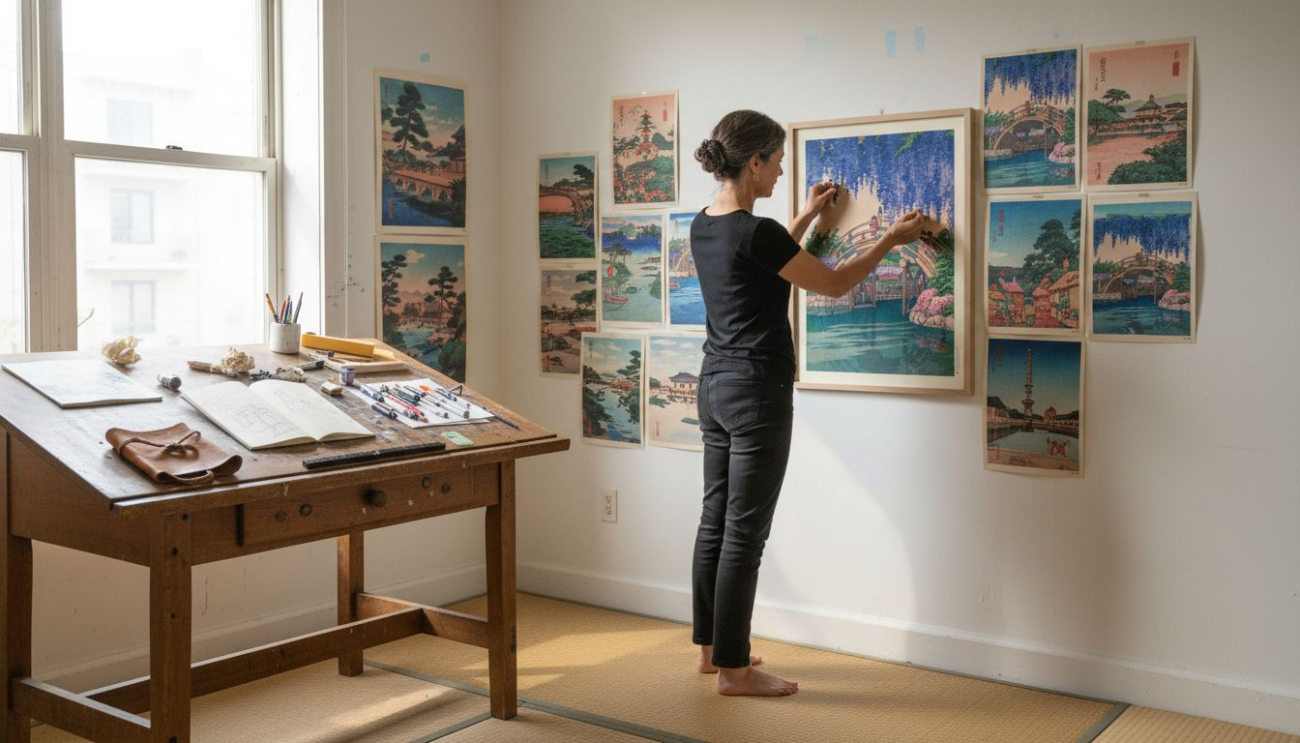
Settling into a new city apartment often sparks the desire to create a space that feels uniquely personal and visually striking. Japanese posters offer a refined solution, blending minimalist composition with cultural storytelling that transforms modern interiors. For those seeking to infuse their living areas with retro charm and sophisticated flair, the nuanced balance of suggestion and understatement found in Japanese design promises both artistic depth and modern style.
Table of Contents
- What Defines A Japanese Poster Today
- Key Styles And Types: From Ukiyo-e To Bauhaus
- Cultural Influences And Symbolic Motifs In Design
- Collecting, Displaying, And Caring For Prints
- How To Choose Authentic Japanese Posters Online
Key Takeaways
| Point | Details |
|---|---|
| Minimalism in Design | Modern Japanese posters prioritise minimalism, emphasising the use of negative space to convey messages subtly. |
| Cultural Storytelling | These posters utilise restrained visual techniques to communicate complex cultural narratives and symbolism. |
| Influence of Historical Styles | Ukiyo-e and Bauhaus principles have significantly shaped contemporary Japanese poster design, blending traditional elements with modern aesthetics. |
| Collecting and Preservation | Serious collectors should focus on provenance verification and proper conservation techniques to maintain the integrity and value of Japanese prints. |
What Defines a Japanese Poster Today
Japanese poster art represents a sophisticated visual language that goes far beyond mere graphic design. Contemporary Japanese poster design embodies a profound cultural aesthetic characterised by subtlety, minimalism, and profound visual communication.
The defining characteristics of modern Japanese posters emerge from several distinctive principles:
- Minimalist Composition: Emphasising negative space (Ma) as a critical design element
- Cultural Storytelling: Communicating complex narratives through restrained visual techniques
- Experimental Typography: Blending photographic and illustrative elements seamlessly
- Philosophical Understatement: Prioritising suggestion over direct representation
Unlike Western poster designs that often rely on bold, aggressive typography, Japanese posters communicate through nuanced visual strategies. Japanese poster collections demonstrate a remarkable ability to convey profound meanings through minimal visual elements.
The contemporary Japanese poster represents a delicate balance between commercial communication and artistic expression. These designs are not merely advertisements but cultural artifacts that reflect deep aesthetic principles of restraint, harmony, and meaningful emptiness.
Pro tip: When selecting Japanese posters for your space, prioritise designs that create visual breathing room and communicate through subtle visual metaphors rather than overwhelming graphic statements.
Key Styles and Types: From Ukiyo-e to Bauhaus
Ukiyo-e woodblock prints represent a foundational artistic movement that profoundly shaped Japanese visual communication. Emerging during the Edo period, these intricate prints captured fleeting urban moments through distinctive artistic techniques that would later influence global design movements.
The key characteristics of Ukiyo-e and subsequent Japanese poster styles include:
- Aerial Perspectives: Unique spatial representations breaking traditional Western compositional rules
- Minimalist Color Palettes: Employing limited yet striking colour ranges
- Narrative Complexity: Telling sophisticated stories through seemingly simple visual elements
- Precise Line Work: Emphasising clean, deliberate graphic contours
Bauhaus design principles dramatically intersected with Japanese aesthetic traditions, creating a remarkable cross-cultural design dialogue. German modernist ideas of functional simplicity resonated deeply with Japanese artistic sensibilities, leading to innovative graphic design approaches that prioritised clarity and purposeful minimalism.
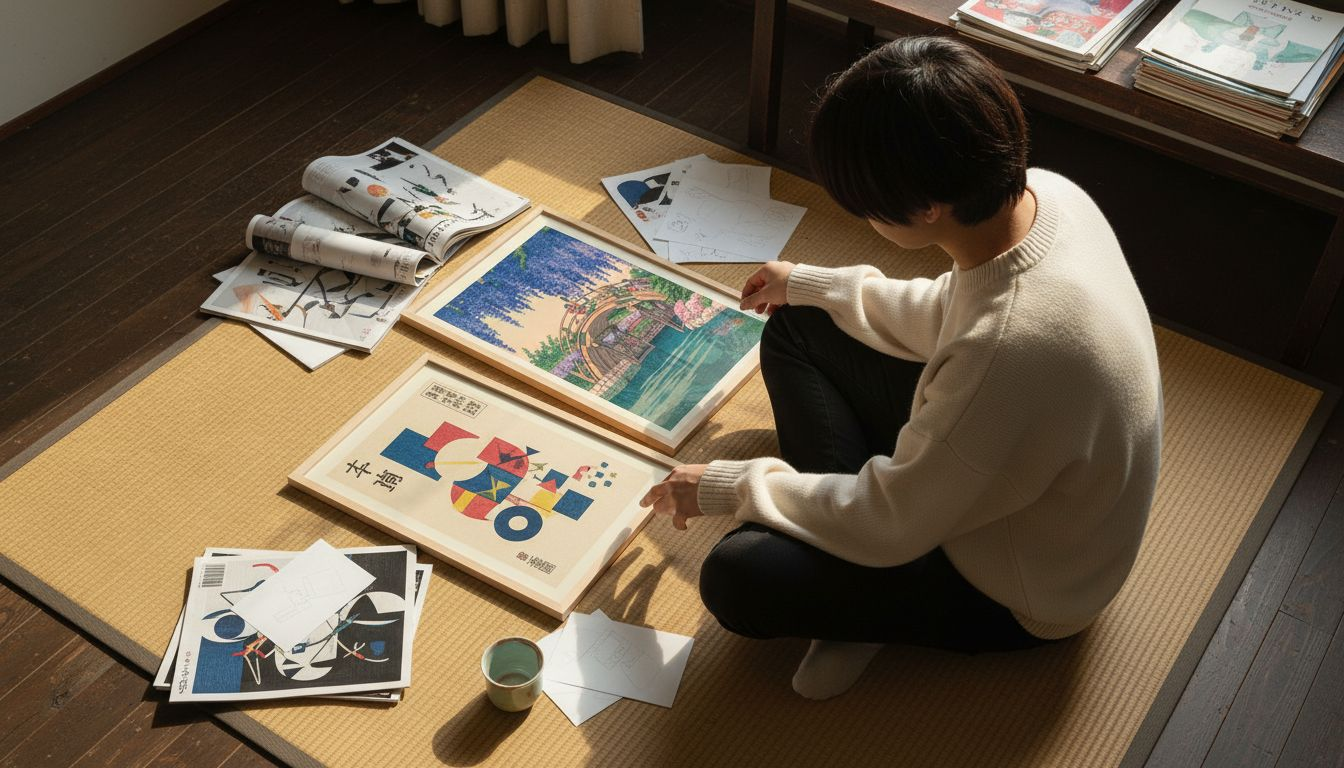
These artistic movements demonstrate how Japanese poster design transcends mere visual communication, becoming a nuanced language of cultural expression. The interplay between traditional Japanese techniques and Western modernist approaches created a unique visual vocabulary that continues to influence contemporary graphic design worldwide.
To clarify the evolution of Japanese poster styles, here’s a comparison of Ukiyo-e and Bauhaus influences:
| Aspect | Ukiyo-e Prints | Bauhaus-Inspired Posters |
|---|---|---|
| Artistic Origins | Edo period Japan | Early 20th-century Germany |
| Visual Approach | Detailed illustration and storytelling | Functional simplicity and clarity |
| Colour Strategy | Limited, hand-mixed hues | Strong geometric and neutral tones |
| Global Impact | Influenced impressionist art worldwide | Shaped modern design conventions |
Pro tip: When exploring Japanese poster art, look for designs that balance negative space, incorporate subtle narrative elements, and demonstrate a sophisticated relationship between form and meaning.
Cultural Influences and Symbolic Motifs in Design
Post-World War II Japanese graphic design represents a profound visual narrative that weaves together complex cultural threads. This artistic approach transcends mere aesthetic representation, serving as a sophisticated language of cultural identity and historical transformation.
Key symbolic motifs in Japanese poster design include:
- Natural Elements: Representations of seasons, landscapes, and organic forms
- Historical Iconography: Traditional symbols reflecting cultural heritage
- Philosophical Concepts: Visual metaphors expressing abstract cultural values
- Pop Culture References: Contemporary imagery blending modern and traditional aesthetics
The design philosophy emphasises a delicate balance between historical resonance and contemporary expression. Traditional Japanese visual language incorporates profound symbolic meanings, where every line, colour, and compositional choice communicates deeper cultural narratives beyond surface-level graphic representation.
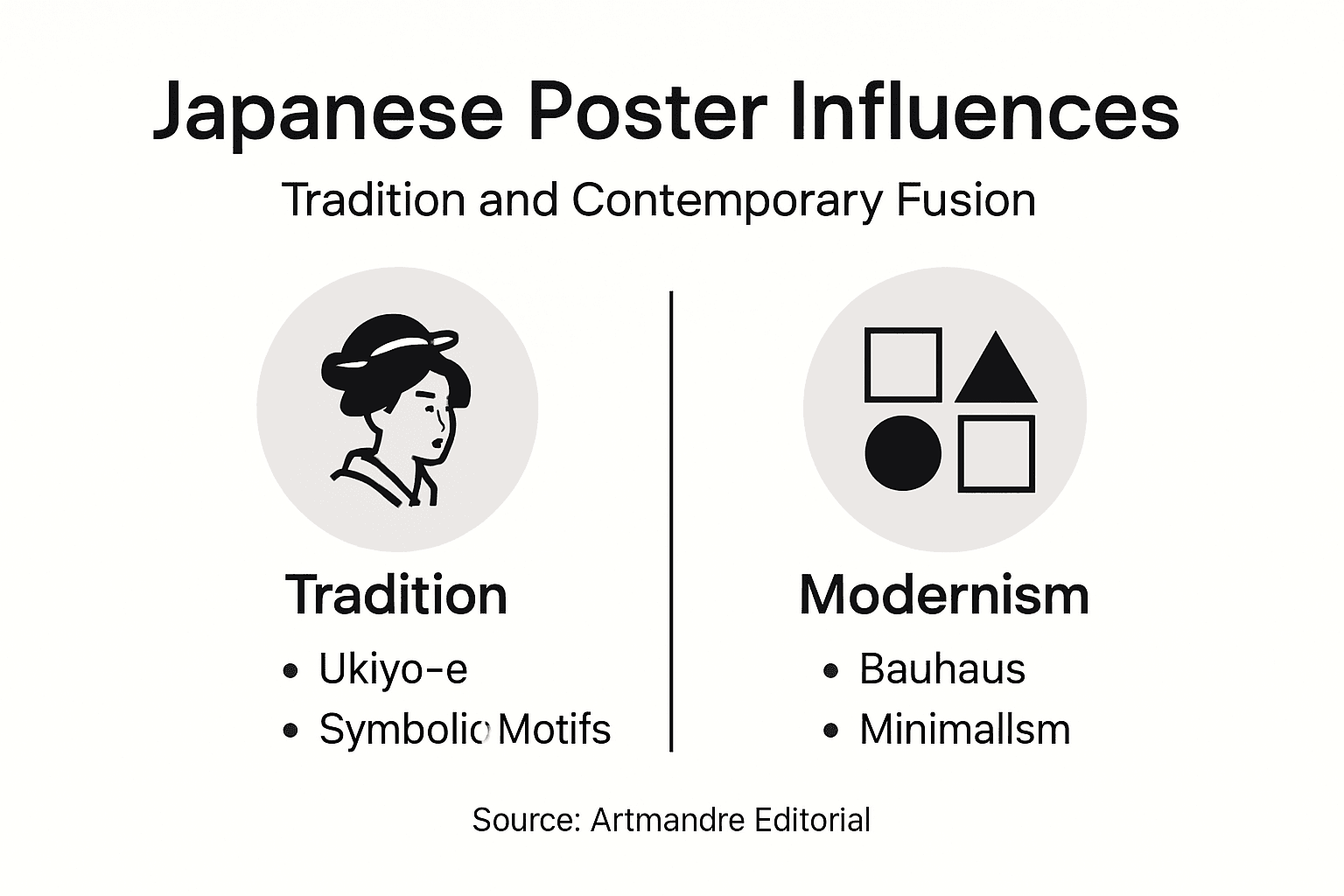
These artistic approaches demonstrate how Japanese poster design functions as a nuanced dialogue between past and present, national identity and global influences. The visual language becomes a powerful medium for cultural storytelling, bridging generational and cultural experiences through carefully crafted graphic expressions.
Pro tip: When analysing Japanese poster art, look beyond surface aesthetics and explore the intricate symbolic layers that communicate complex cultural narratives.
Collecting, Displaying, and Caring for Prints
Japanese art collection requires sophisticated knowledge beyond typical art acquisition strategies. Understanding the nuanced world of Japanese prints demands expertise in authentication, cultural context, and preservation techniques that go far beyond simple aesthetic appreciation.
Key considerations for serious collectors include:
- Provenance Documentation: Verifying artwork’s historical and artistic lineage
- Material Authenticity: Examining original production techniques and materials
- Conservation Standards: Understanding environmental preservation requirements
- Cultural Significance: Recognising historical and artistic context of each piece
Japanese print preservation demands meticulous environmental control. Delicate prints require specific conditions to maintain their integrity, including controlled humidity levels, minimal light exposure, and protection from atmospheric pollutants that could compromise their historical value.
Successful collectors approach Japanese prints as living cultural artifacts, understanding that each piece represents a complex narrative of artistic tradition, historical moment, and aesthetic innovation. The true value lies not just in visual beauty, but in the profound cultural dialogue each print represents.
For collectors, here’s a quick reference guide to essential Japanese print care steps:
| Step | Purpose | Example Practice |
|---|---|---|
| Humidity Control | Prevents paper warping and mould | Use dehumidifiers |
| Light Limitation | Maintains original colour vibrancy | Display in low-light areas |
| Archival Framing | Protects from environmental damage | Acid-free materials |
| Regular Inspection | Checks for deterioration or pests | Annual expert appraisal |
Pro tip: Invest in professional conservation consultation and archival-quality framing to protect the longevity and value of your Japanese print collection.
How to Choose Authentic Japanese Posters Online
Japanese art authentication requires a sophisticated approach that goes beyond casual visual appreciation. Discerning collectors must develop a keen eye for distinguishing genuine historical artefacts from modern reproductions.
Critical factors in verifying authentic Japanese posters include:
- Publisher Marks: Examining original publishing house stamps and signatures
- Print Techniques: Understanding traditional woodblock and lithographic methods
- Material Quality: Assessing paper composition and printing integrity
- Historical Context: Researching the artwork’s cultural and artistic provenance
- Condition Assessment: Evaluating preservation state and original characteristics
Successful online purchasing demands meticulous research and strategic verification. Reputable sellers will provide comprehensive documentation, including detailed images of publication marks, production techniques, and historical context that substantiate the poster’s authenticity.
The digital marketplace presents both opportunities and challenges for collectors. While online platforms offer unprecedented access to rare Japanese posters, they simultaneously require heightened diligence to prevent acquiring inauthentic or misrepresented artwork.
Pro tip: Request comprehensive provenance documentation and high-resolution images from sellers, and consider consulting a professional Japanese art appraiser before finalising significant online purchases.
Elevate Your Space with Authentic Retro Japanese Poster Art
Discover how the subtlety and cultural storytelling of Japanese poster art can transform your home decor into a refined expression of elegance and meaning. The article highlights key challenges like finding authentic designs that balance minimalist composition with rich symbolic motifs. If you are passionate about capturing that authentic retro impact through carefully curated visuals, you will appreciate artworks that marry Bauhaus simplicity and Ukiyo-e inspired storytelling.
Bring these timeless qualities into your living space with our exclusive collection at Artmandre. Whether you seek vintage maps, cocktail posters, or carefully crafted Bauhaus-inspired pieces, our selection emphasises visual breathing room and meaningful design.

Browse our carefully curated new arrivals and hot sellers to find authentic retro posters that enrich your walls with cultural depth and stylish minimalism. Act now to take advantage of our buy 2 get 1 free offer and start building your distinctive collection today.
Frequently Asked Questions
What are the key characteristics of contemporary Japanese poster art?
Contemporary Japanese poster art is characterised by minimalist composition, cultural storytelling, experimental typography, and philosophical understatement, prioritising suggestion over direct representation.
How does Ukiyo-e influence modern Japanese poster design?
Ukiyo-e, a traditional woodblock printing style, has profoundly influenced modern Japanese posters through its unique spatial representations, narrative complexity, and minimalist colour palettes, creating a rich visual language for contemporary designs.
What are some common symbolic motifs in Japanese poster design?
Common motifs in Japanese poster design include natural elements representing seasons and landscapes, historical iconography reflecting cultural heritage, philosophical concepts as visual metaphors, and pop culture references that blend modern and traditional aesthetics.
How should I care for and preserve Japanese print art?
Caring for Japanese prints involves ensuring proper humidity control, limiting light exposure, using archival framing materials, and conducting regular inspections for deterioration, which will help maintain the integrity and value of the artwork.