



Blog
Japanese Poster Art: Timeless Appeal for Decor Lovers

Choosing the perfect statement piece for your interior can sometimes feel deeply personal, especially when you want to blend cultural depth with striking design. As interest grows in affordable vintage Japanese poster art, collectors and decorators alike are discovering how these works blend vibrant colour, minimalist elegance, and symbolic storytelling. This article offers expert insight on identifying authentic Japanese posters, exploring their historical roots, and recognising styles that bring genuine cultural value into your living space.
Table of Contents
- Defining Japanese Poster Art and Its Origins
- Recognising Key Styles and Movements
- Cultural Symbolism in Japanese Posters
- Collecting and Displaying Japanese Art Prints
- Spotting Authenticity and Avoiding Reproductions
Key Takeaways
| Point | Details |
|---|---|
| Cultural Significance | Japanese poster art reflects socio-cultural transformations and embodies complex narratives from Japan’s history. |
| Key Artistic Styles | Movements such as Avant-Garde Minimalism and Pop Art Fusion showcase the blend of traditional and modern aesthetics. |
| Symbolic Imagery | Posters utilise natural motifs and geometric patterns to express cultural values and societal dynamics. |
| Authenticity in Collecting | Verifying authenticity requires understanding material quality and historical value for true appreciation of the art. |
Defining Japanese Poster Art and Its Origins
Japanese poster art represents an extraordinary visual narrative that emerged during the complex socio-cultural transformations of the late 19th and 20th centuries. Japanese graphic design history reveals a fascinating evolution from traditional advertising to sophisticated artistic expression.
Originating in the Edo period, these visual communications initially served practical purposes like commercial promotion and public information dissemination. The artistic style gradually transformed, reflecting Japan’s rapid modernisation and cultural shifts. Key characteristics of Japanese poster art include:
- Vibrant, bold colour palettes
- Minimalist design principles
- Strong symbolic imagery
- Blend of traditional and modern aesthetic elements
Post-World War II, Japanese poster design experienced a remarkable renaissance. Post-war graphic design incorporated Western influences while maintaining a distinctly Japanese sensibility, creating a unique visual language that resonated globally.
The artistic approach combined graphic innovation with cultural storytelling, making posters more than mere advertisements – they became powerful cultural artefacts representing Japan’s aesthetic philosophy and societal changes.
Pro tip: When collecting vintage Japanese posters, focus on condition, historical significance, and the specific artistic movement represented.
Recognising Key Styles and Movements
Japanese poster art encompasses a rich tapestry of stylistic movements that reflect the nation’s profound cultural transformations. Post-war graphic design represents a pivotal period where traditional aesthetics merged seamlessly with contemporary artistic expressions, creating a unique visual language that captivated global audiences.
Key artistic movements and styles in Japanese poster design include:
- Avant-Garde Minimalism: Characterised by clean lines and sparse compositions
- Pop Art Fusion: Blending Western pop culture influences with Japanese graphic sensibilities
- Psychedelic Experimentalism: Featuring complex layering and cosmic visual narratives
- Traditional Motif Reinterpretation: Incorporating elements like Noh masks and calligraphy
Japanese poster designers like Ikko Tanaka and Tadanori Yokoo pioneered groundbreaking approaches that synthesised Eastern cultural heritage with international graphic design trends. Their work transformed posters from mere commercial communications into sophisticated artistic statements that challenged visual conventions.

The most remarkable aspect of these styles was their ability to communicate complex cultural narratives through seemingly simple yet profoundly meaningful visual compositions. Each poster became a microcosm of Japan’s evolving identity, bridging traditional aesthetics with modernist sensibilities.
Here is a concise overview comparing the main Japanese poster art movements and their distinct influences:
| Style/Movement | Main Characteristics | Historical Influence |
|---|---|---|
| Avant-Garde Minimalism | Clean lines, sparse arrangement | International Modernism, Zen thought |
| Pop Art Fusion | Western pop culture integration | US pop artists, mass media |
| Psychedelic Experimentalism | Bold colours, cosmic motifs | 1960s youth and music culture |
| Traditional Motif Reinterpretation | Noh masks, calligraphy, woodblock inspiration | Edo period traditions, cultural nostalgia |
Pro tip: When studying Japanese poster art styles, focus on understanding the contextual cultural narrative behind each design, not just its visual elements.
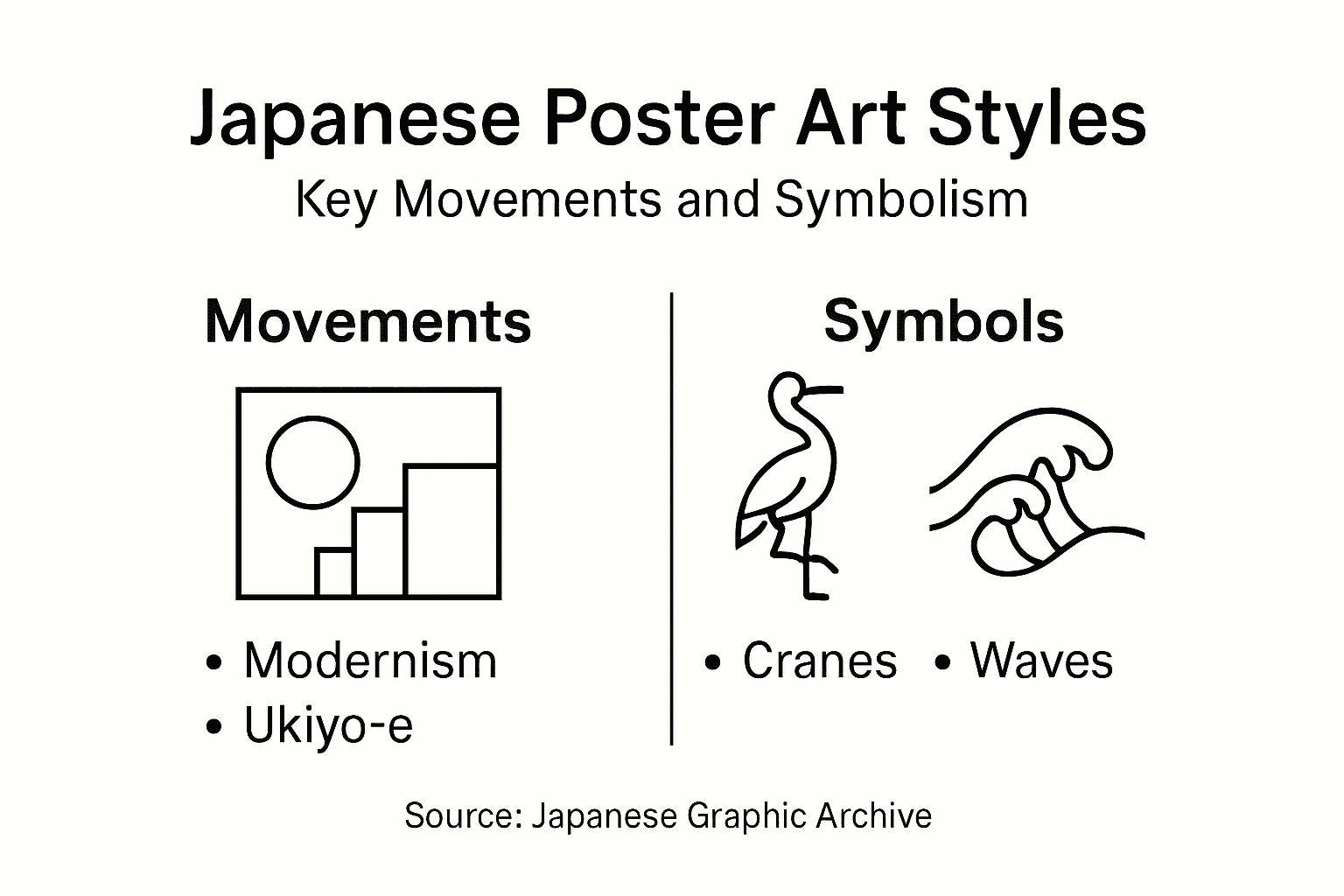
Cultural Symbolism in Japanese Posters
Japanese poster art transcends mere visual communication, serving as a profound cultural language that encapsulates complex societal narratives. Post-WWII graphic design represents a pivotal moment where visual symbolism became a powerful medium for cultural restoration and identity expression.
Symbolic elements in Japanese posters typically represent multiple layers of meaning:
- Natural Motifs: Representing harmony and seasonal transitions
- Geometric Patterns: Symbolising order and philosophical balance
- Traditional Icons: Embedding cultural memory and historical continuity
- Minimalist Imagery: Suggesting depth through intentional simplification
Japanese manner posters exemplify how visual communication can communicate intricate social norms without verbal instruction. These designs masterfully use metaphorical imagery to guide public behaviour, transforming poster art into a subtle yet powerful social mechanism.
The most intriguing aspect of these symbolic representations is their ability to bridge traditional Japanese aesthetic principles with contemporary global visual languages. Each poster becomes a nuanced dialogue between historical heritage and modern sensibilities, inviting viewers to decode complex cultural narratives through visual metaphors.
Pro tip: Study the negative space and subtle symbolic elements in Japanese posters to truly appreciate their profound cultural storytelling.
Collecting and Displaying Japanese Art Prints
Japanese art print collecting demands a nuanced understanding of historical significance and preservation techniques. Collecting Japanese prints requires discerning taste, careful consideration, and a deep appreciation for the cultural narratives embedded within each artwork.
Key considerations for building an authentic Japanese art print collection include:
- Authenticity Verification: Researching print origins and provenance
- Condition Assessment: Examining print quality and preservation state
- Historical Context: Understanding the artistic movement and cultural period
- Preservation Techniques: Implementing appropriate conservation methods
Japanese print preservation involves meticulous handling and strategic display techniques. Collectors must protect prints from environmental threats like humidity, direct sunlight, and potential physical damage through careful storage and mounting practices.
Displaying Japanese art prints transforms living spaces into sophisticated cultural narratives. Each print represents more than decorative art – it becomes a window into Japan’s rich artistic heritage, inviting viewers to explore complex visual storytelling and aesthetic philosophies.
Pro tip: Use archival-quality, acid-free mounting materials and rotate displayed prints to prevent prolonged light exposure and potential degradation.
Spotting Authenticity and Avoiding Reproductions
Authenticity is the cornerstone of valuable Japanese art print collecting, requiring sophisticated expertise and meticulous examination. Authentic Japanese ukiyo-e prints demand careful scrutiny beyond surface-level visual assessment, involving deep understanding of historical production techniques and nuanced verification methods.
Key indicators of authenticity include:
- Paper Quality: Examining texture, age, and traditional manufacturing marks
- Printing Techniques: Assessing woodblock printing characteristics
- Colour Integrity: Evaluating original pigment layering and ink density
- Provenance Documentation: Verifying historical origin and artist certification
- Age Markers: Identifying genuine wear and historical production signs
Japanese vintage poster authentication involves sophisticated forensic techniques that go beyond casual visual inspection. Genuine pieces reveal subtle markers like specific fold lines, matte paper textures, and unique Eirin certification marks that distinguish them from modern reproductions.
Collectors must develop a trained eye, understanding that authenticity represents more than monetary value – it embodies cultural preservation and historical narrative. Each genuine print carries a story, a moment frozen in artistic expression that transcends mere decorative purpose.
The table below summarises essential differences between authentic and reproduction Japanese art prints:
| Aspect | Authentic Prints | Reproductions |
|---|---|---|
| Material Quality | Handmade paper, natural pigments | Machine-made paper, synthetic inks |
| Printing Technique | Hand-carved woodblocks, visible texture | Digital or offset processes, smooth surfaces |
| Historical Value | Unique, period-specific, with provenance | Lacks certification, contemporary creation |
| Collectible Worth | High investment and cultural significance | Decorative value, limited market demand |
Pro tip: Invest in professional authentication services and build relationships with reputable Japanese art dealers to confidently verify print origins.
Bring the Timeless Allure of Japanese Poster Art into Your Home
If you find yourself captivated by the cultural symbolism and minimalist elegance highlighted in Japanese poster art, you are not alone in seeking authentic and stylish wall decor that tells a story. Many collectors and decor lovers wrestle with the challenge of finding prints that balance historical significance with modern appeal while maintaining quality and authenticity. Whether you admire the bold palettes of post-war graphic design or the subtle beauty of traditional motifs, integrating these elements into your living space can instantly transform your interiors.
Explore a carefully curated collection of vintage-inspired and thematic art prints at ArtMandre.com where we prioritise quality that resonates with your passion for meaningful decor. Discover new arrivals and enjoy promotional offers designed to help you build a unique gallery wall that reflects your love for sophisticated artistic expression.

Elevate your home with wall art that honours cultural heritage and modern style. Visit ArtMandre.com today to browse exclusive retro and vintage poster prints. Act now to take advantage of special deals and start your collection of timeless decor pieces inspired by global design traditions.
Frequently Asked Questions
What are the key characteristics of Japanese poster art?
Japanese poster art is known for its vibrant colour palettes, minimalist design principles, strong symbolic imagery, and a blend of traditional and modern aesthetic elements.
How did Japanese poster art evolve over time?
Japanese poster art evolved from practical advertising in the Edo period to a sophisticated artistic expression by incorporating Western influences post-World War II, creating a unique visual language that resonated globally.
What should collectors consider when building a Japanese art print collection?
Collectors should consider authenticity verification, condition assessment, historical context, and employing proper preservation techniques to ensure the longevity and value of the prints.
How can one spot authentic Japanese art prints?
To spot authentic Japanese art prints, examine paper quality, printing techniques, colour integrity, provenance documentation, and age markers, as these indicators differentiate authentic pieces from reproductions.