



Blog
Woodblock Art Print: Vintage Charm for Modern Homes

Finding affordable ways to add character to vintage-inspired living spaces can often feel challenging. Woodblock art prints offer a unique solution, combining centuries-old craftsmanship from Chinese, Japanese, and European traditions with the freedom to showcase personal style. These prints bring a bold blend of history, storytelling, and handmade detail, making them a standout choice for those who want more than mass-produced decor. Discover how traditional woodblock printing techniques create stunning and expressive art that enriches any home environment.
Table of Contents
- What Defines A Woodblock Art Print
- Major Styles And Regional Variations
- Step-By-Step Woodblock Printing Process
- Features, Materials, And Artistic Appeal
- Choosing And Displaying Woodblock Prints
- Common Mistakes And How To Avoid Them
Key Takeaways
| Point | Details |
|---|---|
| Woodblock Printing Origins | Woodblock printing originated in ancient China and has evolved through various cultural expressions in Asia and Europe. |
| Distinct Regional Styles | Each region has developed unique woodblock printing styles reflecting their cultural narratives, such as Japanese Ukiyo-e and European Woodcuts. |
| Printing Process Complexity | The woodblock printing process involves precise steps, including design preparation, block carving, and careful ink application, requiring technical skill and patience. |
| Preservation Practices | To maintain the integrity of woodblock prints, collectors should use archival framing materials and manage environmental conditions to prevent degradation. |
What Defines a Woodblock Art Print
Woodblock art printing represents a centuries-old printmaking technique with profound cultural significance. Traditional wood carving techniques transform wooden blocks into intricate artistic mediums that capture narratives and visual expressions across different civilizations.
At its core, woodblock printing involves several critical components:
- Hand-carved wooden surfaces designed with precise imagery
- Strategic ink application using specialized tools
- Careful pressing techniques to transfer designs onto paper or fabric
- Multiple block usage for creating complex multi-colored prints
The technique originated in ancient China during the fifth century CE and subsequently spread across Asia and Europe, evolving into unique artistic styles. In Japan, woodblock printing developed the renowned ukiyo-e style, while European artists like Albrecht Dürer elevated the medium through intricate designs.
Modern woodblock art prints maintain the delicate balance between traditional craftsmanship and contemporary aesthetic sensibilities. Artists continue to use this technique to communicate complex narratives, preserving a connection to historical artistic expression while adapting to current design trends.
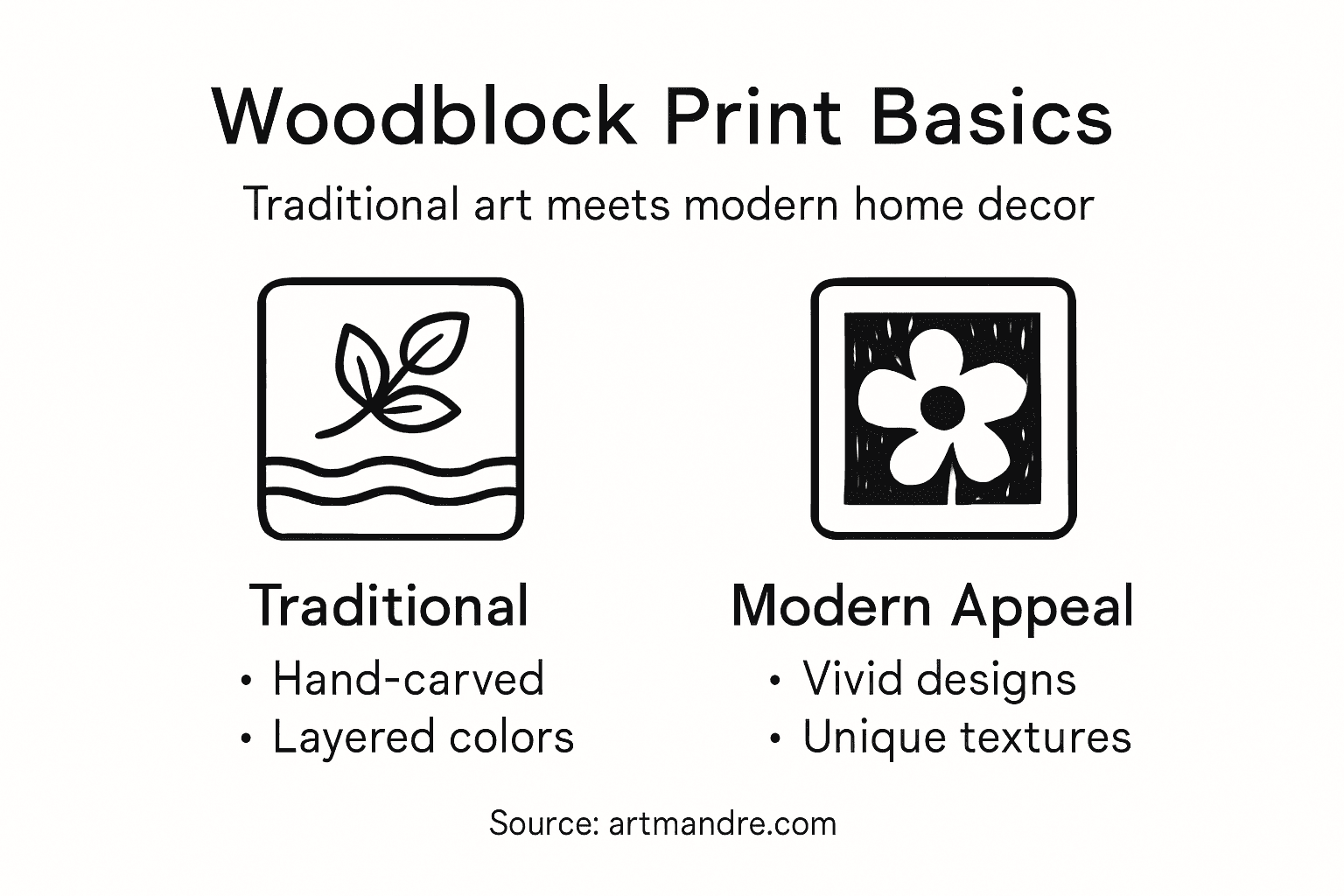
Pro tip: When selecting woodblock art prints, examine the carving details and color transitions to appreciate the artist’s technical mastery.
Major Styles and Regional Variations
Woodblock printing has flourished across different cultures, developing distinctive styles that reflect unique artistic traditions. Manuscript culture techniques reveal remarkable regional variations spanning East and Central Asia, as well as Europe.
Key regional woodblock printing styles include:
- Japanese Ukiyo-e: Depicting urban life scenes and landscapes
- Nishiki-e: Multi-colored prints featuring actors and courtesans
- European Woodcuts: Intricate religious and narrative imagery
- Chinese Buddhist Manuscript Prints: Textual and illustrative designs
In East Asia, woodblock printing often served spiritual and narrative purposes. The ukiyo-e style, emerging during the Tokugawa period in Japan, captured the vibrant essence of urban experiences and entertainment. European artists like Albrecht Dürer and Hans Holbein transformed woodcuts into sophisticated artistic expressions, using detailed carving techniques to create complex visual narratives.
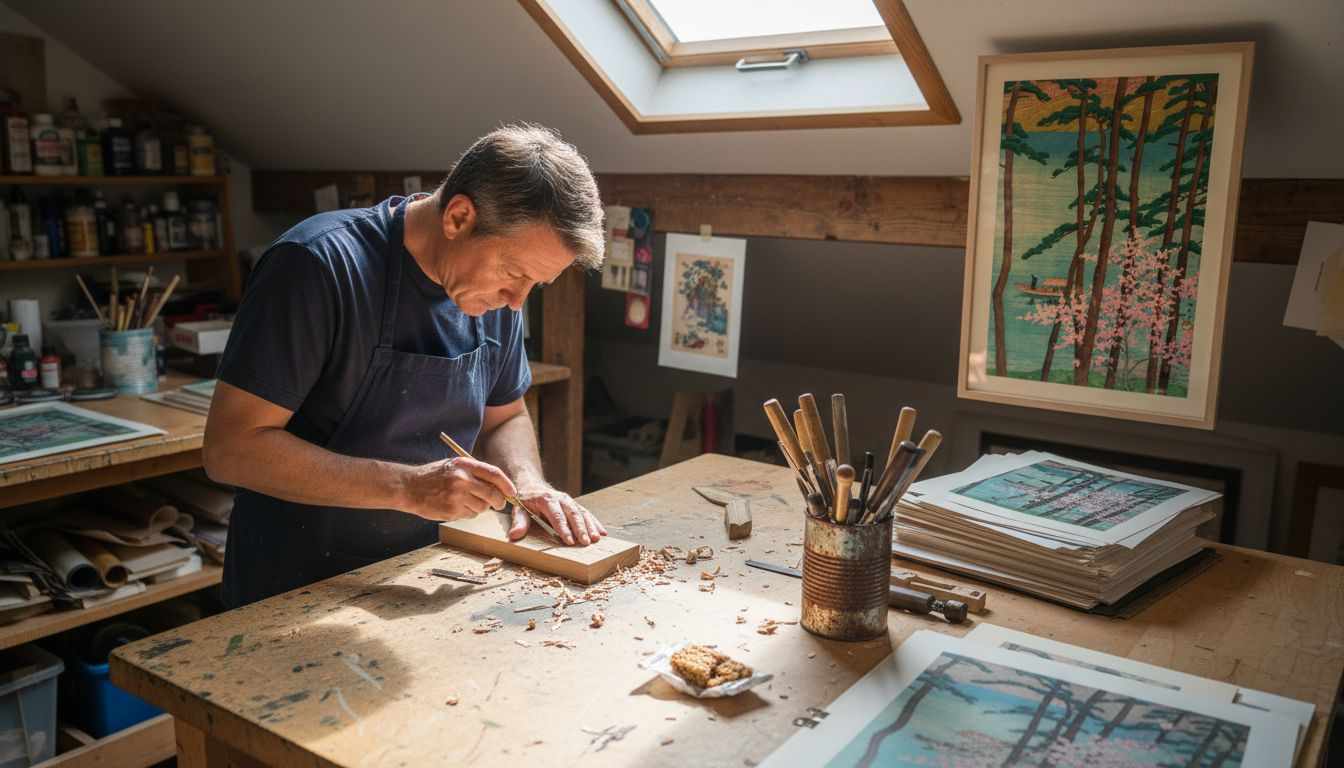
Different regions developed unique technical approaches, with East Asian prints typically emphasizing fluid storytelling and European versions focusing on precise, often religious iconography. These variations demonstrate how woodblock printing transcended mere reproduction, becoming a sophisticated artistic medium that communicated cultural identity.
Here’s a concise comparison of major woodblock printing styles across regions:
| Region/Style | Defining Subjects | Technical Emphasis |
|---|---|---|
| Japanese Ukiyo-e | Urban life, landscapes | Multi-block color layering |
| Chinese Buddhist | Texts, religious illustrations | Line clarity, sacred motifs |
| European Woodcuts | Religious, narrative imagery | Detailed carving, bold lines |
Pro tip: Examine the cultural context and carving details when collecting woodblock prints to appreciate their historical and artistic significance.
Step-by-Step Woodblock Printing Process
Woodblock printing requires precision, patience, and a deep understanding of traditional artistic techniques. Wood block printmaking involves a complex series of carefully executed steps that transform a simple wooden block into a stunning artistic piece.
The comprehensive woodblock printing process typically follows these essential stages:
- Design Preparation
- Create an initial sketch or drawing
- Transfer the design onto a smooth wooden block
- Verify design alignment and proportions
- Block Carving
- Use specialized carving tools to remove non-printing areas
- Maintain raised surfaces that will transfer ink
- Ensure clean, precise edge details
- Ink Application
- Select appropriate ink colors
- Apply ink evenly using a brayer
- Ensure consistent ink coverage
- Print Transfer
- Position high-quality paper carefully
- Apply pressure using a baren or printing press
- Lift paper to reveal the final print
Multi-colored prints require additional complexity, with artists creating separate blocks for each color and carefully aligning them during the printing process. This registration technique demands exceptional skill and precision, as even slight misalignments can compromise the entire artwork.
Modern artists continue to honor these traditional techniques while incorporating contemporary design elements, bridging historical craftsmanship with current artistic expressions. The intricate process demands not just technical skill but also a deep appreciation for the art form’s rich cultural heritage.
Pro tip: Practice on inexpensive wood blocks and experiment with different carving tools to develop your woodblock printing technique.
Features, Materials, and Artistic Appeal
Woodblock art prints represent a sophisticated artistic medium that combines intricate craftsmanship with exceptional visual depth. Traditional woodblock printing techniques reveal a remarkable interplay of materials that create unique aesthetic experiences.
Key features of exceptional woodblock prints include:
- Vibrant color layering capabilities
- Intricate texture and depth
- Handcrafted precision
- Cultural narrative elements
- Subtle color gradations
- Unique material interactions
The materials used in woodblock printing are fundamental to its artistic appeal. Cherry wood and boxwood serve as primary carving surfaces, offering artists smooth, responsive textures for detailed designs. Natural pigments and water-based inks enable artists to create translucent color layers that capture light in extraordinary ways, producing prints with exceptional visual complexity.
Contemporary artists continue to honor traditional techniques while introducing innovative approaches. The mokuhanga method, which uses water-based inks and delicate washi paper, allows for extraordinary color transparency and nuanced artistic expression. Each print becomes a unique artifact, reflecting both historical craftsmanship and individual artistic vision.
Use this reference to understand the impact of material choices in woodblock printing:
| Material | Artistic Advantage | Common Usage |
|---|---|---|
| Cherry Wood | Enables fine, precise carving | Japanese and contemporary |
| Boxwood | Supports intricate detail | Traditional European prints |
| Washi Paper | Enhances color transparency | Mokuhanga, Japanese styles |
Pro tip: Invest in high-quality, acid-free paper when collecting woodblock prints to ensure long-term preservation and color integrity.
Choosing and Displaying Woodblock Prints
Selecting and displaying woodblock prints requires careful consideration to preserve their artistic integrity and visual appeal. Conservation of Japanese woodblock prints demands a nuanced approach that balances aesthetic presentation with long-term preservation.
Key considerations when choosing and displaying woodblock prints include:
- Assess print quality and authenticity
- Evaluate historical and artistic significance
- Consider color palette and design compatibility
- Examine print condition and preservation state
- Match frame style to print’s cultural origin
- Select appropriate display lighting
The display environment plays a crucial role in maintaining print quality. Optimal display conditions involve limiting light exposure to below 50 lux, which prevents pigment degradation and color fading. Archival-quality framing with UV protective glass and acid-free mats can significantly extend the print’s longevity and visual integrity.
Modern home decor enthusiasts should approach woodblock print selection as both an artistic and preservation endeavor. Each print represents a delicate historical artifact that requires thoughtful placement, avoiding direct sunlight, humidity, and environmental pollutants. Rotating prints periodically and using museum-grade display techniques can help maintain their original beauty and cultural significance.
Pro tip: Invest in professional archival framing and use museum-grade LED lighting with low UV emissions to protect your woodblock print’s long-term visual quality.
Common Mistakes and How to Avoid Them
Woodblock print collecting and preservation requires careful attention to prevent costly errors. Woodblock printing techniques reveal numerous potential pitfalls that can compromise the artwork’s quality and longevity.
Common mistakes collectors and enthusiasts should avoid include:
- Exposing prints to direct sunlight
- Using non-archival framing materials
- Handling prints without protective gloves
- Storing prints in unstable environmental conditions
- Neglecting humidity and temperature controls
- Improper cleaning and maintenance techniques
Technical errors during print creation or preservation can significantly damage delicate woodblock prints. Improper carving techniques may lead to uneven lines or block damage, while inconsistent ink application can result in blotchy or faded prints. Understanding wood grain direction and using appropriate carving tools are crucial for maintaining print quality.
Preservation challenges extend beyond immediate handling. Volatile compounds from wood or pigments can cause gradual deterioration, making climate-controlled storage and conservation-grade materials essential. Professional conservators recommend creating stable environments with minimal light exposure, controlled humidity, and protection from environmental pollutants to ensure the long-term integrity of woodblock prints.
Pro tip: Invest in white cotton gloves and archival-quality storage materials to protect your woodblock prints from potential damage during handling and storage.
Bring Vintage Woodblock Charm to Your Modern Home
Discover how the timeless elegance of woodblock art prints can add warmth and sophistication to your living space. This article highlights the intricate craftsmanship behind woodblock printing and the care needed to preserve these delicate artworks. If you want to enjoy the vintage charm without the worry of complicated preservation, explore our curated collection of affordable retro and vintage-inspired art prints that perfectly blend classic aesthetics with modern durability.

Elevate your home decor with stylish prints from ArtMandre.com. Take advantage of our exciting offers like buy 2 get 1 free and find the perfect woodblock-inspired artwork or vintage map to complement your style. Visit ArtMandre.com today and bring the beauty of artisanal prints into your modern living spaces with ease.
Frequently Asked Questions
What is woodblock art printing?
Woodblock art printing is a centuries-old printmaking technique that involves hand-carving wooden blocks to create intricate designs, which are then inked and pressed onto paper or fabric.
How does the woodblock printing process work?
The woodblock printing process includes several steps: preparing a design, carving the wooden block, applying ink, and transferring the print to paper. For multi-colored prints, multiple blocks are used for each color with precise alignment.
What are the main features of woodblock art prints?
Key features of woodblock art prints include vibrant color layering, intricate textures, handcrafted precision, and cultural narrative elements that convey rich histories and artistic traditions.
How can I properly display and preserve woodblock prints?
To display woodblock prints effectively, use archival-quality framing with UV protective glass, limit light exposure, and maintain stable humidity and temperature conditions to preserve their beauty and prevent damage.